Category Archives: International Creative Talents

IT’S THE END OF THE WORLD & ALEX MACPHERSON FEELS FINE

IMG_3375

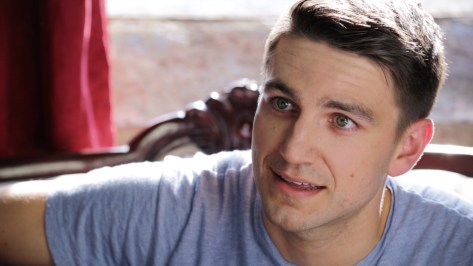
Who likes the idea of a Zombie Apocalypse? Nobody, right? Well, except for Alex MacPherson. Maybe it’s because he is such a fan of the genre. Maybe it’s because he feels as if he has already lived through it with his role in Dead Rush. The film was released earlier this year and was an Official Selection of the Canada Film Fest. Unless you have been hibernating or living off the grid for the past several years, you know that zombies are ubiquitous in film and television. Walking Dead and movies like 28 Days Later ignited a zombie fire that has seen TV and movies about them set records. One thing is for sure, people love seeing zombies and MacPherson is no exception. Whereas most zombie scenarios show a group paradigm, Dead Rush takes an extremely personal perspective by following one man as he loses everything. It’s this individual’s struggle in a world that is crumbling around him that implies the modern concern for our planet and how society is causing it to fall into a state of disrepair; one from which it can never fully recover…or maybe it is just good old’ fashion Hollywood scare tactics.

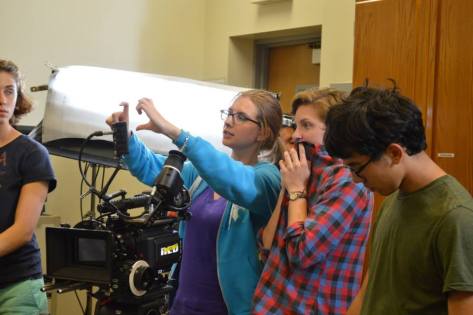
Dead Rush is simply the zombie version of the “riches to rags” story for one man. Early in the film the main character’s wife dies as they attempt to escape the chaos that follows the apocalypse, soon all those around him are dying and becoming zombies. We follow the journey of the main character and his attempt to find refuge with survivors. MacPherson is literally the first person we see in the film. Sadly for him, he is killed trying to escape and is impaled by a pole; his death resulting in his rebirth as a zombie. Even the long periods required to be in the makeup chair couldn’t dull Alex’s enthusiasm as he recalls, “It sounds a little crazy to say that you love a car crash scene but I didn’t have any of the negativity of an actual crash or the repercussions that follow so it was a lot of fun. The Art Department had beaten the hell out of this old van. They shoved a pole through the windshield, hooked up smoke machines, it was pure Hollywood magic! The Makeup artists were incredible so when I saw the zombie it really was terrifying. He looked so real!”

Zac Ramelan directed (along with writing and producing credits for) the film. Ramelan (known for his work on feature films like Late Night Double Feature, Zombieworld, and others) often works with cinematographer Karl Janisse. Witnessing the professional relationship between the two, Alex comments, “Working with director Zac Ramelan, and Director of Photography Karl Janisse, was the best part of this project for me. The two were like peanut butter and jam, working so well together. I remember sitting back and watching with admiration as they broke down a scene. Zac, who also wrote the film, had such a clear vision of everything, and of course, that always help as an actor, when you have strong direction.” It would be quite difficult for anyone to understand what motivates a zombie (other than eating brains, of course) but MacPherson confirms that working with Ramelan made it easy, noting, “When you have a director with a vision as strong as Zac’s, not much research is required. As for putting my mind fully into the film’s character, it really wasn’t hard with how detailed the set was, which was just done so well. It truly felt like I was in a post-apocalyptic world.” The film’s cinematographer Karl Janisse praises MacPherson’s abilities and contributions that helped achieve such a positive public response declaring, “It was an immense pleasure to work with Alex on Dead Rush. He is so creative. Working in this genre you need the story to be fresh but you also need the actors to bring something new to a role, something that entices the viewer; Alex does that. He is a wonderful actor. I’m scheduled to work with him soon on a project for Mimic Entertainment and I am really looking forward to it.”

It would seem that the misfortune which befalls the cast on screen is not without a real life counterpart, although in a much more benevolent sense. When the cast walked the red carpet at the film’s premier (at the Canada Film Festival) they were caught in a torrential downpour…in Canada…in winter! This occurrence (soundtrack provided by fellow Canadian Alanis Morissette’s tempting of fate) still did not dampen the cast’s spirits. According to MacPherson it has more to do with Canadian’s love of film that anything. He states, “Studios like to pick up horror films because they sell! Much of the feel of a horror film can be created with lighting, color correction and music. I don’t think Canada in particular has any specific things that make the horror genre so prevalent but there is just so much filming here! Toronto and Vancouver are film capitols, and the amount of filming there is actually increasing!”
IMG_3371

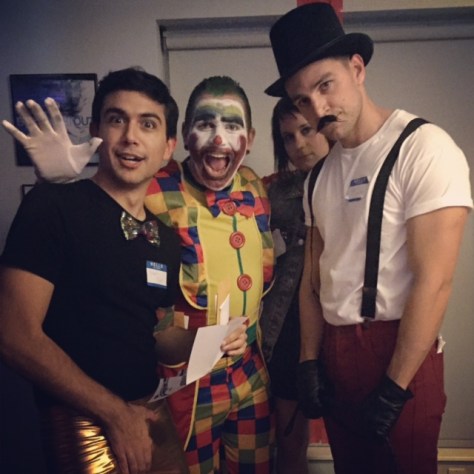
Never content to settle, Alex has several projects in the works. He recently wrote and starred in Palmer’s Pumpkins. He wrote the film specifically as an ode to the 80’s horror films that he grew up loving, although it is more fun and fantasy based than horror. When Earth Sleeps is a trilogy set in a post apocalyptic world (a theme Alex is familiar with) in which the main character Aydin searches for solace. While maintaining a heavy workload of filming in his homeland of Canada, MacPherson hears the sirens beckoning from Hollywood. He reveals, “As much as I love Canada, and Toronto specifically, Los Angeles has been calling to me for a while. There’s something about the Hollywood dream that calls to all actors. I visited LA a few times over the last few years, originally thinking that I wouldn’t love the city, but would have to learn to at least accept it; the funny thing is, after my first visit I absolutely fell in love with it. That and every fiber of my being was screaming out that I had to get there. To this day I have a strong intuitive notion that my next chapter in film will occur in LA. Whether Toronto has a ton of projects shooting or not, there is still something about LA that Canada doesn’t have, when it comes to the entertainment world. As an actor and screenwriter, Los Angeles’s appeal is paramount. I’m also really lucky to have become close with a number of LA-based directors and producers. I am super excited to have a bunch of projects lined up already. It is one thing to want to get to LA as an actor, but it’s another thing altogether to have LA film people want to work with you. It’s like something out of a dream. What a life!”
TV COMMERCIAL EDITOR PAVEL KHANYUTIN IS A MASTER OF THE 60 SECOND EPIC

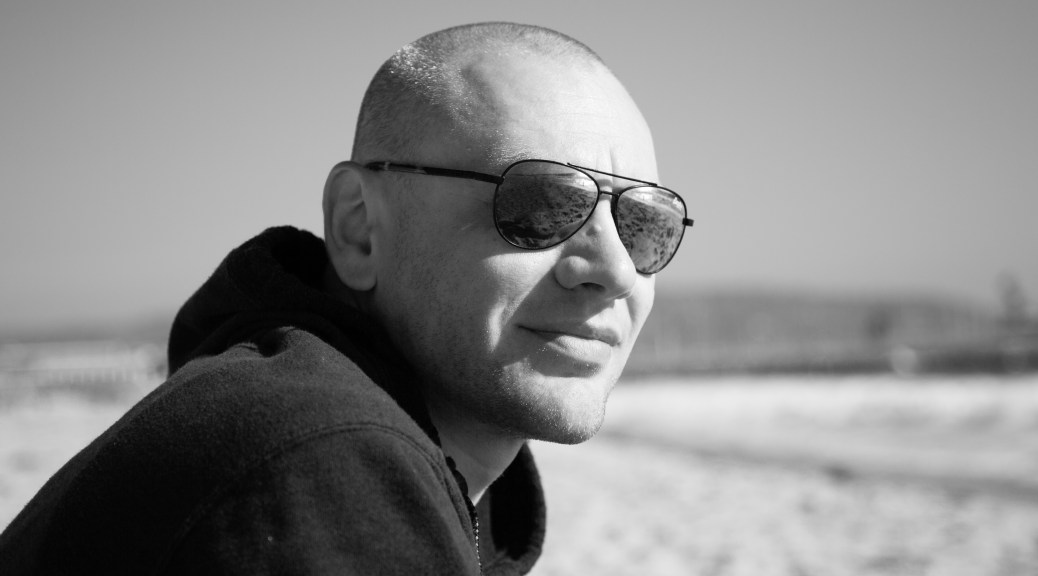
Small is beautiful—the economy and discipline of the short form, whether a haiku poem or one minute television commercial can be as rewarding, in its own way, as a feature length project. But that spare intimate moment also poses a tremendous creative challenge, one which only an acutely capable craftsman can master, and Pavel Khanyutin epitomizes that nuanced, subtle skill.

The Russian-born film editor-visual effects supervisor’s instinct, delicacy and precision have allowed Khanyutin to build a solid professional reputation as a master of both thirty second TV spots and feature length films. Navigating such a broad spectrum takes a very special gift, and the ease with which he manages it only underscores Khanyutin’s natural talents.

Khanyutin’s earliest experience was cutting documentaries, a genre where the straight expositional narrative succeeds largely due to how the editor frames and delivers that information.

“I started doing advertising at the beginning of my career in 2000,” Khanyutin said. “At that time I already had experience in editing documentary films and I’d been working with computer graphics for several years.”

“Advertising, of course, can’t be compared with films in complexity,” he said. “Time spent in the editing room and the tasks differ a lot. However, advertising is strongly connected with film. To my thinking, this goes both ways and dozens of techniques move from ad to film and back, improving and gathering sensibility along the way.”

Khanyutin soon found himself working for all the top Russian ad production companies—DAGO, Bazelevs, Robusto, Action Film , Park Production and international agencies like Instinct (BBDO Group) and Leo Burnett Worldwide.

“These gave me fantastic opportunities, within a short time, to edit dozens of TV promotions in many genres, to work with different directors and studios, for various brands and in different formats.” Khanyutin said

The ability to infuse cinematic qualities into a television commercial gained Khanyutin a great advantage in the field and he has done successful spots for such major international clients as Mars, P&G, Garnier, Pepsi, Toyota, Google, IKEA, Tele2, Megafon cellular and many others.

“The skill of editing commercials has a lot to do with one’s ability to pinpoint the soul of a story and convey it in the most economical way possible,” commercial director Rachel Harms said. “Pavel’s brilliance is evident at every stage of the editorial process. He’s a master at uncovering the choice moments, shaving them down to their essence, establishing rhythm and musicality, and finally juxtaposing images in a way that achieves maximum impact.”

Khanyutin relishes the challenge television ads present. “During editing, I consider a TV ad to be like a short film,” he said. “There are many possibilities in spite of the very restricted format, but you also face a limitation of possibilities. As an example, there are ads with a lot of dialogue or an overload of text information, and you must always consider the strict time limit of 30 seconds to one minute.”

“Another type is the ‘branding’ or ‘mood’ ad. These have a much less strict structure. The characters do not speak much or don’t speak at all. Here you almost unlimited possibilities for editing, with many variants on how and where to put focuses–to solve the task rhythmically. All small details are of great importance. One flash of half a second may finish the composition in full, if you find its right position in editing.”

Khanyutin’s focus, dedication, comprehensive vision and innate knack for conceiving and presenting the ideal cut on any given assignment has kept him in demand as a TV commercial editor for more than fifteen years

“I’ve worked with countless editors across the globe in the course of my career as a commercial director,” Harms said. “It’s rare to find such extraordinary intelligence and insight wrapped in such a collaborative heart. Pavel listens well and quickly attunes to a director’s vision, yet he never loses his own strong point of view.”

“After a shoot, I know that my material will either live, die or thrive in an editor’s hands. This is the final critical stage where everything will either come together or will be derailed. With Pavel as my editor, I’m always confident the finished product will be exceptional.”

Spanish Photographer and Videographer Captures Wedding Memories that last a Lifetime

DSC00339 copia
Wedding photography from Padilla-Rigau is brought to breathtaking life by Cristina Tomas Rovira.


Cristina Tomás Rovira knows she’s done her job when goosebumps are part of the end result. She is a photographer and videographer who specializes in photographing and filming wedding videos for Padilla-Rigau, a celebrated photography company headquartered in Barcelona.

“You are witnessing a very special day and you need to make your clients feel like Julia Roberts and Hugh Grant,” said Rovira, an outstanding photographer who is also recognized for her work in music and fashion. “I always want them to have chills while watching the video. If the couple says they’ve got goosebumps while watching it and they love it, that’s all that matters and I feel proud and happy.”

Rovira oversees all of Padilla-Rigau’s filmmaking and has served in the role since 2010, when the company was formed by Bernat Padilla and Anna Rigau.

“This is the 6th year that we’ve been shooting weddings,” Rigau said. “We’ve evolved and we’ve created the Padilla-Rigau style. Lately, a lot of the couples that hire us tell us that they knew that they would hire us before they were even engaged. That is amazing — they love how our videos and our photos connect. Cristina’s work connects with the people, and given we work with emotions here, she knows how to make people happy.”

Padilla-Rigau’s videos range from three and half to four and a half minutes long and highlight all the intimate happenings at weddings, from the preparation moments just before the ceremony all the way to the bride and groom’s exit following the reception.

It’s a day-long shooting process that captures memories made for life.

Rovira, who has also collaborated with famed music photographer Joseph Llanes (Rolling Stone, Billboard, Spin and many more), said, “By the end of the day, all the guests and the couple are so used to us being there that they give us the best reactions. We are like four more friends who brought a camera and are capturing everything nonstop.”

The videos unfold as short romantic films shot in HD and set to music. They evolve from season to season and are altogether emotion-stirring, beautifully crafted, stylized and artistic.

The required ability of a photographer and videographer in the case of weddings extends beyond technical camera aptitude. There’s a need to develop rapport, to blend into the environment naturally and to shoot with delicate sensitivity. Rovira’s talent resonates deeply in this regard and lends itself to exceptional photography and filmmaking.

“I like people, I like emotions and I like to capture those emotions,” she said. “I treat every wedding as it was my own or one of my friends or family members, and I think to myself what I would want to see as a bride, as a friend and as a family member. After so many years shooting weddings, you kind of film instinctively.”

Rigau notices the same sentiment featured in Rovira’s work and said, “She’s been doing this for a long time now and she is great with emotion and her way to capture those emotions is beautiful. I think she sees weddings through her lenses, thinking she is filming a romance comedy movie. And it’s amazing. The other day, we were talking about how the four of us can sense when is going to be a high five, or a kiss, or a hug before it happens. She knows that she is filming one of the most important days of someone’s lives, and she treats that day the same way the bride and groom do.”

It’s a team-oriented approach that’s propelled Padilla-Rigau to the pinnacle of wedding photography.

“What makes Padilla-Rigau special and step out from the rest is that we are a team of two photographers and two videographers,” said Rovira, adding that Ferran Clotet rounds out the team. “We work together and synchronize. Like playing any kind of sport, sometimes you throw the ball without looking — you know your team is going to catch it because you’ve know each other really well. That’s our thing.”

The strategy and collaboration has certainly been working. While wedding season traditionally ran from mid April to September, Rovira noted how the schedule has expanded to a nearly year-round basis. Padilla-Rigau has booked more than 65 weddings in the last two seasons, Rovira said.

With a bevy wedding photographers shoring up the industry, Padilla-Rigau has risen to such outstanding heights in large part due to its dynamic video productions spearheaded by Rovira. It was a creative decision to trim down and succinctly portray the essence of weddings in a way that would bode well for sharing on social media.

“We were one of the first companies in Barcelona to do these highlight reel videos,” Rovira said. “When we started, Facebook was only like four years old and in Spain it got really popular around 2007. We decided to focus on that. People wanted to share their life and fast. So we wanted to step out of the old fashioned wedding videos that lasted forever and that families were forced to watch.”

An important component inserted in the videos during editing and post-production is the accompanying music selections that help set the tone and ambiance. A few clients may request specific songs, but most entrust Padilla-Rigau for musical selections.

“I think they like to be surprised by it and I love music, so finding the perfect song for the perfect moment is what makes me love my job even more,” said Rovira.

And the most rewarding part?

“It feels awesome to hear back from the couples who tell me that they felt all kinds of feelings watching the video and they felt like they were living again that day. I’ve cried reading most of their emails or feedback,” said Rovira. “When you hear from them and what they say is good, you feel such relief and happiness. As in any other job or in your personal life, you feel over the moon when you make someone else happy.”

Padilla-Rigau also shoots for events and fashion. In these areas, Rovira has photographed for a Friday’s Project branded campaign, for Shana Shops and for the Oysho free yoga Barcelona, Barcelona Night Out, Hard Rock Cafe Barcelona and luxury hotel events, among others.

“In fashion, we’ve noticed that our clients love Cristina’s work because she listens to them,” Rigau said. “She makes their ideas and thoughts real. She puts the same effort as she does at weddings to show emotions, even in fashion. She wants to make the people feel something while watching the video. She is fast, and a lot of times, she makes a great video when at first hand it could seem impossible.”

For more on Padilla-Rigau, visit: www.padilla-rigau.com

Watch their wedding videos on Vimeo:

https://vimeo.com/padillarigau

For the latest and greatest from Cristina Tomás Rovira, visit: www.cristinatomas.com

Kate Mahon’s Work Connects With Millions of ‘Real’ Women

Kate Mahon
Kate Mahon’s work Dove’s Real Beauty Campaign lead to international success.

It can be easy to forget, when admiring something, who is involved. When reading a book, you are consumed in the story and not who published it. When watching a movie, you are wondering what happens next and not who was behind the camera. When looking at an advertisement, you connect with your need for the product and not who was in charge of the campaign behind it.

Kate Mahon, an advertising art buyer, knows this well. Mahon has had a successful career with many achievements, and millions of people have been impacted by her work, but not many know it.

Mahon worked on one of the most successful advertising campaigns of the decade. The Dove campaign for Real Beauty aimed to celebrate the natural beauty of women and inspire them to be a confident about who they are. Many young women’s lives were changed and tens of millions were impacted by the emotional and enlightening adverts. Videos from the campaign went viral, some receiving over 60 million hits on YouTube. It was named by AdAge, the leading global source of marketing and advertising communities, as one of the three “Ad Campaigns of the Century”.

“I wish I could say that I predicted the massive reaction the work would get, but in truth I imagined a couple of strong campaigns would be created and then the client and agency would return to producing more conventional work,” said Mahon. “Yet twelve years after its launch the Real Beauty campaign is still producing work that opens up yet more discussions about what is considered beautiful and the constraints placed both by society and women themselves.”

Mahon worked as a lead creative producer and art buyer for the campaign, essential to both its commercial and social success. She was in charge of all photography, design, print production, as well as commissioning the casting agents who had to find the women that would represent “Real Women” and resonate with so many people.

“Being part of this campaign makes me extremely proud. Advertising in general is often accused of being morally bankrupt. It is edifying to be part of work that truly opens up serious debate. I look at the ads now and they still look groundbreaking,” she said. “Campaigns such as ‘Real Beauty’ only come around once every few years or even decades, so when it does become apparent that they have broken the boundaries between commerce and social dialogue they take on a life of their own. Whether people like or loathe the work, they begin a discussion that is worth having, about conventional rules of beauty and women’s self-image in general.”

“The initial function of advertising is simple: to sell and raise the profile of a client’s product,” she continued. “If it then extends beyond that into serious social commentary then it is a rare thing which takes it beyond the norm.”

Mahon was essential to Dove’s Real Beauty success. Many of those she worked with remark at her ability to network and her creativity.

“She proved herself to be a valuable asset to the overall project and to the agency in general,” said Susan Pratchett, the Account Director of the Dove Campaign. “Kate’s lead creative role was responsible for much of the project as it created the public image for our campaign.”

Mahon was also in charge of recruiting A-List photographers such as Annie Leibovitz, David Bailey and Rankin for the campaign.

For Mahon, it’s the collaboration that she loves.

“In the fine art world it is all a very personal and solitary process but in advertising every part of the creation of a campaign is a collaboration between the clients brief, the creatives idea and the photographer or directors vision of bringing the idea to life,” she said. “My job means I get to work with a huge range of image makers from all genres and I have to work with an equally diverse range of budgets. Complacency is not possible with the ever changing industry. During my career I have seen a seismic shift in my role and over the advertising industry as a whole which is incredibly exciting.”

Mahon says she never expected the reaction the campaign received.

“The agency and client knew the strategy was a break from the conventional notions of a beauty campaign, but I don’t think anyone expected the massive reaction we received from the outset,” she said. “It is not often that one gets to work on an advertising campaign that ends up being covered in national and then global media. Once the first couple of posters and print advertisements were launched to such universally positive reviews it allowed the creatives even more freedom to push the boundaries of the clichéd notions of beauty.”

Mahon’s work proves that a simple ad can be more than just a small sales technique. Her work shows that she can change lives.

Nathaniel James — From The Weeknd to Full Time!

The music industry is an ever­changing force, with new artists popping up and powerful legends lost, all the while a tempo being kept by those masterminds behind the scenes. Nathaniel James is one of the prominent tempo­keepers of modern music, and his deep and soulful relationship to music is as dynamic as the industry itself.

At the ripe age of 3, James’ father put him at the piano keys, not much later seeing this young prodigy playing “On the Hill Far Away” at the local church. Like most brilliant minds, an obstacle got in the way — and for Nathaniel James the hurdles were the struggles of adolescence. James’ passion for music never left, and was powerfully reignited when he was 16 years old and a friend invited him to play at a church. It was back at the church that James’ passion was sparked, and stayed aflame.

Scan10005 (4)
Nathaniel James, who has toured and performed with renowned superstars such as The Weeknd, began playing music when he was just 3 years old. 

“It’s what I am,” says Nathaniel James, who has since worked with notable artists including touring as the keyboardist for The Weeknd, and playing alongside powerhouses like Kaya Stewart & YouTube sensation Leroy Sanchez. James acts as the co­arranger and musical director for many of the artists he works alongside, bringing a vast knowledge of both traditional and contemporary musical styles to the table, which allows him to share a rare versatility. James prides himself on fostering a warm and comfortable working environment where the collaborators are able to flow and organically create together.

The Weeknd’s acclaimed drummer, Ricky Lewis, raves about the young and hungry talent. “I initially met Nate on a gig we did together when we were much younger and then reconnected in our twenties through some mutual musician friends. The next time we would get the chance to play together was for The Weeknd’s European and American tour in 2012. He had just over a week to learn the set with our arrangements, different transitions and recreate all the patches before our headlining show for the Primavera Festival in Barcelona, and he killed it.”


IMG_2479
Of music, Nathaniel James says it best: “It’s what I am.”

As a pianist, composer, keyboardist, and bassist, Nathaniel James has managed to travel throughout his native country of Canada, and throughout the United States, France, Germany, Barcelona, England, and Amsterdam. As a freelancer, he is not tied down to any single artist, and is constantly excited about fostering new relationships. So much so that he’s recently launched his very own hosted show entitled “Living Room Session,” where he facilitates filmed sessions with artists performing cover songs. This YouTube series is proof of James’ proactive nature. The young and passionate musician saw a need for a platform allowing artists to put a face to their music, and for the audience to meet their favorite singer/band through a low­key performance and video segment.

“One of the greatest guys I know, even outside of being an amazing musician,” raves Ledaris Jones (The Weeknd’s keyboardist/bassist). “Something to for sure appreciate! You can count on him showing up knowing the material and carrying himself in a respectable manner. He’s also a good hang, which is super important when you’re spending months at a time with the same people on the road.”

James recently started his own production company, providing music for all facets of music, from in­studio recordings to live performances. And some upcoming gigs including playing alongside artist Snoh Aalegra, as well as performing in Maui, Big Bear, and New York, among many other locations abroad, alongside a some high profile production companies.

IMG_2991
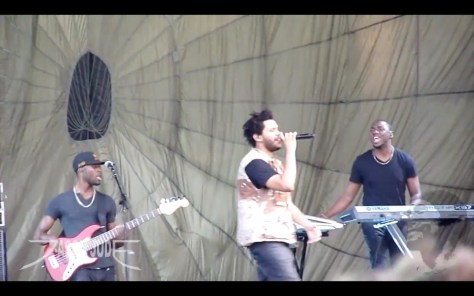
Nathaniel James (right) performed at Lollalapooza with Grammy Award winning artist, The Weeknd (center), whose 2015 hit, “Can’t Feel my Face,” peaked at No. 1 on the US Billboard Hot 100 and Canadian Hot 100 charts.

Nathaniel James carries a heart filled with desire, and an extensive catalogue of compositions — including commercial music from jingles, to film cues, to radio theme arrangements. As for the future, James is beyond excited to grow his YouTube series and continue fostering relationships with top artists worldwide. He aspires to great heights — writing hit songs with superstars, and one day planning to open his own music institution whereby he can equip musicians with degrees and diplomas — the tools he feels are necessary for working musicians to attain. “Sometimes you have to sacrifice going on a tour to pursue education. I want to help students study music a s they play, and gear the institution towards working musicians, giving them education as a backup, as a supplement. This will ultimately allow musicians to continue working past just touring or working gig to gig.”

Arbonne-3 nate
Mastery on keys and piano are chief among the sensational talents of musician Nathaniel James.

“When you watch Nate play you can see how much he truly loves music. His discipline and respect for his craft not only make him easy to work with, they make him reliable as well,” Ricky Lewis adds warmly.

Nathaniel James is a young and multi­talented musician with a solid resume, but an even sturdier purpose. With his heart in the right place, it is only a matter of time before all of James’ dreams come true.

For more information and to check out the music of Nathaniel James, visit:

U.K.’s EMILY RICE ENRICHES HOLLYWOOD, BLENDING TRADITION AND CONTEMPORARY

British born composer Emily Rice is a member of the club of young composers who began as serious instrumentalists but angled into the path of composition. While many gifted performers seek the adulation of a live audience, a subset chooses instead to influence and affect generations of audiences by writing music to interact with other art forms; in Emily’s case, film and television. The choice to have your work be supportive and shine the spotlight on another’s performance implies both talent as well as a complementary nature. No doubt, her early years as a cellist in London taught her the importance of each individual’s role in an ensemble, as well as the emotional impact the entire group could elicit on an audience. Following a successful series of compositional endeavors in the UK, Rice began fielding offers from Hollywood with highly successful results.MV5BMjIzMTUyNjIyMV5BMl5BanBnXkFtZTgwMTAzOTYzNzE@._V1_UY1200_CR165,0,630,1200_AL_ (336x640)

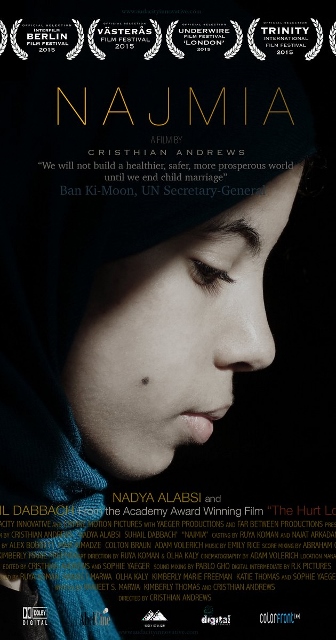
Najmia is a film about the last days of a pregnant twelve-year old Yemini child bride before undergoing labour. The uneasiness of the subject matter in terms of social conformity and the life endangering experience of Najmia coupled with the presentation of this piece led to a win in 2015 at the Forum on Law, Culture, & Society’s International Short Film Competition. Ethical discussions were bound to arise concerning the situation in the film but Rice states, “Our main focus was to communicate the topic of humanity, especially towards the central character Najmia. The film ends ambiguously with Najmia giving birth and the audience is left not knowing whether she survives the labour or not. The film’s aim wasn’t to make judgment on child marriage and the pregnancies that result from these marriages, but to raise awareness about the need for proper midwife training and better sanitary conditions in these situations.” The film required a score that would match the intensity of the story being displayed on screen.IMG_3063 The compositions Rice created more than achieved this goal, as proven by her nomination for Best Composer at the Underwire Film Festival in 2015 (Najmia has received four nominations in addition to those previously mentioned). Rice took some extra precautions to assist the filmmakers in avoiding any preconceptions by the audience. She comments, “We wanted the audience to come away thinking that Najmia could be any young woman, not just a young woman from the Middle East as depicted in the film, and this is why I avoided using ethnic instruments. Also, emotion is something that strings provide very effectively. As a string player (I started my musical life as a cellist), they were the obvious choice.” Emily used an early musical form known as a passacaglia as a base to create the cue in the climactic scene in which we realize that the main character is in trouble. The composer’s knowledge of the prejudices that we may carry with us helped the filmgoer experience the true message that was intended.
2015’s award winning Clone Counseling is a stark contrast in subject matter to Najmia. A comedy that concerns a man in couple’s therapy with his clone; the film needs to evoke a completely different color of the emotional spectrum when it comes to music. Emily worked hand in hand with Aaron Burch to compose a sonic backdrop to set the proper tone. The subject matter of technology and its contributions to society are not lost on Rice and her approach to composing as she utilizes a blend of organic instruments, loops, and electronics.  Highly recognized composer Bruce Broughton (Academy award-nominated, Emmy award-winning, and ASCAP award-winning) recognizes Rice’s abilities and achievements. He relates, “In all of the musical combinations, whether large or small, whether with live musicians or with electronics, regardless of the demands of musical or dramatic style, Emily does a fine job in demonstrating her skill in approaching and successfully negotiating a broad range of contrasting and dissimilar requirements.”IMG_3058

As an artist who is cognizant of the evolution of TV and Film and the need for the compositions that accompany it to grow, Emily constantly seeks out new challenges and ways to widen her palette. In addition to live action films, animation has been popular for many decades and continues to change with technology. As continued validation that Rice is clearly a respected and contemporary member of the film and music community, the Los Angeles Live Score Film Festival recognized and selected her to score the animated film Cowboys in a Saloon (awarded Best Picture at the Los Angeles Live Score Film Festival). The score was recorded by the LA based ultra modern ensemble the Helix Collective. Emily takes an active interest in the live music scene in Los Angeles but it is her deep love of film and television composing that drew her to the city and industry. Her achievements working on commercially successful films such as the Jerry Bruckheimer production “Deliver Us from Evil” (Grossing $65 MM) and the $100 MM Worldwide hit “The Last Witch Hunter”, starring Vin Diesel, have benefited from Rice’s focus as well as longer formats like the WGN’s TV series “Underground”.

Emily continues to immerse herself in new challenges and musical experiences here in Los Angeles. The composition and orchestration for 93 Days, about a Liberian-American racing against the clock in a foreign country against the Ebola influenced panic, demands an intensity and suspense similar to other big budget films. It’s a situation to which Rice has already proven herself to be more than appropriate to contribute.  Firefly (2016, currently in production) sees Emily being challenged with the dichotomy of wonderment and suspense. The child’s perspective of Maya (the film’s central character) has led the composer to seek a nontraditional approach in order to bring something fresh to the story. The score of Firefly is based on musical motifs, including a “monster hunting” theme. Rice reveals, “The ‘monster hunting’ theme is quite rhythmic as it accompanies Maya while she prepares traps for the imaginative monster. I’ve also used a lot of instruments that are typically ‘light’ to reflect the childlike qualities in the story…mostly harp, piano, celeste, and a small amount or strings and percussion.” Sometimes it takes a light touch and approach in a score to leave a strong impression.

VERONICA LI USES CREATIVE SOUND DESIGN TO CONNECT TWO DIFFERENT PARTS OF THE WORLD AND TWO DIFFERENT WORLDS IN MANDALA

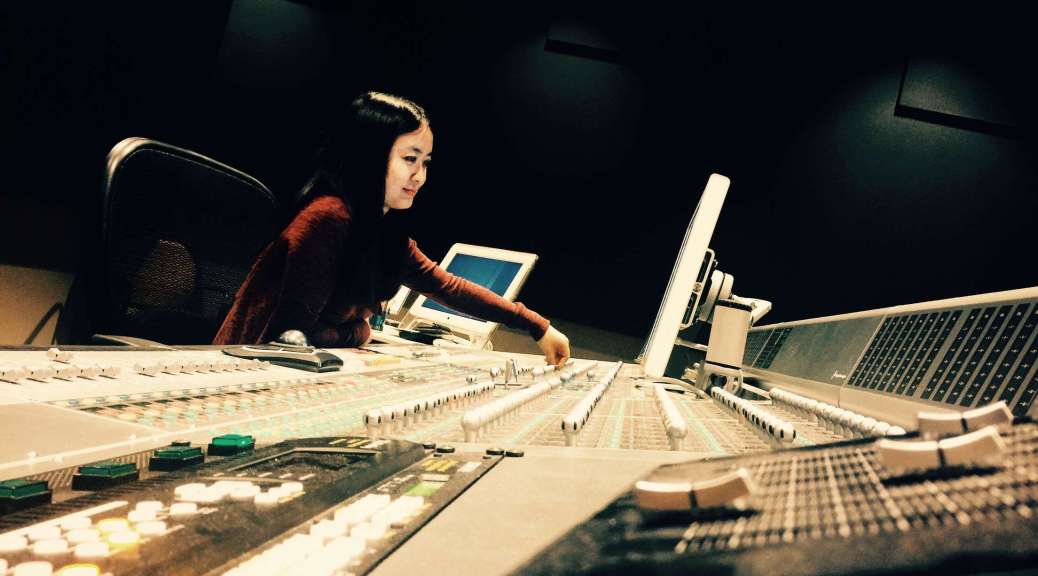
One of the key components of any renowned artist is the ability to achieve popular success while simultaneously keeping their artistic vision intact. This is no small accomplishment and can be quite a balancing act. The yin and yang of this  (whether it is music, painting,  film, etc.) is required to both satisfy the masses as well as lift the art form to new places. When executed at its highest level, art can challenge us to consider our thoughts on love, life, and the world. Technology has created a world in which we are more in touch with other cultures and lifestyles; it seems intuitive that it would bring the elite of the artistic world into a closer community. Sound Designer Veronica Li is an example of this very ideal. She has made a name for herself as a talented and in demand sound designer in Hollywood. Working on box office hits like Michael Bay’s 13 Hours: The Secret Soldiers of Benghazi (grossing 53MM) as well as artistically praised films such as STAND (for which Li won the Outstanding Achievement in Sound Award at the First Film Festival) has displayed Veronica’s ability to match the tone and scale of her work to any film and assist the filmmaker’s desired emotional impact.

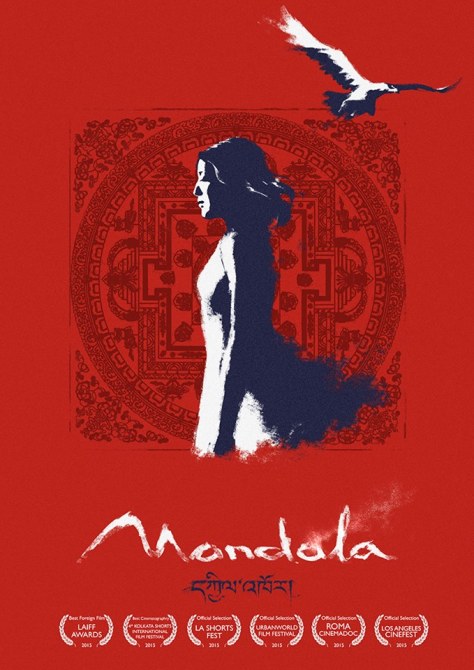
Ask any director what they require to make a great film and they will tell you that it takes a highly skilled and talented team in order to achieve their vision. Ask Guan Xi, the director and writer of Mandala, about Veronica Li and she will reinforce that statement. Mandala received multiple nominations at the 2015 Los Angeles Independent Film Festival Awards including a win for LAIFF’s Best Foreign Language Film in July, as well as being recognized by the film community in Italy and India.  Guan Xi states, “Veronica’s work was critical to the success of the production, as evidenced by the numerous official selections to the industry-renowned film festivals in the U.S. and around the world.” Veronica’s achievements on award winning films like Looking at the Stars captured the attention of Xi while they were working on this film and solidified the director’s resolve to enlist Li to work on Mandala. Remarking on the experience, Guan Xi comments, “Veronica’s work as a Sound Designer and Sound Editor on the production was absolutely crucial, as the sound in a film is one of the most important facets of filmmaking. Mandala was critically lauded by some of the industry’s most prominent directors and producers. The Academy Award-winning documentary filmmaker, journalist, and novelist Mark Harris called the film ‘Beautifully shot and impressively produced…’ while Amanda Pope, the Emmy Award-winning director called the film ‘A visually exquisite story of an artist torn between her modern life and her Tibetan Buddhist culture.’ Many more luminaries in the field have voiced their praises for the film.”Li 5

Mandala is a timeless and universal story of the loss of a loved one and the attempts of a female artist to overcome her pain while at the same time reconnecting with her roots. The story grounds itself in the physical world and its day to day realities, while the emotional upheaval creates a bridge to a metaphysical world. Only by dealing with the less familiar “higher plane of consciousness” does the heroine stand a chance at living a life once again free from sorrow and unattached to the tragedies life can bring. The sounds required to make viewers accept both visions of life as reality are equal to the demands of the visuals…if not even greater. Li is highly aware of the subtle yet highly important nature of her role professing, “I think sound design helps to bring a film to life. It definitely makes the environment more believable. Most of the sound designs in Mandala are so subtle that the audience won’t notice them but they will help to set the proper mood. They can really sell the shot.” The dichotomy of the setting of New York City’s Gotham and Tibet’s peaceful mysticism is stark and the sonic environment must reflect this in a “not too obvious” manner. Li’s expertise was called upon to meet this lofty goal. Guan Xi praises Veronica’s ability to exceed expectations recalling, “I needed the sound of the film to be at an exceptionally high-quality level. Veronica perfectly combined and contrasted Tibetan and NYC sound elements together, and as the Sound Designer and Sound Editor, she spent countless hours collaborating with the Composer, working seamlessly on the sound design and score of the film. Not only was I able to entrust Veronica with the sound design and sound editing of Mandala, but what most impressed me was the fact that she really understood the story and my needs as the director.” Veronica used her talent as well as some creative ideas to help link the main character’s two geographic anchors of NYC and Tibet. Li reveals, “In addition to contrasting the two places, we also wanted to connect them. Helena is someone who belongs to Tibet but is currently trapped in the city. We decided to use a very subtle Tibetan musical cue whenever we saw Helena’s Tibetan painting. The horns of the cars passing by would gradually change to Tibetan musical bells, as if Tibet was calling from inside Helena whenever she and Lobsang Lama walked by each other on the city street.

Authenticity was paramount in the approach to producing Mandala. With the exception of the lead roles of Helena (Sarah Yan Li, also know for Fast & Furious 6) and Paul (Omar Avila, also know for The Punisher), all the other lead actors were Tibetan. To ensure that the original Tibetan Buddhist culture was presented correctly, the production team consulted eight living Buddha about every detail in the movie. Tibet contains the highest plateau in the world making it quite difficult for non-Tibetans to do strenuous activities. Even though the filming could have taken place at a less “difficult” location, the audience needs to feel, see, and hear the real Tibet. In the rare cases that a modification needed to be done, they were delicately handled with the highest level of professionalism.  Since shooting is forbidden in a real Tibetan temple, a temple was recreated in Los Angeles for filming interiors. Editor Cheng Fang describes his experience working on the film with Veronica commenting, “In Mandala there is a scene in which the female character is taking a test in a Tibetan Buddhist Temple to see if she is the reincarnation of the Rinpoche that passed away several years ago. During the scene, the character has several ‘visions’ and eventually has a mental breakdown. We finished the picture editing of the scene but everyone knew there was something missing. The picture itself was just not powerful enough. The mental breakdown of the character seemed to end abruptly. Veronica went to work on it. After she finished, we viewed the scene again…it was now so powerful! Veronica successfully combined the sound of Tibetan music instruments with mysterious murmuring; transforming the mental journey of the character into a crescendo as the music got louder, resulting in an intense ending.”Li 6 When a poem that was already recorded was unable to fit due to time constraints, Guan Xi once again called on Veronica Li and her expertise. The director explains, “Veronica helped me choose the certain words from the poem, and reorganize them so they could fit the style of the movie but still deliver the message I wanted to tell. To be able to change such an important sequence in the film, yet stay true to a Director’s vision is one of the most difficult tasks in filmmaking, but Veronica was able to flawlessly execute it.”
Veronica Li and the message of Mandala share a few striking similarities; each is the story of a woman from one culture, living in another culture, striving for excellence in the arts, all the while using the best of each part of the world to tell the universal stories we all share.

Q & A With Seasoned Stylist Patricia Lagmay

Q+A.jpg
Styled by: Patricia Lagmay. Photo by: Ian Lanterman.


Currently based out of Vancouver, Canada, Patricia Lagmay is a fashion stylist known for styling leading fashion editorials and esteemed lookbooks and campaigns. Her work with brands spans professional labels such as Priory, Samsung, Wings + Horns, and Aritzia, and her editorial spreads have been published by Hearst Media.

Lagmay spent time both abroad in Canada and locally in Los Angeles, where she was initially drawn to pursue a career in styling. Once just a place of work for Lagmay at the age of nineteen, the renowned stylist was represented by THEY Representation by the time she was twenty-one, and remained with the agency until 2012, when she began working exclusively with Aritzia.

While at Aritzia, she refined her talents and made a significant impact on the brand’s growth and development , with her role becoming more senior as time progressed. Lagmay contributed her innate skills to the retailer until 2015 as a lead stylist on their seasonal lookbooks, campaigns, and eCommerce catalogue. Most recently, for the past year and a half, she’s worked with the clothing line Priory, styling and art directing their Fall ’15, Spring ’16 and Fall ’16 collections.

Throughout her profession and on many occasions, she has established herself as an invaluable asset to the fashion industry. We recently had the chance to sit down with Lagmay and discuss a few of her crowning career highlights, which we’ve outlined in our exclusive, one-on-one interview below.

Where are you from originally?

I was born in the Philippines and lived there until I was 10. My family moved to LA and lived there for six years, and then relocated to Vancouver, where I’ve now lived for the past 11 years.

What inspired you to purse a career in styling?

This is going to sound like a cliché, but I don’t think I had a choice. I’ve been drawn to it since even before I realized it was a career.

 What types of platforms does your work span?

My work spans print and digital. I work on editorial stories for varying publications, alongside styling campaigns, lookbooks, and eCommerce for established and emerging brands.

Does your approach to styling differ from one platform to the next?

Print has a longer lead-time whereas digital is more or less immediate. This dictates what season the clothes I choose have to come from so that when the story hits, the clothes are available.

 Who are some of the top clients you’ve worked with?

I worked with Aritzia extensively for the last three years. I’ve also worked with Priory, Wings + Horns, Sitka, and Samsung, among others.

 In your opinion, what are some of the most important characteristics a stylist can possess?

You really have to love it. The decisions you make as you style won’t make any sense otherwise, since a lot of it is instinctual. You also have to be extremely organized. There are a lot of moving parts to a shoot and it takes a healthy dose of OCD to get everything done.

 How do you try to incorporate those qualities into your own styling?

I make sure to listen to my instincts. There can be a lot of cooks in the kitchen at times, and paired with the number of trends that arise every season, it’s easy to get caught up in styling to please the whole team. But as the stylist on set, you’ve been hired for your taste and opinion, so it’s important to know when to stick to your guns. As for being organized, I’m definitely a bit OCD so that part comes naturally!

Your journey with THEY Representation is a fascinating one. What was your first role with them?

I started out as an intern when I was 19 and eventually became the Head Booker and Marketing Manager, handling all bookings for the artists, dealing with production, and managing the agency’s brand. After a couple of years I was ready to move on from my role. Since I’d already been styling my own shoots, THEY’s owner and agent suggested that I jump over to the artist side instead and become a represented stylist on their roster.

 What about your time working with Aritzia? You were a stylist there for over three years. What were your main roles? Did your roles change as time went on?

The areas of the business that I worked on more or less remained the same, but my involvement with each of them progressed as the years went on. I worked on the brand’s seasonal lookbooks and campaigns, alongside styling (and often art directing) their extensive eCommerce catalogue.

 With Priory, how do your roles as a stylist and as an art director differ from one another? Similarly, how do they complement one another?

Technically speaking, a stylist is someone who deals primarily with the clothing—choosing which pieces to use, putting the looks together, and ensuring they look good on the model. An art director is someone who deals with all the creative facets of a shoot—from the photography, to the styling, to the hair and makeup, to the casting, all the way down to the posing. I find it difficult to not have an opinion on all of those different areas since each of them greatly impacts the final images. I can bring the best clothes in, but if what I have doesn’t work with what the hair stylist has chosen, or vice versa, it really doesn’t matter. In that sense, styling and art directing are very intertwined.

 Tell us a little bit about the Samsung commercial you worked on. Who did you collaborate with? What brands were incorporated into the shoot?

Samsung was looking to change their creative tonality and this commercial was their first step in that direction. We had an amazing international crew—the director and producers had flown in from Copenhagen, the clients from Seoul, the talent from the U.S. and Europe. My goal, along with everyone else’s, was to bring a sense of authenticity to the characters. To do this, I pulled from a variety of sources—from vintage stores to more contemporary brands such as Reigning Champ.

 What has been your most challenging project thus far, and how did successfully completing it help you grow as a stylist?

Each project’s been challenging in it’s own way so it’s hard to choose. Some have been a challenge from a creative perspective, some from a budget perspective. They’ve all worked out regardless, so I try to keep that in mind whenever I’m faced with another hiccup.

 What is one thing that people on the outside of the fashion industry would never suspect about being a stylist?

There are just as many unglamorous parts to the job as there are glamorous ones, if not more. From taping shoes, to dealing with customs, to trying anything to get a stain off of a garment – the list goes on.

 Why is having a stylist so important?

When it comes to shooting a brand’s lookbook or campaign, a stylist brings an important level of objectivity to the set. That outsider’s perspective combined with the designer’s vision is what brings the collection to life. A stylist also knows how to make the clothes look their best for the camera—which requires more trickery than you’d think.

Can you elaborate on a favorite project or two that you’ve worked on?

My favorite part is the mix of it all so I definitely can’t choose just one. Working on varying projects is what keeps the next one as interesting as the last.

 From where do you draw your inspiration?

It can come from anywhere—runway, the old lady walking down the street, a recent film, old editorials.

 What are your personal hobbies and interests outside of styling?

Eating. Good meals with good friends and I am a happy camper.

How would you describe your own sense of style and fashion when it comes to your own wardrobe?

I definitely have a uniform. Lots of nude, black, and navy, and not a whole lot of anything else.

What brands do you aspire to one day work with?

The Row, Celine, and Protagonist.

 What brand or client is up next on your agenda that you’ll be styling?

I don’t like to count my eggs before they hatch, so we’ll just have to wait and see.

Female lead is ‘lovable, but hopeless with guys’ in Katie Micay’s Romantic Comedy ‘Flirt’


flirt 4.JPG
Kelsey Impicciche (middle), Lexi Giovagnoli (left) and Tyler Mauro star in writer-producer Katie Micay’s “Flirt.”


The short romantic comedy film, “Flirt” from Canadian writer-producer Katie Micay has all the ingredients of a champion paradigm of filmmaking. Micay wrote the high concept script featuring an endearing protagonist who faces a relatable obstacle and features a strong character arc. There’s a torrent of comedy stemming from firsthand source material, strong supporting characters with palpable chemistry and on-location shooting captured with refined cinematography.

The story follows Taylor (Kelsey Impicciche), a quirky college senior who lacks in the oft-tricky art of flirting and is on a quest to land the hottest guy in school as her date to her final sorority formal.

“Flirt” is a romantic comedy about a girl who is very lovable, but hopeless with guys,” Micay said. “Ultimately, she is focused on things that aren’t important and needs to learn to find someone who appreciates her for who she is.”

Impicciche, who has acted in the films, “Suicide Note,” “The Toy Soldiers” and “The Mastery,” said, “I loved the idea of the project and of this character who can’t flirt and ended up in many awkward situations. I loved the idea that this character really needed a date to a dance. I’ve honestly had this problem many times.”

The film co-stars Lexi Giovagnoli as Jenna, Taylor’s sorority sister and best friend. Playing Taylor’s love interests are Tyler Mauro as Liam and Shane R. Kennedy as Brad. “Flirt” was filmed on location at Loyola Marymount University (LMU) in Los Angeles and went on to be an Official Selection at the Reality Bytes Film Festival in 2013.

Micay is known for her writing and producing of “Limited Engagement,” a comedy short that won an Award of Merit at the Women’s Independent Film Festival and was an Official Selection at the Los Angeles Women’s International Film Festival.

“Flirt” came on the heels of Micay’s “My So Called Family,” a darker, quirky dramedy she wrote and produced in 2013. “I was ready to just make something different,” she said. “I got to use a lot of wit and dry humor and I hadn’t done that before. My friends and I are hopeless at flirting and it was something we always joked about! After seeing “Easy A,” I was inspired to try writing “Flirt.”

The premise was one where art imitated life. Micay is a member of LMU’s Tri Delta Sorority. Her inception into sorority life was an unexpected one and an experience that would later lay the framework for filmmaking inspiration.

“I came into college with a very sour idea of Greek life,” Micay said. “But when my friend convinced me to try it, it turned out to be the best decision of my college life. I still live with my sorority twin!”

In the case of sorority formals, it’s the girls who find dates and ask out guys. “It was definitely stressful for my friends and I,” Micay said.

The fabric of the leading character, Taylor, was also derivative, on a certain level. “I’m not as expressive or over-the-top as Taylor can be, but she stemmed from me. When we auditioned Kelsey, she really took to the character right away. Through rehearsals, we built the character up to be what you see on the screen.”

Katie flirt.jpg
Katie Micay (middle) unifies the vision behind the romantic comedy, “Flirt.”

Said Impicciche, “Katie had a solid grip on what she wanted, and was very helpful with guiding me towards her vision, while still allowing me a lot of creative freedom. There was a lot of physical comedy she wrote for the character, which was incredibly fun to do.”

The relationship between characters Taylor and Jenna was based on one of Micay’s friendships, “one where you are essentially sisters,” she noted.

“For me, the characters made the story,” Impicciche said. “As soon as I describe them, other girls immediately can identify people in their own lives that relate to these characters. They’re very real.”

From a producer’s standpoint, Micay was charged the task of navigating the project among its multiple on-campus locations including a dormitory and a working lab classroom that required a filming permit with the needed safety protocol.

flirt 3.JPG
Actor Shane R. Kennedy plays Brad, the elusive love interest  of Taylor, played by Kelsey Impicciche in “Flirt.”


“When shooting on a college campus, you have to go by their rules so when they will let you shoot really dictates a lot. We also shot outside with a dolly track during school hours so that completely killed our audio,” said Micay. “We went back and used ADR in post. During the shoot, I relied heavily on Alyssa Brocato, my cinematographer. We planned as much as possible ahead of time because we knew timing would be tough. On the day it was about getting everything we needed.”

Micay’s diligent producing paid dividends and led to the film becoming a success. “Katie ran a really professional and fun set. Everything ran very smoothly,” Impicciche said. “I was really impressed with how she organized everyone and how she kept everyone on track and doing their best work. She was a joy to work with.”

Most recently, Micay wrote and produced “The Firefly Girls” that starred the award-winning Savannah Paige Rae of “Parenthood” and “Date Night” fame. “The Firefly Girls” screened this year at the Sonoma International Film Festival and the Equinox Women’s Film Festival.

For more information, visit: http://www.imdb.com/name/nm5084812/?ref_=fn_al_nm_1

Watch “Flirt” here: https://vimeo.com/81416130

Follow Katie on Vimeo: https://vimeo.com/katiemicay

Multitalented game designer and producer Zi Li effectively changes the game

image1
Zi Li combined her passions – art and science – into a thriving game design career.


The innovative game designer and game producer Zi Li has spent years studying various forms of media and entertainment. Originally from Guangdong, China, the experienced creator has demonstrated a proficiency of filmmaking and animation in addition to her expertise in the world of gaming.

With four years of game designing under her belt and two years of game producing, Li is known for her work with companies such as Firefly Games Inc., Floor 84 Game Studio, and Ericsson Communications Company. As a designer, producer and artist, Li has contributed to top, award winning games of various genres, including “Dissonance,” “Leviathan,” “Dungeon Crash,” “Epic Knights,” “Paralect,” and “MiraLab.”

As a game designer, Li’s role is similar to that of a film director’s, where as a game producer is in charge of overseeing the development of a video game, acting as a liaison between everyone involved with the project.

At an early age, Li developed a passion for science and art. “Unlike a lot of game developers, I didn’t fall in love with games first,” Li stated. “I spent more than six years studying paintings. I always thought I could become a part-time artist. Later, I dabbled in animation, however, neither satisfied my needs of expressing my engineering mindset. Eventually, I understood that in the gaming industry, science intersects art. For me, games are a media that allow both areas to collapse together.”

Li first got her start in the industry as a graduate game design student at the University of Southern California (USC). Through her extensive work on various independent projects, Li was able to gradually figure out her strengths, ultimately learning what it takes to become an effective inventor aside from the expected creative and technical aspects. “One of my main strengths is execution,” said Li. “As a game designer and programmer, I can execute myself very well. As a game producer, I can push other people to execute ideas well and understand every aspect of the game.”

Steve Cha, producer and fellow Collaborator on “Dissonance,” raved about Li’s talents. “Zi is not only about coming up with ideas, but also completing them with efficient ways. Dissonance is a game with relatively new gameplay and needed time to implement. Since everything in the game has two shadows, the team needed to make a system that casted two shadows for one object. Some talked about recalculating the vertices and some suggested using black 3D objects to make the shadows. Zi came up with the idea of using two cameras and casting images from these cameras to the walls. Her ideas efficiently solved the issue without slowing down the computing process. Zi can always find efficient ways to solve problems and keep everything running forward simultaneously.”

There are several required characteristics a game designer must have in order to be successful in their career. Every game has a target audience, and as a designer, it is his or her job to be aware of said audience. “Game designers communicate with the players through their games. A game designer should love his or her players and aim to work their design around their audience in order to provide a complete gaming experience,” said Li.

When it comes to her games in particular, Li works hard to engage these qualities that will ensure audience fulfillment as well as personal success in her own designing approach. Commenting on the matter, Li said, “I love being able to see into other people’s minds through their work, and I try to provide my players with a glimpse into my own through mine. My passion is communicating with people through the game as a form of art rather than just being passionate about making a game with no meanings.”

As a designer, it is Li’s responsibility to apply design and aesthetics to a game for its players to enjoy. More often than not, this type of work expresses the theme of the game. “For example,” Li explained, “I came up with the mechanics that translate the idea of psychological concept related to dualism in “Dissonance.” The two shadows involved in the came are casted from different lighting and visualize the abstract concept of dualism. One shadow represents logic and actions, while the other represents intuition and feelings. This approach I’ve created is unique and has never been done before. The game communicates the psychological concept through gameplay and people can see the idea even if they don’t speak the language – one of the main reasons why I believe “Dissonance” gets recognition from so many countries.”

“Dissonance,” an award winning, video game developed by Team Dissonance, is a puzzle-adventure game. After six months of development, what started out as Li’s personal thesis project, expanded to a team of over ten people. The developers transmitted the psychological concept about dualism into the core mechanics of the game to make it more than just a puzzle.

Since it’s initiation, “Dissonance” has received awards such as Most Innovative Game in Indie Prize and Experimental Game Finalist in Out of Index Festival, as well as appreciation from several different countries and organizations.

“I draw inspiration from all sorts of things,” Li answered, when asked from where she draws her ideas. “I often find myself motivated by other media, biology, psychology, and life experiences.” “Orbanism,” a game Li created with her friend Anisha, is inspired by the biology concept of mutualism and interspecific competition. Regarding how the game works, Li said, “It’s a two player game in which players are competing against one another and working as a team to overcome obstacles.”

Similarly, Li’s game called “Greek to Me,” is a game in which each player hears multiple different languages and has to distinguish which is English in order to reach their goal. “The game shows how hard it is for a foreigner to achieve things in a strange country,” said Li, detailing its purpose.

Li’s years of experience in designing and producing video games have allowed her to explore various diverse genres, ultimately rounding out her impressive framework of success. Her projects range from the puzzle genre to games that fall into the category of RPGs, ultimately proving a type of versatility that not every game designer carries.

“Through working on various projects, I can easily understand different aspects of a game and, overall, the image of each project. Though they all vary from one another, every step of the process teaches me new skills and perspectives of game development. These experiences contribute to me becoming a better designer who can be creative and resourceful. Thanks to my past experiences, I have learned how to be a better leader and am very confident approach to game designing and producing,” said Li.

“Dungeon Crash” and “Epic Knights” are two of Li’s mainstream mobile RPG games. With over 1 million download, “Dungeon Crash” was featured at both Android and Apple Stores, and was rated as a top-grossing Android game. With 50,000 downloads from over 100 countries, Li’s “Epic Knights” was rated the same.

Observing Li’s leadership abilities, Annie Chan, associate producer of “Dungeon Crash,” affirmed, “The developers of all games always want to put every fun element into their game, which not only slows down the development, but often creates a lot of bugs. Zi quickly spots this tendency and puts a stop to it. She directs the team to focus on improving the current version of the game and providing users with a user-friendly experience. Since Zi has stepped in and corrected the direction of “Dungeon Crash,” the overall performance of the game as well as its player reviews has gone up.”

Aside from Li’s sought after designing and producing abilities, her work as an art director has also reached a massive number of audience members. As the art director of “Leviathan,” Li is accountable for the overall look and feel of the Leviathan-world, as ensures the quality and style of the world as it is built.

The game itself is a bold and daring mix of virtual reality, augmented reality, cinema, and the novel based on the celebrated steampunk series by Scott Westerfield.

For her role, Li was required to conduct research in order to offer various ideas for the creation of an assortment of creatures for the game. “Zi came up with creatures that carried the story plot and were consistent with the rest of the world,” explained the creative director of “Leviathan,” Sunil Kalwani. “In the ship of “Leviathan,” the main characters need a communication tool. Zi designed Messenger Lizard, which is similar to a mobile phone, which offers an incredible user experience. Messenger Lizard’s skin color can change based on the emotion of the person on the other side. In this way, users can see the visualized emotion of the messages and choose if they would like access to whatever type of emotion or person. Zi’s creativity brings vivid life and a friendly, visualized experience to the Leviathan-world.”

“Leviathan” won the award for New Frontier Project at the Sundance Film Festival and has been featured on The Creators Project, a joint celebrity blog of art and technology by VICE, as well as at the internationally renowned Consumer Electronics Show.

In an industry that is still dominated by males, Li takes pride in being a successful, Asian female game designer. “Every time I’ve attended a game festival, I’ve noticed that the majority of the developers are male,” Li recalled. “As an Asian, female game designer and producer, I realize that my background is definitely different from most of the game developers I know.”

As a child, Li was fascinated with the Asian culture, art pieces that speak universal languages, and struggled with being both logical and sentimental. Now, she’s discovered her voice in the industry, and doesn’t hesitate to own her perspectives, thoughts or feelings. “I like to express my progressive, Feminist views through my work. I am proud to be a woman working in a field that used to be entirely dominated by men. I hope I can bring more of my unique viewpoints to the table and push the game industry to be more progressive with my knowledge and skills,” said Li.

Continuing that thought, Li added, “Contrary to popular belief and stigmatism, games aren’t always products used to simulate violent actions in the virtual world. Games can be used for educational, medical or experimental purposes. For me, I would like people to have fun and also find satisfaction within the spiritual communication through the gameplay when they play my games. That is what I aim to achieve.”

For more information, please visit: http://liizii.com/