Category Archives: International Creative Talents

ARCIONI’S ECLECTIC TALENTS PAVE A NEW PATH FOR TODAY’S EDITORS

There is no questioning the fact that the way the world disseminates and receives information and entertainment is forever changed. “Appointment TV”, a staple of the home viewing industry only ten short years ago, is almost nonexistent thanks to the DVR. You can watch a film that was released in the theater within almost three month’s time on a plane. Digital Downloads now result in more viewers watching on their computer or smartphone than any of the traditional means previously commanded. News and entertainment go everywhere on the planet and they get there quicker than ever before. While this has caused previous models to take a financial hit, it has also produced an industry that has more creative professionals involved in production that at any point in history. The belief is that that not everyone succeeds but, as the saying goes “the cream rises to the top.” Ana Arcioni is among this new breed of professionals. A highly in demand editor with a widely diverse resume, Arcioni has the ability to work with productions around the globe who seek out her consummate abilities. Empowered with a wider sphere of influence than that afforded to previous professionals means that editors like Ana are offered a host of diverse opportunities, something which is a part of Arcioni’s list of desirable qualities. Productions like the animated film Reality Takes Place, EATV (Educational Access Television), and Premiere Pictures International Inc. are just a short list of the employers who have enlisted this talented editor to make their creations even greater than before.

When Ron Merk, owner/president of San Francisco based Premiere Pictures International Inc. approached Ana about working on the company’s new S.E.Q.U.E.N.C.E. project (as a film/video Editor and Artistic Supervisor for Trailers, Promos, Teasers, and interviews), it seemed to her like an opportunity to be really creative and on the ground floor of something new to the industry. It also gave credence to the company’s belief that Arcioni could display their technology and approach to the best and brightest of the industry. The owner and president of Premiere Pictures International Inc. declares, “Ana’s work with S.E.Q.U.E.N.C.E. proves to the world that It does exactly what I had in mind; it gets the viewer intrigued and want to ask ‘what is this and when can we see it?’ Editing has its own rhythm and pace, and the project itself is going to tell you when to stop. I love that Ana can read my director’s mind and put together a video like if she was? reading my mindWe’re in the business of giving great editors great tools, look no further than Ana Arcioni as proof of this.” In addition, Ana participated in the projects Outrageous, Repeace, and Harvest during her time at Premiere Pictures International Inc..

Ana’s work with EATV is yet another example of the difference in content that she edits. Ana utilized a variety of skills at EATV; doing promos, intros and station ID’s. Some of her editing work with EATV has been viewed at the Festival of Moving Image 2016 (Roxie Theater in San Francisco) and the animation film festival at the Niles Essany Film Museum. Working with producer Jody Yvette Wirt, directed by Maya Prickett, and starring Maya K Chenille, Shoebox Circus was one of the most popular productions at EATV. Shoebox Circus’s content is meant to appeal to a mainly young audience, something that Ana sees as inconsequential to her role as editor. She states, “The fact that the programs are dedicated to children or adults is only a subtle difference, as in the case of a program of urbanism or any other nature. Politics, art, geography, travel, cooking, science, new discoveries, astronomy, there’s an infinity of things. I love them all as long as there is variety. What I love most is the absence of routine. One of the most appealing factors in my line of work is diversity. For Shoebox Circus, Jody raises the idea and gives the tone of the idea. I work with that idea with After Effects editing to have a product which matches that idea. I’m happy to be working with Jody because she has a unique voice and that makes it interesting for me.”

Proving that her work bridges the gap between child and adult is the animated production Reality Takes Place. This inspirational drama discusses friendship, positive perspective and thinking, as well as death vs. life. The topics can be light and then switch quickly to having substantial gravitas. Reality Takes Place was selected and screened at: City Shorts Film Festival at Diego Rivera, Artist Television Access, Festival of the Moving Image, and the Bernal Heights Outdoor Cinema. Ana felt that her work on this production revealed things to her about editing as well as the role of all filmmakers. She explains, “Reality Takes Place is drawn and animated by myself using the Adobe Flash program. The voices are recorded in a small studio through Pro Tools, as well as the Foley effects. The first-line editing was made with AVID. The tweaks, and retouches (including sound design) were made with Final Cut Pro. On and off it was a total one-year project. In my opinion (and I know that not everyone will agree) every independent filmmaking process starts from the editor’s point of view. The more you get to edit and the more you gain experience at it, the more expert you become in shooting and in directing because you know what you want, you know the type of shots that you need. If an editor has a say in the production, or has a good relationship with a director who listens to him/her then the film benefits. I think the editor is the one who understands the most because they have the film in their head and know what shots are needed in order to make the finished piece look good. The editor can advise the director with insight like “don’t do that because it will be impossible to fix in post” or the opposite, “don’t worry about that because I can fix it in post. Being a part of any production is about teamwork. Of course I see the importance of my role as an editor. I also understand that my greatest asset is my ability to make everyone else’s work look even better, that’s why I enjoy editing so much.”

pic-for-ewg-headshot1


Anton Engel is living the dream with The Dreamboys

anton-3
Anton Engel photo by Daniel Jaems

When Anton Engel was a young boy, he would watch music videos, dreaming that one day he would somehow be a part of them. He was like most children, watching TV, wanting to be on the screen one day too. But it was this initial spark that led to his interest in dance, and now Engel is a celebrated dancer all over the world.

Initially starting as a competitive break dancer at just 13, Engel began studying and mastering all types of dance, wanting to be able to do whatever he felt was best for the performance. This led to performing with chart-topping pop group Fifth Harmony at Heaven in London earlier this year, as well as his appearance in the opening for the BBC Music Awards with almost five million people watching on television. He danced on the famous Alan Carr’s New Year Specstacular for two consecutive years, and once performed for none other than the royal family as part of the Royal Variety. Most recently, however, he lived his childhood dream quite literally, dancing with The Dreamboys in their tour of the United Kingdom.

“It was great to have the opportunity to dance and travel at the same time,” said Engel. “The Dreamboys have extremely good dancers who are a part of it and I wanted to prove to myself that I was at the same level.”

And prove himself he did. The Dreamboys are one of the world’s biggest glamor shows, and the most successful and celebrated in UK history. Engel not only excelled at his role, but stepped into the shoes of other’s when they were absent, which is called swinging people, ensuring the audience had the same experience at each tour location.

“This wasn’t easy since sometimes we only had an hour before the show would start. I would usually find a quiet room and go through every number to make sure there wasn’t anything I was missing. I always found a way to make it work,” said Engel.

This determination and professionalism was not missed by his counterparts. Not only did Engel work alongside a few celebrities from reality shows like Scotty T and Gaz Beadle from Geordie Shore, and Rogan O’Connor and Joss Mooney from Ex on the Beach, he worked closely with had well-known dancer and choreographer Jordan Darrell. Darrell describes working with Engel as an absolute delight.

“We have had so many ups and downs and Anton has always been ready to help. His professionalism and dedication to his work is outstanding,” said Darrell. “Anton dealt with rehearsals very well and the pressure of learning the choreography one-on-one with me in a studio, and there was a short time frame of which he had to learn a lot of choreography and spacing. Not once did he falter or waver his responsibilities, and he remained calm and professional throughout, soaking up the pressure with a smile.”

“Throughout the run of the show Anton has never backed down from a challenge such as a quick re-block or even a track change, which he then covered,” Darrell continued. “Anton has never deviated from the content or feel of a number, which I set as choreographer, and the audience response has always been one of the strongest towards him. He is talented, a hard worker and a pleasure to work with. In my experience this combination is one that can be added to any team, in any work environment, and will always be an asset.”

The audience attention that Engel received did not go to his head, but was actually a humbling experience for the young dancer. Touring for months on end three to four times a week, he saw the letters, messages, presents, t-shirts, and flowers he constantly received from the audience as support.

“It was so much fun to get the opportunity to dance for such big audiences. The feeling on stage is incredible. After the show, we gave out autographs, which was a really fun experience. It makes me happy knowing that when people watch me dance they leave with a smile on their face,” said Engel.

Despite the challenges that can come from touring, like never being able to have the comfort of your own bed, and having to adapt to a different stage with each show, the travelling was a highlight of the experience for Engel, and being on a tour bus is a unique way of doing it.

“It was amazing to see so many different parts of the UK. I had never been outside of London before I joined The Dreamboys, and now I have been in every major city and a lot of lovely small places that I never heard about,” said Engel. “I met so many different people and it’s such a pleasure to see that I have so many fans not only in London but all over the country.”

The Dreamboys experience is one that Engel will never forget, and helped him prepare for his upcoming show in Las Vegas, with Channing Tatum’s Magic Mike Live.

“Being on tour with The Dreamboys taught me a lot and helped me improve in every dance style. By switching dance styles from number to number it really let me use my full capacity, and I really enjoyed it,” concluded Engel.

PRODUCING A PAINFUL WAR FILM WITH “DAVID” YU HAO SU IN “RESURGENT”

Yu Hao Su is Harvey Keitel. Okay, maybe he isn’t the Oscar nominated actor but just like Keitel’s character Mr. White in Quentin Tarantino’s Reservoir Dogs, David (as Su in known) has a reputation for being a “fixer” in the film industry. When the 2016 Action/Thriller Resurgent needed to do a reshoot for scenes which take place in Afghanistan, David was contacted to contribute his exemplary producing skills. A reshoot is so crucial to a film because it has to match the existing footage in so many ways as to seem and feel that it was part of the original filming. Any deviation from the tone and mood of the existing principal footage could derail the already massive amount of work a production has executed, to say nothing of completely distracting the audience. As the editor of this film, no one is more qualified than James Stiegelbauer to comment on the work of David on the reshoot. Stiegelbauer proclaims, “Yu-Hao was calm under pressure. When our director made last minute script changes, everyone was concerned it couldn’t be pulled off but Yu-Hao didn’t even flinch. He made a few calls and quickly got everything that was needed. Yu-Hao is detail oriented, resourceful, and is never afraid to get his hands dirty. I would ask him to work on every job if I could. We could not have finished Resurgent without his hard work. He coordinated with the actors, locations, and crew quickly making all the necessary arrangements to meet our needs. As an Editor, I’m not on set, but I do need to be in constant communication with the director and cinematographer. Yu-Hao was crucial in this communication. This ability to be able to keep the work flowing even as unforeseen factors arise and must be dealt with…that’s what the truly great producers possess.”

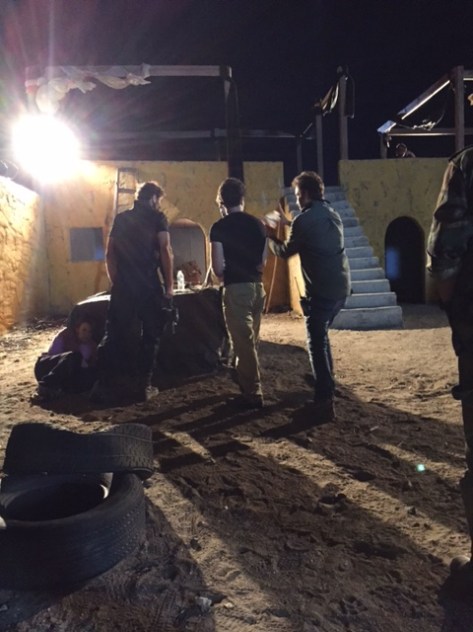
Resurgent is a film which depicts the story of a mercenary who must come to terms with a botched mission in order to return to the battlefield. Max, the main character (played by Manny Cartier) is suffering from the pain of his partner who has died in a military missionary with him in Afghanistan. The action and military theme of this film necessitates stunts, something which David is familiar in dealing with. Setting the table in a safe manner for these stunts is highly important to him. He notes, “We have a lot of stunt in the film. I need to make sure the stunts are done right in order to make sure the actors are completely safe. We not only have the stunt coordinator on set but also a set medic. This may seem obvious but every little situation must be planned for regardless of if it ever needs to be used. We also have a weapon wrangler on set to make sure people are aware on set, even though the weapons are just props. My job is not only to make sure the stunt scenes are well-planned but also to make sure the set is safe. I take stunts very seriously. Because it’s an action film with a lot of stunts (and we filmed in a dessert to cheat it as Afghanistan) I needed to make sure our production was a self-contained unit with everything we could possibly need at a moment’s notice. It’s not easy to shoot stunt scenes with weapon props in the desert. I need to make sure everyone is safe not only because of the stunt actions but also the difficult shooting environment.”

For those of us who don’t work in the film industry, it might be hard to understand exactly what a producer does on set. For those who do work in film, it’s difficult to overemphasize the impact a producer has on any film. A producer’s role can be described as parent, police officer, president, healer, and best friend…all in one person. A producer is the person who supplies what you need even before you understand and comprehend that you need it. It’s a conflicting situation for most producers. They love what they do but they rarely are afforded the opportunity to lose themselves in the fun of watching the movie magic they help to create. David states, “Being in charge of the reshoot for Resurgent was fun, there’s no mistaking that. I just had to always be thinking a few steps ahead. There is really no time for losing yourself in the moment. It’s interesting to shoot an action film. The stunt sequences with the stunt coordinator are fun and look amazing in the film. Watching that when the film is finished is fun. There are always challenges that are unique to each film. The desert location we filmed didn’t have a phone signal or Internet. It’s very hard to run a set without this technical stuff. We ended up planning it well and got the work done in spite of this. There is nothing to complain about for me. I’m so excited to be a part of this industry. To focus on the story and tell the story from an essential human’s point of view. I believe truth and humanity is the key to delivering a story everyone can understand and connect to.”

img_7923


ALL HEED THE MESSAGE OF AWAKEN

The arts have been the creative analogous tool of creative types for centuries. This format to communicate the real life situations with which society is confronted must often be done in a covert manner. In order to avoid strife and previously held opinions, avenues like music, literature, theater, and film, are utilized to help us see things from other perspectives. This methodology often finds us sympathizing in a first person sense, placing ourselves in the shoes of others and their circumstances. Historically, great art has struck a chord in the collective society and spurred on movements that create change. This is the story told in the film Awaken by Bruce Sze Han Chen. It is a lofty idea that he proposes in the film. In order to successfully bring about his vision, Bruce obtained the successful production talents of “David” Yu Hao Su. The many accolades and recognitions that the film has received prove that this decision was well founded for all involved parties. Some of the achievements include: Accolade Competition 2015 (Winner-Award of Merit), Alaska International Film Festival (Winner-Northern Lights Emerging Talent Award), California Film Awards (Winner-Diamond Award), Los Angeles Independent Film Festival Awards (Best Production Design), Mexico International Film Festival (Winner-Golden Palm Award), World Film Awards, Jakarta (Award of Merit), and on and on. Regardless of geographic location, audiences were captivated by Awaken’s message, a message which was delivered exactly as its creator had envisioned thanks to the support and talent of his producer David (as well as co-producer Pin Chun Liu). As with any great artist, having the professionals around you to allow you the freedom to create your art is paramount.

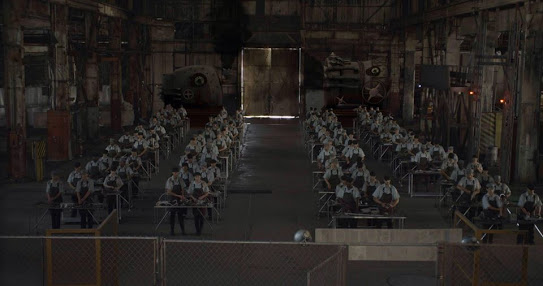
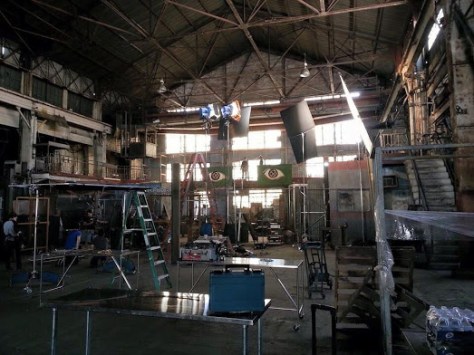
Awaken is a story which is applicable to any society, political system, or theology on the planet. The heroine of the film is Sophie. She has spent her life working in an enormous factory. In this facility, the workers’ minds are controlled by the music which is ubiquitous. One day, Sophie is suddenly impervious to the effects of the music and she decides to destroy the music system in order to free everyone from its effects and the factory’s dictator who is in control. The message is thinly veiled but easily understood; be in control of your own life rather than to unconsciously follow a path which is handed down to you by others, others who may be less concerned about your well-being than their own. As a producer on Awaken, it was David’s role to assist Bruce (the director) to find a production designer, costume designer, and other principle team members. Location and casting was a particularly vital part of this film. The lead actress playing Sophie is a minor which meant that scheduling needed to be coordinated around strict guidelines. The futuristic location of a massive factory was coordinated among three different venues. To further complicate things, an enormous amount of extras were cast and then supplemented with VFX to complete the proper feel of the factory and its workers. David reveals, “We needed to create a lot of workers to show how big the factory is and how many people are controlled by the dictator. We decide to use VFX to duplicate the workers. We found an excellent VFX team to helps us prepare the work and coordinate it with the Camera and Art departments. Even though we decided to use VFX to duplicate the workers in the factory, we still needed a huge amount of extras to create the materials for the VFX team. Also the location we had for the factory was huge, so it required us to have an enormous amount of extras on set. My production team and I posted casting information online and called all the actors we knew in order to have so many extras come to our set. The VFX works is the most challenging part for me because we had a very limited budget and time to plan the VFX. It ended up that the VFX scene worked very well and it’s all because of the teamwork each department devoted.” To fully understand the role David played in Awaken, consider that the actual principal filming took five days. His preproduction involvement began two months prior to filming and his post-production work took place for three months following its conclusion. That’s a ratio of 1/20 or more. The beauty and strength of the message in Awaken solidify the fact that when creative artists of all vocations work together, they can create and communicate in a manner that reaches the public and critics. The beauty of this film lies not only in its aesthetic but also in its content, both of which are fueled by the amazing team that brought it into existence.


awaken-set-photo

DIORS SAMURAI IS ZHENG KANG’S ACTION/ROMANCE AT ITS NERDY BEST!

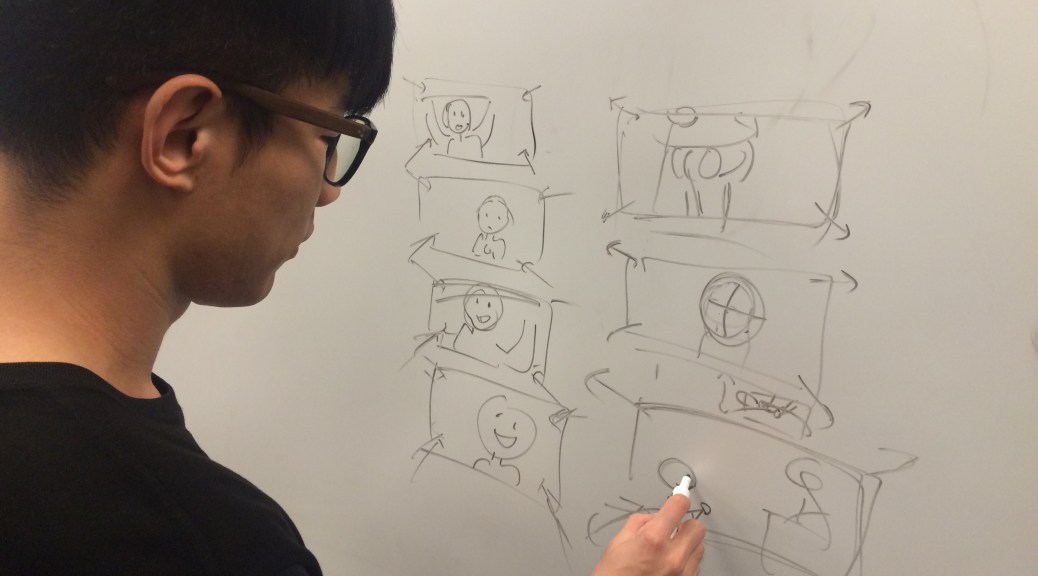
Doing your best and always giving one hundred percent are more important now than ever. Information is instantaneous these days and you can google anything in less time than it takes to yawn. Zheng Kang has always given his best and it is starting to supply dividends to his career. Belying his young age, Kang’s animation productions have already reached achievements like being used by faculty at USC School of Cinematic Arts for graduate animation classes (Lion Dance, in which he oversaw a group of professionals spread across five continents), working on the Comedy Central’s TripTank (contributing to every episode of the entire second season), and others. As such a recognized part of the animation community, his diverse creations are receiving great attention. one of his earliest productions, Diors Samurai, shows a different side of Zheng’s sentiment and may soon be made into a series production at a US network. Diors (Chinese for “loser”), gives a hint to the humor found in this action animated show. One cornerstone of Kang’s work is that it is always different, thematically and stylistically. A viewing of the Diors Samurai trailer (http://vimeo.com/189854381) reveals how different it is from his other work (https://vimeo.com/190416387 Baby and Granny for example). It is not hyperbolic to state that each new film Zheng starts receives the respect of him breaking his approach down and starting fresh each time. As both a director and an animator, Zheng Kang has learned to give each story the opportunity to become its own entity.

Production I.G.’s Dead Leaves (distributed in Japan, North America, Canada, Australia, New Zealand, and the UK) and Samurai Jack (the American animated series on Comedy Central) both inspired Kang’s approach for Diors Samurai. He wanted an Eastern influence, time travel, a love story, all augmented by his sense of humor and wit. The tale of Diors Samurai is that of a hero who falls in love with a beautiful princess and is heartbroken to learn that their love is forbidden. A chance encounter with a magical elder reveals that he may marry the princess if he travels through time to find her in the dystopian future. He jumps at the chance and finds her, only to learn that she is now a successful police officer with no memory of him! Yota (the samurai) must divide his time between saving the city from ruthless organized gangs, trying to understand this confusing modern world, and hopefully sweeping the princess off her feet! While the story is full of action and danger, it’s the characters who drive the story and interest viewers the most. Yota is a very strong samurai but very tiny. He grew up with his lord’s daughter and was in-charge of protecting her every day. Yota fell in love with her but never told her as society would not approve of this. When the princess is selected to marry another lord’s son, Yota cannot do anything about it and is beside himself. While he is adept at fighting and killing, he does not know how to express his feelings and show love. The “Diors” or “loser” facet of this character comes from his unrequited love as well as his inability to express himself (a modern view of loser for certain). The princess in Diors Samurai is perhaps one of the most positive and well-rounded female Asian leads accessible to viewers these days. In ancient time she is very elegant, like every traditional princess in our mind. In the future however, she is tough, strong, and highly proficient with firearms. The princess possesses qualities that appeal to every type of fan and contradict stereotypical female roles.

While Diors Samurai is definitely an action program, Zheng confirms that it shares a common thread with all of his creations, “It’s a love story. People search every day for love and to find their partner. That’s a basic human need. I know that people have an immediate thought in their minds that a samurai/warrior is very serious and not in touch with their feelings. Their mission is always to protect and serve their king. I wanted to create someone who is just like normal people, someone who feels loves and is eager to get love. Yota has some strength but also has drawbacks. He might be a winner as a Samurai but might be a loser in life. That’s a universal story no matter what part of the world you are from or what you might do in your life. We all struggle for love and we all want it.”

Perhaps the most striking and apparent aspect of Diors Samurai is the mixture of Eastern artistic style with a western based theme and emotion. The clash/combination of the two serves to heighten the impact of both in this production. Zheng states, “I grew up with comics and manga. I began to draw them when I was a little kid. So my drawing style is highly influenced by Japanese anime and manga, which looks very Asian. I also enjoy western storytelling like Pixar and Disney features because they always have a clear and simple storyline. They’re character-driven, there are three acts, and the motivations and conflicts for every character are easy to understand. I enjoy Asian storytelling very much but I have to say, sometimes it’s too cultural and you can get confused if you’re unfamiliar with that culture.” Caroline Hu (formerly the Character Artist at Warner Bros. Animation and Conceptual Artist at Walt Disney Feature Animation/now the Artist at Warner Bros Consumer Products) notes Zheng’s successful integration of these two cultural traits. She relates, “Zheng’s approach to storytelling is both collaborative and diverse, and is exactly what Hollywood needs right now. It’s very refreshing to see. His successful marrying of two cultures, Asian and Western, to create a number of globally successful projects, is no small feat. Zheng’s animation and direction skills are superior. As a member of the Animation Faculty at USC School of Cinematic Arts, I often refer to his projects when addressing undergrad and graduate film students in my masterclass, even using Zheng’s materials as a teaching aid to show the students how things should be done!”

His role as director/animator has become commonplace for Kang these days but his work with composer Torin Borrowdale on Diors Samurai was one of his first entries into overseeing multiple facets of an animation production. Zheng understood that the mixing of cultures in his story, combined with the dichotomy of a Samurai in love, meant that he needed a soundtrack that would mesh with these ideas. Add to that, the need for intensity in the actions scenes and the music suddenly became paramount. Kang recalls, “I was always looking for high energy, with Japanese traditional instruments and elements in the music. Because it’s an action-comedy, high energy music can work very well with every sequence. Because the characters are Samurai, Japanese traditional instruments and elements can help build an authentic atmosphere. I found some reference music for Torin so he could understand what I wanted, but he also provided great ideas which made the final music much better than the reference music, suitable and unique! After this first cooperation with a composer, I understood how important music is for storytelling. I respect composers very much and would like to work with them to achieve great and unique music. For me it’s always a mind- blowing experience and learning opportunity when I work with my composers.”

The interest in Diors Samurai does not rely solely on the achievements of Kang’s more recent productions. With Official Selection Screenings at the: Trailer Fest Film Festival, London Monthly Film Festival, Direct Short Online Film Festival, Creation International Film Festival, and the Play Film Festival, Diors Samurai was highly noticed when it first was made available as a Short. Now, the industry that has become so captivated by this director/animator’s lauded animation productions has also rediscovered the time-travelling Samurai that began it all. Sword in hand and princess in heart, Yota is disproving his own moniker to his creator Zheng Kang.work-on-animation

Film Director Claudio DiFede’s Date with Cinema Fate

The movie business is fraught with ambition, cynicism and expedience—qualities diametrically opposed to producer-director Claudio DiFede’s gentle, artistic nature. The Canadian-born DiFede, who is equally at home working in television and motion pictures, betrays a gentle, individualistic aesthetic that is a refreshing divergence from hard driving commercially-fixated attitude which so frequently saps the creativity from mainstream Hollywood projects.

Claudio’s aesthetic, part vulnerable hesitancy, part determined auteur, part pop culture guerilla is showcased in his unusual, career defining documentary film “Calling Spielberg.” The story is one of fateful twists and human foibles that reflects the film maker’s distinct, creative philosophy.

The origins of “Calling Spielberg” goes back to the early 1990’s, when the 22 year old Claudio was barnstorming through Tinsel Town, tuxed up and cheeky enough to finagle his way into the People’ Choice Awards ceremony at Sony Studios. This was a star-studded, formal affair with tight security which the charming film maker easily bypassed. Backstage following the presentations, Claudio came to face to face with his greatest idol, the legendary director Steven Spielberg.

“It was a once in a lifetime thing—by chance if you will!” Claudio said. Like my whole life had lead up to that moment in time. It was crazy! Spielberg had just accepted the People’s Choice Special Tribute award and I found myself, backstage, just walking right beside him. It was one of those things I’d always thought of, ‘what would you say to Spielberg if you met him?’ Well, it happened, it took a lot of chutzpha but I introduced myself and I told the biggest Director in Hollywood: ‘Take it to the bank,’ I told him. ‘You and I are going to work together one day. For a split second I thought ‘WTF did I just say to him?’ He smiled, asked my name again and replied ‘Sure kid, why not?’”

Emboldened, Claudio repeated the feat weeks later, but at even higher profile affair: the post-Academy Awards Governor’s Ball at Shrine Auditorium, a big night for Spielberg whose “Schindler’s List” had just won seven Oscars, including Best Picture and Best Director.

“It happened again a few weeks later, after the Oscars,” Claudio said.  This time I found my chance, I hugged him and face to face I told him that I can only imagine what it must be like to create such an incredible, moving film as Schindler’s List. He replied ‘Thank you,’ and told me it had taken a lot out of him. I then asked, ‘So, when can I call you?'”

DiFede today would not elaborate much more on the conversation or on his reply “I don’t want to give out too much on the film,” he said. “But let’s just say; it was encouraging.”

“I drove home that evening, roof down and I remember I couldn’t contain my emotions any longer. So I let out the loudest scream!” Claudio said. ‘The fact he remembered my name from our first meeting—it was a feeling I cannot describe. We all have dreams and this was mine. It was nothing short of a crazy euphoria.”

Was it just a lark, a childhood fantasy that had unexpectedly played out? Time passed. Claudio moved along with his life, fell in love, married, and started a family.

“I never called the man,” he said. “I had the chance, and I never did. I was asking myself that question. Then It occurred to me, I must be the only human being that never called Steven Spielberg when he asked someone to. What if? What if I did call? I was thinking there must be a lot of people in my situation that have left behind many of opportunities maybe even regrets and dreams left behind. We all once had aspirations, dreams – did I miss my opportunity?  there was one way to find out.20 years later, and that was to make ‘Calling Spielberg.’”

“When I first started working with Claudio I didn’t really have any formal training in filmmaking,” Mike T. King, editor at Big Coat Productions, said. “I jumped at the opportunity. Claudio’s attitude was infectious, which got me excited to hop onboard. The amount of time and effort he has poured into ‘Calling Spielberg’ is incredible, inspiring even. It is his passion project.”

Still in post-production, Calling Spielberg promises to be a fascinating examination of the human condition. Unorthodox and compelling, equal parts documentary, philosophical seeking, self-examination and show business truth-telling, it’s a rich, multifaceted achievement.

“Things happen for a reason, and we simply cannot give up on our dreams,” Claudio said. “I have matured and what my goals were in my 20’s compared to what they are now are very different. My goal now is to truly be who I am, living out my life doing what makes me happy. Honestly, I consider being a dad, fatherhood, as my greatest achievement.“

But Claudio’s romance with film remains profound. “Professionally, I was involved in Canada’s first reality TV show, and that was a great experience,” he said. “And being part of the American Film Institute, just being immersed with such talents from all walks of life was wonderful. To collaborate with my AFI fellows was a cherished experience. I am passionate about storytelling, through television or the big screen, either way its storytelling.”

Claudio’s commitment and emotional involvement with storytelling is a compelling, legitimate creative force, one that is certain to soon reach a wide international audience.

“Claudio is a talented director and pays a great attention to detail,” composer Mark Dunnet said. “He never gives up until he gets that perfect shot or performance”.

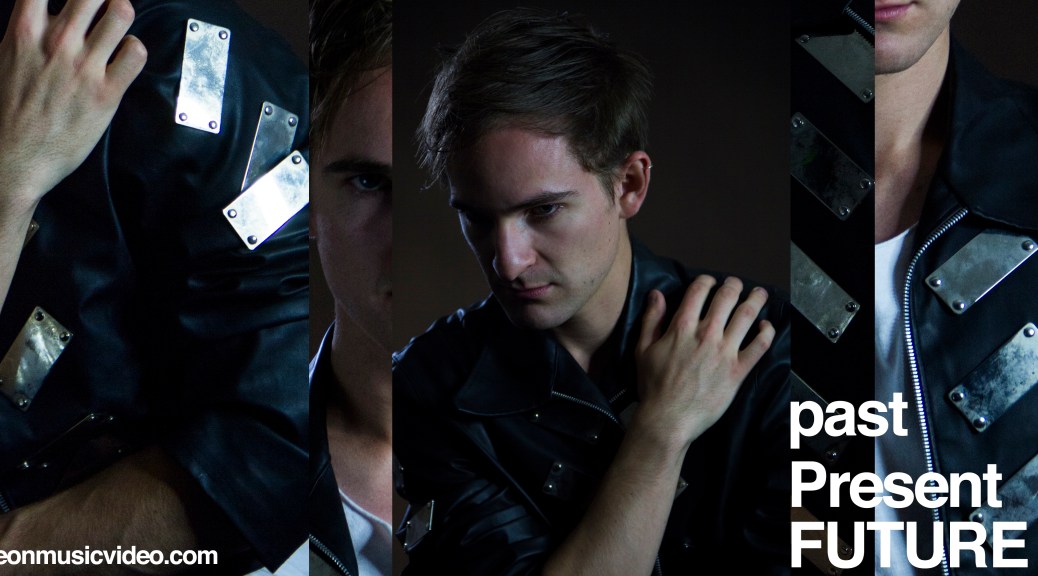
Zeon’s Music Video Journey

Alejandro Salinas discovered MTV when he was just 10 years old. As a child growing up in Mexico City, he would listen to songs and always think about what the music video would look like. When he saw a new one come out and it would not match his expectations, he would become thrilled at the idea of making his own version. When one came out that was better than he imagined, he would become overwhelmed with excitement and the new possibilities that those amazing ideas had brought on for the industry, the world, and his creative perception. The love for music and inspiration it draws generates a need for him to create visuals for it.

Now, that young boy from Mexico City goes by Zeon, and is recognized around the world as an outstanding director and editor. Despite working on films and fashion films and achieving extraordinary success, he still knows his passion is the same as the 10-year-old boy who would watch MTV all day.

I make music videos. I create a visual world from a song. I direct and edit the process, and I’m very detail-oriented. It’s the most rewarding discipline for me. It encompasses so many different art forms and you’ll never be bored by it. There will always be new songs to be inspired from to create new visuals, and that keeps me coming back to them,” said Zeon.

music-videos-zeon-in-lady-gaga-%22til-it-happens-to-you%22
Zeon in Lady Gaga’s “Til It Happens to You”

One of Zeon’s greatest accomplishments was working with Lady Gaga on the music video for her Academy Award nominated song “Til It Happens to You”, showing the stories of women who are raped on college campuses. The video has been viewed over 37.5 million times on YouTube.

“I love Lady Gaga and she is someone I look up to,” he said. “But I also wanted to work on this because of the importance of the video and the impact it would have on society and rape culture. I was there behind, in front of and beside camera throughout the whole process, and it was a very fulfilling and honoring experience to have taken part of.”

Jamie Holt, the producer of “Til It Happens to You” was impressed with Zeon’s work and asked him to be involved with her next projects, the music videos for the band Icon for Hire, for their songs “Now You Know” and “Supposed To Be”. “Now You Know” premiered February 2016 and has over 1.4 million views on YouTube. “Supposed To Be” premiered June of this year and has over 826 thousand views.

“It was a lot of fun. Each video presented different ways to be explored creatively,” said Zeon. “Jamie allowed me to fulfill her vision through editing by expanding the ideas she had in mind and by also adding my personal touch to make it impacting.”

music-videos-icon-for-hire-%22now-you-know%22-still
Still from Icon for Hire’s “Now You Know” music video.

Zeon’s first taste of true success came when working on the music video for “Arrójame” for the legendary 80s/90s Mexican rock band La Lupita, a humbling experience for Zeon, who had his music video on TV debut with this video.

“It was very emotional moment when I saw the video on television for the first time. I never knew when or how it would ever happen, that a music video of mine would be on TV, but when I was watching the premiere with my cousin and grandma and the video came up, it felt very touching to see a video I worked on debuting on national television,” he said. “I loved the song and I thought I could create an interesting video for the band. They are very talented and hardworking people. Even after years, they’re still hustlers and I found that very inspiring.”

The producer of the video, Estívaliz Zaragoza, had worked with Zeon previously and says she would never miss an opportunity to collaborate with him.

“Working with Zeon is full satisfaction, because he is always on top of his responsibilities and tasks, he never hesitates on helping his team mates. His creativity and ideas are refreshing and right on spot. He always has something to share, knowledge, helpful information and useful ideas. He has a mixture of skills that make you want to have him in your team and collaborate in his projects: He is proactive, disciplined, detail-oriented, a team player, and super creative,” said Zaragoza.

From there, Zeon’s career took off. He worked on the fashion film Dieode and the celebrated fashion documentary Mextilo, and worked on the music video for the iconic collaboration of legendary Mexican singer Lila Downs, the Spanish Niña Pastori, and the Argentinian Soledad for their song “Que Nadie Sepa Mi Sufrir”. The video has amassed over 2.5 million views on YouTube, and their album received a Grammy nomination.

“It was a very exciting opportunity to work a new project with such legendary artists from different Spanish-speaking countries,” said Zeon. “I didn’t have an award in mind at all, I just wanted to make sure I could deliver a video that worked best for such great artists, but it’s very honoring to know that you took part in such a great achievement in an artist’s career. The album not only got nominated, but actually won the Latin Grammy in 2014 for Best Folk Album. And then the next year it got nominated for the 2015 Grammy Awards for Best Latin Pop Album, which is amazing as well.”

Zeon knows he has the power to push an artist’s vision even further. He has been studying music videos for almost his entire life, and can sense what works and what doesn’t. He strives for perfection, and that is what he is known for achieving.

“I love the emotional, narrative and visual impact I can have on the final result of a video. It can completely shift an artist’s career. It thrills me to push alongside them, because we’re both moving forward in ways we never imagined” he concluded.


Cooking for the stars: chef Vincenzo Pezzella talks working at Naples’ top restaurant

In the city of Naples, Italy, on the pebble beach of Seiano in Vico Equense underneath the Torre del Saraceno, sits the world renown Torre del Saracino restaurant. Guests from around the globe head there for exquisite Italian and Mediterranean cuisine prepared by the famous chef Gennaro Esposito. It has not just one, but a two Michelin star rating, and seats politicians, athletes, and celebrities regularly. It also happens to be where chef Vincenzo Pezzella started his career.

Pezzella now is known internationally for his skills as a chef, moving to Paris after working under Esposito at Torre del Saracino and becoming the head chef at the popular Mamma Prima Ristorante in Paris. He moved quickly up the kitchen ranks, and the success of the restaurant can be attributed to his creativity in the kitchen. He remains humble, however, and attributes his success to what he learned working as a line cook at Torre del Saracino.

“It was really hard, but also amazing working at Torre del Saracino. Any time you work for a two star Michelin restaurant, perfection is the only thing you learn how to do. I wanted to run away as much as I was proud to be a part of it. The experience was unlike anything I will ever encounter in my career,” said Pezzella. “The kitchen was masterful. It was definitely well worth the time spent there.”

Few are fortunate enough to learn from legends, but Pezzella is one of them. Working under Esposito, he quickly picked up what was important in terms of running a kitchen, and learning what it meant to make authentic Italian cuisine while staying true to what you know. Being from Naples himself, working in such a high profile restaurant right in his backyard was everything while he was learning.

“It was incredible working under chef Gennaro Esposito. I learned everything that is my base through that man. I learned not only what it is to be in a kitchen but how to respect it and everyone around it. I learned that you could be from Naples and still manage a kitchen in that style and that demeanor,” said Pezzella. “I still call him from time to time to see how he is doing and hopefully to catch a lesson from him.”

The relationship is one that Esposito also admires, and remembers the days that Pezzella worked for him fondly.

“He was a listener. Vincenzo understood what he was being taught and followed through. He will have a great career,” said Esposito.

Working in a Michelan star restaurant, Pezzella also learned what perfection in cooking truly was. Sometimes, dishes needed to be made and remade again and again until they were exactly what Esposito envisioned. The environment can be stressful for a newcomer, but the ideal place to grow as a chef.

“Being perfect is never easy. We overcame it by taking our time and making sure everything fit the necessary criteria, and then we moved on,” said Pezzella. “Despite what some may think, I learned perfection working here that perfection in a kitchen does exist. It’s not an easy thing to obtain, but it is possible none the less.”

This attitude is what led Pezzella and the rest of the kitchen crew to such grand success. Constantly receiving positive feedback, locals and vacationers alike would go to the restaurant just to say they did.

“The restaurant pushed limits on Neapolitan cuisine because it could and the result is priceless,” said Pezzella.

Now that he has relocated to France and runs his own kitchen, Pezzella looks back at his time at Torre del Saracino as an invaluable learning experience. He liked everything about it, even the stressful and intimidating parts of the job. But what truly made the experience was cooking in the city he loves, the city he grew up in.

“To work where I grew up is the way it should always be. To get up and be around your people, knowing that your product is top notch is definitely a gift. Being able to do something as easy as walk to work and trace the steps you have done since your birth is an awesome way to live and build your career,” he concluded.

Director of Photography Sergey Savchenko “not working for industry, but making it”

sergey-3
Sergey Savchenko was born in Siberia.

“I meet people, I listen to their stories and watch their lives. I see and try to understand the visual styles and colors of different countries and places. Every day I try to develop myself, to apply my experience in creating my own style, and hone my skills.”

Those are the words of Siberian born Sergey Savchenko, when describing what he does as a director of photography. Those are the words of someone who does what they do because they love it. Every project Savchenko works on is a learning opportunity. He constantly aims to be better, and he is already respected in the industry for what he does.

“Once, when I was experimenting with video, I noticed something. It was a feeling that I was not previously familiar with. It was seeing how my thoughts and ideas became a reality through film. I understood that I can capture a mood, an attitude, a feeling. It was the spark of creation. I can’t compare this feeling with anything else. I can not only consume, but create. From that moment, this feeling for me becomes one of the most strong and pleasant. I feel that I’m alive when filming and create a certain style or idea,” he said.

Savchenko’s work is recognized across the globe, and has been nominated for several awards. He worked with REN-TV on That’s My House, which was a finalist when it was nominated for “Best Leisure and Lifestyle program spot” at the Promax BDA Europe in 2015. This year, his work on the promo Americans won Bronze in the “Best Drama Promo” category of the Promax BDA UK awards. Savchenko considers these true victories, but they still came as a big surprise.

The feeling is hard to describe. In our work, we constantly ‘run’, focusing on the ‘road’, not looking around. When your job gets to the finals of the international competition, you start to ‘look around’, trying to figure out where you are and realize that you are ‘running’ in the company of giants like the BBC and Discovery. It’s an interesting feeling,” he said.

While at REN-TV, Savchenko worked closely with Roman Toloknov, the chief Director of the Promo Department and the two became close. Tolokonov says Savchenko has a loud voice, joking that he can’t decide if it is a good thing or not, as he Savchenko is never afraid to tell even his boss when something “sucks.”

“Sergey came to our department in late summer of 2013. I immediately saw in him a man who can give good advice and bring our ideas to life. We worked for three years and got a huge number of promotional projects. Sergey is like an engine. You start the engine and it works,” he said. “Sergey has this massive energy, he loves what he does – that’s what really got to me when he came for an interview. He is not working for the industry, he is making the industry.” 

Savchenko describes Toloknov as having an excellent sense of style and humor, producing more great ideas than he team can manage to film. For Savchenko, despite the awards and recognition, it’s the people he has worked with that have made his career into something he loves.

“You know, it is always a surprise to receive awards, it’s very nice, but this joy fades away. It’s always a pleasure to share this joy with someone, but a reward by itself does not bring happiness. The award is a measure of official recognition, it affects to your confidence, but the support of a family and friends, and their faith in you, is much stronger than any award,” he said.

Having this attitude keeps Savchenko humble. Despite his many accolades, he does what he loves for himself and the people he loves. He is motivated by the challenges of the profession, which one can only do when they are truly passionate about something. He knows that every take can have a different approach, and every other director of photography will do it differently, but he takes his time and finds the best approach.

“It’s similar to how you tune a musical instrument, feeling only the vibration from it in your body. You don’t hear the sound, you only see the faces of those who listen to your music. The best gift is to see smiles on faces, this means that your music is resonance in the hearts of the audience. Your instrument is tuned. Constant practice and selfless love helps along the way. Any task has 100 ways to solve and we are always looking for the best choice. The storytelling language, the style and the color is very similar to our speech, if we start talking randomly – we might upset or offend someone, nobody likes scrappy speech. Video products directly affect the consciousness and sub consciousness of an audience, therefore it is necessary to control the quality and check 10 times to make sure, that what you’re doing is right and carries a beautiful thought,” he advised.

Savchenko is not simply a director of a photography. He is an artist. He is a creator. He knows this, but uses his gift to positively affect not only the people directly around him, but those that see his work. There is no doubt that his name will continue to roll through the credits in film and television for years to come.

“I want to grow as a director of photography and work in the film industry. I truly love what I do the more than anything in the world,” he concluded.

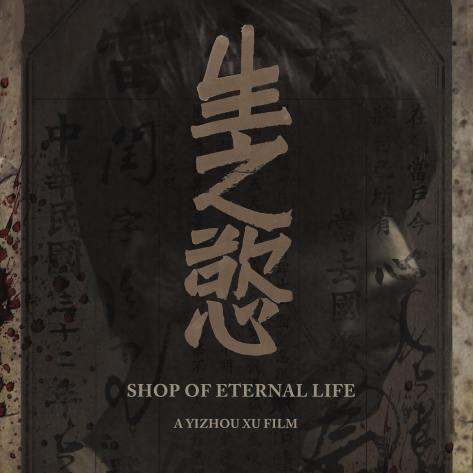
SIMU FENG CREATES A DARK AND MYSTERIOUS CHINA IN “SHOP OF ETERNAL LIFE”

Shop of Eternal Life is the passion project of director/writer/producer Yizhou Xu. In the film, he uses an almost literal metaphor to show the dangers we humans can make in times of desperation. It’s an evergreen tale that applies to all peoples of this planet. It just so happens that Xu’s film takes place in two by gone eras of his homeland, 1920’s and 1950’s China. Not only is there an other-worldly occult thread in the film but the obstacle of transforming downtown Los Angeles into an almost hundred-year-old China. While giving great credit to his crew and cast, Xu admits that his secret weapon for this transformation appearing so convincingly on screen was Shop of Eternal Life’s cinematographer Simu Feng. The award-winning Yizhou Xu declares, ““Simu is the most professional cinematographer I have ever worked with. Simu is such a vital part of this project because he is the metronome of the production. The most time consuming part of any film production is the lighting and camera positioning. We had a lot of shots in the film and it was paramount to have a cinematographer with the confidence to finish those shots with the highest quality and to do so very quickly. Simu finished the task without wasting a single second; and his efficiency didn’t harm the result of the image at all. Simu knows how to take limitations and challenges and transfer them into creativity.” The filmmaker’s peers and public definitely agreed with the finished product as it was an official selection at: the 36th Hawaii International Film Festival, the 20th Los Angeles International Short Film Festival, the 10th Bali International Film Festival, and the 8th San Jose International Short Film Festival. The look which Feng bestowed upon Shop of Eternal Life belies the budgetary confines which Xu relates. A story which spans the struggles of its main character, his transformation, and the cautionary tale it communicates deserves a beautiful and elegant aesthetic; one which it richly possesses thanks to Simu Feng.

shop-of-eternal-life-screenshot-1

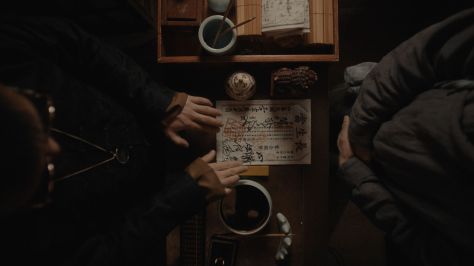
Shop of Eternal Life is a film full of fantasy and terror, relating the choices we sometimes make and the unexpected results they have on us as well as others. Even the best of intentions can result in malevolent outcomes for all involved parties. The film is the story of a poor man in 1920’s China who ventures to a pawnshop, hoping to sell his wedding ring to save his sick wife. The shop owner offers only a pittance…or a deal. Rather than money, the pawn shop owner suggests that the husband sell his heart for a great deal of money to him. The man feels he has no choice but to take the offer in hopes of saving his spouse’s life. Many years later, the husband returns to the shop to redeem his heart, but his time without a heart has transformed him into a monster. He discovers that his heart is no longer at the shop. Doomed to a heartless life (literally), he kills the pawnshop owner and assumes duties as its proprietor.

The storyline itself immediately conjures mental images of fright and fantasy infused characters and their surroundings. It was Simu’s task to make the images visible on screen to match the reality of China in the 20’ and 50’s as well as the mystic ideas presented by the subject matter. Feng relates, “The film’s visual dark tone is the key element for the story. We did this through lighting and camera work. I did thorough tech scouting with my long time gaffer Toshi Kizu and planned out the whole low key lighting scheme. I wanted the pawnshop owner character to be part of this darkness; I wanted him to feel inseparable from the shop itself. We hid several single tube kinoflos to give some small pools of light in the room and to add to the depth of the set. Camera movement was also very carefully planned out so the move was always motivated. We didn’t want the audience to feel the existence of the camera. Combined with the blocking of actors, we were able to create tension and a sense of the mystery at the same time. I’ve always felt that, by planning things out appropriately, you can help the audience forget about the technical aspects of a film and thereby lose themselves in the story…which is what we want as filmmakers and what the audience wants as well.” Yizhou Xu confirms, “Simu achieved a very strong visual style in Shop of Eternal Life; a mystery and a sense of darkness. I think this stylish look is the most important part of the film and it’s the first thing people talk about concerning this film. Because of the fascinating visual style, people have the patience to dig deeper on the subject and theme of the film. As a filmmaker, that helps me to tell the story.” Feng continues to explain the look of the film in commenting, “Because the film consists of two different time periods (the 1920’s and the 1950’s.), we wanted them to be really different, making sure the audience gets the idea that the poor man has changed into a monster. The production designer (Dara Zhao) did a great job building the set to be authentic to the time periods yet retaining our own dark and mysterious style. When we discussed the practical lights in the shop, we decided that for the 1920’s we would dress the shop with candle lanterns, and for the 1950s we went with tungsten bulbs. The practical lights are always important for me because all my lighting is motivated from these practical lights. The warm color given off by the lanterns, combined with the black pro-mist filter I put in front of the lenses, gave the 1920’s a softer and warmer tone. I shot the 1950’s with no filter and the tungsten bulbs flaring directly into the lens, making the look harsher and brighter. With more desaturation in color correction, the 1950’s looked pale and cold, fitting the change of the character.”

shop-of-eternal-life-3

Both the look of Shop of Eternal Life and the lesson of the film itself are entertaining and gripping. Yizhou Xu uses his film to communicate the idea that in our sacrificial attempts to help those we love; we risk the danger of turning into monsters. Making a deal with the devil may be very literal in this film but it has great relevance to many everyday choices. The film production itself conceals the challenges that the cast and crew overcame to create such a polished film. Simu Feng is thankful for the creative and unique approaches the production was forced to invent as he states, “Working on a small budget film is always difficult but it can be a truly fun experience if the filmmakers try to make a difference. Every filmmaker will face the situation in which they don’t have enough resources to achieve what they imagined and planned. I always believe certain limitations help yield better result by forcing creative people to come up with ‘poor man’ solutions. The luxury of a big budget does make a lot of things easier, but working on small-scale project helps me to keep the spirit of being flexible and the ability to adapt myself to changing circumstances.”


shop-of-eternal-life-4

shop-of-eternal-life-screenshot-poster