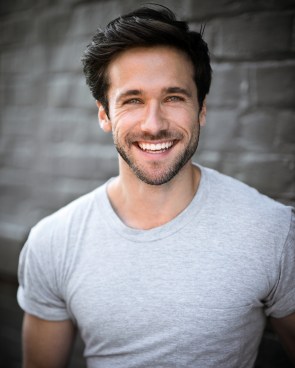
Mark Davis describes his style of acting as transformational. To him, there is no specific way to perfect his craft; it is simply about becoming an entirely different person the moment the camera is on him. He does whatever instinctually feels right, and as a sought-after actor in both his home country of Australia and abroad, he is definitely doing something right.
“I’m blessed with an ability to adapt my physicality and appearance to suit what I need. Though sometimes I just copy the greats. Steal everything,” he joked.
Film is a way for Davis to express himself, and as many of his projects have gone on to critical acclaim around the world at some of the world’s most prestigious film festivals, he knows how to connect with an audience. Whether working on dramas like I Want You, romance’s such as Lucy, or comedies like Topdecked, the actor’s versatility shines whatever the genre.
Australians would also immediately recognize Davis’ face from several national commercials for well-known brands, including a three-year long campaign for Honda. At the time, it was his first commercial, and he remembers the audition well.
“I walked in and pretended to talk to my girlfriend whilst driving a nice car and that was it. My mate ended up marrying the girl who played my girlfriend in it which is pretty funny. We joke that we had a relationship prior to them meeting,” said Davis.
Soon after, Davis once again graced small screens around his home country in a commercial for Crownbet, one of Australia’s largest sports-betting companies. In the advertisement, he played a young, wealthy gambler in a suit having a great time. He was the main character with a bunch of friends on a rat pack style night out. It showed a high end look at what a night out at Crown could be like, with an amazing hotel, beautiful scenery and lots of fun. However, it was shot entirely in front of a green screen, so Davis had to truly be in character and not pull from his surroundings to portray a believable performance. The commercial played during the Melbourne Spring Racing Carnival, which screens nationwide and gets millions of viewers.
“Crown is a huge company in Australia and it had a big budget to match. It was over the top and I knew it would be a good laugh,” said Davis. “Crown is a Melbourne icon and I love my city, so it was cool to work with the brand.”
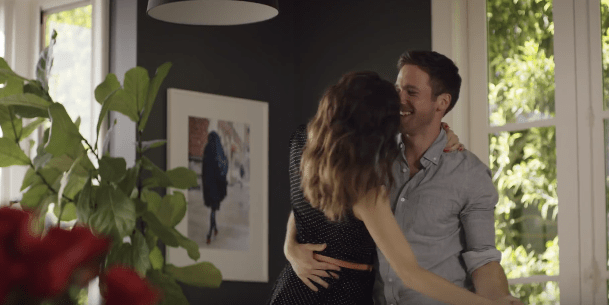
Another unique commercial experience for Davis was when he shot a spot for Interflora, the international flower delivery service. In the Valentine’s Day campaign, one of the most important for the retailer, Davis played a teen, a mid-twenty-year-old, and a forty-year-old, putting up a fun acting challenge to quickly transition between such different age groups. He also had to manufacture a loving relationship with his co-star that showed them through the ages. At first, he was a cheeky teenager trying to steal a kiss, then a young dad, and finally a middle-aged man giving his wife flowers. He also had to dance, and having never taken dance lessons before, he let his natural abilities shine.
“This was a great commercial to shoot. It had amazing art direction that you can expect from a flower retailer, with lots of color and beautiful locations. It’s also a quintessential romance and Valentine’s Day story. I’m not sappy, but it did have a nice sweetness to it and romance is kind of cool. It’s great because my mom loves it,” he laughed.
So, what’s next for this industry leading actor? His latest film, Fallen, comes out later this year. The WWI period drama is some of Davis’ best work and can’t be missed. Be sure to check it out.
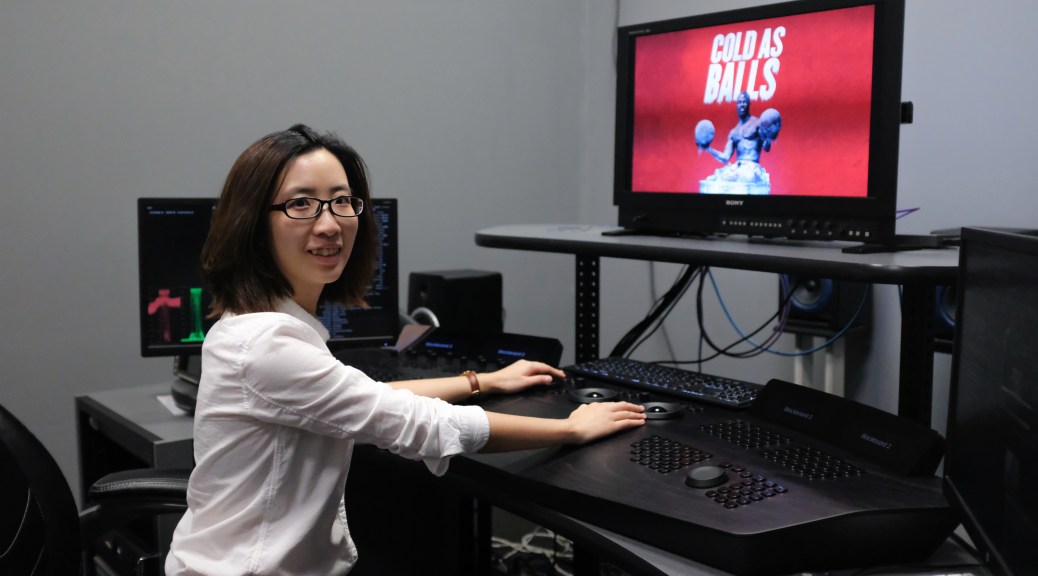
When Cynthia Chen was a little girl growing up in China, she was always inspired by her mother. She was an art teacher, and a young Chen therefore began painting from a young age. She was always sensitive about the different colors she used and playing around with color always amused her. As she grew, this fascination only intensified, and she found it impacting her hobbies. She began to have an interest in photography just to play around with the photos while editing, changing the colors and enhancing them to create a captivating piece of art. When she began filmmaking, she realized how impactful color is to every shot in a piece, conveying emotions and acting as another way to tell a story. It can impact film styles, she realized, and when she already had an interest in editing films, she realized that being a colorist would allow her to explore this interest she had from childhood and turn it into a fruitful career.
Chen is both a highly successful editor and colorist. Her passion for what she does is unwavering, her talent unparalleled. Every project she has been a part of, including I Don’t Want to Sleep Alone, Offsprung, Slingshot Prince, and The Last Page, have gone on to critical acclaim at many of the world’s most prestigious film festivals thanks to Chen’s efforts.
“Just like editing has a rhythm to tell a story, the color, as another method to express the emotions, also can have a “rhythm” when it comes to contributing to create a film. I believe a film masterpiece must be treated and polished as a great art piece. Color grading enhances the texture of a film picture which makes it become a completed art piece. Every time I finish the color grading works, the group of filmmakers I am working with are always shocked after seeing the before and after pictures. That is my proudest moment. The whole color grading process makes me believe that my talent brings this film into a higher level,” she said.
One of Chen’s greatest successes as a colorist was the film Mask. The animated drama looks into masks in Sichuan opera that are traditionally used to reveal the changes of inner feelings and emotions of the characters participating in the drama. The masks turn abstract emotions and mental states into visible and sensible concrete images, and reveal the feelings of the characters inside the story. By raising the hand, swinging a sleeve or tossing the head, an actor uses different masks to show different emotions, expressing invisible and intangible feelings through visible and tangible masks. Mask, is inspired by Sichuan Opera Face changing. It is a story behind a mysterious mask, which shows different patterns as different lights go through.
The three characters in the film are heroes from different traditional Chinese historical contents. Qingshi Huang, represents as the breadth of vision, is the first king in Qing Dynasty. Monkey King, one of the most famous and classical characters in Chinese fairy story, the guardians of his master, as the leader protected his group on the West Road, through eighty-one trials and finally reached the goal. Zhuge Liang, the smartest military advisors from three kingdoms era, served for Bei Liu, represents wisdom and loyalty. Those characters are also three heroes in Chen’s heart. For the Chinese native, it was an honor to work on this film that has a deep Chinese culture background.
According to those three different characters, Chen decided basic color tunes for each one. The king Qingshi Huang has a yellow and green color tune because in Ancient China, yellow means power in social classes. Zhuge Liang, who represents wisdom and loyalty, uses a blue color tune as the main color base. In the color theory, blue connects to calmness and cool emotions. Chen set golden and orange color tune for the brave Monkey King as those colors stand for positive minds, passion and braveness. Therefore, the scenes where those three characters appear, and the weapons on their hands, have the unite color tunes.
As the entire film was CGI, the renders had a strong contrast in colors, which Chen thought looked very digital. To solve this problem, she decreased the contrast of the entire picture, adding some yellow color tune and film grains. She then adjusted each scene for each character, and finally finished the color grading work. She helped to bring the whole picture to a new stylized level.
“This short film had a very large creative space for me to try on the different color palettes and stylize the picture, which made this piece very interesting and fun to work with. The CGI images contain more color information than the images shot by cameras, so there was a lot of space for me to adjust the color for this film,” said Chen.
Mask had a tremendous film festival run with the help of Chen. It was an Official Selection at the New Media Film Festival and the Asian Film Festival of Dallas 2018. It also went on to win the Award of Excellence at both the Best Shorts Competition 2018 and the One-Reeler Short Film Competition 2017. Chen could not be happier about the film’s many accolades.
“It was such an honor to work on this project that explores such an important part of Chinese culture. This is a milestone project in that it was a brand-new experience for me. The success of this film encouraged me to do more color grading work in the future which has more culture background,” she said.
The new works Chen has contributed to, feature film Indivisible and documentary Fantastic Fungi, are expected to be released later this year. Be sure to check them out to witness this colorist’s talent first hand.
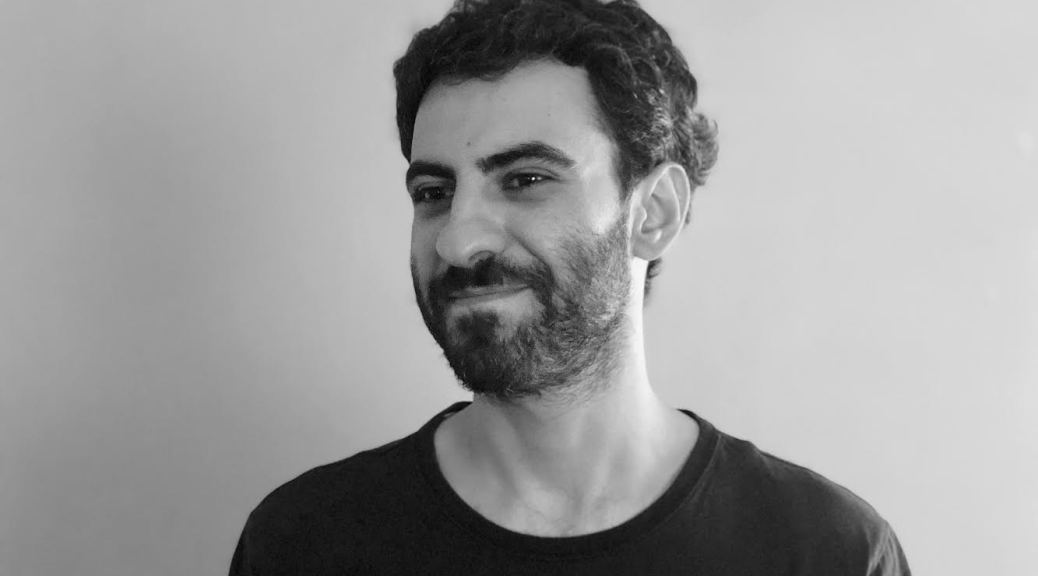
The acclaimed Turkish art director Cagri Kara always knew his destiny lay in the arts. As a teenager, Kara wasted no time, successfully creating and selling a variety of progressive, eyecatching web designs before graduating high school. After attaining design degrees at university, the ambitious, driven Kara established himself, in short order, as one of the most skilled art directors in hometown Istanbul, the biggest, most sophisticated metropolis in eastern Europe.
The international entertainment, promotion and design communities are a tight knit pool of craftspeople and Kara’s mastery of the universal language—visuals—and impeccable reputation as a reliable, intuitive and groundbreaking artist quickly spread. Kara’s early formal accolades included numerous high-profile industry awards Crystal Apple Festival of Creativity, Kirmizi Advertising and MIXX Awards and the famed Cannes Lions Festival of Creativity. All of this notably preceded his 2016 arrival in Los Angeles, where Kara’s characteristic professional alacrity found him taking on a spectrum-spanning array of assignments and campaigns for a wide variety of agencies and clients.
One of Kara’s first, key alliances in California was with the prominent Hollywood agency Forbidden Toast, a relationship which served both as proving ground and springboard for his American career.
“I’ve been working with Forbidden Toast since I’ve moved to LA,” Kara said. “It’s a high end creative services company that focuses on entertainment art work for movies and television The company’s owner, Sherry Spencer, hired me as an art director for several projects she was working on.”
It was a significant break for Kara, and also one that demanded he deliver first rate product. “Forbidden Toast has a very high quality work standard and a clear vision for the work they produce,” Kara said. “I very much respect that and enjoy working with the team. And I enjoy the challenges of producing such great work.”
From the start, Kara’s stylish, skillful contributions fit right in.
“My responsibility with Forbidden Toast is overseeing campaigns in post-production, and ensuring the artwork is correctly executed,” he said. “The projects I worked on were highly visible and vital to the success of the films and television shows for which we developed these campaigns, and my work resulted in both increasing the company’s revenue stream and exposure in the market.”
Kara’s mixture of technical skill, instinctive flair for appealing design and comprehensive grasp on the adaptability each visual element must have is a priceless combination.
“Mainly, we do print ads, large outdoor billboards and social media campaigns,” Kara said. ”The platform is not as important as the flexibility of the art work—it needs to be effective and integrated into all types of media, both internet and large scale print campaigns.
Kara’s keen vision has created important advertising campaigns for productions by some of the biggest names in the business—Sony, HBO, Fox, Netflix, Starz, National Geographic and numerous others.
“I worked intensely with Sherry in producing the final art work for the client,” Kara said. “The art gets approved directly by the studios and, often, also by the talent. And they were all very happy with the results.”
Kara’s successful ventures include campaigns for shows with wildly disparate themes and content. He successfully worked a winning campaign for the current season of comic provocateur Bill Maher’s “Real Time” (“The show is very timely and, I feel is very important to the American political climate. It was very special to be a part of the production of the art work for this series. The art went all over the United States and the show was highly rated and successful”) preceded by one completely opposite, 2017’s launch for the National Geographic television series Genius.
“It was very exciting and challenging,” Kara said. “The talent needed to give the impression that we were actually looking at Albert Einstein. Sherry and I worked closely together to produce a successful final product that appeared not only throughout the city but also appeared on the one of the most visible billboards in the city including—the entrance of the Fox studios.”
Whether it’s documentary, fantasy, film, television, album cover art or an international promotion for FIFA giant EA Sports, Kara’s sweeping creative scale, holistic grasp of his field’s requisite elements and most effective practices create the foundational basis upon which Kara’s formidable natural skills excel—and Forbidden Toast continues to reap his bounty.
As company president Sherry Spencer said “I’ve worked closely with Cagri over the last several years—I’ve been impressed by his ability to successfully lead teams of artists and watched his creative skill and impressive talent push my company even further into creative entertainment marketing. “
It has been said that you are known by the company you keep; this also applies to talent. In the case of Will Shivers and his latest work in the television series Eddie’s, it’s relevant to both. Alex Scrymgeour (writer and executive producer of Eddie’s) met Shivers three decades ago when they were both young lads at a boarding school in Pomfret, Connecticut. While most of their classmates were jocks looking to announce their masculinity, Will and Alex were fixated on humor and entertainment…creating their own that is. Present day finds them both with successful careers in Hollywood and finally working together. Scrymgeour’s latest production is Eddie’s, starring Eddie McGee (CBS’s Big Brother, NCIS: Los Angeles, Mutatnt X), George Wendt (Cheers, Fletch), and Shivers as Daren Willis. Alex openly admits that it was Will’s talent in front of (Shivers is a co-producer and editor of the show) and behind the scenes which assured the writer that he was a key component to its success.
When the show’s writer approached Shivers about the role in a family friendly show which takes place in a Bar & Grille in Venice, California…the actor immediately expressed an interest. Will confirms, “I for one am done with everything having to be dark and mean in comedies. At one point Eddie actually says ‘Don’t be a jerk.’ It’s a basic life lesson that is too often overlooked these days. I think people are seeking a refuge from all the grim news and entertainment out there; I know I am. Eddie’s [the program] offers up some dysfunctionally good-hearted people who have each other’s backs. They don’t judge but they also don’t tolerate jerks.”
Shivers appears as Daren Willis on the show. Daren is a bit dichotomous, in a pleasing manner. He is a high tech nerd working in AI who’s also very conscious and present, having done a lot of yogic and meditative work. Willis is a socially awkward genius, very self-aware and craving improvement with social interaction. It’s this expertise with complicated things and simultaneous uncomfortablity with simple human interaction which is endearing to Will’s presentation of Willis. Shivers is not unfamiliar with complexity and navigating it. The actor not only stars in Eddie’s but he is also one of the show’s producers and the editor. Appearing on screen while also working in a capacity that necessitates he produce off camera could become problematic for anyone. Co-producing with Eddie’s co-producer and writer David Brzozowski (21 Jump Street, Anamorph) allowed Will to vacillate between his dual roles. He notes, “David is incredible so I never had to worry. I found ways to split my time. The script was so good that I just had to be involved in some way. When Alex wrote a role specifically for me, it makes things more complicated but also more enjoyable for me. I loved development and watching it blossom into something more and more with each draft. And then to show up on the shoot day and actually feel it as it came to life on set as an actor and then to take over as editor? I mean there is nothing more satisfying than being a part of all of those stages of the process.”
The tagline to Eddie’s is “Where all are welcome.” While dark humor can most certainly be funny it can also be the path of least resistance. Will Shivers, Alex Scrymgeour, David Brzozowski, director Michael Lange, and everyone involved in Eddie’s aspired to do much more than this. The goal was not to make something easy that would sell but rather to make the best television they could and be motivational in message and comedy, rather than being reactive and following the status quo. Eddie’s is most certainly different and is most certainly full of laughs.
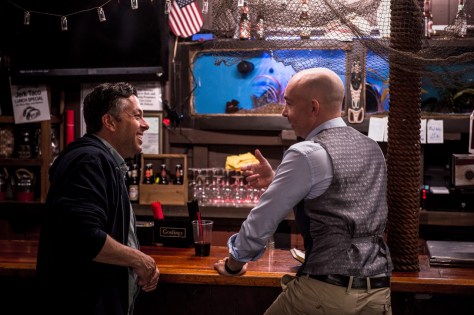
(Eddie’s Place creator Alex Scrymgeour and Shivers on the set of Eddie’s Place)
For Canada’s Hubert Kang, his hobby and his career are the same. Being a professional photographer allows him to do what he is truly passionate about every day. He believes that is the key to driving himself forward, as he never loses interest in his work.
“I like photography as an art form. I also like working with people. Being a professional photographer allows me to work with different projects and different people almost daily. It’s exciting and interesting,” he said.
This attitude has allowed Kang to soar to the forefront of his industry in Canada. His photos have been featured in the Globe and Mail, a leading Canadian newspaper, and his images have helped large brands for campaigns for Fairmont Hotels and Fairmont Royal York, as well as Canadian Tourism.
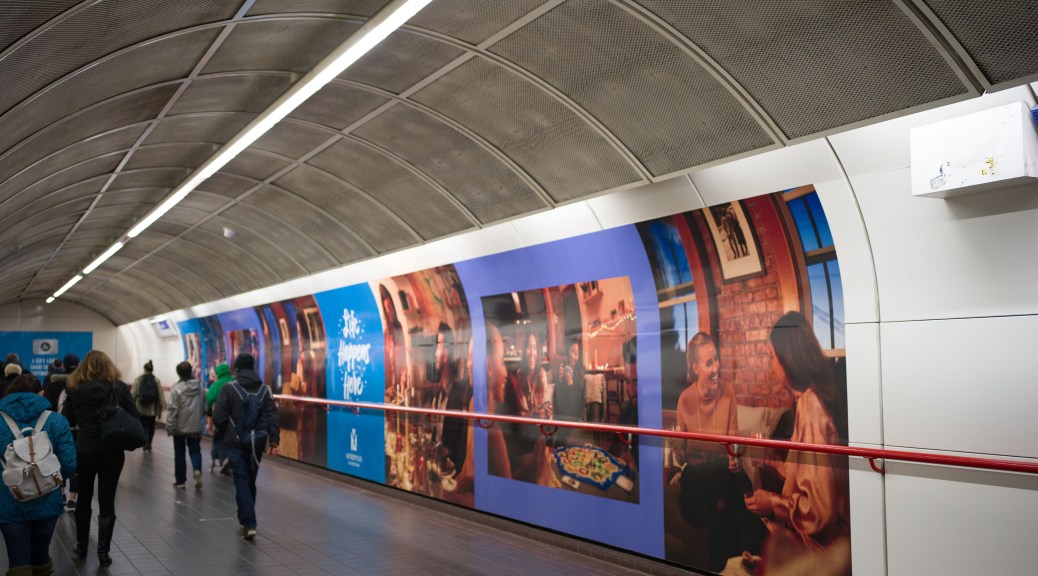
Kang often shoots advertising campaigns for travel and tourism companies and destinations. He continued this pattern when he created imagery for the last three seasonal campaigns for Metropolis at Metrotown Mall, the largest and most successful mall in the Vancouver Area. His images were used extensively for outdoor billboards, especially in the busiest subway station in Vancouver. They were also used online and in print. The video he directed was used as a spot in cinema as pre-roll advertising before the feature movie.
Traditionally, Metropolis used mostly fashion photography for their campaigns. For their new brand, however, they wanted to take a storytelling approach showing sweet moments in life. Twice Brand therefore reached out to Kang, knowing that he would excel at such a feat. His efforts helped boost customer interaction at the mall.
“I am really proud to see the success of the campaign. Metropolis took a risk to try my photography skills, which is very different from what they usually did in the past. It was great to see that I was able to create these beautiful and effective images to reward the client taking the risk,” he said.
The central theme of the campaign is “life happens here”. Right away in the brainstorming process, Kang and the team at Twice were looking for activities that are photographically compelling and yet at the same time showing enough emotional quality and products so that they could advertise the mall. Kang came up with unique ideas for the Christmas shoot. For example, he shot a group of friends at a dinner party, showcasing all the food, gifts, decorations, cookware, and more that highlighted what could be purchased at the mall. The ad also told a story and evoked an emotional connection that people could resonate with when they looked at it.
“It is very inspiring that I can return to my documentary photography roots and apply it to a commercial project. I was also attracted to the project because of the large print implementation they planned to do with the images. It’s a very photography driven campaign and I was intrigued to lead it,” said Kang.
It was exciting and refreshing for Kang to bring a new photography concept to the largest mall in Vancouver. He and his team elevated the standard of productions for Metropolis. He was a big part of the creative process in coming up with the stories and finding locations. Then when it comes to actually shooting the photos, his approach and thoughtfulness in considering everything from production, art direction, lighting, and model performance led to images that look natural and interesting, and at the same time help Metropolis’ reach out to the targets they want to reach. This is a combination of Kang’s artistic sense and experience in both commercial and documentary photography, exemplifying what a unique skill set he possesses.
“I enjoyed this project for so many reasons, but most of all it was the people I worked with. I have worked with Twice many times throughout my career so there is a lot of trust between us. The creative team at Twice was very collaborative and open to new ideas from all members of the crew. It was a great feeling to work with a group of like minded professionals who are on top of their game in this field. I really like the execution of the project as well. Metropolis took up ads that took over one of the largest subway stations in Vancouver. It was an immersive experience to see these images printed large scale plastered all over the station. With so much advertising moving to digital these days, I really enjoyed seeing the images in print,” he said.
Kang credits his vast success as an advertising photographer to the work he does as a documentary photographer. His eagerness to tell stories for his clients rather than simply taking a photo is what makes him so in demand.
One of Kang’s most heartfelt projects in his career is the work he does in Uganda. He has gone there to document the progress of baseball development in the country, showing how the sport positively impacts the lives of the children in the country. In the future, he would like to extend the project to other sports as well, as he has seen the incredible power it has to positively influence one’s life.
“I have enjoyed teaching quite a bit. I guest lecture in our local colleges from time to time. I like being able to give back to my community since this profession has given me such an incredible life so far. I like spending time in Uganda to teach photography to the local children as I see they enjoy having another way to express themselves and tell their stories,” he said.
Kang also will soon be starting a new photo project on the relationship between people and animal. He is passionate about animal rights and likes to utilize his skills to help promote the causes he cares about. Be sure to keep an eye out for it.
In recent news of NBL’s 3-year partnership with Channel Nine, we sat down with the man behind Nine’s innumerable advertisement campaigns, Australian-born filmmaker Adrian Prospero to discuss his crucial role within the groundbreaking network and how his contributions have shaped Channel Nine to be Australia’s largest commercial free-to-air television network to date.
“It was an absolute honour to work with Channel Nine, and I am thrilled that the network has been skyrocketing in their success.”
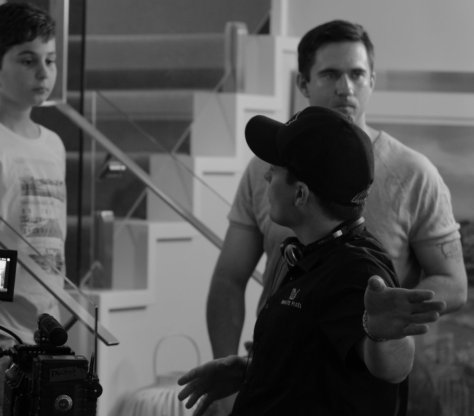
Award-winning Director Adrian Prospero working with actors on set.
Adrian Prospero has been a force to be reckoned with in the entertainment world for the past decade having distinguished himself as a versatile filmmaker with over a 100 credits to his name as a Writer, Director, and Producer on various media platforms including television commercials, narrative films, and documentary films.
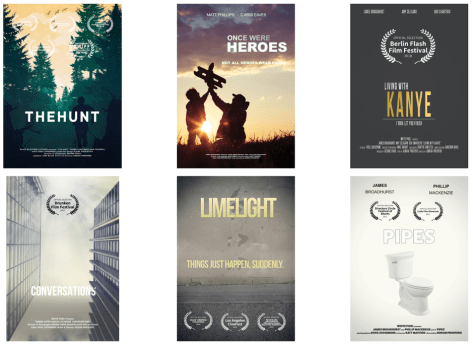
Some of Adrian’s impressive award-winning narrative and documentary films.
We asked Prospero about his great passion for filmmaking and the many hats that he wears as a filmmaker.
“I love all aspects of filmmaking, but I would consider myself first and foremost a director.”
While the entertainment industry is known to be excruciatingly difficult to break into with thousands of filmmakers competing to get their foot in the door, Adrian Prospero has impressed many esteemed filmmakers with his success as he managed to conquer the narrative and documentary world while also making himself indispensable in the commercial and corporate world. Since the beginning of his career over a decade ago, Adrian has since been involved in dozens of advertising campaigns in the capacity of a Writer and Director for multi-billion dollar companies such as REIWA and Australia’s prominent WIN Television Network.
Most notably, Prospero has undertaken a crucial role in the growth and success of Channel Nine. The network is equivalent to America’s paramount television networks namely ABC, CBS, and NBC.
Prospero’s skills as an extraordinary filmmaker combined with an extensive knowledge in marketing allowed him to contribute to the network primarily through cultivating client relationships, which consequently magnified the company’s revenue and strengthened the reputation of Channel Nine. In 2017, Nine reported a revenue of $720 million. During his time at the network, Adrian raked in millions of views for numerous affluent clients such as the global upscale hotel brand Novotel and the renowned multi-billion dollar real estate company, Mirvac.
In a reflection of how far Adrian has come as a director, and proving how sought after he is, Prospero can now earn up to $1570 an hour as a director. A source from Channel Nine joked “not a bad jump considering most directors are only paid about $75 an hour, and Adrian’s humble beginnings in Perth!”.
Despite his vast experience and success in the industry, Prospero remains modest when asked about his success in the commercial and corporate world.
“I am thankful to Channel Nine for entrusting me with each campaign and for allowing me the creative freedom towards these commercials.”
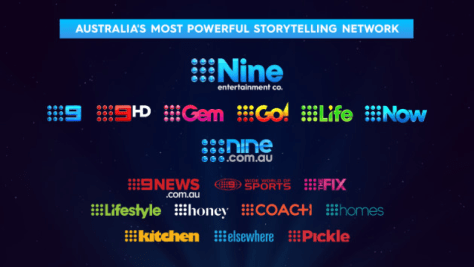
[above: some of the above companies who have gained millions of views for their films and commercials made by Adrian Prospero].
Prospero has been regarded as a terrific collaborator across all platforms. Therefore, it is no surprise that numerous companies and artists seek to work with him. His versatility in storytelling have led him to working with Songwriter and Rapper Bill Marri and Australia’s beloved electro-pop band, The Arsonist. His work on their music videos have gained these artists legions of fans globally.
The prominent Writer and Director shares “Music videos are so much fun to work with, but what I love about it is the integration of two mediums (music and visuals) to create something powerful. You are often allowed so much creative freedom in music videos so it can be challenging in getting the balance right between the two, but when you find that balance where the two complements each other, the results are extraordinary”.
More recently, Prospero challenged himself in taking on several roles on a workplace comedy miniseries in which he wrote, produced, directed, and edited. The miniseries, Unrealty, was shot in Australia with actors Chris Buckley (Sons of Soldiers, Badgirl) and James Broadhurst (Reflection, Derelict). Adding to his great acclaim, Prospero picked up an award for the series from the Accolade Global Film Competition.
“It was really fun to shoot a comedy series. I’d definitely love to do it again.”
Comedy miniseries written, directed, produced, and edited by acclaimed filmmaker Adrian Prospero.
Prospero was also previously awarded the Accolade Global Film Competition Award for his 2016 dramatic film The Hunt starring award-winning actor Robert Hartburn and David Pragnell. The prestigious film festival has successfully been running for 14 years, and recent winners of the competition include the films Money (starring Jesse Williams from Grey’s Anatomy) and Riley Wood (starring the James Bond and Wild Things actress Denise Richards).
“It is incredibly humbling to be recognized by renowned festivals for doing what I feel most passionately about”.
Recognized by Movie Maker Magazine as one of the “Top 25 Festivals” in its category.
From commercial and corporate work to music videos and narrative films, Adrian Prospero is regarded as amongst the best in his field. He takes incredible pride in everything that he does which in effect produces outstanding films, and we are confident that this extraordinary filmmaker will continue to conquer the entertainment industry.
It probably comes as no surprise that the VFX industry is among one of the many tech related fields that has been dominated primarily by men since inception; and that’s not to say that women haven’t played an equally powerful role, they just haven’t received their due credit. Though the media in general has shone somewhat of a lesser light on women in VFX, there is hope for equality in the industry now more than ever before. But this is just the starting point.
Women like Victoria Alonso, who earned the Visual Effects Society Visionary Award last year, and VFX artist and compositor Charmaine Chan, who created the video series “Women in VFX,” have both used their position in the industry to draw attention to the lack of diversity in the workforce. In order to play ball in such a male dominated arena, women have to go the extra mile to prove their worth; and one woman who’s managed to carve out a place for herself in the industry despite the obvious challenges is Brazilian born VFX artist Tati Leite.
“I think what separates me from the rest is that I have my background in computer engineering. I used to be more technical before moving to LA. But I never felt completely satisfied only using my technical skills. My artistic side was always there trying to show up too. And that’s the main reason I chose VFX,” explains Tati.
A story that proves once again that women are just as capable as their male counterparts, Tati’s journey serves as an inspiration to push ourselves as women to follow our dreams, even if it means that we have to push harder at this point in history. This is how we are going to change the face of the industry so future generations of women can be judged based on skills rather than gender.
Creating artistic videos was a passion Tati discovered at an early age. She carefully learned how to shoot, modify and craft different effects at a time when technology was not nearly as advanced as it is today. Her close examination and methodical approach to the videos she created drove her desire to understand how it all worked.
“Every movie I watched I paid attention to all the details and watched it over and over to see the effects, the animation and all the aspects that had been introduced to the footage,” recalls Tati. “Even my choice for majoring in computer engineering was based on the fact that I wanted to acquire a deeper knowledge in computer graphics.”
This perfect fusion of art and technology is what drew Tati to become a VFX artist, and it’s one of the major assets that sets her apart. Backed with a computer engineering degree Tati was not intimidated by male dominated spaces. Not only was she well prepared to take on this highly technical position, but she realized that, in a way, it made her part of a movement towards equality for women in the industry.
“Having a wide background helped me to navigate through this world easily. But, this industry is still male dominant and we have a long way to go until we see some real changes. The future is promising, every day I think we move one step forward, but it’s far from equality,” Tati admits.
Pioneering the way for other women to delve into VFX, Tati has paved a trail of outstanding work on various projects that range from high profile motion picture films, such as the highly-anticipated film “The Lion King,” which is due out in 2019 and directed by Jon Favreau, to a plethora of award winning video games.
Video game projects not only challenged Tati and revealed her power behind the screen, but they also prepared her for the bigger tasks she’s undertaken as a VFX artist on major feature films. One of Tati’s favorite video games so far has been Making Campcreated by the award winning company 7 Generation Games. It was there she found the freedom to add her own visual design and concept to the game as an animator.
She says, “This game is very special to me. Not only because I created VFX for some of the videos played in the games, but also because we completely remodeled the game visually. Icons, buttons, effects, all the assets were remade and/or adapted to a new look.”
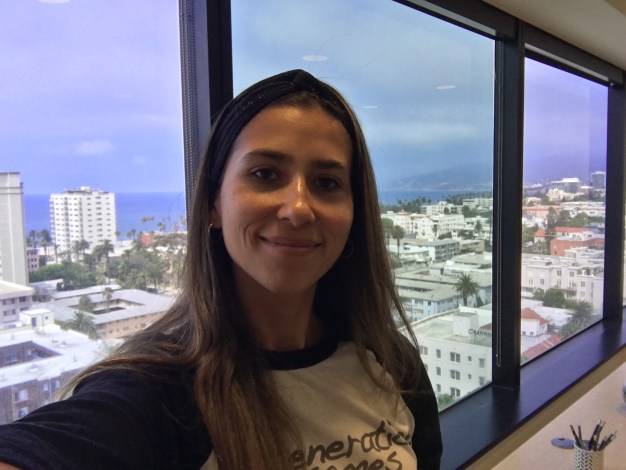
Tati Leite designing for 7 Generation Games
Project manager Diana Sanchez, who worked with Tati at 7 Generation Games, quickly recognized Tati’s inspiring work ethic, her capacity to effectively communicate with her team, and her ability to elevate the creative process overall. When it came down to creating games for the company, it was never a competition but a fruitful collaboration.
Sanchez says, “What makes Tati good at what she does is her ability to collaborate… When you have an idea of what you want such as an animation or image for an icon, she then takes that vision and puts her great skills to work, but the best part is her flexibility if modifications need to be made. That’s a great quality to have when collaborating on a project.”
Executing work for 7 Generation Gamesis where Tati’s creativity and intelligence went hand in hand, and her background in computer engineering coupled with her keen artistic eye have her the power to produce the best visual designs.
“Creating VFX for games is exciting because you can be very creative, but at the same time you need to be smart about how you are going to do it without consume too much memory or processing.”
The 3D educational video game Fish Lake was another video game where Tati’s VFX prowess was a leading force in the game’s creation. As part of an Indian tribe, the game’s player has to overcome roadblocks related to math and history, so it’s not only fun for users but it teaches them valuable skills. For Tati, Fish Lake was not only an exciting project that utilized her seasoned skill, but it is one that challenged her in new ways.
She explains, “The big difference of this game is that it is 3D. The tools and the skills required for 3D are completely different. This was the main 3D game we had at the house at the time so it was very special to have the opportunity to work on it.”
Tati’s creativity and VFX expertise have led her to be an invaluable force in the ever evolving design concept of countless many games like the project Aztech. This educational math and social studies game for kids was sparkled with magic where students would go back in time to try and survive challenges in order to move forward, and Tati was key in creating the visual effects that kept them playing.
Tati says, “This project was really nice to work on because I could see the idea of the game evolving until it became real. Putting together the concept to create a game is a big challenge.”
When it comes to design and creating concepts in the ever growing field of visual effects for video games Tati ha become a sought after force. She’s adapted to new advances in the field at every turn, and her work makes her stand out as one of the best, but her work is by no means limited to the world of VFX for video games.
Tati Leite at the 2017 HoloLens Hackathon
The adept nature of her talent as a VFX artist has led the film industry to take note, and though the industry department is still considered by many to be more of a ‘boys team,’ she’s definitely made her way in, and her contributions have been key in creating the incredible visuals we see on the bigger screen.
With only three women nominated in the VFX field for an Oscar, Tati aims to raise the conversation about this problem but also lead the charge in creating stellar work, proving she is just as good as any man.
“I love working on feature films,” admits Tati. “It’s very gratifying when you see the final result on the big screen helping to tell a story better.”
Aside from “The Lion King,” Tati has played a key role in the VFX departments on some of the biggest feature films of this year, including “Ant-Man and the Wasp,” “Christopher Robin,” “Mission: Impossible – Fall Out,” “Book Club” and many more.
To play on the boys team Tati realized early on that has to be the best at every aspect in the field, and that means staying on top of every new technique, but her passion for the craft and her individual creative eye has made her unbeatable. There are somethings that can not be taught like work ethic, cohesive collaboration, and artistic skill, and Tati possesses all of these traits in spades.
At the end of the day, Tati says, “For me the secret is always do your best. Never consider any of your jobs smaller or less valuable. In every job you will get something from it, it can be learning something new, improving some skills, experience dealing with a tough client, or even if it’s just making money. It does not matter. If you consider that all the jobs are very important and you give them your best, you will grow and build the bridge to the next level of your career.”
It is not often that one individual is both technically and artistically inclined. Such skills normally find themselves separated, considered two different ways of thinking entirely. However, this is not the case for China’s Qiao Wang, where the fusion of both technology and art have led to a dynamic skill set that most do not possess. As a Character Technical Director (Character TD) or Character Effects Artist (CFX), Wang combines his technological way of thinking with his innate artistic talent. Compared to other roles in a CG animated film or a visual effects driven film, a Character TD tends to be both artistic and technical, and most of the time requires more technical knowledge and skill sets than other roles. As Wang was trained in both art and science, he knew those two roles would be a great fit for his career path, and he has dedicated himself to it ever since.
Wang now finds himself as a leader in his industry, having worked on several prolific projects. Whether he is working on films, such as Avengers: Infinity War, music videos, including the hit “Filthy” by Justin Timberlake, or commercials, including a series of recent ads for Lexus, Wang’s talent is evident, using CGI to create extremely realistic looking characters and objects.
“To me, design is to create a better experience or better life for users. The artwork, character animation system or whatever I design, is simply trying to make the users happy, to create the most efficient setup to make their lives easier. I think that’s my design style,” said Wang.
One of Wang’s ongoing professional relationships is with the iconic department store Target. He has worked on many commercials for the company over the past couple of years and enjoys it every time. They were one of the first series of projects that he did at Method Studios and they incorporate many aspects of what he likes about his job. The commercials offered a variety of digital characters, from Marvel superheroes, Lego characters, Trolls, ponies, Barbie dolls, etc. They all have different body types and they all require different rigging and character FX setups.
The challenge was creating such an array of characters, and Wang was eager to develop them.
“All these spots are all over the internet and TV, and they’ve got millions of views, with very positive reviews. It feels great that consumers love the creative content that we did for our clients. I was so happy reading the reviews on YouTube, kids are very into the toys, cartoon characters, and the short stories. I feel very happy to see all these characters come to life, and I’m very excited about getting ready for the new Target holiday commercials in 2018 and creating more fun characters,” he said.
On every commercial, Wang jumped into production and started creating characters’ rigs including skeleton animation system, cloth and hair/fur simulation effects right away due to the tight schedule and large amount of CG content. He built characters and wrote thousands of lines of code for tons of different types of digital characters, props, vehicles, and massive environments.
Wang was also responsible for cloth and hair/fur simulation, muscle effects along with various other character finishing tasks and shot finishing tasks. He essentially is a groomer for the hair and fur, and characters like Trolls have a lot of hair to be managed. His skills in hair/fur simulation were essential. There was only one groomer in the studio besides Wang, who was quite busy at the time, so he stepped up and helped deliver high quality hair grooming and simulations.
One of Wang’s greatest accomplishments for the Target commercials was the system he developed to create generic rigging templates for Lego characters, Minions, and Barbie doll characters, which he was then able to apply to many other characters that had similar body types. It helped create facial rigs, and lip syncs to improve characters’ facial workflow and performances. The cartoon character facial setup system saved Wang and his team a lot of time, as the old system was broken. Wang’s new system saved the entire production.
“I really like how the commercials merged characters from different worlds, different productions into one story, and made them look like they belonged to the same world. I like to work on different types of characters to face different challenges. I really enjoyed being able to contribute to the character technology pipeline and workflow for the studio. The story and the lines are very entertaining and working on them makes me feel like the holiday season is right around the corner. Even though these are VFX commercial projects, we really treated them as top-notch fully CG animated short films,” he described.
Keep an eye out for the 2018 Target Holiday campaign to see more of Wang’s outstanding work.
It’s no wonder that internationally acclaimed writer Sonia Gumuchian has caught America’s attention. An award-winning writer with sharp dialogue, hilarious stories and impeccable timing, Gumuchian’s ability to turn real life situations into fun and engaging scripts will leave any person wanting more.
Originally from Vancouver, Canada, Gumuchian has a way with words that is an impeccable blend of both natural talent and deliberately honed skill. With her first novel under her belt before she finished high school, and then graduating from the University of Southern California with a Bachelor of Fine Arts in Writing for Screen and Television, Gumuchian’s talents were quickly recognized by major powerhouse networks in Hollywood.
Working for respected TV networks such as HBO and FOX, as well as ABC Studios, Gumuchian attended table reads and provided coverage on potential scripts, which helped her learn the ropes of what goes into developing some of today’s most watched shows. Gumuchian even worked with the Hallmark Channel where the ideas she pitched were taken into consideration in the development of the 2016 Kitten Bowl, the nation’s most beloved rescue pet adoption of the year. THE KITTEN BOWL, guys.
Her pilot “Hi Again” has been met with glowing praise and interest. Centering on a young woman who wakes up as an android that’s been built by her ex boyfriend, yikes, Gumuchian’s script for “Hi Again” was awarded as a second rounder at the esteemed Austin Film Festival, an honor that only 15 to 20 percent of almost 10,000 submissions receive.
“At the time, I was inspired by the technology centered around transhumanism and the surge of science fiction content we were receiving,” Gumuchian explains. “After personally visiting AI symposiums and conducting interviews with scientists who are creating the next generation of materials made to simulate human faces, I wanted to write my own spin of the genre. What if someone was brought back to life, but not on their own terms?”
And that’s exactly what happens. The story begins in 1987, when 21-year-old Kat tragically dies from a drunken bowling accident, leaving her friends, family, and loving boyfriend, Toby, behind. Cut to 2018 and Toby, now a successful scientist, finally succeeds in downloading Kat’s consciousness onto an android, only for Kat to break up with him the second she wakes up (something she was meaning to do before she died). Now, faced with a world far into the future, Kat must navigate new waters and become reacquainted with her loved ones. With “Hi Again” Gumuchian pulls at heartstrings while exploring the depths of human connection and making the reader laugh out loud, pretty much all of the time.
One priceless mark of a great writer is their ability to pick up and expand upon a contemporary idea and make it into something more– a throughline regularly seen in sci-fi novels and scripts, but Gumuchian does it with comedy. A a certifiable pro, that’s exactly what she did with her “Good Cop, Old Cop” script drawing inspiration from the series “Brooklyn Nine-Nine.” The script, which is only one of several that will leave audiences rolling on the floor laughing, earned her attention once again when, going up against 800 other entries, it made it into the Top 7 in Filmmakers.com’s TV Script Writing Competition.
The story follows Jake and Amy as they go undercover to infiltrate a fake ID epidemic, which leads Jake to the painful realization that he can’t connect to the youth anymore; meanwhile, Boyle distrusts Rosa’s new boyfriend, as Mike and Scully investigate a suspicious Chinese restaurant. The script’s ingenuity lies within Gumuchian’s seamless creation of fresh new material cut from a preexisting cloth, an invaluable asset to any writers room. Honestly, it wouldn’t be at all surprising if she starts writing for Saturday Night Live or the like very soon.
With talents expanding from screenwriting to journalism, Gumuchian has been chosen to contribute as a staff writer to a plethora of popular magazines and media outlets such as The Fullest Magazine, and Neon Tommy.
Covering countless red carpet events and movie premieres for media outlet Neon Tommy, her review of “A Million Ways to Die in the West” not only gained major traction with audiences, but it was retweeted by Alex Borstein, one of the film’s stars. A gratifying moment for any writer.
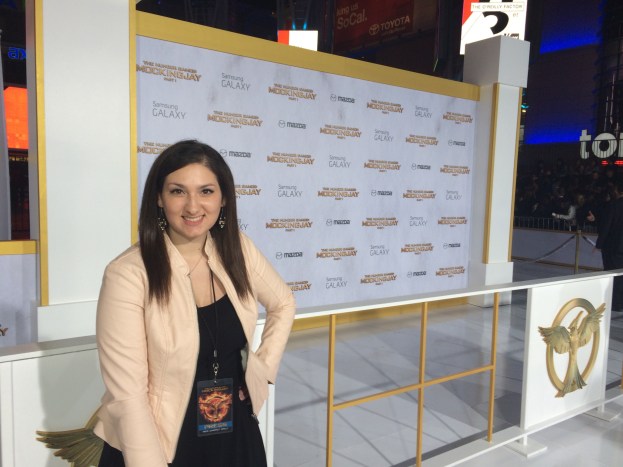
Sonia Gumuchian covering the premiere of “The Hunger Games: Mockingjay – Part 1”
“On one of my most glamorous nights, I was invited to join the red carpet of the ‘Hunger Games,’ and got to chat with the likes of Julianne Moore, Elizabeth Banks and Jennifer Lawrence” Gumuchian recalls.
The voice found in Gumuchian’s writing is gripping and visceral, hilarious and deliberate, engaging and unwasted. She is an unparalleled and important presence behind a keyboard, a mind behind the pages that continue turn the world of entertainment on its side, in a good way.
She admits, “I’m the type of person where I’ll say yes to nearly any experience, and no matter how dangerous or silly my adventures may be, I usually encounter an interesting story or person along my way, and most of my stories do come that real-life inspiration. I live life as a gatherer of stories. Every new day is an opportunity for inspiration, meeting strangers, and getting whisked off to new locations.”
Though she’s gained international attention for her storytelling capacity in the realm of pop culture and comedy, Gumuchian’s gift extends far beyond that alone. Her ability to speak bravely and candidly about tragedies such as the Armenian genocide in the piece “Coming to Terms with Genocide” has helped to shed light on heavy and hard hitting world events while also giving readers a deeper look into her personal world.
She explains, “One piece that I’m proud of is a reflection I wrote about the anniversary of the Armenian Genocide and my personal experience with it growing up. It was a hard piece to write, as I had to explore sometimes painful parts about not just the genocide itself, but my part in keeping the legacy alive.”
Without passionate, honest, and gifted writers such as Gumuchian, we, the human race, would never really know the true impact of incredibly sensitive, and even painful, events our cultures and societies have endured. Gumuchian’s article about immigration and her family’s personal migration history can be found in the ‘Volume 5’ print edition of The Fullest Magazine.
As a writer Sonia Gumuchian is one powerful storyteller who’s creative genius clearly spans the gamut and she is definitely one to keep your eyes on.
From the time she was a child, Youjia Qian always had a great interest in the arts and fashion. She learned to play the flute at a young age and began painting very early in her life. Music was always a great passion of hers, with an eclectic playlist featuring many genres. She enjoys expressing her attitude and emotions through clothing and accessories, which she has all her life.
“I think clothes show the characteristic of one person and the style that they want to express at that day. Same as artworks, dressing is also an art. To me, being a stylist enables me to help others to show their attitude with clothes,” said Qian.
Now, Qian is a celebrated stylist and art director, and a leader in her industry. She has worked on many successful music videos, such as “Say Less” for Roy Woods, “Devil in California” by Burna Boy, “Talking to Me” for Gab 3 and “Hollywood Angel” by BEXEY and Gab3. She has also made her mark with commercials, working with the famous department store Barneys New York earlier this year on their “Starwalk” campaign.
“I think the greatest challenge as an art director is pre-communication, since the visual effect is hard to express with words. Sometimes customers are not able to imagine what you want to express and then I need to prepare so many cases and proposals with clearer visuals to let them know what I want to express finally. I always make sure to discuss everything with my client in detail. Any problem that arises can be overcome with patient communication,” she described.
Such an attitude is why the art director was approached by newcomer DeathByRomy to take on her debut music video. DeathByRomy needed an experienced professional at the helm to make the project a success, and she knew Qian was just the person. Qian enjoys working with young artists, giving them insight into what it takes to make a hit video.
“I am very happy to work with female artists and hope to cooperate with more girls and new artists in the future,” said Qian.
Qian was eager to work with DeathByRomy. The two had an understanding that the video would have a slightly more feminine feel, and as the two are both female, they found it easy to strike a balance in what they both envisioned. They spent a lot of time discussing the details prior to shooting. They decided to use a dreamy color to express the feeling of youth, while interspersing a lot of cute shots to express a girlish feeling.
“I think this new artist is very willing to try new ideas and styles, so the actors in the audience are some of her own friends, and the cooperation with everyone is very harmonious and happy. We can also know what kind of things and styles young people like now through the communication,” said Qian.
The video was released in June of this year and was published by Elevator. Watch it here to witness Qian’s artistry first hand.
Everything you ever wanted to know about Hollywood's who's-who.











 Tinsel Town News Now