All posts by Lorraine Wilder

WHY NICKY MARTIN LOOKS SO FUNNY

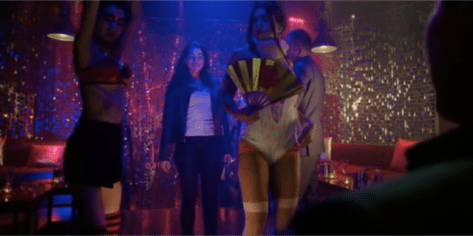
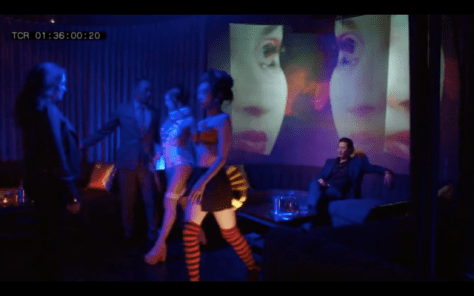
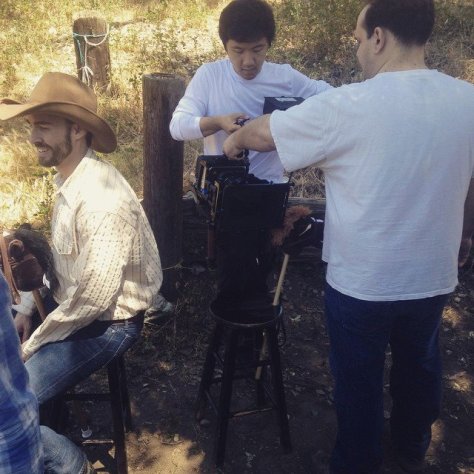
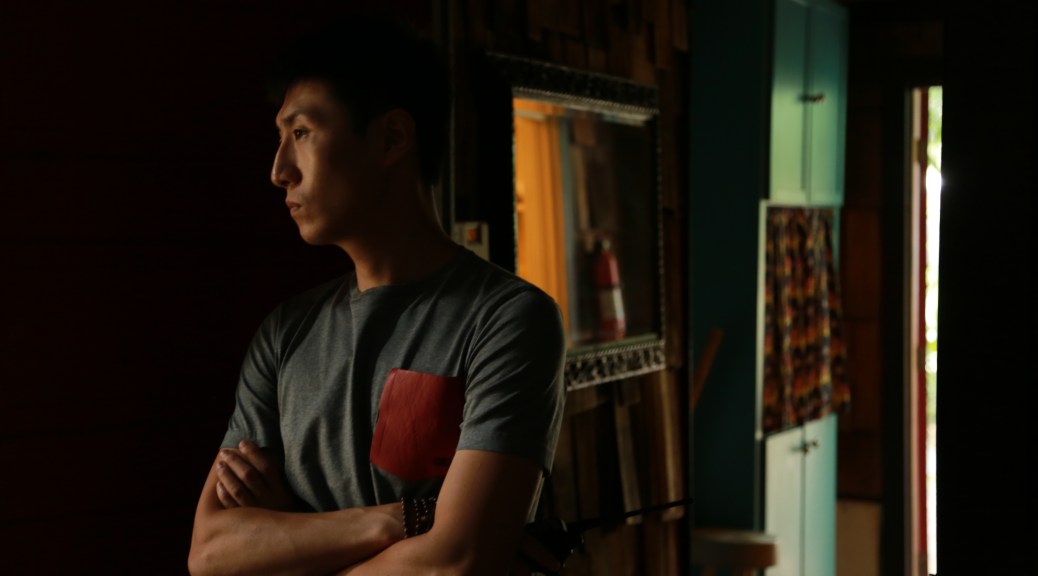
Comedy feels a certain way and it looks a certain way. There are not specific parameters which define this but it easily recognized. When you feel something is funny or see something that is funny, you know it. It’s a characteristic older than cinema itself. Before there was sound in films, comedy was more accurately conveyed than any other sentiment. Xing-Mai Deng displays this concept exceedingly well in Andrew Elliott’s “Nicky Martin: Country Superstar.” As a cinematographer with a highly diverse list of award-winning film credits (including this one which received an LAIFF award for Best Comedy/Dramedy and a Jury Award at the Melbourne Indie Film Festival), “Nicky Martin: Country Superstar” is yet another example of Deng’s ability to visually achieve the intent of the writers and directors he works with in an exception manner. With the ubiquity of the pursuit of fame, often via social media these days, the film’s story reveals the all too common hopes of someone who wants to be famous almost solely because they desire fame.

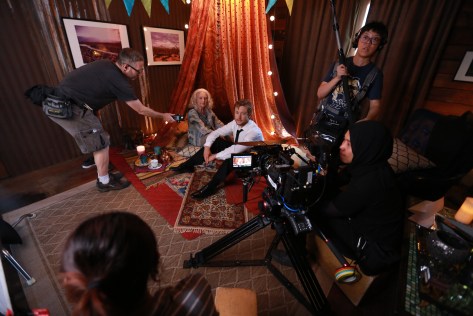
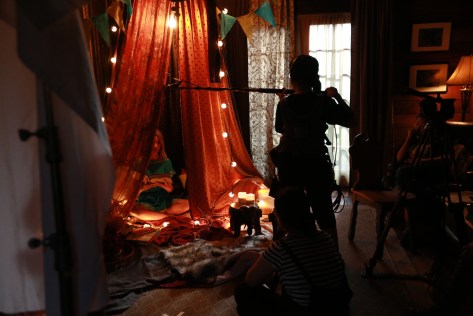
In an ironic turn, this written story necessitated studying reality TV productions in order to accurately be presented with authenticity. The look of the film needed to bring out the absurdity of the story while spoofing the standard reality TV show. The film’s director and Xing-Mai researched several American reality TV shows to study their lighting, framing, and documentary-like camera movement. The blocking and camera angles were all decided before the filming to achieve a deliberate chaotic appearance for the shots.

Much of the look of “Nicky Martin: Country Superstar” required Xing-Mai to use his extensive knowledge and talent to appear as if he did not possess these attributes. It’s an aspect that took him some time with which to relax. Constant second guessing and reassessment of going too far was required. He explains, “I purposely moved the camera in an amateur way in order to make the film look absurd. High-key lighting and amateurish camera movements brought the feel of a valid reality show to our film. There wasn’t any dramatic lighting. The camera movements followed the actors in a passive way rather than anticipating the characters’ actions as compared to a scripted production. We wanted to have the reality TV feeling but we also wanted some cinematic moments in the film. Some of the reality productions I researched were not lit at all. I added contrast for most of the scenes to give a cinematic touch to it but used it sparingly. Most of the reality TV shows I studied were not comedic so the usual reality TV look would not serve ‘Nicky Martin’ as it still desired to look funny. We did not want it to look like normal mockumentary as that look has become fairly common and we wanted something that stood out.”

12239655_939016469511700_6579762550975927828_n

The improv nature of the film and the actor’s performances kept Deng on his toes and required a fair amount of improvisation on his own part. As different cast members spontaneously changed and evolved their parts during the actual filming, Xing-Mai was required to essentially collaborate with them in terms of lighting and framing the scene, accepting what he could get away with in terms of these parameters. With knowledge of this potentiality in advance, he created general lighting schemes based on the blocking and devised a plan that would give the widest coverage possible while achieving the largest part of his goal. Because the film is a comedy, Deng used a wide warm color palate.

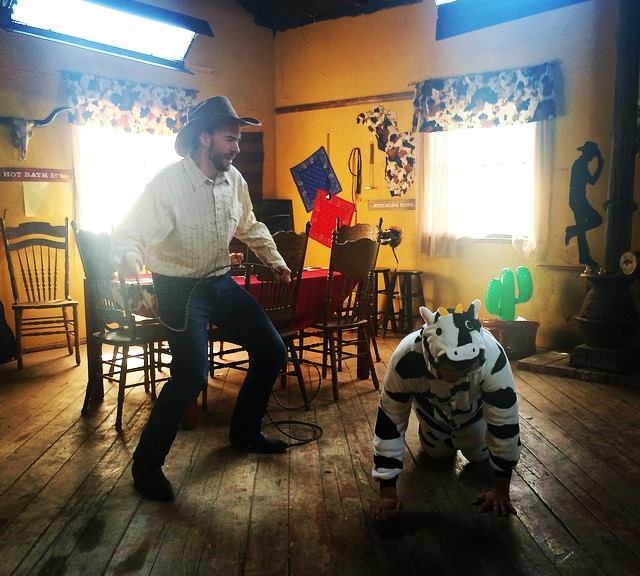
“Nicky Martin: Country Superstar” is a spoof comedy about a man who wants to be a country music star but doesn’t know how to sing or play guitar. He wants to be a cowboy but he’s afraid of all four-legged animals…so he rides on stools. Upon hearing about a singing contest at the County Fair, Nicky gathers his cohorts and prepares for what he believes is the chance of a lifetime. Numerous efforts towards achieving his goal of becoming a legitimate cowboy fall short. In a scene which drives this failure home and yet endears the audience to his tenacious drive, Nicky and his close friend Mickey reconcile by riding their stools together into the sunset as they have learned that being a cowboy is not about being famous but rather about possessing the cowboy spirit.

Andrew Elliott, the mastermind behind “Nicky Martin: Country Superstar” communicates, “I honestly had always planned to convince Xing-Mai to be the DOP for this film, since it’s very inception. Xing-Mai’s insight was invaluable to the success of the shoot. He was able to quickly and efficiently form a great crew and was always present with ideas and suggestions on how to make thing flow more smoothly. His work ethic was unquestionable on the shoot. Nicky Martin went on to success in the festival scene the following year, winning awards at several of these. Xing-Mai’s understanding of the story and unique ability to shoot the film played an integral part in winning these awards and in the success of the film as a whole.”

12196205_939014422845238_7081999955296816799_n

Immersing one’s self in an industry that contains some of the most skilled and creative minds and then attempting to shed the abilities you have come to rely upon as second nature in order to move you forward in said industry is disconcerting at best. Shakespeare often depicted the person who appears as the fool to often be the cleverest of all; communicating the idea that the misdirection of the depth of one’s knowledge and abilities is often the most difficult task of all. In “Nicky Martin: Country Superstar”, Xing-Mai Deng proves that he’s no fool but he knows how to convincingly present the appearance of one to the laughter and enjoyment of his audience…and does so as a master.

ARROW MAKES A BOOMERANG OUT OF ALISON ARAYA

Art can run in cycles or periods of fashion. As one of the most ubiquitous art forms, TV is as susceptible as any to being a part of this. It’s no news flash that we are in the heyday of superhero entertainment. Marvel, DC, and many independent comic book/graphic novels have been featured in production after production. There’s a good reason for this; these larger than life characters depict who we want to be, the stories are epic and provide an excellent form of escapism. When it comes down to it, people truly enjoy them. These Omni-present produtions provide many actors with opportunities to utilize their skills as well as live out some personal fantasies. How many times do you get the chance to save the world in tights? While Alison Araya’s character on Arrow (distributed by Warner Brothers Television) might not be Oliver Queen (based on DC comic’s Green Arrow), her recurring role places her in the “universe” as the fans say. Her continued presence comes with the fans and attention that the show and the genre are well known for. It’s not a new source of attention for this actress who has appeared in films based on comics (Avery has appeared in both X-Men Origins: Wolverine and Watchmen). Being a part of a fantasy world that is also grounded with a large dose of reality suits Araya just fine. By her presence throughout multiple seasons (Arrow is completing its sixth season), it appears that it suits the producers of this CW series as well.

With several seasons under its belt, “Arrow” is a vetted hit in the CW line-up. Exploits of these types of heroes are among the most popular of all action hits and “Arrow” is happy to be part of this movement. What drew Alison to the program is what most fans appreciate about it; the darker element of the story. This non-genetically enhanced hero who has earned his abilities through somewhat mysterious circumstances and is tenacious in the pursuit of criminals gives a realistic quality to “Arrow” that is part Batman, part Robin Hood, and a hint of LA Confidential. Flawed characters abound in the story but not in an overly defined moral sense. As a member of the SPCD, Araya’s character Officer Lopez was originally written as a more peripheral role but Alison’s on screen charisma quickly altered this. Lopez has continually appeared throughout the last three seasons of “Arrow” and has been a part of some of the most pivotal storylines in “Arrow.” For Araya, an accomplished actor with roles in action films, there was still a learning curve to playing a police officer. She somewhat hesitantly tells, “It was much harder than I thought. In my first scene I was arresting and handcuffing a perp…there was some fumbling on my part. No one would say I’m a natural when it comes to being a law enforcement professional. I even dropped the gun several times, but I was determined to see the scene through. Shortly after that first experience my agent called to say they had booked me on another episode and that was the beginning of the development of Officer Lopez.”images (3)

In the show’s world of superheroes and super villains, Lopez is a reality anchor for the show’s fans. A stoic member of the police department, she searches for the truth and is a more relatable element for the audience to connect with and bridge the gap with the more extraordinarily powered characters. Araya portrays this character with a calm demeanor which comes off surprisingly well considering Lopez is charged with enforcing the public safety in a community of such epic parameters. Even with the somewhat hyperbolic scenes, Lopez approaches her work as any urban officer would treat an everyday disturbance.

It increasingly becomes a required skill for the modern day actor to be comfortable working with what is not actually there but will appear later in post. Alison’s work on a number of feature films and TV productions has given her ample experience to master this craft. Actors are required to use their imagination but this modern technological facet takes the idea to a very literal place. Araya states, “It definitely makes for an interesting day on set. As actors we are asked to use our imaginations and drop into the reality of our scenes but days with VFX require big imagination. I love the challenge, I really have to work to create the world around me and say yes to it. You have to simply commit fearlessly!”

Alison concedes that the development of Officer Lopez into a character that would appear throughout numerous seasons of “Arrow” was as unexpected to her as anyone. Still, it’s something for which she has been continually thankful. It’s a perfect balance for the actress who has been able to accept roles in feature films, independent films, made for TV movies, and other productions simply because of the fact that Lopez is not a central part of every episode of “Arrow.” Her character’s recurring presence keeps her in the eyesight of fans of the show and gives her the freedom to pop up in other productions simultaneously. It’s the entertainment industry version of Johnny Appleseed. The situation can create a somewhat welcome growing pain for Alison who notes, “Working on the show is such a wonderful experience for me. Everyone involved is very kind and they truly interact like a family. Because I’m not there every day, I make sure to watch the show and stay on top of the story so it will make sense when I am on. That can be difficult sometimes when I’m trying to immerse myself in preparing for another role…but I’m not complaining; I’ll accept this kind of problem anytime I am fortunate enough to have it.”images (2)

These superheroes that we love to watch are exciting and inspiring to watch. They make us all feel that we are capable of doing great things and working for the common good. As Officer Lopez, Alison Araya reminds us that there are those among us who bridge that gap, that we all have the potential to aspire to service of others…and she is just plain ol’ fun to watch in the world of “Arrow.”

FILMMAKING WITH TALENT AND HEART: ZHENG HUANG

The role of producer is about money and schedules, correct? In its most simplistic terms, yes but it’s also about much more than that. For Zheng Huang it’s about art, personal connection, and the bonds that tie us to each other. While that might sound overly emotional, one should remember that we are dealing with the artist temperament; they are known to investigate feelings. A producer is the boss of a production. Everyone has experienced a boss who is only concerned with the bottom line as well as the one who is interested in you performing your job with excellence because you are happy to be there. Huang is very much the later. Every producer has a budget, schedules, etc., the nuts and bolts of their job. Approaching their role from an emotionally inspiring place is just as vital as a cinematographer who looks for the moving aesthetic in the frame (rather than one who simply makes sure everything is in focus). This approach is as intuitive as breathing for Zheng, which is likely why he has become such a sought after producer. Often the difference between good and great is how much you care; Zheng Huang cares a great deal.

Upon returning for the Cannes Film Festival, where his film “Lost” had been presented, Huang was interviewed about this by Neo. Neo was not only the host of an interview show but is also a director. Neo was instantly appreciative of Zheng’s passion for film and his unique perspective, so much that he enlisted him to take on the role of producer for his film “Never mind I Remember.”

LK2_5025

The film details the plight of a family who is forced to deal with an all too familiar difficulty in life. When seventy-year-old Lily loses her husband Frank to a heart attack, her son Jackie comes to her aid. He discovers very soon that his mother is dealing with a very acute case of Alzheimer’s. While Lily struggles to deal with her own constant sense of disorientation and unfamiliarity with those around her, Jackie comes to terms that he must now be the caretaker for his mother and realizes (perhaps somewhat selfishly) the impact on his own life. While both deal with the loss of Frank, Lily deals with the confusion of why her husband is not with her. The film is acted with mastery and captured with the same level of excellence. In one of the most tender and heart breaking scenes, mother and son find themselves in the same tent they used to play in decades before as Lily asks her son when Frank will return and he replies, “Let’s wait for him together.”

Zheng was drawn to this intensely emotional story by the script as well as a personal connection. He shares, “My mom’s aunt has had Alzheimer’s disease for many years but her only child never comes back home to see her. Luckily, her husband takes care of her very well. Because of genetic inheritance of Alzheimer’s, my own mother worries that one day she will begin to show signs of this disease. I am her only child and she has fears about my being too busy to take care of her properly. When she told me these fears of hers, I realized that this is a very deep and powerful topic, one which I want to explore. The son in the story is MYSELF but also every single child who has a busy career and big ambitions. Alzheimer patients can be a big burden for their children but there is no option here. Our mothers are our caretakers, our protectors from the moment we first come into this world. I directly relate to the story of this film and I know that there are many other people who do also. I knew that I wanted to be a part of telling this story and it demanded to be told with the proper emotional lens.”

The vast majority of a producer’s work for any project is in coordinating and scheduling, there’s no denying this fact. Obtaining permits, scouting locations, casting, “connecting the dots” is the norm for producers in a wide variety of settings. The secret ingredient of Huang’s approach is his focus on the communication and relationships of those he is involved with on each project. Neo, director of “Never mind I remember” reveals, “I feel extremely fortunate to have had such an excellent producer as Zheng Huang on my film.  As we were preparing for the shoot, I was having some problems with my 1st AD. This person has also directed and was giving a great deal of unsolicited opinions about the shot list. When I approached Zheng about the situation he said, ‘Neo, I will always support you whatever the decision you make in the end. If you tell me you will fire the 1st AD one day before shooting, I will be your 1st AD if you need; whatever you need, I’ll be there. The most important thing is: you have to be happy with what you do. You have to create your film, not your 1st AD’s film, or anyone else’s.’ This stirred something in me and I was able to confidently move forward and resolve the issue with my 1st AD, which meant that the entire production would benefit as well. Instances like this prove how Zheng is so much more than your average producer or someone who schedules events.”

LK2_5732

When discussing his definition of a producer, there are many familiar tasks and terms that Huang uses to describe his day to day. There’s a verbiage that he has in common with his peers and then there is one word which he continually refers to that stands out; empathy. It’s not something that you often hear a producer discuss as part of their skill set and yet Zheng professes that it is an essential part of what makes him successful as a producer. For someone who works with artists every day, it seems an obvious trait; to those who work with this producer, it is obviously Zheng Huang.

GORKEM CIFTCI: BEHIND “WOMAN WITH NO VOICE”

Gorkem Ciftci is pleased with himself, not in a smug manner but with a sense of satisfaction that he has made a positive impact. As the Art Director of the campaign “Woman with no Voice” Ciftci conceived of and created a campaign (with his team) to dramatically raise awareness of domestic abuse in his homeland of Turkey. While his vocation most often has him working with clients who are promoting everything from interior design/aesthetics to cars to TV programs, Gorkem has also utilized his talents to promote many socially minded ventures that exist in and border on altruism. The role of art director is itself steeped in both the creative mind and the business sense; it perfectly suits someone like Ciftci who thinks of helping others aspire to a better life and possesses the real world skills to enact this. While this may sound like an extremely benevolent view of those involved in the business/advertising realm, one need only consider Gorkem’s work on “Woman with no Voice” to understand it in a real world application. He passionately explains the situation and his motivation to become involved stating, “The real problem about domestic abuse in Turkey is that nobody is brave enough to speak out. The women who suffer from domestic violence are often economically dependent on their husband; this is why they choose to keep silent and not to talk about it. Silence of the oppressed makes this violent epidemic inevitable. Moreover, in rural parts of Turkey, religion and bigoted traditions contribute significantly to the suffering of women. They are often forced to get married in very early years, very few of them have chance to get education, and they are not really counted as human beings but rather the commodities of men. As a proud feminist, I have been seeking any chance to get involved in campaigns to combat patriarchy in Turkey. And I was fortunate to take part of a few over the course of my career. I knew that this one was going to be the boldest one. I knew from the start.”

This campaign was part of a greater movement named ‘’Every Breath, a Voice’’ that was dedicated to combating and ending domestic violence in Turkey. Numerous campaigns were created and events held annually to raise awareness on the issue. This group wanted a bold and provocative campaign that would spark national debate. As art director, Gorkem wanted to find a unique and dramatic way to convey the idea that the plight of these women was not receiving the attention that it deserved. He explains, “After researching and reading the stories from victims of domestic abuse, I had reached to the conclusion that a single major characteristic of victimized women is their silence, hopelessness in other words. With this focal point, we needed to come up with a creative execution that demonstrates the silence of these victimized women in an interesting and creative way; that execution was to associate this oppression with Facebook’s automatically playing mute videos (Facebook plays videos on mute in order to not disturb users while scrolling down on the newsfeed. This feature has been very significant to the Facebook users).


This idea was powerful but also created a major problem for Gorkem. This gravitas of the presentation rested on the idea of silence; if this silence was broken by a voice over it would diminish the power of the visual. The presentation would be decidedly simple. A woman cries out in front of the camera, wearing a plain dark shirt and a wedding ring while standing in front of a dark gray background. The drama is exponentially intensified by Ciftci’s decision to place text in the box to the right of the screen (the voice icon on Facebook video bar) corresponding to the Facebook feature. This communicated the twist that the cries for help from these women are not heard as the viewer attempts to increase the volume of the audio. It cannot be overstated how emotional and heart-wrenching the campaign is (https://vimeo.com/172093012).

Thirty Turkish actresses were viewed to portray this simple yet highly emotive role. The performance of the actress seen in the campaign is haunting, which is appropriate. Far from the glamour and excitement normally associated with being on set, Ciftci relates, “The set suddenly become a dark and depressing place as we began shooting. This was quite surprising for me. Even though we all knew that it was a screenplay, the screams of the actress were something terrible to witness knowing that millions of women suffer domestic abuse and had to face these horrors on daily basis. The original film had no audio, but we had to hear her screams in the studio for the sake of persuasiveness. Witnessing a re-enaction of such horror was upsetting to all on set that day. However, I also knew that this was a powerful cause and could not wait to have the film published so it would start contributing to the positive change.”

A significant difference between the “Woman with no Voice” campaign and those of a similar intention in the past is that the decision to use Facebook and Twitter to share its message resulted in a mass proliferation (via “shares”) and immediately accessible metrics. As opposed to traditional TV or print campaigns in which the public’s reaction is often uncertain, social media allows for immediate responses and feedback, without censorship. As the creators of “Woman with no Voice” had hoped, a national debate was triggered and millions viewed it. One of the most unexpected outcomes of the campaigns viral nature was that men were very eager to talk about the issue and were among the majority of those who “shared” it.

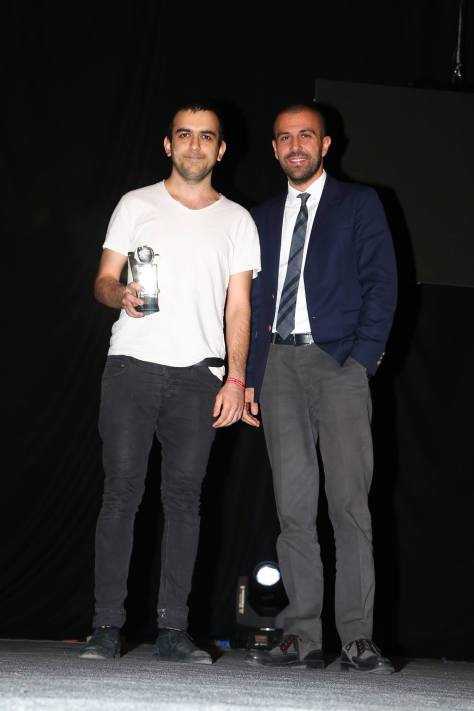
Polisan Woman with no voice Crystal Apple

(CRYSTAL APPLE FESTIVAL AWARD CEREMONY 2015, UNIQISTANBUL, ISTANBUL)

“Woman with no Voice” was overwhelmingly accepted and praised by the public. In addition, it received copious accolades that included: 1x Gold, 1x Silver, 1x Bronze at Crystal Apple Festival of Creativity (2015), 1x Gold Mixx Awards Turkey (2016), 1x Bronze Mixx Awards Europe (2016),
& 1x Gold, 1x Merit at Kırmızı Advertising Awards (2015). While awards always have a beneficial effect on a professional’s career, Gorkem states, “My involvement with this campaign truly deepened my understanding that I could use my role as an art director to really make a change. I think if we all found ways to use the abilities we have to help others rather than only to support ourselves, the world would be a much better place for everyone. I am humbled that I was able to do even a little bit to help the women of my country and I’ll be looking for opportunities in the future to do more.”

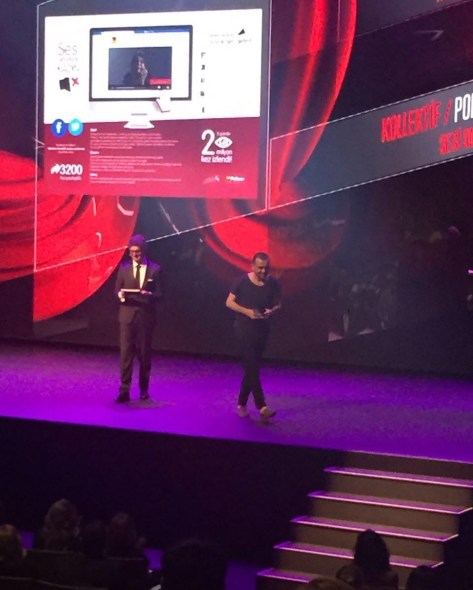
IMAGE0009

(KIRMIZI AD SHOW 2016, ZORLU PERFORMANCE HALL, ISTANBUL)


DIRECTOR ALEXANDRA LA ROCHE ON HAVING FUN WITH EUREKA

Science and Tech nerds are the new rockstars. There was a time when the brains behind these types of advancements were kept hidden away while the powers that be put a public face on those they deemed marketable. Carl Sagan, Steve Jobs, and many others completely changed that. Sci-Fi Channel’s “Eureka” presented the idea of an entire community of these brilliant minds. The Emmy nominated and Leo award-winning TV show was a ratings hit during its six year run as one of Sci Fi’s highest rated series. One of the brilliant minds behind the scenes of “Eureka” was director Alexandra La Roche. The writers of the series are self-proclaimed science geeks who structured many of their themes on real or postulated science. This coupled with the show’s heavy oversight by actual science consultants not only informed La Roche but required her to be on her toes. In contrast to the normal greed, sex, and ensuing power struggle, “Eureka” episodes presented conflict of a more cerebral nature. Alexandra concedes that it’s one of the most unusual and fun shows she has ever directed precisely due to this aspect.

“Eureka” is the story of a scientific community, in large part based on the perspective of the town’s sheriff Jack Carter. Carter cooperates with scientific geniuses in the community who work for Global Dynamics. They often find approaches to resolving situations that require more cerebral effort than “stop in the name of the law.” A perfect example of this is “Up in the air.” This episode was based on the opening sequence of the show which depicts the town floating away as the Sheriff watches. The opening had never been explored as a story before. What seemingly starts out as a normal bank robbery quickly became a situation in which the entire bank had been taken, the whole building! An element of the Higgs Bosen (based on real science) has been stored in the bank and somehow is effecting everything in the town. Carter is tasked with having to get the element contained and bring everything back to earth. Unfortunately, the bank is floating 4 miles above the earth and nothing can fly him there. He does make it, but the bank is on a terrible tilt and when he does get the element contained, the bank starts to plummet, listing back and forth and sending him in all directions with amazing physical comedy from Carter, played by Colin Ferguson. The day is saved at the last minute and order is restored. Even though “Up in the air” employed extensive use of VFX and filming trickery to make the scenes believable, Alexandra believes that the performances of the actors are the cornerstone to any production. For this particular episode, the physical comedy performed by Colin Ferguson (starring as sheriff Jack Carter) due to the gravity challenged nature of the situation was a high note (no pun intended). On working with La Roche, Ferguson proclaims, “Alexandra is one of, if not the best, director I have ever worked with.
I think it is fair to say that I have a deep understanding and appreciation for Alexandra’s talent. When we worked together, we worked in tandem to improve, correct, defend, and in short, save eighty plus hours of television from lesser hands than hers. She has the rare ability to follow the story, hear the actors, know the technical, and bring it all together in a manner that gets better, quantifiable results, faster than most, and in the form that others only dream they could achieve. This is exceptional. She always helped. She was never wrong. Not once. Our show had the quality that it did because of Alexandra La Roche. When I am asked by someone which episodes to watch to see if they will like I show I always say ‘Up in the Air’ or ‘Smarter Carter’, both of which are Alexandra’s episodes. She is an ally, she is a friend and she is someone I will always look up to.” Perhaps the reason that Alexandra is so respected and appreciated by the actors she works with is due to her honesty with them. She stipulates, “I had an excellent rapport with all the actors on ‘Eureka.’ Our deal was simple; I did not lie. If Colin wanted an honest opinion, he knew he would get it from me. Actors are so used to smoke being blown up their asses, they were really quite happy for me to say what I really thought. Of course, I never approach any situation with a negative. If I see a problem, I only mention it if I have a solution or proposal on how to solve it. This is what I know endeared me to the entire cast, with a particularly close working relationship with Colin as he trusted me implicitly.”

Screen Shot 2017-06-26 at 8.58.25 AM

One of La Roche’s favorite experiences directing for Eureka was the episode “Smarter Carter.” It combined many of the elements that were so endearing about the series: science, VFX, and comedic performances. A confrontation between sheriff Carter and two disembodied legs in the town square was a scene which Alexandra had conceived of herself. Kevin Blake (played by Trevor Jackson) and the sheriff square off with the legs in an attempt to capture them. The director describes, “It was written as a simple chase through the town square ending in a crash into the café patio. Parkour was just getting really popular so I expanded the scene and created a sequence where the legs jump, leap, and hang all over the town square ending up with Carter pinned in a head lock. This was a massive sequence and I had to call out to the actors every beat and every move because the legs were all CGI.  I had no voice left by lunch!! We had to use green screen elements as well. It took 7 hours to shoot, but it was a great scene, very funny and well worth it.” These situations give evidence that La Roche had a deep understanding of the personality the producers wanted “Eureka” to project. While executing these scenes can be taxing and stressful, the final result was well worth it. Screen Shot 2017-06-26 at 8.58.16 AM

While “Eureka” left a lasting impression on its fans and science nerds everywhere, the road is two-way. Alexandra admits that to this day that she gravitates towards science magazines on plane rides and whenever she has free time. The experience working on “Eureka” led not only to many more professional opportunities (La Roche has directed CW’s “Flash”, USA network’s “Dead Zone”, and many others) but left her with a lifelong interest in science. Sometimes the conduit for learning resides in unobvious means.

Screen Shot 2017-06-26 at 8.57.41 AM

Featured Model: UK Bombshell Alice Phillips

Hailing from Hertfordshire, England blonde bombshell Alice Phillips began her modeling career a little over three years ago when she was scouted by Anne Tilby, a UK-based artist who was collaborating with a London designer, and was immediately attracted to Alice’s look and asked her to model for their project.

In the years since that fated encounter, Alice’s presence as a model has grown exponentially; and with her flawless fair skin, mesmerizing blue eyes, pouty lips and perfect blonde hair, it’s no wonder why. The girl is a knock out!  

She has a unique way of exuding the type of appeal that says girl-next-door and sexy vixen all at the same time, and it wouldn’t be at all surprising if she get’s tapped to become a Victoria’s Secret angel in the very near future.

Model Alice Phillips
Model Alice Phillips featured in the Sept. 2015 edition of Hello! magazine

Early in her career Alice was featured in the September 2015 issue of Hello! Magazine, one of the UK’s most popular magazines specializing in celebrity news. Alice, who was featured in a prominent beauty editorial for the magazine, shot with internationally known photographer Bjoern Kommerell, who’s known globally for his shots of celebrity icons such as Elton John, Danny Trejo, Ashton Kutcher and many more household names. Wearing very little make-up, Alice looks natural, calm and graceful, creating a striking yet relatable look that easily caught the attention of the magazine’s readers.

Since she got her start in the industry Alice has made a name for herself as a uniquely versatile model. Over the years she’s been the center focus for a plethora of ads and magazines back home, but her appeal has definitely extended beyond the borders of the UK.

Brands across the world have continued to seek her out to be their featured face in a long list of campaigns, editorials and billboards, including those for companies in the U.S. such as New Yorker’s Apparel. Being chosen to model for New Yorker’s Apparel– arguably the largest women’s wear wholesaler in the U.S., Alice appeared on several billboards and print ads distributed across Los Angeles, New York and Las Vegas earlier this year. Alice’s slim figure and dynamic look made her the perfect model to wear a variety of styles for New Yorker’s Apparel including everything from upscale evening dresses to sleek and fitted casual wear; and not surprising in the least to anyone who’s seen her work, she looked stunning in them all.

Alice Phillips
Alice Phillips in a print ad for New Yorker’s Apparel

Earlier on in her career that same versatility that landed Alice a coveted position as New Yorker’s Apparel’s featured model caught the attention of Goals Boutique, a popular UK clothing store. In 2015 Alice shot a series of photos for Goals Boutique that were featured on the company’s website and were integral to driving sales. For Goals Boutique Alice exhibited more of a sexy sultry look, one where her ability to take on different poses without looking ‘forced’ was essential to making each outfit look hot, which was the key vibe the company was going for.

Though Alice’s physique and natural talent for adapting her look to fit whatever attitude the client is trying to achieve has made her a sought after model for a range of clothing, over the years she has also be tapped to model for several make-up companies.

Alice Phillips
Model Alice Phillips for Jessica White Cosmetics

Her strong cheekbones, voluminous pouty lips, and perfect nose caught the attention of Sports Illustrated supermodel Jessica White earlier this year who cast Alice to model her new line of lipsticks in Paris for her company Jessica White Cosmetics. At 22-years-old, UK-based model Alice Phillips is in hot demand; and with a naturally youthful look, she definitely has a long and fruitful career ahead of her.

SOCIAL MEDIA PRODUCER EZGI EREN: MAKING DREAM COME TRUE

Social Media; it’s intimidating and sometimes confusing to older generations and the thought of being without is unthinkable to younger generations. Your interpretation of it and its prevalence in your life is somewhat delineating and defining of your generation en masse. Social Media producer/manager Ezgi Eren is right in the sweet spot of Social Media (SM) and the idea of online interaction. Forgive the pun but she seems to be hardwired to achieve in the industry. She grew up in Izmir on the west coast of Turkey and used Myspace to connect with others worldwide about her interest in music, fashion, and creativity. A self-described shy young girl, being online empowered her with an ease of sharing thoughts and ideas. These days you’ll find Eren shuffling back and forth between her two modern day home cities of New York and Los Angeles conducting her work with clients and growing their brands with her SM skills. Her early interest and embrace of SM and its ability to connect with others for a variety of ends has served both Eren and those she works with quite well.

Dreaming has always been a part of Ezgi’s formula for life. While attending university she had thought she would be pursuing a role in music management, working with famous musicians from around the world. Her intuitive nature working with SM would lead to a redirecting opportunity. She recalls, “I was 20 when I started an internship at Opening Ceremony Web. I applied when I was still in Turkey. At that point going to New York was still a pipe dream but I ended up having a few Skype interviews and got the job; they even waited over a month for me to get my visa. My official title was Online Marketing and Social Media Intern. I worked directly with the Social Media manager and I learned a lot from her. I started out with compiling FB albums with the brand’s press mentions and later got to help with insights and analytics to figure out which posts work best on all social channels. I learned a lot about insights during this internship. I tracked all stats on google analytics and presented these to the whole team once a month. It was terrifying as an intern but I’m so grateful I got to do it as it made me so much better at public speaking.” Once again, SM helped a somewhat shy Ezgi break out of her shell.

Eren’s skills became so adept that she was recognized and hired to work as a social media manager to celebrity hairstylist Jen Atkin, whose social media presence is almost as well-known as her famous hair styles! Atkin was chosen Creative Influencer of the Year in 2016 by WWD. “Jen Atkin has always been one of my professional inspirations. I think she was one of the first people who was relatable on social media without even trying. She just makes her followers feel like they’re on her journey with her and I think that’s a powerful connection to establish. It’s such an honor to work as a social media manager to one of my ultimate social media she-roes!” notes Eren.


Ezgi is also most recently working on a new segment for Whitney Casey’s company Finery. Finer  is a highly interactive web based system for organizing, styling, and management of one’s wardrobe. It’s yet another indicator how people are using online methods to cultivate organization and style. Ezgi was brought on as Finery’s social media producer/manager shortly after the company’s conception in 2016. Casey (CEO & Founder of Finery) states, “It was important for us to have a social media manager from the beginning of our company to make sure we have a strong visual brand identity from the get-go. Ezgi worked closely with us from the beginning to achieve that and knows a lot about who we are as a brand and who exactly our customers are. “ Finery recently launched an exciting new segment on the site called “Featured Wardrobes”. Casey states “Our initial idea was to launch a blog for Finery to dip our toe in content and spotlight our friends and people we admire in the fashion industry but then we started receiving more and more comments from our users asking for styling advice, inspiration, etc. People don’t just want to see their clothes; they want you to help them put them together in different ways. We had various wardrobes we were curating for different reasons, mostly to continuously test out the site and its new features. Ezgi started helping me put one together and I loved all the items she curated, I even bought a few!! Most importantly it was great to see a wardrobe in front of you that was curated for a specific style. This combined with the comments from our users had us thinking, why not feature different influencers every month and give their fans a chance to go through their wardrobe digitally, instead of going with the same old blog content? Ezgi has been a key player in Finery in this process of rolling out a whole new way of presenting content. She knows the brand so well and cares about developing real relationships with our audience, which is part of what makes her so great at what she does.”

Seeing this professional woman who shuttles back and forth between NYC & LA, working in an exciting new industry…it’s hard to imagine that shy young girl from Izmir who only gained the courage to truly open up when she was typing to someone on a computer. In such a short amount of time both Eren and the way the world uses SM has evolved a great deal. Learning to find your passion and embrace change has worked well for Ezgi and it’s a good lesson for all of us. When considering change she states, “I think about this a lot because there’s no way of predicting what shape SM will be in in 20 years or more, but I think a big part of working in SM is collaborating with people from many adjacent industries: photography, videography, design, tech, styling, & others. I try to acquire as many new skills as possible from them along the way and just be more prepared for whatever SM managing turns into in the future.”

Ezgi 4

From the Stage to Screen, Actress Gaia Passaler Dazzles Audiences

Gaia Passaler
Actress Gaia Passaler

Hailing from Milan, Italy, actress Gaia Passaler has proven her unique gift for embodying strong and dynamic female characters on both the stage and screen through a plethora of highly watched productions. From her riveting performances in plays such as “MARILYN!” and “Inversion” to the award-winning Bashford brother’s films “2 Minutes to Live,” “Unspoken” and “Memoirs,” Passaler has left an indelible mark in the minds of viewers.

When asked about what drives her to perform, Passaler explained, “[It’s] the unique feeling of happiness, liberation and power that being on stage or in front of the camera gives me. And the feeling I had the first time I saw in a friend’s eyes that he had been somehow touched by what I had done on stage. Experiencing what it means to be human by putting myself into someone else’s shoes is an act of sublime compassion, that to me is the true meaning of existence.”

Earlier this year Passaler gave a dazzling performance in the modern play “Inversion,” which premiered at the Sacred Fools Theatre Company in June as part of the Hollywood Fringe Festival. Performing to sold-out audiences each night, Passaler took to the stage in the starring role of Natalia, a beautiful and confident Russian girl, and the love interest of the main protagonist Adam, who is played by Aditya Putcha.  

Written and directed by Aditya Putcha, “Inversion” centers on Adam, an awkward mathematician who can’t seem to find the love he so desperately desires. With advice from his friend Brendan, played by Adam Daniel (“Inside Room 334,” “Murder Book,” “Betrayed”), the kind of guy who is always surrounded by women, Adam decides to lower his standards and take a chance on dating Rhonda, played by Shayna Spielman (“GodComplx”) an older woman with low self-esteem. But when Adam encounters Passaler’s character Natalia, Rhonda’s roommate, he becomes hopelessly enthralled by her, which causes understandable turmoil between the two women.

Gaia Passaler
Cast and crew of the play “Inversion” (left to right) Shayna Spielman, Gaia Passaler, Aditya Putcha, and Lena Zhani, director and producer Elise Hodge (front center), Adam Daniel (front right)

“I think [Natalia] expresses a very common kind of frustration in the difficult world of modern dating. That’s definitely my favorite part of the play,” explains Passaler. “I brought in all my negative dating experiences, they became alive again in my memory for a moment every time I was on stage fighting with Rhonda and gave me that anger and the stakes necessary that made the scene come alive, together with the desire to shake my friend from her lethargy and the desire to defend myself from the accusations.”

While Passaler has proven her inimitable talent on stage through a wide range of productions, her skill on screen has been equally as important to her overall success as an actress. Last year Passaler played a critical role in Jinh Yi Shao’s (“Lee’s Market,” “Intervention”) film “Toenail” where she acts alongside Kevin Ashworth from the Golden Globe Award nominated series “Scandal” and Dante Swain, who is known for his roles on the series “NCIS” and the two-time Golden Globe nominated series “Silicon Valley.” The film, which took home the Third Place Award from the HBO Visionaries Competition and is currently available through HBO GO and HBO NOW, gave Passaler the opportunity to prove her dramatic skill on screen where her magnetic presence came across with ease.

The actress admits, “I love characters with a lot of contradictions because they are the most interesting and the most challenging ones. And I love great, epic stories. Picking one role over another will always be based to me on how much of a complex journey the character had in the past and is going to have in the story, and how much of the human condition I am able to portray to the audience through that role.”

With an impressive repertoire of work already under her belt, it’s not at all surprising that actress Gaia Passaler has been tapped to star in several upcoming film and television productions. Up next for Passaler is the film “Cocktails & Brothers,” award-winning director Catherine C. Pirotta’s (“Dreamkiller”) thriller film “The Mystery of Casa Matusita” with Golden Globe Award nominee Malcolm McDowell (“Fantasy Island”), as well as the series “Emergency L.A.” and “Mysteries of the Unexplained.”

CINEMATOGRAPHER SHOWS BOTH SIDES AT THE SAME TIME IN PARENT, TEACHER

Chris Lew is someone who enjoys learning. Though he has served on numerous productions as Cinematographer, he is adamant that being creative is not about being comfortable. Anyone who pursues growth comes to the realization that growth only comes about through tension, stress, and (hopefully) release. He accepted the DP position on the film “Parent, Teacher” with the understanding that it would be difficult in a number of ways for him. What he had not expected was that this would be his closest foray into actually becoming a passive actor in a film. It’s an interesting and unusual experience that began when the film’s writer/director Roman Tchjen approached Chris to be the DP for this tense film.

“Parent, Teacher” tells a story that is not completely unheard of. What it does so ingeniously is to communicate the emotional temperature of a room during a stressful situation. In “Parent, Teacher”, a father meets with his son’s teacher after school when his son is accused of attacking a classmate. Who is right and wrong in the situation becomes increasingly harder to define as the father and teacher argue their beliefs.

Roman Tchjen has a long history of collaborating with Lew, creating a high level of trust and understanding between them. When Tchjen wanted to present a story in a very non-traditional manner, he was firm about the need for Chris’s involvement. While most films display the commonly used and accepted approach: shooting coverage, having a protagonist with a clear goal, a clear villain whom the hero must overcome etc., Roman wanted to create something that was more honest and lacked a clear answer because in real life these types of issues aren’t black and white. Going into the film, Lew and Roman made the commitment to have as few cuts as possible. The entire film was to be split it into two takes, foregoing any coverage, any establishing shots, or cut aways. This is the cinematography equivalent of riding a bull at the rodeo while being handcuffed from behind. All of the “go to” tropes of a DP were stripped away leaving Lew to formulate an approach that would still stimulate and entice the viewer. Chris communicates, “We focused solely on the performance and the conflict between these two people. This goes back to taking risks. After reading the script I knew it wasn’t written to be the most visually stimulating film so rather than making the visuals flashy, which Roman really didn’t want, I instead thought of ways to make it immersive and use that to make the film engaging and interesting. It was this approach that contributed to the decision to shoot extremely long takes. It took a lot of work for Roman and even more so for the actors. There were many sessions leading up the shoot where everyone practiced their lines. Once they were feeling comfortable, I came in for my own rehearsal to see how we could block the camera. I needed to know at what point I was going to be on each character and if we were going to see some lines spoken on camera or off screen. Making sure I was on the right actor for an expression was key too. It was a lot like a dance that the actors and I were doing together!”

A reason for which Roman was so insistent concerning Lew coming aboard as DP was due to his style. Just as director’s have a signature which leads many to hire them, Lew has been recognized for his ability to enable the audience to have an intimate experience via his choices and camera work. It appears effortless for Chris to make the camera unnoticed in any way and at the same time pick up every nuance in the actors faces. The question of how does the action on screen affect how much the camera moves really comes down to the content. Film is art and art is subjective. For Lew it comes down to the content of the scene and the emotion the he and the director want to convey.

“Parent, Teacher” required extensive preproduction for Chris which is very atypical for a DP. The story and the unique approach necessitated Lew being there for rehearsals. Because the camera essentially appears as a mute third party witness, Lew needed to almost “perform” as another participant in the scene. Every project prior to this one had this DP engaging in the typical method of planning the scenes out based on the locations with the director as they reviewed photos. By contrast, in this production the camera was very much a character in itself, with blocking and queues that needed to be timed down to lines. If Lew and Tchjen wanted the film to feel completely out of the norm they were going to have to start with this beginning stage. Long takes helped with this. When the father first walks into the classroom at the beginning of “Parent, Teacher”, the camera follows him in but then hangs back as he walks over to the teacher to shake her hand and sit down. This was the wide establishing two shot to set the scene. As the teacher starts to explain what had happened, the camera begins to slowly creep in. Lew’s advance is so slow and subtle that you don’t even notice as he moves in to a close up. Chris describes, “Eventually we’re out of the two shot and just on the father when he starts to explain that he doesn’t see anything wrong with his son’s actions. I wanted to isolate him in the frame at this point to represent that he is in his own world. He’s clearly an immigrant and not used to Western ways of handling situations of violence. The teacher becomes increasingly frustrated as the two cannot agree on what is right and wrong, all the while the camera is slowly getting closer and closer. I tried to hide the walk in with the camera panning back and forth between each character. Just before the climax of the argument, the father has given up and is lashing out at the teacher, feeling targeted and attacked for his beliefs. Here, the front of the lens is inches away from the actor’s face. You see every detail of his expression and all the frustration in his eyes before he jumps up away from camera breaking the tension. Essentially I wanted the entire conversation to be one slow, imperceptible push in that brings the audience closer as the tension rises.”

Chris felt the camera needed to be handheld to create this immersive feeling, to make the audience feel like another person in the scene. It was a decision that Chris would have regreted if not fully committed to achieving the goals he had set for this film. The challenge was the length of the takes and the physically demanding nature of the equipment he chose. “Parent, Teacher” was shot using the Alexa XT which is a large, heavy camera. Hand holding it, trying to keep the frame steady for such long takes is extremely difficult.

Producer Kegan Sant admits to being overwhelmed upon seeing the final product. He declares, “When you are in preproduction of a film you have a vision in your mind of what you hope it will look like. I can honestly say that the idea I had for ‘Parent, Teacher’ pales in comparison to what you see when viewing it. Christopher was essential to the way in which the story was presented to our audiences. His incredibly striking camera work and expert understanding of shadow and lighting allowed for the film to reach impressive narrative heights. The way in which he reflects the overall despair and confusion of our main character throughout the frames is what makes Christopher such a valuable asset to any production that seeks out his talent. His efforts throughout the film solidified the film’s high standing and reception. We would not have received the same overwhelmingly positive reaction without his talent as cinematographer.”

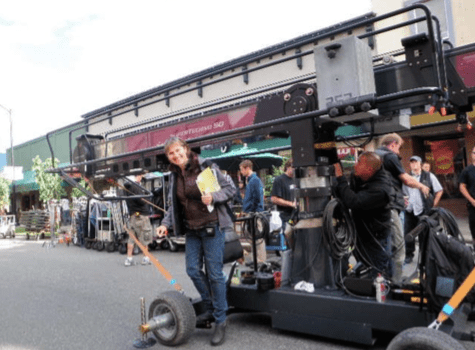
Snowblink set

Chris Lew admits that his work on set left him consistently soaked in sweat from long takes wielding a heavy camera. However, he also admits that taking a risk and trying to create a film which stands apart from the norm is something that he will hold onto much longer than an aching back or sore arms.

IS PHIL LUZI THE SUPERHERO GENRE’S FRENEMY OR BFF?

There’s no being lukewarm when it comes to superhero movies. It’s either love them or mock them. If you’re not standing in line to see the newest Marvel or DC Batman vs. Superman vs. King Kong vs the Crab Legged Prestidigitator film, then you’re likely mocking those standing in line. Wrong; in fact, wrong bigtime! A group of very funny and very talented comedy actors/singers showed their affinity for these films while also pointing out some of their shortcomings in the appropriately titled Man of Steel Song. If you recall the Dean Martin Roasts (the present incarnation of which is the Comedy Central Roast), then you understand that the purpose is to show love and also keep someone aware of their fallibility. The combination of superheroes, comedy, and singing was the triple crown for Canada’s Phil Luzi. Luzi is an instantly recognizable name in Canada’s improv scene as well as on comedy series (such as CBC’s “Terrific Women”) and feature films (The Devil’s Tail), and is vigilant in his search for different ways to display his talent and sensibilities. Truth be told, Phil was beyond being a pushover when Melissa D’Agostino (Writer and Star of Man of Steel Song) asked him to join the cast. Luzi confesses, “I was so excited when I was invited to play Green Lantern in the super hero parody Man of Steel Song, which went on to be a huge success. Not only did I get to perform as Green Lantern, but I was also the lead male voice on the soundtrack! That’s something that’s been on my bucket list forever. I love playing and singing with Melissa, not to mention with other cast members who are absolute dynamos. We were given the opportunity by our director, Matthew Campagna, to improvise and play, and I believe that’s what makes the short so, so good!”

ManofSteelSong1

Man of Steel Song became an internet sensation, and went on to be featured and recognized in many film festivals. It satirizes the disposability of franchise film-making that is rampant in the superhero genre, namely between DC and Marvel. In the short film, superheroes gather in a church to mourn any shot they may have had at a big screen feature. Luzi plays The Green Lantern, made famous by Ryan Reynolds. While D’Agostino’s Wonder Woman has reason to feel upbeat these days, Phil’s character comes to terms with the likelihood that his shot at anything more might be over too since it was a box office flop; all thanks to the overexposure of the golden children of the comic world, Batman and Superman. The superfluous drama in which the actual superheroes are immersed exacerbates the implied and stated comedy of Man of Steel Song. Perhaps the only thing funnier than someone who isn’t in on the joke is an individual who simply doesn’t have a comedic thought or expression. Phil states, “I think any grown person wearing a cape in tights and makeup is hilarious. Also, I love wearing a cape in tights and makeup. Green Lantern, specifically is hilarious to me because, if anything, I’m a Superman fan. The Green Lantern is MAYBE in my top 5 and even then, I don’t really know if that would be the case if his lantern was another color. Truthfully, I don’t really follow superhero movies as an adult like I did as a child. As with the tooth fairy and Santa, there just came a time when I stopped believing. I lost interest somewhere along the way when the novelty of it wore off and superhero movies became a dime a dozen.”

The ironic thing about Phil’s involvement in this production is that it reminded him of his real life superpower as well as realizing a dream of his own. While a blemish faced teenage Peter Parker became bitten by that radioactive spider or an adolescent Bruce Wayne began his training to become the world’s greatest detective, it was his natural inclination to easily elicit laughter that set a young Phil Luzi apart from his classmates and peers. He recalls, “Being comedic is the first talent that made itself apparent to me while I was growing up. Friends would say ‘you’re so funny!’ or ask me to say something funny! For a while, I took it offensively like I was a clown or something. Like they were laughing AT me and I didn’t know why; like the Joe Pesci scene in Goodfellas when he freaks out on Ray Liotta. But now I love the idea of making someone laugh. It’s the best sound in the world. It means someone is watching, that I have an audience. I guess I prefer comedy more because I love laughing so much myself. The sound of it means I’m doing something good…that something I’m doing is making someone’s day better or more memorable.”

ManofSteelSong2

In the short film, Melissa D’Agostino rewrote the lyrics to the famous Crash Test Dummies hit “Superman’s Song.” Luzi sings the male part in this duet and delivers it with impressive facility and presence. One almost wonders if he lip synced to a professional vocalist performance but he is adamant that the male singing was all him. “Singing on the soundtrack was without question my favorite part! It has always been a goal of mine to be on the soundtrack of a film, whether it was an animation or a musical. Man of Steel Song gave me that first opportunity. I love singing, and it’s actually been a while since I’ve done a musical. After I started Second City, that part of my life sort of dwindled. The only time I get into a sound booth now is for commercial or animation voice gigs, so this was a real treat. This was my chance to bring that part of my performance abilities back to the surface, and now I want to do it more!” comments Luzi.

ManofSteelSong3

As Phil did in his younger days, the makers of these superhero franchises might misconstrue the intention of Man of Steel Song if they hear of it secondhand or don’t truly pay attention when viewing it. They would make a serious mistake if they took it as ill-natured mocking. It is the most affectionate type of comedy; that which says you are loved and we feel close enough to you that we can say it is funny when you stumble on a pebble in the road. Luzi is an ideal messenger for this. His leading man looks, his comic timing, and his singing ability just might place him in contention for an actual superhero role and, more than anyone, Phil Luzi finds that incredibly amusing.