All posts by Lorraine Wilder

Featured Model: UK Bombshell Alice Phillips

Hailing from Hertfordshire, England blonde bombshell Alice Phillips began her modeling career a little over three years ago when she was scouted by Anne Tilby, a UK-based artist who was collaborating with a London designer, and was immediately attracted to Alice’s look and asked her to model for their project.

In the years since that fated encounter, Alice’s presence as a model has grown exponentially; and with her flawless fair skin, mesmerizing blue eyes, pouty lips and perfect blonde hair, it’s no wonder why. The girl is a knock out!  

She has a unique way of exuding the type of appeal that says girl-next-door and sexy vixen all at the same time, and it wouldn’t be at all surprising if she get’s tapped to become a Victoria’s Secret angel in the very near future.

Model Alice Phillips
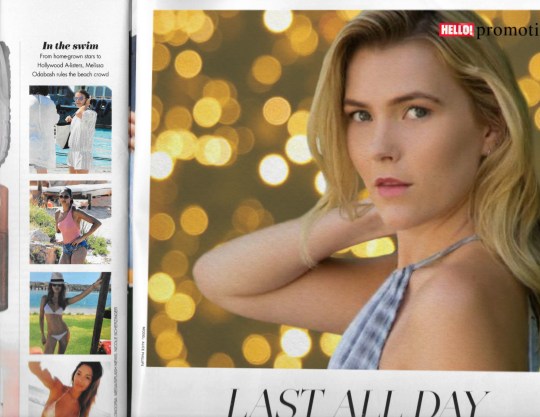
Model Alice Phillips featured in the Sept. 2015 edition of Hello! magazine

Early in her career Alice was featured in the September 2015 issue of Hello! Magazine, one of the UK’s most popular magazines specializing in celebrity news. Alice, who was featured in a prominent beauty editorial for the magazine, shot with internationally known photographer Bjoern Kommerell, who’s known globally for his shots of celebrity icons such as Elton John, Danny Trejo, Ashton Kutcher and many more household names. Wearing very little make-up, Alice looks natural, calm and graceful, creating a striking yet relatable look that easily caught the attention of the magazine’s readers.

Since she got her start in the industry Alice has made a name for herself as a uniquely versatile model. Over the years she’s been the center focus for a plethora of ads and magazines back home, but her appeal has definitely extended beyond the borders of the UK.

Brands across the world have continued to seek her out to be their featured face in a long list of campaigns, editorials and billboards, including those for companies in the U.S. such as New Yorker’s Apparel. Being chosen to model for New Yorker’s Apparel– arguably the largest women’s wear wholesaler in the U.S., Alice appeared on several billboards and print ads distributed across Los Angeles, New York and Las Vegas earlier this year. Alice’s slim figure and dynamic look made her the perfect model to wear a variety of styles for New Yorker’s Apparel including everything from upscale evening dresses to sleek and fitted casual wear; and not surprising in the least to anyone who’s seen her work, she looked stunning in them all.

Alice Phillips
Alice Phillips in a print ad for New Yorker’s Apparel

Earlier on in her career that same versatility that landed Alice a coveted position as New Yorker’s Apparel’s featured model caught the attention of Goals Boutique, a popular UK clothing store. In 2015 Alice shot a series of photos for Goals Boutique that were featured on the company’s website and were integral to driving sales. For Goals Boutique Alice exhibited more of a sexy sultry look, one where her ability to take on different poses without looking ‘forced’ was essential to making each outfit look hot, which was the key vibe the company was going for.

Though Alice’s physique and natural talent for adapting her look to fit whatever attitude the client is trying to achieve has made her a sought after model for a range of clothing, over the years she has also be tapped to model for several make-up companies.

Alice Phillips
Model Alice Phillips for Jessica White Cosmetics

Her strong cheekbones, voluminous pouty lips, and perfect nose caught the attention of Sports Illustrated supermodel Jessica White earlier this year who cast Alice to model her new line of lipsticks in Paris for her company Jessica White Cosmetics. At 22-years-old, UK-based model Alice Phillips is in hot demand; and with a naturally youthful look, she definitely has a long and fruitful career ahead of her.

SOCIAL MEDIA PRODUCER EZGI EREN: MAKING DREAM COME TRUE

Social Media; it’s intimidating and sometimes confusing to older generations and the thought of being without is unthinkable to younger generations. Your interpretation of it and its prevalence in your life is somewhat delineating and defining of your generation en masse. Social Media producer/manager Ezgi Eren is right in the sweet spot of Social Media (SM) and the idea of online interaction. Forgive the pun but she seems to be hardwired to achieve in the industry. She grew up in Izmir on the west coast of Turkey and used Myspace to connect with others worldwide about her interest in music, fashion, and creativity. A self-described shy young girl, being online empowered her with an ease of sharing thoughts and ideas. These days you’ll find Eren shuffling back and forth between her two modern day home cities of New York and Los Angeles conducting her work with clients and growing their brands with her SM skills. Her early interest and embrace of SM and its ability to connect with others for a variety of ends has served both Eren and those she works with quite well.

Dreaming has always been a part of Ezgi’s formula for life. While attending university she had thought she would be pursuing a role in music management, working with famous musicians from around the world. Her intuitive nature working with SM would lead to a redirecting opportunity. She recalls, “I was 20 when I started an internship at Opening Ceremony Web. I applied when I was still in Turkey. At that point going to New York was still a pipe dream but I ended up having a few Skype interviews and got the job; they even waited over a month for me to get my visa. My official title was Online Marketing and Social Media Intern. I worked directly with the Social Media manager and I learned a lot from her. I started out with compiling FB albums with the brand’s press mentions and later got to help with insights and analytics to figure out which posts work best on all social channels. I learned a lot about insights during this internship. I tracked all stats on google analytics and presented these to the whole team once a month. It was terrifying as an intern but I’m so grateful I got to do it as it made me so much better at public speaking.” Once again, SM helped a somewhat shy Ezgi break out of her shell.

Eren’s skills became so adept that she was recognized and hired to work as a social media manager to celebrity hairstylist Jen Atkin, whose social media presence is almost as well-known as her famous hair styles! Atkin was chosen Creative Influencer of the Year in 2016 by WWD. “Jen Atkin has always been one of my professional inspirations. I think she was one of the first people who was relatable on social media without even trying. She just makes her followers feel like they’re on her journey with her and I think that’s a powerful connection to establish. It’s such an honor to work as a social media manager to one of my ultimate social media she-roes!” notes Eren.


Ezgi is also most recently working on a new segment for Whitney Casey’s company Finery. Finer  is a highly interactive web based system for organizing, styling, and management of one’s wardrobe. It’s yet another indicator how people are using online methods to cultivate organization and style. Ezgi was brought on as Finery’s social media producer/manager shortly after the company’s conception in 2016. Casey (CEO & Founder of Finery) states, “It was important for us to have a social media manager from the beginning of our company to make sure we have a strong visual brand identity from the get-go. Ezgi worked closely with us from the beginning to achieve that and knows a lot about who we are as a brand and who exactly our customers are. “ Finery recently launched an exciting new segment on the site called “Featured Wardrobes”. Casey states “Our initial idea was to launch a blog for Finery to dip our toe in content and spotlight our friends and people we admire in the fashion industry but then we started receiving more and more comments from our users asking for styling advice, inspiration, etc. People don’t just want to see their clothes; they want you to help them put them together in different ways. We had various wardrobes we were curating for different reasons, mostly to continuously test out the site and its new features. Ezgi started helping me put one together and I loved all the items she curated, I even bought a few!! Most importantly it was great to see a wardrobe in front of you that was curated for a specific style. This combined with the comments from our users had us thinking, why not feature different influencers every month and give their fans a chance to go through their wardrobe digitally, instead of going with the same old blog content? Ezgi has been a key player in Finery in this process of rolling out a whole new way of presenting content. She knows the brand so well and cares about developing real relationships with our audience, which is part of what makes her so great at what she does.”

Seeing this professional woman who shuttles back and forth between NYC & LA, working in an exciting new industry…it’s hard to imagine that shy young girl from Izmir who only gained the courage to truly open up when she was typing to someone on a computer. In such a short amount of time both Eren and the way the world uses SM has evolved a great deal. Learning to find your passion and embrace change has worked well for Ezgi and it’s a good lesson for all of us. When considering change she states, “I think about this a lot because there’s no way of predicting what shape SM will be in in 20 years or more, but I think a big part of working in SM is collaborating with people from many adjacent industries: photography, videography, design, tech, styling, & others. I try to acquire as many new skills as possible from them along the way and just be more prepared for whatever SM managing turns into in the future.”

Ezgi 4

From the Stage to Screen, Actress Gaia Passaler Dazzles Audiences

Gaia Passaler
Actress Gaia Passaler

Hailing from Milan, Italy, actress Gaia Passaler has proven her unique gift for embodying strong and dynamic female characters on both the stage and screen through a plethora of highly watched productions. From her riveting performances in plays such as “MARILYN!” and “Inversion” to the award-winning Bashford brother’s films “2 Minutes to Live,” “Unspoken” and “Memoirs,” Passaler has left an indelible mark in the minds of viewers.

When asked about what drives her to perform, Passaler explained, “[It’s] the unique feeling of happiness, liberation and power that being on stage or in front of the camera gives me. And the feeling I had the first time I saw in a friend’s eyes that he had been somehow touched by what I had done on stage. Experiencing what it means to be human by putting myself into someone else’s shoes is an act of sublime compassion, that to me is the true meaning of existence.”

Earlier this year Passaler gave a dazzling performance in the modern play “Inversion,” which premiered at the Sacred Fools Theatre Company in June as part of the Hollywood Fringe Festival. Performing to sold-out audiences each night, Passaler took to the stage in the starring role of Natalia, a beautiful and confident Russian girl, and the love interest of the main protagonist Adam, who is played by Aditya Putcha.  

Written and directed by Aditya Putcha, “Inversion” centers on Adam, an awkward mathematician who can’t seem to find the love he so desperately desires. With advice from his friend Brendan, played by Adam Daniel (“Inside Room 334,” “Murder Book,” “Betrayed”), the kind of guy who is always surrounded by women, Adam decides to lower his standards and take a chance on dating Rhonda, played by Shayna Spielman (“GodComplx”) an older woman with low self-esteem. But when Adam encounters Passaler’s character Natalia, Rhonda’s roommate, he becomes hopelessly enthralled by her, which causes understandable turmoil between the two women.

Gaia Passaler
Cast and crew of the play “Inversion” (left to right) Shayna Spielman, Gaia Passaler, Aditya Putcha, and Lena Zhani, director and producer Elise Hodge (front center), Adam Daniel (front right)

“I think [Natalia] expresses a very common kind of frustration in the difficult world of modern dating. That’s definitely my favorite part of the play,” explains Passaler. “I brought in all my negative dating experiences, they became alive again in my memory for a moment every time I was on stage fighting with Rhonda and gave me that anger and the stakes necessary that made the scene come alive, together with the desire to shake my friend from her lethargy and the desire to defend myself from the accusations.”

While Passaler has proven her inimitable talent on stage through a wide range of productions, her skill on screen has been equally as important to her overall success as an actress. Last year Passaler played a critical role in Jinh Yi Shao’s (“Lee’s Market,” “Intervention”) film “Toenail” where she acts alongside Kevin Ashworth from the Golden Globe Award nominated series “Scandal” and Dante Swain, who is known for his roles on the series “NCIS” and the two-time Golden Globe nominated series “Silicon Valley.” The film, which took home the Third Place Award from the HBO Visionaries Competition and is currently available through HBO GO and HBO NOW, gave Passaler the opportunity to prove her dramatic skill on screen where her magnetic presence came across with ease.

The actress admits, “I love characters with a lot of contradictions because they are the most interesting and the most challenging ones. And I love great, epic stories. Picking one role over another will always be based to me on how much of a complex journey the character had in the past and is going to have in the story, and how much of the human condition I am able to portray to the audience through that role.”

With an impressive repertoire of work already under her belt, it’s not at all surprising that actress Gaia Passaler has been tapped to star in several upcoming film and television productions. Up next for Passaler is the film “Cocktails & Brothers,” award-winning director Catherine C. Pirotta’s (“Dreamkiller”) thriller film “The Mystery of Casa Matusita” with Golden Globe Award nominee Malcolm McDowell (“Fantasy Island”), as well as the series “Emergency L.A.” and “Mysteries of the Unexplained.”

CINEMATOGRAPHER SHOWS BOTH SIDES AT THE SAME TIME IN PARENT, TEACHER

Chris Lew is someone who enjoys learning. Though he has served on numerous productions as Cinematographer, he is adamant that being creative is not about being comfortable. Anyone who pursues growth comes to the realization that growth only comes about through tension, stress, and (hopefully) release. He accepted the DP position on the film “Parent, Teacher” with the understanding that it would be difficult in a number of ways for him. What he had not expected was that this would be his closest foray into actually becoming a passive actor in a film. It’s an interesting and unusual experience that began when the film’s writer/director Roman Tchjen approached Chris to be the DP for this tense film.

“Parent, Teacher” tells a story that is not completely unheard of. What it does so ingeniously is to communicate the emotional temperature of a room during a stressful situation. In “Parent, Teacher”, a father meets with his son’s teacher after school when his son is accused of attacking a classmate. Who is right and wrong in the situation becomes increasingly harder to define as the father and teacher argue their beliefs.

Roman Tchjen has a long history of collaborating with Lew, creating a high level of trust and understanding between them. When Tchjen wanted to present a story in a very non-traditional manner, he was firm about the need for Chris’s involvement. While most films display the commonly used and accepted approach: shooting coverage, having a protagonist with a clear goal, a clear villain whom the hero must overcome etc., Roman wanted to create something that was more honest and lacked a clear answer because in real life these types of issues aren’t black and white. Going into the film, Lew and Roman made the commitment to have as few cuts as possible. The entire film was to be split it into two takes, foregoing any coverage, any establishing shots, or cut aways. This is the cinematography equivalent of riding a bull at the rodeo while being handcuffed from behind. All of the “go to” tropes of a DP were stripped away leaving Lew to formulate an approach that would still stimulate and entice the viewer. Chris communicates, “We focused solely on the performance and the conflict between these two people. This goes back to taking risks. After reading the script I knew it wasn’t written to be the most visually stimulating film so rather than making the visuals flashy, which Roman really didn’t want, I instead thought of ways to make it immersive and use that to make the film engaging and interesting. It was this approach that contributed to the decision to shoot extremely long takes. It took a lot of work for Roman and even more so for the actors. There were many sessions leading up the shoot where everyone practiced their lines. Once they were feeling comfortable, I came in for my own rehearsal to see how we could block the camera. I needed to know at what point I was going to be on each character and if we were going to see some lines spoken on camera or off screen. Making sure I was on the right actor for an expression was key too. It was a lot like a dance that the actors and I were doing together!”

A reason for which Roman was so insistent concerning Lew coming aboard as DP was due to his style. Just as director’s have a signature which leads many to hire them, Lew has been recognized for his ability to enable the audience to have an intimate experience via his choices and camera work. It appears effortless for Chris to make the camera unnoticed in any way and at the same time pick up every nuance in the actors faces. The question of how does the action on screen affect how much the camera moves really comes down to the content. Film is art and art is subjective. For Lew it comes down to the content of the scene and the emotion the he and the director want to convey.

“Parent, Teacher” required extensive preproduction for Chris which is very atypical for a DP. The story and the unique approach necessitated Lew being there for rehearsals. Because the camera essentially appears as a mute third party witness, Lew needed to almost “perform” as another participant in the scene. Every project prior to this one had this DP engaging in the typical method of planning the scenes out based on the locations with the director as they reviewed photos. By contrast, in this production the camera was very much a character in itself, with blocking and queues that needed to be timed down to lines. If Lew and Tchjen wanted the film to feel completely out of the norm they were going to have to start with this beginning stage. Long takes helped with this. When the father first walks into the classroom at the beginning of “Parent, Teacher”, the camera follows him in but then hangs back as he walks over to the teacher to shake her hand and sit down. This was the wide establishing two shot to set the scene. As the teacher starts to explain what had happened, the camera begins to slowly creep in. Lew’s advance is so slow and subtle that you don’t even notice as he moves in to a close up. Chris describes, “Eventually we’re out of the two shot and just on the father when he starts to explain that he doesn’t see anything wrong with his son’s actions. I wanted to isolate him in the frame at this point to represent that he is in his own world. He’s clearly an immigrant and not used to Western ways of handling situations of violence. The teacher becomes increasingly frustrated as the two cannot agree on what is right and wrong, all the while the camera is slowly getting closer and closer. I tried to hide the walk in with the camera panning back and forth between each character. Just before the climax of the argument, the father has given up and is lashing out at the teacher, feeling targeted and attacked for his beliefs. Here, the front of the lens is inches away from the actor’s face. You see every detail of his expression and all the frustration in his eyes before he jumps up away from camera breaking the tension. Essentially I wanted the entire conversation to be one slow, imperceptible push in that brings the audience closer as the tension rises.”

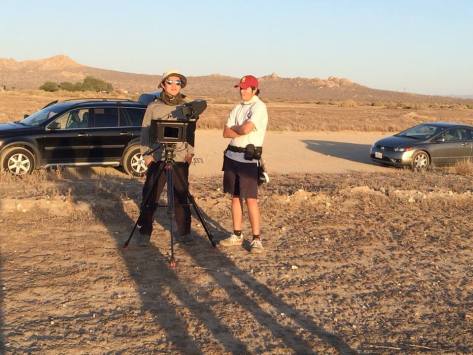
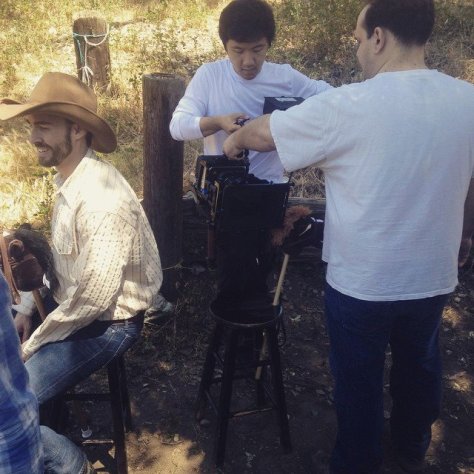
Chris felt the camera needed to be handheld to create this immersive feeling, to make the audience feel like another person in the scene. It was a decision that Chris would have regreted if not fully committed to achieving the goals he had set for this film. The challenge was the length of the takes and the physically demanding nature of the equipment he chose. “Parent, Teacher” was shot using the Alexa XT which is a large, heavy camera. Hand holding it, trying to keep the frame steady for such long takes is extremely difficult.

Producer Kegan Sant admits to being overwhelmed upon seeing the final product. He declares, “When you are in preproduction of a film you have a vision in your mind of what you hope it will look like. I can honestly say that the idea I had for ‘Parent, Teacher’ pales in comparison to what you see when viewing it. Christopher was essential to the way in which the story was presented to our audiences. His incredibly striking camera work and expert understanding of shadow and lighting allowed for the film to reach impressive narrative heights. The way in which he reflects the overall despair and confusion of our main character throughout the frames is what makes Christopher such a valuable asset to any production that seeks out his talent. His efforts throughout the film solidified the film’s high standing and reception. We would not have received the same overwhelmingly positive reaction without his talent as cinematographer.”

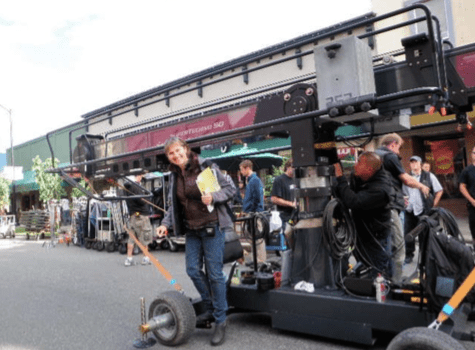
Snowblink set

Chris Lew admits that his work on set left him consistently soaked in sweat from long takes wielding a heavy camera. However, he also admits that taking a risk and trying to create a film which stands apart from the norm is something that he will hold onto much longer than an aching back or sore arms.

IS PHIL LUZI THE SUPERHERO GENRE’S FRENEMY OR BFF?

There’s no being lukewarm when it comes to superhero movies. It’s either love them or mock them. If you’re not standing in line to see the newest Marvel or DC Batman vs. Superman vs. King Kong vs the Crab Legged Prestidigitator film, then you’re likely mocking those standing in line. Wrong; in fact, wrong bigtime! A group of very funny and very talented comedy actors/singers showed their affinity for these films while also pointing out some of their shortcomings in the appropriately titled Man of Steel Song. If you recall the Dean Martin Roasts (the present incarnation of which is the Comedy Central Roast), then you understand that the purpose is to show love and also keep someone aware of their fallibility. The combination of superheroes, comedy, and singing was the triple crown for Canada’s Phil Luzi. Luzi is an instantly recognizable name in Canada’s improv scene as well as on comedy series (such as CBC’s “Terrific Women”) and feature films (The Devil’s Tail), and is vigilant in his search for different ways to display his talent and sensibilities. Truth be told, Phil was beyond being a pushover when Melissa D’Agostino (Writer and Star of Man of Steel Song) asked him to join the cast. Luzi confesses, “I was so excited when I was invited to play Green Lantern in the super hero parody Man of Steel Song, which went on to be a huge success. Not only did I get to perform as Green Lantern, but I was also the lead male voice on the soundtrack! That’s something that’s been on my bucket list forever. I love playing and singing with Melissa, not to mention with other cast members who are absolute dynamos. We were given the opportunity by our director, Matthew Campagna, to improvise and play, and I believe that’s what makes the short so, so good!”

ManofSteelSong1

Man of Steel Song became an internet sensation, and went on to be featured and recognized in many film festivals. It satirizes the disposability of franchise film-making that is rampant in the superhero genre, namely between DC and Marvel. In the short film, superheroes gather in a church to mourn any shot they may have had at a big screen feature. Luzi plays The Green Lantern, made famous by Ryan Reynolds. While D’Agostino’s Wonder Woman has reason to feel upbeat these days, Phil’s character comes to terms with the likelihood that his shot at anything more might be over too since it was a box office flop; all thanks to the overexposure of the golden children of the comic world, Batman and Superman. The superfluous drama in which the actual superheroes are immersed exacerbates the implied and stated comedy of Man of Steel Song. Perhaps the only thing funnier than someone who isn’t in on the joke is an individual who simply doesn’t have a comedic thought or expression. Phil states, “I think any grown person wearing a cape in tights and makeup is hilarious. Also, I love wearing a cape in tights and makeup. Green Lantern, specifically is hilarious to me because, if anything, I’m a Superman fan. The Green Lantern is MAYBE in my top 5 and even then, I don’t really know if that would be the case if his lantern was another color. Truthfully, I don’t really follow superhero movies as an adult like I did as a child. As with the tooth fairy and Santa, there just came a time when I stopped believing. I lost interest somewhere along the way when the novelty of it wore off and superhero movies became a dime a dozen.”

The ironic thing about Phil’s involvement in this production is that it reminded him of his real life superpower as well as realizing a dream of his own. While a blemish faced teenage Peter Parker became bitten by that radioactive spider or an adolescent Bruce Wayne began his training to become the world’s greatest detective, it was his natural inclination to easily elicit laughter that set a young Phil Luzi apart from his classmates and peers. He recalls, “Being comedic is the first talent that made itself apparent to me while I was growing up. Friends would say ‘you’re so funny!’ or ask me to say something funny! For a while, I took it offensively like I was a clown or something. Like they were laughing AT me and I didn’t know why; like the Joe Pesci scene in Goodfellas when he freaks out on Ray Liotta. But now I love the idea of making someone laugh. It’s the best sound in the world. It means someone is watching, that I have an audience. I guess I prefer comedy more because I love laughing so much myself. The sound of it means I’m doing something good…that something I’m doing is making someone’s day better or more memorable.”

ManofSteelSong2

In the short film, Melissa D’Agostino rewrote the lyrics to the famous Crash Test Dummies hit “Superman’s Song.” Luzi sings the male part in this duet and delivers it with impressive facility and presence. One almost wonders if he lip synced to a professional vocalist performance but he is adamant that the male singing was all him. “Singing on the soundtrack was without question my favorite part! It has always been a goal of mine to be on the soundtrack of a film, whether it was an animation or a musical. Man of Steel Song gave me that first opportunity. I love singing, and it’s actually been a while since I’ve done a musical. After I started Second City, that part of my life sort of dwindled. The only time I get into a sound booth now is for commercial or animation voice gigs, so this was a real treat. This was my chance to bring that part of my performance abilities back to the surface, and now I want to do it more!” comments Luzi.

ManofSteelSong3

As Phil did in his younger days, the makers of these superhero franchises might misconstrue the intention of Man of Steel Song if they hear of it secondhand or don’t truly pay attention when viewing it. They would make a serious mistake if they took it as ill-natured mocking. It is the most affectionate type of comedy; that which says you are loved and we feel close enough to you that we can say it is funny when you stumble on a pebble in the road. Luzi is an ideal messenger for this. His leading man looks, his comic timing, and his singing ability just might place him in contention for an actual superhero role and, more than anyone, Phil Luzi finds that incredibly amusing.

JUN XIA MANIFEST THE VISION OF “SHE GIVES ME SIGHT”

In spite of what the tabloids would have you believe, filmmaking is a team effort. While directors and actors are the faces of this mode of entertainment, the success of each production owes just as much to the talented professionals who perform their feats of magic and ability behind the camera. Think of it like this; if you order a fantastic meal but it isn’t handled properly or delivered properly…then it’s no good to you. Those whom the public never sees are as responsible for the gripping and endearing stories that we all love just as much as the marquee names we all know. Jun Xia may not be a household name but this editor is widely known and respected in the film industry. His editing has enabled the stories of fright (as in “Emily” and “Inside Linda Vista Hospital”), the touching stories of love and love lost (in “The Good Memory”), and of perseverance and the human spirit in “She Gives Me Sight.” This story of a young blind boy who is given a gift stronger than that of sight by a loving family member is the type of inspirational film that simultaneously evokes tears and admiration. Honored with multiple awards (at the Hollywood Boulevard Film Festival, Love Shorts Film Festival, LA underground Film Festival, and many others), “She Gives Me Sight” has a distinct pacing that is the result of Xia’s collaboration and planning with director Jiping Liu. When viewing the film, it is apparent that this approach is a major part of how the story is delivered and thus a result of its recognition in the film community.

“She Gives Me Sight” is a story about a little boy named Cecil whose life is full of bullying and darkness. Cecil was blinded in an accident and now lives with his grandmother in a small town. His only playground is the front yard of the old house in which they live. After little Cecil lost his sight, his grandmother decides to give Cecil love and light. Rather than treating him gently or with sympathy, she treats him more strictly than before. She continually asks him to help with simple housework. The neighborhood kids laugh at Cecil and taunt him. Although his grandmother is a witness to all of this, she doesn’t say anything about it. When a mishap occurs during these common house chores, Cecil breaks down. He is astonished that his grandmother does not take his situation into consideration and treat him differently than before he lost his sight. That night, she tells Cecil a bedtime story about a rose and a butterfly and how the rose promises to fight against the wind and keep blooming. Cecil dreams that night and understand that the story is about him and the rose’s story is his own. Three years later, Cecil became a successful author and writing a book named She Gives Me Sight about his childhood, and thanks his grandmother for teaching him to persevere and find his own way.

Because such a vast amount of the story is driven by narration and dialogue, Jun had copious discussions with the film’s director Jiping Liu in regards to how the editing might add to the story’s action. It was Xia’s contention that if the film were edited in exact correlation with the script, it would not achieve its full potential. In his mind, there was more happening in this story than what was directly stated. He explains his approach commenting, “I used the method of Parallel Montage in the film. I created it on the basis of a lot of dialogue and narration of the film, which made the overall movie more interesting. In this film, when the grandmother reads,  coaxing the blind boy to sleep, the imagination in the blind little boy’s mind, the imagination of him in childhood, and in the period of growing up were interspersed with editing. In addition, the things that occurred at different times and locations were edited together, which made the rhythm of this story more compact.”

Headshot.jpg

Jiping concedes, “Jun is a very smart when it comes to filmmaking, especially for editing. His approach is always well thought out and is about serving the message of the film. It was a great experience to work with such a fantastic film editor. Jun agrees noting, “I can’t overstate how important I feel that it is to be a modest filmmaker and editor. Receiving advice from others whom I respect about my own editing methods will only lead to increasing the integrity of the film.”

While a plethora of awards, nominations, and “official selection” accolades point to the widespread recognition of “She Gives Me Sight” by the film community, it’s the power that the film has on the individual when viewed that reveals its true impact. The film’s tone creates such a strong connection between the audience and young Cecil that it is almost unfathomable to think of its presentation as any other way. What Jun Xia and Jiping Liu created together is a moving and epic story of love overcoming life’s harsh blows. The rose that defies the wind can be found inside any of us; Jun Xia made certain that all viewers understand this lesson.

Production Designer Shuhe Wang contributes to the delightful horror of ‘Inside Linda Vista Hospital’

Making something from nothing is what all filmmakers achieve every day. They are creators, they are storytellers, and they are artists. Shuhe Wang knows this well. She takes the pages of a script and transforms them into sets. She creates a visual world, turning each nothing, such as a meaningless prop, into something, creating a masterpiece. She is a one-of-a-kind production designer.

While working on films such as Stay, Dancing for You, Red String, and Cartoon Book, audiences were given the opportunity to see Wang’s ability to transform a drama into a completely immersive experience, making it evident why she is considered one of the best. However, this past year, Wang has brought her extraordinary talent to a new genre: horror. Working on the film Inside Linda Vista Hospital, Wang’s production design skills were on full-display, helping to fully immerse audiences in the terrifying story.

“This is a classic horror style film, so I focused more on how to show and even amplify the emotion and tense by color, texture and overall set dressing. Even each small prop can be an important storytelling step. That quite an adventure for production designer,” said Wang.

Inside Linda Vista Hospital tells the story of a young girl who wakes up in a hospital surrounded by police covered in the blood of her boyfriend. With the help of a video camera, she slowly pieces together what happened, and she may not like what she finds.

“Horror stories are connected with our real lives, but with different point of view. I needed to find and create the elements to scare the audience and keep the emotion of the storyline in the right place, and at the same time the elements should make sense in the world.
Color and tone are always the most important parts in designing a horror story. Even a tiny subtle difference would affect the whole feeling of the set,” said Wang.

The film has gone one to do exceptionally well at some of the world’s most prestigious film festivals. It was an Official Selection at the Festival de Cannes Short Film Corner and the Pasadena International Film Festival, it won Best Director and Best Horror at the Los Angeles Independent Film Festival, Best Editing at the United International Film Festival, and Film of the Year at the AFMA Film Festival of Young Cinema 2017.

“Horror story is always a popular style, but there are a bunch of these type of films that are terrible when it comes to actual storytelling, that is what divides a good horror film from a bad one. This film is a good one because it shows a tense, strong and simple story, which perfectly matches the horror genre, so I think the film totally deserves all those awards,” said Wang.

The production design directly contributed to the film’s success. She had to design in accordance to many special effects and stunt work, and the film is set in a true historical building, and the cultural importance of this influences the story in an important way. To make the set highlight this, she researched and applied this to her work.

“It was a dramatic and kind of emotional showing story. I watched a lot of classic experimental and psychology films to get more inspiration and insight into how to let the audience feel the inner world through the production design,” said Wang.

This commitment to both the genre and the film impressed all that worked alongside Wang on Inside Linda Vista Hospital. The director, Jun Xia, knew no one else could do the job but her.

Working with Shuhe was a great experience, she was familiar with each of the details of the whole story, and her plan for working was effective for the shooting process. Shuhe is sensitive with color and designing, and she knows how to create and decide the correct textile and color to present the emotion. That is actually a really important part of the horror genre,” said Xia.

Xia approached Wang to work on his film, knowing he needed the best to make the film the success that it eventually became. When he sent Wang the reference of the visual style, so knew she wanted to take part in the project, as it was quite similar to the style she always loves.

“I felt confident and interested in designing this film after talking about the film and the story. Jun is a talented horror film director, he is always enthusiastic, and he is really insistent on what he wants which is good for making a great film,” Wang said. “What I really liked was how I could see how the set dressing worked so well when the lights and performance came together. It makes the visual complete and seemed like we accomplish the original idea of the director.”

There are many nuances to production design that are easy to get lost in the big picture of a film, but with Wang as the designer, audiences are sure to take in each and every part of it.

Editor Minghao Shen talks impactful new film ‘Cartoon Book’

Only someone that truly loves what they do can enjoy it the way that Minghao Shen enjoys film editing. His understanding of his craft and his commitment to the artistic elements of it allow him to excel at what he does. Not many people are lucky enough to be so talented and so passionate about their work. Shen is one of those fortunate few, and on top of this, he is considered one of the best Chinese film editors right now.

While working on award-winning films such as Red String, Emily, Inside Linda Vista Hospital, and Stay, Shen’s editing skills were extremely evident for both audiences and critics.

“I am a creative minded person, so I love the re-creative part of editing a lot. There are many ways to make a film, and I feel editing is one of the best ways to engage in the filmmaking production,” said Shen.

Shen engaged in both the filmmaking production and with audiences with his work on the film Cartoon Book. Cartoon Book is about a little boy who tries to go against the school and teacher under severe rules. Afterwards, it seems that the teacher gradually controls the boy by using his vulnerability and letting the rebel boy become a tool to manage other students. The boy draws cartoons, but he feels it is hard to choose between his desire or his morals when the teacher bribes him to be her spy who needs to betray his friends.

“It is a kind of classic tone film, so rather than edit it ‘correctly’, director more like to keep the smooth and stressful feeling by editing. That is why I, as the editor, needed to understand the story indeed,” said Shen. “We had a lot of footage, so it was quite a lot of work at the beginning. But, all the effort and hard work was worth it.
The director had her own style for the entire pace of the film, and the film had really good results.”

The film went on the be an Official Selection at the prestigious Cannes Short Film Corner where it premiered last year, as well as the Berlin Student Film Festival, the Goa Shots International Short Film Festival, and the Accolade Global Film Festival Competition.

“I had a feeling that the film would see a lot of success in festivals, so when I found out the film got some awards I was not surprised, and I think it deserves even more and bigger awards,” said Shen. “The director is good at screenwriting. The first time I read the story I was so intrigued and really connected with the story. I was really looking forward to work with the director and making great film, which we did. It was not the first time we worked together. We know and understand each other very well. She is natural born storyteller and I always looking forward to work with her.”

The film was written and directed by Shuhe Wang, who had previously worked with Shen on her film The Regret, and was immediately impressed by his talents. Knowing they work well together, and that she needed the best to make her new film a success, she reached out to Wang to join her on Cartoon Book.

“I worked with Minghao on my award-winning short film Cartoon Book. I was the director and he was the editor. We worked together really well. He was so full of thoughts and understood the story deeply. When we were on set, Minghao watched the footage carefully on each shooting day. His did the rough cuts very quickly and helped me to get the overall storyline,” said Wang.

Shen was vital to the successful of the film. He says working on Cartoon Book was unlike any project he had worked on in the past. He read a lot of the director’s notes and talked about the story more than just the editing technique with the director. He would meet the cinematographer and communicate about the shot, knowing they all needed to be on the same page for the overall tone of the film. This understanding of not just his role, but the entire filmmaking process, is outstanding.

“The most exciting part of making this film was the journey of the main character. There were many twists and turns in it. It is a bit challenging for editing because the complex storyline, but on another hand, it offered a variety options for editing, and that is what makes my job fun,” Shen concluded.

Akira Uchida: Born to Dance

Professional dancer Akira Uchida
Dancer Akira Uchida shot by Taylor James Photography

Since the time when our ancestors danced around fires performing ceremonial rituals and entertaining their tribe, the transformational power of dance and movement in general has been around for thousands of years. Most of us have felt it– the way stress or emotional pain seems to fade away the second the music hits us and we begin moving our bodies. While many of us love to dance, there’s a huge difference between just ‘loving’ to dance and turning this magical art form into a career.

A career as a dancer is a massive undertaking that requires intense training, dedication and an insane amount of talent, something that Canadian dancer Akira Uchida has in spades. Uchida first began dancing at the age of 3 and he hasn’t stopped since.

He says, “Dance was always freeing to me, it felt natural and right. I only ever recall the feeling of pure joy stepping on to the stage and taking a dance class. I was extremely passionate and driven from the very beginning and loved devoting myself to learning. I can’t pinpoint a particular moment when I decided to pursue it professionally… I simply could never have imagined it apart from my career.”

In 2010, Uchida leaped into his professional career as a dancer with relentless fervor, and what he’s accomplished since is nothing short of amazing. Last year Uchida was selected as one of 22 finalists out of 200 to present his work and perform at the Capezio A.C.E Awards, a choreography competition that is held in New York and judged by some of the most recognizable dancers in the industry internationally, such as Emmy Award winner Mia Michaels, Primetime Emmy nominee Warren Carlyle and the Editor in Chief of Dance Magazine, Jennifer Stahl.

The previous year Uchida was tapped to perform in the emerging choreographer’s showcase Fresh Blood. For the competition he created a mesmerizing routine he calls “Interconnectivity,” which he says, “explores the fundamental concept that everything happens for a reason; every action happens at a specific time and place to provoke another set of actions – a snowball effect of pre-determined fate. In a physical sense, the dancers embodied atoms breaking and forming chemical bonds, constantly in flux.” The performance definitely turned heads and in the end Uchida earned Fresh Blood’s coveted Audience Choice Award.

While Uchida grew up fully immersed in the world of competitive dance where he earned quite a bit of success, he is one of the rare dancers who has actually managed to transcend the competition world and turn his work as a dancer into a full-time career. One area where he’s made an indelible mark as an exuberantly talented professional dancer has come through his work in television.

In 2012 he landed a key role as a featured dancer on the hit series Canada’s Got Talent, which followed two-time Primetime Emmy Award winner Martin Short (Saturday Night Live), Meahsa Brueggergosman (Project Runway Canada) and Oscar Award nominee Stephen Moccio (Pitch Perfect 2), three judges who travel across Canada to find the country’s best talent. The popular series brought chosen competitors, which included dancers to comedians, into the spotlight and give them a chance to win a $100,000 cash prize plus several other awards.

As with all performance driven reality competitions, having an entertaining production take place as the competitors take the stage is paramount to keeping viewers engaged and getting the audience excited about the show, and that is exactly what Uchida did for the series as one of the lead dancers. Uchida’s expert skill as a dancer, the mesmerizing way he moves his body and his ability to quickly learn a routine is what ultimately helped to land him a role on the show so early on in his career.

“We would learn a routine to go along with certain acts in each episode, and add energy and excitement to the performances,” recalls Uchida. “Being on ‘Canada’s Got Talent’ was an invigorating experience at the time because it was the first season for the Canadian edition of the ‘Got Talent’ series. The American rendition of ‘Got Talent’ was so successful and revered by all, which made being a part of the Canadian version a fresh experience. It made those of us involved feel like we were embarking on a project that was full of potential.”

After his success on the series Canada’s Got Talent Uchida was tapped to take on a starring role as a lead dance on the series Over the Rainbow. Another one of Canada’s performance driven reality series, Over the Rainbow followed Andrew Lloyd Webber as he searched across Canada for the girl to play Dorothy in Mirvish’s production of “The Wizard of Oz.” The performances on the series varied greatly week after week meaning that Uchida had to easily adapt and quickly learn the new routines without much time to practice. But for a dynamically talented dancer such as Uchida, immersing himself in a new routine each week was nothing new– for him the challenge was actually playing characters during dance performances on the series, something that both pushed him as an artist and proved his capacity to tap into unique roles on screen.

Akira Uchida
Jordan Clark winner of “So You Think You Can Dance Canada” season 4 (left) and Akira Uchida (right) on set of “Over the Rainbow”

“I loved the excitement of learning new routines every week. Every week we performed with different contestants, a new pairing of dancers, and an original theme and song. It kept the rehearsal process fresh,” says Uchida. “In one of the dances, the contestant played Cinderella. I was her Prince at the ball! In another, myself and dancer Jordan Clark played a celebrity couple at a movie premiere… Playing characters was challenging but very fun!”

A phenomenally talented dancer with a powerful stage presence, Uchida’s performances on the small screen have continued to attract the attention of audiences around the world. In 2013 and 2014 he was cast as a lead dancer on several episodes of the incredibly popular four-time Primetime Emmy Award nominated series Degrassi: The Next Generation. In the episode “Hypnotize,” which guest starred Niamh Wilson (Maps to the Stars, Hemlock Grove), Uchida was one of two featured dancers who performed in a full-length contemporary dance piece that was integral to the storyline in the show. During one of the main scenes Uchida and Wilson’s character Jack Jones, the love interest of one of the main characters, performed a complex dance routine, which was a major highlight of the episode and required immense skill.

“Niamh Wilson, the guest star, was a trained dancer and we were able to engage in relatively advanced choreography for the piece,” explains Uchida.  “This was also distinctive because the piece was featured and shown in its entirety. Definitely a rare sight in TV and among my favourite moments of my career…To be able to step on the set of an iconic show for Canadian youth was a very cool experience.”

His dance performances on a plethora of hit television shows over the years have definitely helped Akira Uchida establish a flawless reputation as a sought after dancer who is able to seamlessly take on any routine with style. Aside from his lead roles on television, Uchida has also had definitive success as a lead dancer in several popular music videos. In 2015 he starred in the Much Music promo video for Sam Smith’s “That Much Closer.” Considering that Sam Smith has earned an Academy Award, a Golden Globe Award, as well as several Billboard Music Awards and Grammy Awards, being chosen to be the main performer in the video for “That Much Closer” is a tell-tale sign of the caliber of work Uchida has become known for.

Caroline Torti, who choreographed the routine in the video along with dancer Bree Wasylenko, explains, “Akira is a chameleon and is able to replicate any style given to him by a choreographer. He is able to expertly take direction and create meaningful moments on whatever job he works on. Beyond that he is an artist in his own right and his unique movement quality makes him a very special member of any team.”


In 2015 Uchida choreographed the music video for solo artist Lights’ hit song “Same Sea,” one of the single’s off the album “Little Machine,” which earned the prestigious Juno Award for “Pop Album of the Year” (Canada’s equivalent of a Grammy Award in the U.S.) and debuted at No. 5 on the Canadian Album Charts.

The music video for the song “Same Sea,” which has garnered over 800,000 views on YouTube since its release, starts off in the year 5057 with Lights first appearing as a voyeuristic cyborg  observing the previous versions of herself over the centuries.

As the choreographer and one of the featured dancers in the music video Uchida, who handpicked the other dancers in the video as well, did a marvelous job of creating a routine that is fun and full of life. The video cuts back to the year 2011 where Lights, Uchida and the other dancers are fully involved in a dance class. Uchida infuses the routine with a lively energy that creates a stunning dichotomy between the futuristic version of Lights, who surrounded by robotic machinery and devoid of other humans, and that of her previous self.

“I sought to make the work powerful and uplifting, and chose to utilize high energy movements that would build moments of euphoria. I focused on creating strong visuals to highlight Lights and played with imagery based on the lyrics,” explains Uchida. “The song repeatedly talks about ‘the arms of the same sea,’ and inspired me to incorporate fluid wave-like movements in the piece. I wanted to involve elements of the sea and have her ‘swim’ amongst her dancers.”

Not only did Uchida choreograph a lyrically relevant routine that made the video for “Same Sea” entertaining to watch, but he was also tasked with teaching Lights the dance routine.

“Lights had little to no experience in dance before shooting this video, so I was responsible for coaching her on how to execute the movements properly and to help her feel as comfortable as possible,” recalls Uchida.

While he is still quite young, Akira Uchida has accomplished more over the past seven years than most professional dancers will in a lifetime; and we can’t wait to see what he does next!

20 QUESTIONS WITH WRITER SARAH WALTON

You write films which present the plight of modern romance. How does romance differ today from the romantic films of your childhood?

Classic 80’s rom coms like Overboard and Housesitter were much soppier than most modern rom coms. They were more fantasy based, more farcical, over the top and fun. I think audiences found corniness more palatable back in the 80’s.

In the 90’s rom coms became more realistic, more drama based rom coms like Sliding Doors and 40 days and 40 nights, high concept ideas based in reality.  Now rom coms are often quite reality based like He’s Just Not That Into You and Bridget Jones’s Dairy.  Personally I love them all, but I have to admit I’ve not seen many Woody Allen rom coms. They feel too gritty for me, but I know I shouldn’t knock it till I try it!

It feels as if society is slowly becoming more accustomed to violence and graphic, sometimes aggressive sex scenes and becoming less comfortable with cheesy love stories and romance.  I don’t know who decided it was “uncool” to like romantic comedies – I imagine someone or more likely, a group of people who had been through a lot of pain and were angry at the world.  It seems audiences are more comfortable seeing character get slaughtered on screen than they are with seeing true intimacy.  Love definitely feels more natural to me than violence and I’m passionate about making more corny lovey dovey content to counteract the violence and hate spreading like a disease in the world.  Romantic comedies have the power to remind us of the love inside of us.

What is it about romantic comedies that appeals to your sensibilities as a writer? 

Rom coms appeal to me because I’ve always been obsessed with love. I’ve been so fascinated by observing and experiencing the power of love and how it transforms people and their behavior.  I didn’t start out writing rom coms.  I fell for the mainstream view that rom coms were “uncool” and although I loved them I stayed quiet about it.  In the industry they’re most often not taken “seriously” – certainly in Australia – They don’t usually win Academy Awards (although that seems to be shifting). In my 20’s when I was an actor/writer I was the epitome of a tortured artist, I smoked cigarettes, drank too much alcohol, I fit the Hemingway stereotype perfectly. The first feature I wrote wasn’t a romantic comedy and it was horrendous. I was trying too hard to be clever. It wasn’t coming from the right place. It was coming from my head instead of my heart. I threw it all in and decided to write something fun instead – a film I wanted to watch, which I admitted to myself was a cheesy romantic comedy set in my two favorite places – a tropical island and NYC!

As I matured and I cared less and less what other people thought I began to speak my truth.  I decided to do the seemingly impossible, the unheard of, the bravest thing a filmmaker can do – come out of the romantic comedy closet and admit my love for them once and for all! And not just cool Woody Allen rom coms, but the cheesy, soppy ones that make people gag.  It was a shaky road, initially I was embarrassed, but once I embraced my true self as a corny rom com lover and expressed my passion for rom coms with conviction, I found that other people came out of the woodwork and admitted their secret rom com love.  I once dated a guy who lived in a sharehouse with a group of guys who had what they called “Rom com Sunday”! They’d all huddle around the TV nursing hangovers and watching their favorite rom coms (and no, they weren’t gay! I can vouch for that!). Some people have told me I inspired them to uncover the love from rom coms they never realized they had or were too embarrassed to admit. It’s a pretty liberating experience that I’d highly recommend 😉  Rom coms being “uncool” is kind of ridiculous, but what’s more ridiculous is caring whether people think we’re cool after we leave high school. 

Different cultures have their own perspectives on romance. How would you describe your Australian homeland’s unique sensibilities towards romance?

Australian romance can be pretty pathetic. In Australia, the sophisticated method by which a man lets you know he likes you is usually by ignoring you or teasing you.  I recently wrote the joke “You know you’re a true blue Aussie when”: 1. You understand the importance of vegemite to butter ratio; 2. You only know the first 2 verses of The Australian Anthem. 3. You call your best mate dickhead.  Excuse my French there, but you get the point.  Banter is a huge part of the Australian culture.  What we call “giving each other shit” is an endearing process by which us outback simpletons bond.  I lived in London in my 20’s and my experience dating there was that this culture comes from our British roots. Men in London were even more reserved. I find in the US and Europe men are more forthright in asking you out. This was such a novelty for me at first, I loved the confidence and straight shooter method, but at the end of the day I feel that in all cultures there’s too much emphasis on the initial “wooing” period at the beginning of dating which can be fun if you’re just dating around for the experience, but essentially it’s kind of empty and fabricated.  I find when people stop playing games and trying to be something they’re not and really get to know each other as friends, they’re more likely to find a compatible match and then from there true romance and love blossoms and flourishes.

As a screenwriter who lives in Hollywood and is female, you have a very authentic voice for the types of films you create. What responsibility do you feel to your audience in regards to creating films that are based in reality? 

I feel my responsibility is to create more female driven stories as well as smash stereotypes and challenge old unhealthy relationship paradigms. I don’t know about making sure that the films are based in reality, as I like a good farcical rom com that’s more fantasy based. I think it’s important to laugh as dysfunctional relationship patterns if I portray them in films, but I’m conscious not to encourage dysfunctional relationship patterns or promote them as healthy.  At times I’ve taken my responsibility as a writer and filmmaker too seriously and lost the true goal of rom coms for me which is to laugh at our pain and to enjoy the ride and experience love and joy myself within the process – basically to have fun! When I’ve agonized over the kind of messages my films are sending I’ve ended up writing preachy material and losing my true intention.  If I stay centered in my intention to tell stories from love about love, I find that’s when my best work comes through.  When I’m in my head I’m coming from my ego and my writing begins to feel fabricated.

I do take integrity seriously though. It’s important for me to not be swayed by external influences that focus purely on making money.  I have no problem with making money – in fact making money is good – it’s how we make more films – but I’m conscious of staying true to the heart of the story and making sure it isn’t lost in the process. This is where it’s important to have strong instincts and learn when to compromise and when to stick to your guns.

I think that the lasting effects that films have on audiences emotionally is largely neglected.  There have been many studies on the neuroscience of how film affects our brain and emotions, but it doesn’t take a neuroscientist to observe the effect the media has on our mind and our emotions.  We can experience these effects ourselves simply by observing the way commercials affect us and get into our heads. I don’t know about you, but a commercial has the power to make me cry or crave a chocolate bar so bad that I’ll be sure to eat one after I’ve been exposed to a luring commercial.  The amount of money spent on Super Bowl commercials is ludicrous and speaks to the power of the moving image on our sensibilities.  In the same way that I’m conscious about what food I feed my body, I’m conscious of what I feed my mind – the amount of negative images I expose my mind to.  I rarely watch television and I almost never watch the news.

It’s undeniable that we’re influenced by our environment- thought processes, images, sounds are all embedded in our mind when we’re exposed to them. When we’re repeatedly exposed to a succession of images, we feel the emotional effects this can have an impact on our daily lives and how we interact with others. This is why I’m so passionate about making more films that evoke and spread love, laughter and joy and remind and encourage people to live from their hearts. 

For the film JUMP, an original soundtrack was written that was inspired by 80’s music, as was the tone of the film. What do you love so much about the 80’s and what is it about this era that infers lighthearted fun? 

The 80’s music and films represent the heart and joy of our inner child. It’s fun, lighthearted and most often about love, dance and enjoying life – “dancing in the street”, “dancing in heaven”, “girls just want to have fun” …  you know how it goes.  I grew up listening to love song dedications – songs that come from love have always resonated with me.  In saying that I feel the same euphoric rush, the same joy in my heart when I listen to Linkin Park music as I do when I listen to Whitney Houston belt out a tune. Punk, rock and sometimes even heavy metal music also speaks to my heart. I think it’s about the space the artist was in when they performed the piece of music – I can feel their intention if it comes from love then it doesn’t matter whether it’s rock, pop or country music. 

The main character in JUMP is a 37-year old secretary who manifests her own release from an ordinary life. Presenting a female lead in her late 30’s is (sadly) far from the norm for Hollywood films these days. What inspired you to present Melody at this stage of her life for this film? 

Melody’s age was the most important part of the film for me.  To portray a character who is considered in society “old” as not only facing her fears, taking a risk and chasing her dreams at the age of 37, but also the fact that the odds are stacked against her in terms of being paired with her worst nightmare dance partner who exacerbates her “Stiff Leg Syndrome”. I’m incredibly passionate about shattering ageist attitudes.  Growing old is a beautiful process – ageing should be celebrated! I’m becoming fitter, healthier, more active as I’m getting older and continuing to push myself outside my comfort zone is an important part of growth.  If we’re not growing, we’re not really living.  Life is growth. If we don’t continue to grow we turn into rocks. No one wants to be a rock. 

The Dating Ring is a film in which you had the male and female leads presented in an emotional role reversal.  Are you constantly looking for new ways such as this to twist the romantic comedy template and how difficult is this to achieve? 

Yes, I love exploring gender role reversal and smashing stereotypes.

Although I still relate to the basic ideals I tend to have different views and opinions to mainstream society – tend to naturally think outside the box, so I don’t find it difficult to come up with new ways to twist the rom com template. It’s just the way I think.

In my experience there’s a different kind of love that’s largely neglected in romantic comedies that I’m excited to delve into in my films – what’s most commonly known as true friendship love or unconditional love.  I feel the current definition of romance is false, fleeting, lacks substance if it’s not grounded in true love.  What is romance with someone you don’t really know yet? You get swept up in the romance, but then once that fades away and you get to know the person you may realize you’re not compatible.  Romance without truly getting to know someone is like coloring your hair. At first it looks luscious and shiny, but eventually it fades and your turn colors show you can keep putting dye in your hair and each time it glows again, but after time your hair becomes brittle or the dye builds up and you have to keep treating it.  It’s a lot of work.  Why not just enjoy your hair in its natural state? Why not just be yourself when you’re first getting to know someone and then once you know you’re a good match, let the romance develop naturally from there.

I’d go even further to question the way we perceive the “opposite sex” in terms of attraction and how it can steer us away from creating deeper stronger bonds and platonic friendships with each other.  What if when we had children we didn’t’ tease them when they had a friend of the “opposite sex”.  What if we refrained from saying “oooh is that your girlfriend?” – or is that just me?  It’s harmless and well-intended, but what if from a young age we encouraged kids to see the other gender as equals – as mates.  Relationships based on a foundation of friendship are more likely to last and to grow unconditional love filled with respect and void of fear based love which includes jealousy, control and insecurity. 

Hollywood is still the biggest producer of films in the world. What are the challenges in this modern era for a writer in this current time here in Hollywood? 

I don’t see challenges as a bad thing, it’s an opportunity to adapt and grow. The addition of platforms like Hulu, Netflix etc. is definitely changing the game, there’s definitely a plethora of content being made and it seems there’s more opportunity to get alternative stories made, as these platforms are open to a wider range of ideas and concepts rather than being restricted by the constructs that the bigger channels and studios adhere to.

What’s the average daily routine for a screenwriter like yourself in Hollywood?

Everyone has a different process. I know some writers write for 4-6 hours a day while some write for 2 hours in the morning or late at night. Some work for 8-10 hour days. It depends on the individual. For me it varies. I can work for long periods without a break, but I can also work really well on short spurts.

You present romance and comedy in your screenplays. What is it about the blending of these two genres that works so well and has become such a popular combination? 

Romantic comedies are love and laughter – love and laughter are the two most powerful forces in human nature.

One of my favorite Gandhi quotes speaks to the power of love: “When I despair, I remember that all through history the way of truth and love have always won. There have been tyrants and murderers, and for a time, they can seem invincible, but in the end, they always fall. Think of it–always.”

There’s still an overhang of an old perspective that hate and anger are power and that love, vulnerability, kindness and compassion are weak. The truth is the opposite. It’s much harder to be kind in the face of aggression than to bite back. True strength is love and I think people connect to this truth in a good romantic comedy.

Laughter is the most positive and powerful human expression of joy and happiness and can be medicinal in its effects.

Crying as an expression of sadness is an important element in the therapeutic effects of film. Repressed sadness is what causes anger, bitterness, resentment and can lead to damaging behavior. Crying as relief is incredibly transformative and can allow the audience to connect with a film on a deeper level.  

How important are romance and comedy to you in your personal relationships? 

Imperative. I love to laugh – I laugh at everything. I can’t have people in my life who don’t make me laugh. But seeing as most people make me laugh, I’m an easy audience. Romance to me means open, regular expressions of love which is one of my favorite things to do. I do it to people I don’t know that well and sometimes strangers which can be awkward, but fun, funny and incredibly rewarding. I much prefer a card with a meaningful message or a cheap thoughtful present than an expensive gift. I guess I see romance as kindness in a way. Random acts of romance should be a thing.  I think because I do it often it comes back to me tenfold. Recently I was having a bad day and I went out for ice cream with a beautiful friend who encouraged me to “let it out” and cry (in public!) and a kind stranger came up to me, opened his arms out and hugged me. We were in Venice, so I thought he was a tree hugging hippy (I hang out in these circles sometimes, so I get it) but it turned out that the stranger was the director of one of my all-time favorite romantic comedies and now we’re friends. 

Are most of your moments of genius (in screenplays) the result of personal experience or imagined experiences? In other words, how much of your writing is based out of first hand experiences? 

My favorite moments in my films spring from a fusion of real life and being connected to the present moment – usually after or during meditation, listening to music, an inspiring conversation or exercise.  I have a vivid imagination and a tendency for exaggeration which bodes me well in comedy, but the best comedy for me comes from the truth and organic moments that pop out in presence.

Studying The Meisner Technique for 3 years as an actress I developed an obsession for organic moments – the magical moments that shoot out of us like lava when we’re in the present moment.  These are gold for both performance and writing.  This is also why I love improv. I like to use improv to help inspire ideas as well as when I direct or perform.

Real life is a huge influence on my work – like all writers I observe and soak up my environment like a sponge.  I see the beauty in everyone, I see peoples pain, their joy, their hidden emotions and stories – sometimes I feel I can see through people – that sounds creepy, but you know what I mean. Don’t you? 

Do you consider the films which you write to be therapy for the audience or how to” instruction?

I see my films as relief – escape from daily life. Have a laugh, take a load off. Laugh at our pain – therapy in that sense.  Laughter and tears are very therapeutic and a good romantic comedy will do both.

Most rom coms shouldn’t be modelled as a how to… more like how not to.  Sex and The City modelled and promoted dysfunctional relationships by making a fairytale out of Carrie and Big’s romance.  There she was, an intelligent, successful, beautiful woman with a group of good friends – a strong support system who chose to be with a man who disrespected her and strung her along for 10 years and left her broken hearted time after time – even on the alter.  This is the kind of love that happen when we don’t have a strong sense of self-worth. 

How does a screenwriter like yourself find romance in Hollywood while pursuing a career in such a difficult field? 

I don’t. Just kidding. I have incredibly fulfilling and nourishing relationships with friends and family.  I’m not interested in the traditional or modern dating structure – I did it to death in my 20’s and it was fun – and then it was painful, and now I’m done with that.

What is the DNA of a great romantic comedy? i.e. the required traits. 

The formula for a great romantic comedy is love plus laughter equals joy. A rom com needs to be relateable even if it’s a fantasy based rom com, there needs to be an element of truth.

I’m interested in exploring a different definition of romance than our current understanding of it in mainstream society. I believe romance should come later rather than at the beginning.  It should start slow and increase as your relationship develops.  The current model shows and abundance of romance in the first couple of months or the “honeymoon period” and then once there’s commitment and safety often people get complacent and the romance fades.  Id’ like to see that turned around. This would make for a long term sustained relationship full of romance.  A higher love is achieved when two people love themselves fully and don’t need or expect the other person to make them happy.  They take full responsibility for their own happiness and merely join together with someone else who is whole and complete.

I’ve fallen into the expectation trap in past relationship, but when I took a 2 year break from dating and focused on me I noticed the ebb and flow of emotion, joy, and love within me and it became clear when I was going through challenges that it came from me – when I no longer had someone else to blame! These themes that surround love are what I’m fascinated in examining further and portraying in my films. 

What film did you not write but wish that you had and why? 

Disney’s Enchanted because it’s a magical fantastical musical with a message of love and believing in wonder and the good in people.  I write music into my films and there’s usually at least one scene where characters sing and/or dance, but I’m yet to make a musical feature. I write songs, so it will happen one day in the not too distant future. 

Describe your idea of a nightmare writing assignment for a film idea. 

Anything on violence or an empty sexualized rom com focused on aesthetics – anything that would contribute to the negative body image content that we already have an abundance of.  Many films are highly sexualized these days – they focus on physical attraction and base the development of love form this foundation of initial attraction or chemistry.   The problem with this is that it fades, it’s not sustainable long terms.  Societies obsession with image breeds insecurity competition and fear which are not compatible with true love which is ultimately what people are searching for whether they admit it or are aware of it or not and what compels people to watch romantic comedies. Enjoying fashion, beauty etc. is totally healthy, it’s the relationship we have with it – when we gain our sense of self and our worthiness from image that’s when we can run into problems. The paradigm – this obsession with superficiality – is flawed and perpetuates itself in a cycle of destruction. 

What is the most avoided topic in romantic comedy films and why? 

I don’t know if there are many avoided topics in rom coms these days. Pretty much anything goes. You hear to steer clear of religion and politics, but I’ve seen some of the best comedic moments on these topics. 

You’re obviously a very creative person; how do you maintain that constant flow of creative ideas over an entire career? What is your personal means for doing this?

 Mediation, yoga, dance, running and spending time with good friends is usually the best inspiration for me as a writer.  The heather and happier I am in myself and my life the more creative ideas flow through me.  I’ve found I’ve still managed to churn out decent work when I’ve been stressed and overworked, but it’s less enjoyable, so I prefer the healthy, happy method!

 Finish this sentence; the best thing about Sarah Walton is….

 Can I say for me what the best thing about “being” Sarah Walton is?

For me it’s that I love everyone and this brings me so much love and joy. It’s not that I don’t find people challenging like everyone else, but I always find a way to connect to empathy and love people regardless of what behavior they display. I see people as who they truly are, not their behavior. My upbringing gave me many gifts, but the one I’m most grateful for is having parents that are so different. My father was brought up in a poorer, small town non-religious family with 11 children while my mother was brought up in a fairly well off suburban catholic family.  This polarity allowed me to relate to a wide range of people. I grew up camping and staying in fancy hotels, so I appreciate the beauty in simplicity while also enjoying the glamorous lifestyle without placing any importance on the superficiality of material things.  I was also blessed with enough make or break me challenges in my life to force me to discover self-development and well-being practices that have changed my life dramatically and lead me to explore new ways to find happiness, love and joy in life regardless of external circumstances. It’s an ongoing process and sometimes I’m like – I’m done! I want to go back to how I was before, ignorance is bliss! – but I know it’s not and I’ve found ways of achieving natural highs through dance, meditation, yoga, laughter etc. which is a pretty good incentive to stay on this path!

Bonus:

Finally, what do other writers say about you when you are not listening?

What others say about me is not really any of my business, but I know sometimes people comment on how cheesy and mainstream my work is thinking that it’s an insult, when for me it’s a huge compliment. I enjoy hearing other people’s perspectives. It makes me laugh.