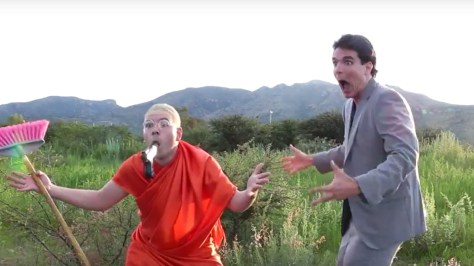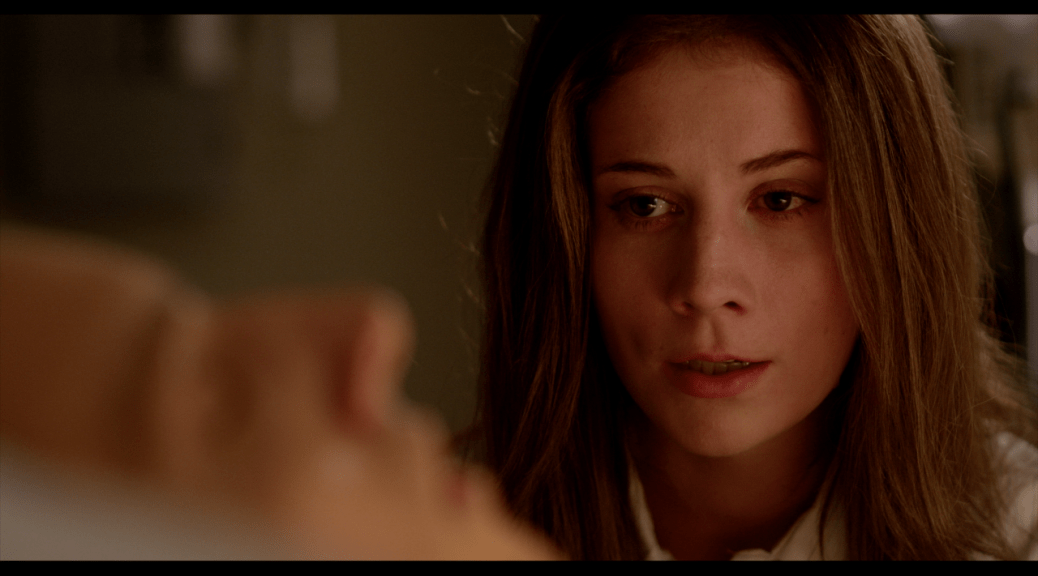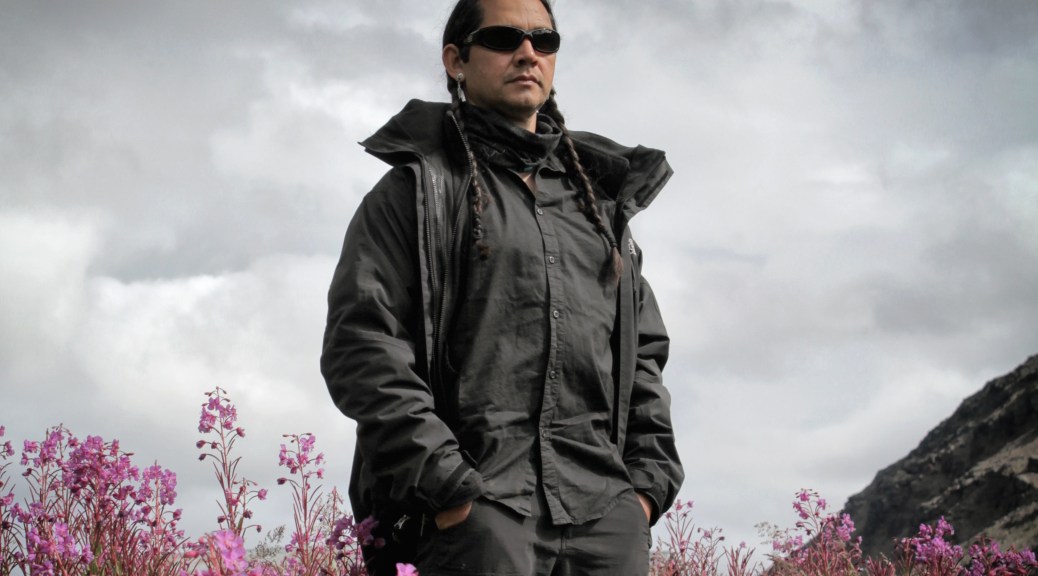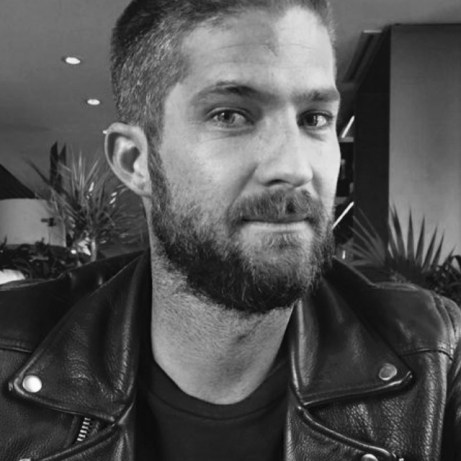
Actors Stephan Bosch (left) and David Mihalka bring comedic genius to the YouTube series, “Zero Button.”
The idea behind the hilariously uninhibited YouTube series, “Zero Button,” is actually a hidden message conceptualized by actors David Mihalka and Stephan Bosch.
“On the TV remote, when you enter the zero button, there is nothing. The message is: the best program is the imagination,” Mihalka said. “That’s what we do! We take our wildest imagination – inspired through real situations – and the result is “Zero Button.”
The sketch comedy series is a riot. Mihalka and Bosch, who co-created the series, star as an assortment of larger than life characters who encounter zany scenarios and predicaments. “It’s like a contract from a lawyer,” Mihalka said. “There are the obvious jokes, but also the fine print, where you have to pay attention to the words and subtle things happening.”
Mihalka often plays gangsters and fools in “Zero Button.” “The challenge lies in not playing a clown,” Mihalka said, “but rather to be serious in the scenes and still funny. That’s the art.”
Bosch described the characters as, “real and imaginary characters under real and imaginary situations. We have no rules at all, and we are not planning on having them.”
The parody series is directed, written and produced by Mihalka and Bosch. It features a load of improv and overall comedic genius.
As to developing ideas for sketches, Mihalka said, “We don’t come up with anything. They come to us! There are so many situations in daily life that are funny. You just exaggerate and let your imagination flow, and you have scene!”
The latest episode – “The Typical Driver” – released Sunday and features Mihalka playing a driver with road rage who gets the favor returned by an angry pedestrian at the end.
Saturday saw the release of “LangWhich,” an episode where Mihalka converses with a passerby at a park who asks Mihalka if he speaks English. “No, I don’t speak English,” Mihalka says in perfect English. “I used to, but no, I don’t like it.” The paradox continues in Spanish, French, German and Sign Language – all of which Mihalka’s character can speak – and ends when the passerby suggests in sign that they have sex, prompting Mihalka to give the guy the middle finger.
There’s episodes where Mihalka plays robbers, thieves, bad guys, a therapist, philosopher and other ambiguous, side-splitting roles.
There are How To episodes such as “How to Solve ALL your Problems” (by drinking a glass of alcohol) and “How to Stop Smoking” that shows Mihalka lighting up a mouthful of cigarettes, then taking a bucket of water to the face.
One episode features an intellectual conversation regarding two percent milk. Another parody is titled “Citizen Pain.” Another shows a Rubik’s cube conundrum called “YouCube?” and there are cultural parodies such as the amusing “Bank of Armenia” episode.
“Our most views and likes are the scenes together with Stephan,” Mihalka said. “We have the same frequency, a good connection. It just works. I can’t explain it.”
The dynamic duo shine on the sketches “Hairdresser,” “Monk,” “Bench,” “Change is Good,” “American Impress,” “How To Solve All Your Problems” and “Pool.”
“If I think about it, David plays a lot of bad guys, which is the opposite of what David really is,” said Bosch, whose other acting credits include “Juventud” and “7 Days” from directors George Blumetti and Maurice Kelly. “He knows what he is good at. His life, plus acting experience, can easily be seen through his performances.”
Mihalka enjoys both current and classic comedy styles including the work of legends such as Steve Martin, Roberto Benigni, Peter Sellers and Jacques Tati.
“What makes something funny is the perception of things,” he said. “For example, recently I have been to a fancy restaurant to make a reservation for a special day. While making a reservation, I noticed behind me many cops with a dog entering the restaurant. They told the dog: ‘Search, Search!’ When I left the restaurant, I told my mum, ‘I know what happened! A guest had a cake with icing sugar, which left traces of sugar under his nose and they thought it was cocaine and called the police!’ A new scene is born.”
No stranger to film and TV, Mihalka, from Germany, has shined on screen in his numerous roles including in the John A. Mati feature Swiss comedies, “Monsieur Brucco” and “Monsieur Brucco 2.” He acted in writer-director Stan Harrington’s “Lost Angels,” which won four awards at the Indie Fest USA International Film Festival, and in Harrington’s four-time-award-winning feature mystery, “Perception.”
Mihalka’s other film and TV roles include in Mickella Simone’s “The WorkPlace,” Alex Lewis’ “Driverless,” director Emilio Ferrari’s “All I Want for Christmas” and “Difficult People” from director Jonathan Moy de Vitry. Theatrically, Mihalka acted in the Stella Adler Los Angeles production of “Margaret,” an original play directed by actor-writer-producer Tim McNeil (“Contact,” “Forrest Gump”).
Mihalka also doubles as a photographer with a premier aesthetic and captivating imagery. Check out his behind the camera work here: www.davidbehindthecamera.com
Styled by: Patricia Lagmay. Photo by: Ian Lanterman.
Currently based out of Vancouver, Canada, Patricia Lagmay is a fashion stylist known for styling leading fashion editorials and esteemed lookbooks and campaigns. Her work with brands spans professional labels such as Priory, Samsung, Wings + Horns, and Aritzia, and her editorial spreads have been published by Hearst Media.
Lagmay spent time both abroad in Canada and locally in Los Angeles, where she was initially drawn to pursue a career in styling. Once just a place of work for Lagmay at the age of nineteen, the renowned stylist was represented by THEY Representation by the time she was twenty-one, and remained with the agency until 2012, when she began working exclusively with Aritzia.
While at Aritzia, she refined her talents and made a significant impact on the brand’s growth and development , with her role becoming more senior as time progressed. Lagmay contributed her innate skills to the retailer until 2015 as a lead stylist on their seasonal lookbooks, campaigns, and eCommerce catalogue. Most recently, for the past year and a half, she’s worked with the clothing line Priory, styling and art directing their Fall ’15, Spring ’16 and Fall ’16 collections.
Throughout her profession and on many occasions, she has established herself as an invaluable asset to the fashion industry. We recently had the chance to sit down with Lagmay and discuss a few of her crowning career highlights, which we’ve outlined in our exclusive, one-on-one interview below.
Where are you from originally?
I was born in the Philippines and lived there until I was 10. My family moved to LA and lived there for six years, and then relocated to Vancouver, where I’ve now lived for the past 11 years.
What inspired you to purse a career in styling?
This is going to sound like a cliché, but I don’t think I had a choice. I’ve been drawn to it since even before I realized it was a career.
What types of platforms does your work span?
My work spans print and digital. I work on editorial stories for varying publications, alongside styling campaigns, lookbooks, and eCommerce for established and emerging brands.
Does your approach to styling differ from one platform to the next?
Print has a longer lead-time whereas digital is more or less immediate. This dictates what season the clothes I choose have to come from so that when the story hits, the clothes are available.
Who are some of the top clients you’ve worked with?
I worked with Aritzia extensively for the last three years. I’ve also worked with Priory, Wings + Horns, Sitka, and Samsung, among others.
In your opinion, what are some of the most important characteristics a stylist can possess?
You really have to love it. The decisions you make as you style won’t make any sense otherwise, since a lot of it is instinctual. You also have to be extremely organized. There are a lot of moving parts to a shoot and it takes a healthy dose of OCD to get everything done.
How do you try to incorporate those qualities into your own styling?
I make sure to listen to my instincts. There can be a lot of cooks in the kitchen at times, and paired with the number of trends that arise every season, it’s easy to get caught up in styling to please the whole team. But as the stylist on set, you’ve been hired for your taste and opinion, so it’s important to know when to stick to your guns. As for being organized, I’m definitely a bit OCD so that part comes naturally!
Your journey with THEY Representation is a fascinating one. What was your first role with them?
I started out as an intern when I was 19 and eventually became the Head Booker and Marketing Manager, handling all bookings for the artists, dealing with production, and managing the agency’s brand. After a couple of years I was ready to move on from my role. Since I’d already been styling my own shoots, THEY’s owner and agent suggested that I jump over to the artist side instead and become a represented stylist on their roster.
What about your time working with Aritzia? You were a stylist there for over three years. What were your main roles? Did your roles change as time went on?
The areas of the business that I worked on more or less remained the same, but my involvement with each of them progressed as the years went on. I worked on the brand’s seasonal lookbooks and campaigns, alongside styling (and often art directing) their extensive eCommerce catalogue.
With Priory, how do your roles as a stylist and as an art director differ from one another? Similarly, how do they complement one another?
Technically speaking, a stylist is someone who deals primarily with the clothing—choosing which pieces to use, putting the looks together, and ensuring they look good on the model. An art director is someone who deals with all the creative facets of a shoot—from the photography, to the styling, to the hair and makeup, to the casting, all the way down to the posing. I find it difficult to not have an opinion on all of those different areas since each of them greatly impacts the final images. I can bring the best clothes in, but if what I have doesn’t work with what the hair stylist has chosen, or vice versa, it really doesn’t matter. In that sense, styling and art directing are very intertwined.
Tell us a little bit about the Samsung commercial you worked on. Who did you collaborate with? What brands were incorporated into the shoot?
Samsung was looking to change their creative tonality and this commercial was their first step in that direction. We had an amazing international crew—the director and producers had flown in from Copenhagen, the clients from Seoul, the talent from the U.S. and Europe. My goal, along with everyone else’s, was to bring a sense of authenticity to the characters. To do this, I pulled from a variety of sources—from vintage stores to more contemporary brands such as Reigning Champ.
What has been your most challenging project thus far, and how did successfully completing it help you grow as a stylist?
Each project’s been challenging in it’s own way so it’s hard to choose. Some have been a challenge from a creative perspective, some from a budget perspective. They’ve all worked out regardless, so I try to keep that in mind whenever I’m faced with another hiccup.
What is one thing that people on the outside of the fashion industry would never suspect about being a stylist?
There are just as many unglamorous parts to the job as there are glamorous ones, if not more. From taping shoes, to dealing with customs, to trying anything to get a stain off of a garment – the list goes on.
Why is having a stylist so important?
When it comes to shooting a brand’s lookbook or campaign, a stylist brings an important level of objectivity to the set. That outsider’s perspective combined with the designer’s vision is what brings the collection to life. A stylist also knows how to make the clothes look their best for the camera—which requires more trickery than you’d think.
Can you elaborate on a favorite project or two that you’ve worked on?
My favorite part is the mix of it all so I definitely can’t choose just one. Working on varying projects is what keeps the next one as interesting as the last.
From where do you draw your inspiration?
It can come from anywhere—runway, the old lady walking down the street, a recent film, old editorials.
What are your personal hobbies and interests outside of styling?
Eating. Good meals with good friends and I am a happy camper.
How would you describe your own sense of style and fashion when it comes to your own wardrobe?
I definitely have a uniform. Lots of nude, black, and navy, and not a whole lot of anything else.
What brands do you aspire to one day work with?
The Row, Celine, and Protagonist.
What brand or client is up next on your agenda that you’ll be styling?
I don’t like to count my eggs before they hatch, so we’ll just have to wait and see.
Actress Zoe Cleland has shined in her roles in “How to Plan an Orgy in a Small Town,” “Murdoch Mysteries,” “Reign” and more.
For Canadian actress Zoe Cleland, the journey began on the stage, advanced to the screen and has featured her becoming many memorable characters across comedy, drama, mystery and more.
“I think every time I do a new project, I grow as an actor and as a human being,” she said. “One of the things I love about acting is that it’s not static. Every job requires me to expand myself and my vision of the world.”
Her own story is one characterized by ambition, talent and success. She began performing for theatrical productions as a child and made her TV debut on “Murdoch Mysteries” at the age of 15. By the age of 17, Cleland was among a dozen actors – and the youngest ever – to be chosen for the National Theatre School of Canada, a milestone selection into her home country’s top conservatory training program.
“I literally knew I wanted to be an actress when I was about 5,” Cleland said. “It never seemed like a choice to me. It was always just part of who I was. For about a year, when I was really little, I used to watch “The Wizard of Oz” every day and told everyone at my school that my name was Dorothy! My parents took me to a lot of theatre as a kid. They would take me to the Stratford Festival every year and I remember that being the first time I started thinking of acting as a profession beyond playing dress-up at home. I remember being about 4 years old and seeing a production of “A Midsummer Night’s Dream” that seemed like the most magical thing on earth.”
Cleland, a Toronto-born talent, is classically trained and among her performing arsenal, she’s studied dramatic combat and is well versed in singing, dialects and accents including British, Irish, Scottish and American.
While attending the National Theatre School, Cleland starred in eight productions at the conservatory including her own self-written solo show, “Drawing White,” and in a production of Anton Chekhov’s “Three Sisters,” in the role of Irina, one of the sisters.
“I also played the Fool in “King Lear,” which was a lot of fun. Sometimes just doing scene work in a lot of detail was most rewarding,” said Cleland. “The great thing about theatre school is that they give you so much time to just totally dive into things and pick everything apart as much as you want, so sometimes just doing scene study was great because you got the chance to look at something from every possible angle.”
The training and experience helped groom Cleland, 24, into a dynamic, well-rounded and brilliant actress with a world of authenticity and performing charisma.
“I think in all honesty going to theatre school taught me more about how I am as a person than any one thing about acting,” she said. “I went when I was really young, 17-19, so I was really still just trying to figure out who I was. The whole thing was such an intense experience and it changed me so much. I think overall it taught me to trust my own internal guidance system and let that lead me in my work, rather than looking to the outside for someone to tell me what I should do.”
Cleland later went on to star in the theatre productions of “Wishes of This & the Other Thing” directed by Rose Plotek and “The Chimes” directed by Nancy Palk. In 2013, Cleland received the Theatre Centre Emerging Artist Award at the Summerworks Festival for her starring role in “Girls! Girls! Girls!” directed by Donna Marie Baratta and Jessica Carmichael. The play is about a group of 14-year-olds who one night decide to attack one of their peers.
“It is written in a poetic, playful style that makes it kind of otherworldly,” Cleland said. “I played Jam, who is a follower just trying to fit in and be liked. She ends up getting in way over her head in the violence that her friends are perpetrating. She struggles with her integrity when she realizes that they have gone too far.”
Parlaying her strong theatre background into TV recognition, Cleland went on to land recurring roles on the CW’s fantasy drama series, “Reign,” starring Adelaide Kane and Megan Follows, and Bite TV’s comedy series, “Guidance” starring Rob Baker.
Millie Tom has worked in the casting of more than 50 films and 19 different TV titles including “A History of Violence,” “The Incredible Hulk” and “Scott Pilgrim vs. the World.” She said, “I have known Zoe since she was 15 years old, when she first started auditioning. I believe she has a unique, magnetic quality that lends itself perfectly to film and television. I cast her in two projects since she graduated the National Theatre School, one being “Guidance,” a comedy series about three inept guidance counselors working in a high school.”
In five episodes of “Guidance,” Cleland played Morgan, a student who approaches the counselors for help.
“She was so good as Morgan, a precocious teenager who was being bullied,” Tom said. “She nailed her role as the ‘straight man’ to Rob Baker, who played opposite her, while at the same time pulling off the comedic timing that made the show a success.”
Cleland kept the momentum going and booked roles on the History Channel’s “Brainwashed,” Craig Macnaughton’s comedy webseries, “Pay Up” and in the hit supernatural medical drama, “Saving Hope” starring Erica Durance.
Most recently, Cleland returned for a guest starring role in “Murdoch Mysteries,” for the episode – “Raised on Robbery” – that aired in January on the CBC. She also made her feature film debut in writer-director Jeremy LaLonde’s comedy, “How to Plan an Orgy in a Small Town,” that’s been screening on the independent film circuit and won Best Feature and Best Ensemble awards at the 2016 Canadian Filmmakers’ Festival. The film stars Jewel Staite, Lauren Lee Smith and Lauren Holly.
“I loved the sense that we were all collaborating and making something together, and that everyone’s thoughts were valued and taken into consideration,” Cleland said.
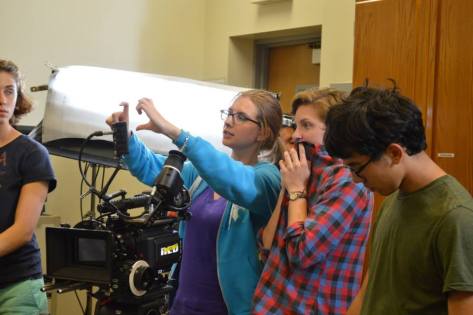
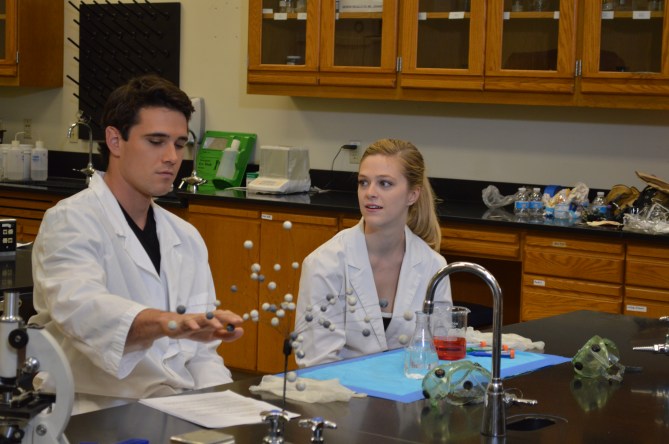
Kelsey Impicciche (middle), Lexi Giovagnoli (left) and Tyler Mauro star in writer-producer Katie Micay’s “Flirt.”
The short romantic comedy film, “Flirt” from Canadian writer-producer Katie Micay has all the ingredients of a champion paradigm of filmmaking. Micay wrote the high concept script featuring an endearing protagonist who faces a relatable obstacle and features a strong character arc. There’s a torrent of comedy stemming from firsthand source material, strong supporting characters with palpable chemistry and on-location shooting captured with refined cinematography.
The story follows Taylor (Kelsey Impicciche), a quirky college senior who lacks in the oft-tricky art of flirting and is on a quest to land the hottest guy in school as her date to her final sorority formal.
“Flirt” is a romantic comedy about a girl who is very lovable, but hopeless with guys,” Micay said. “Ultimately, she is focused on things that aren’t important and needs to learn to find someone who appreciates her for who she is.”
Impicciche, who has acted in the films, “Suicide Note,” “The Toy Soldiers” and “The Mastery,” said, “I loved the idea of the project and of this character who can’t flirt and ended up in many awkward situations. I loved the idea that this character really needed a date to a dance. I’ve honestly had this problem many times.”
The film co-stars Lexi Giovagnoli as Jenna, Taylor’s sorority sister and best friend. Playing Taylor’s love interests are Tyler Mauro as Liam and Shane R. Kennedy as Brad. “Flirt” was filmed on location at Loyola Marymount University (LMU) in Los Angeles and went on to be an Official Selection at the Reality Bytes Film Festival in 2013.
Micay is known for her writing and producing of “Limited Engagement,” a comedy short that won an Award of Merit at the Women’s Independent Film Festival and was an Official Selection at the Los Angeles Women’s International Film Festival.
“Flirt” came on the heels of Micay’s “My So Called Family,” a darker, quirky dramedy she wrote and produced in 2013. “I was ready to just make something different,” she said. “I got to use a lot of wit and dry humor and I hadn’t done that before. My friends and I are hopeless at flirting and it was something we always joked about! After seeing “Easy A,” I was inspired to try writing “Flirt.”
The premise was one where art imitated life. Micay is a member of LMU’s Tri Delta Sorority. Her inception into sorority life was an unexpected one and an experience that would later lay the framework for filmmaking inspiration.
“I came into college with a very sour idea of Greek life,” Micay said. “But when my friend convinced me to try it, it turned out to be the best decision of my college life. I still live with my sorority twin!”
In the case of sorority formals, it’s the girls who find dates and ask out guys. “It was definitely stressful for my friends and I,” Micay said.
The fabric of the leading character, Taylor, was also derivative, on a certain level. “I’m not as expressive or over-the-top as Taylor can be, but she stemmed from me. When we auditioned Kelsey, she really took to the character right away. Through rehearsals, we built the character up to be what you see on the screen.”
Katie Micay (middle) unifies the vision behind the romantic comedy, “Flirt.”
Said Impicciche, “Katie had a solid grip on what she wanted, and was very helpful with guiding me towards her vision, while still allowing me a lot of creative freedom. There was a lot of physical comedy she wrote for the character, which was incredibly fun to do.”
The relationship between characters Taylor and Jenna was based on one of Micay’s friendships, “one where you are essentially sisters,” she noted.
“For me, the characters made the story,” Impicciche said. “As soon as I describe them, other girls immediately can identify people in their own lives that relate to these characters. They’re very real.”
From a producer’s standpoint, Micay was charged the task of navigating the project among its multiple on-campus locations including a dormitory and a working lab classroom that required a filming permit with the needed safety protocol.
Actor Shane R. Kennedy plays Brad, the elusive love interest of Taylor, played by Kelsey Impicciche in “Flirt.”
“When shooting on a college campus, you have to go by their rules so when they will let you shoot really dictates a lot. We also shot outside with a dolly track during school hours so that completely killed our audio,” said Micay. “We went back and used ADR in post. During the shoot, I relied heavily on Alyssa Brocato, my cinematographer. We planned as much as possible ahead of time because we knew timing would be tough. On the day it was about getting everything we needed.”
Micay’s diligent producing paid dividends and led to the film becoming a success. “Katie ran a really professional and fun set. Everything ran very smoothly,” Impicciche said. “I was really impressed with how she organized everyone and how she kept everyone on track and doing their best work. She was a joy to work with.”
Most recently, Micay wrote and produced “The Firefly Girls” that starred the award-winning Savannah Paige Rae of “Parenthood” and “Date Night” fame. “The Firefly Girls” screened this year at the Sonoma International Film Festival and the Equinox Women’s Film Festival.
When Canadian actress Alison Balnar first stepped on stage, it was to play the classic role of Dorothy in Wizard of Oz. At the time, she was ten years old, with big dreams and a life ahead of her. Now, she is a part of a film headed to the Cannes Short Film Corner.
Balnar believes that going to Cannes will give the film, 60 Eight, the recognition it deserves.
“It’s one of the most prestigious international film festivals and will provide a great platform for a fantastic film,” she said. “I feel that the filmmaker, Raja, and the film itself are very worthy of this platform.”
60 Eight follows the life of John, who at the age of eight gets stuck in a lengthy comatose/minimally conscious state. It exposes the life and relationships surrounding John. Balnar plays the role of Sarah, John’s best friend. Sarah is captured at three different ages since the film focuses on the 52 years that John is in a coma. Balnar portrays Sarah at the age of 18.
“It feels great to be involved with a project with such a touching story,” said Balnar. “Raja was a terrific person to work with and was the driving force behind finding and using the vulnerability that was required to portray Sarah.”
The film was written and directed by Raja Pothineni, and stars Matt Jayson, Reginald Span, Lucas Zaffari, Laine Hannon and Denah Angel.
Balnar was extremely dedicated to an accurate portrayal of Sarah right from the beginning, said director Raja Pothineni.
“It was great working with Alison. In the very first meeting, we talked about how 60 eight was going to be a film that tried to portray the lives of its characters as authentically as possible, and the work that would need to go in to be able to pull that off,” said Pothineni. “Right from the start, I could see that Alison was dedicated in bringing her character to life and her talent lets her play complex characters while hiding the effort it takes to create them.”
Pothineni also said that Balnar’s attitude and commitment allowed for a smoother production.
“During the shoot, her commitment to the moment and her fellow actors meant that I had to give very minimal direction, and on the edit table, I was very glad to find her maintain her rhythm across shots and takes,” he said.
For Balnar however, the film is about the story it tells and the life lessons that are conveyed.
“I think that this film is filled with many valuable lessons and Raja does a beautiful job in capturing them,” said Balnar. “One lesson that resonates with me is the power of love. John is consistently loved throughout his life even though he is put in extraordinary circumstances. I think that this film reminds the audience of this force of love and puts life into perspective.”
Playing the character of Sarah has given Balnar the chance show audiences her versatility by playing a very vulnerable character.
“As an actress, each role and character is unique. It requires you to look into different emotions and experiences and translate them to find parts of the character,” she said. “When you combine my exploration of the character with the director’s openness to my interpretation, it gives me total freedom to perform. As an actress, that is a great gift.”
The role did not come without it’s difficulties. Her character is in an extraordinary circumstance that needed to be displayed effectively on screen, and Balnar stepped up the the task.
“A challenge I had with the character, Sarah, was finding the right colours in my performance that captured exactly how she felt,” she said. “It was a matter of how to authentically capture what her character was feeling given these extraordinary circumstances. I needed to find a balance of both strength and weakness within her and have that translate on camera.”
Although Balnar is only portraying the character of Sarah for a portion of the film, she is able to capture her story and the character’s feelings in a way she feels many will be able to relate to.
“When I play Sarah, she is 18 years old and moving to college. She needs to let go of John and accept his fate in order to move forward with her life. Sarah of course takes care of herself and lets go of her dedicated visits to John in the hospital. It’s her struggle of coming to that decision and moving forward with life that I can relate to. Sarah is growing up and facing decisions that will ultimately affect her life for the better or worse,” she said. “I think this is a struggle that is not only relatable to me, but so many other millennials.”
60 Eight premieres May 16 at the Cannes Short Film Corner.
The greatest forms of art are often achieved when one is pushed to their limits, when challenges that are presented seem impossible to overcome, but effort and determination lead to the shining light that is great success. And beyond that, the greatest sense of accomplishment can often be creating such a masterpiece where the reward is not monetary, but knowing what you have created will be appreciated by so many people, and forever changed your outlook on life. Not many people ever get to experience such a feeling, but filmmaker Carlisle Antonio is one of the lucky few.
Antonio spent months in gruelling conditions on a volunteer project in Alaska, making a series of films for the National Park Service that they will use for all the Park visitor centers around the United States as well as for distribution via the Internet, social media and NPS sites. It involved working primarily as the caretaker for the Bremner Historic District, which is situated deep in the Wrangell-St Elias mountains, staying in a primitive cabin that was part of the Yellow Band Gold Mines base camp from 1939 to 1941.
“It was challenging in every aspect, physically, emotionally and mentally. Having to live in extremely remote conditions surrounded by glaciers and steep mountains, with Grizzlies and other wildlife, collecting drinking water from glacial streams with temperatures that would chill every bone in your body, watching eagles playing amidst majestic mountains and landscapes,” said Antonio. “I refer to Alaska as ‘Gods Painted Landscape’”.
Antonio has a vast amount of experience directing and producing films. As CEO of Red Man production films, he travels the globe telling the stories that need to be told. His success comes from the passion he has for filmmaking.
“It’s a medium that can have an immediate and powerful impact on people around the world from all walks of life,” he said. “It can transcend race, culture, religion, politics and prejudice and can build bridges that can play an important role in understanding the world we live in through all its complexities.”
This is the exact experience Antonio had in Alaska. With each rising sun, a new set of challenges were presented to him, while still combatting the difficult and harsh weather that the North can bring.
“To be so isolated, making a wrong decision can literally mean losing your life,” he described.
The change in his usual scenery allowed Antonio to learn and experience many things. He explained that he learned how to use satellite radios, talk to pilots, take weather readings off the mountains, maintain hiking trails, camp in wilderness, bear safety and the dangers of bears, camp safety, river crossings, trek through hazardous terrain, glacier crossings, how to read the terrain and signs of animal activity, trek though wilderness and back country, maintain cabins and campsites, give advice to visitors, and help plan hiking and trekking routes safely. He learned how to read topographical maps, maintain a strict camp discipline. He learned how to use solar paneling to charge phones, batteries and radios. But beyond what is practical, he learned much more.
“I learned how to live with myself in a way that I was deeply fulfilled, physically, emotionally, mentally, physically and spiritually. I learned about the difference between the things we need and the things we think we need. I learned about silence and the natural rhythms of the earth and what we call wildlife. I learned about awe and beauty and humility,” he described. “Because living in a place such as this, you realize the fragility of our own mortality and the delusions that we are in control.”
The National Park Service will benefit for years due to Antonio’s volunteerism. Without him, such a project may not have been possible.
“To be surrounded in such beauty and in a place where conventional time really didn’t exist; I felt a freedom that cannot be found anywhere else,” he said. “With no electricity and the normal everyday city trappings, like phones, Internet, Facebook, etc. its like throwing out all your stresses and anxieties and finding out what it means to be alive. What is not to enjoy about that?”
Antonio donated his time, and ample amount of experience and success in filmmaking for a project that has meant so much. The true definition of selfless art.
“I guess Alaska taught me how to be alive and thankful for being part of this amazing journey that we know as life,” he concluded.
Zi Li combined her passions – art and science – into a thriving game design career.
The innovative game designer and game producer Zi Li has spent years studying various forms of media and entertainment. Originally from Guangdong, China, the experienced creator has demonstrated a proficiency of filmmaking and animation in addition to her expertise in the world of gaming.
With four years of game designing under her belt and two years of game producing, Li is known for her work with companies such as Firefly Games Inc., Floor 84 Game Studio, and Ericsson Communications Company. As a designer, producer and artist, Li has contributed to top, award winning games of various genres, including “Dissonance,” “Leviathan,” “Dungeon Crash,” “Epic Knights,” “Paralect,” and “MiraLab.”
As a game designer, Li’s role is similar to that of a film director’s, where as a game producer is in charge of overseeing the development of a video game, acting as a liaison between everyone involved with the project.
At an early age, Li developed a passion for science and art. “Unlike a lot of game developers, I didn’t fall in love with games first,” Li stated. “I spent more than six years studying paintings. I always thought I could become a part-time artist. Later, I dabbled in animation, however, neither satisfied my needs of expressing my engineering mindset. Eventually, I understood that in the gaming industry, science intersects art. For me, games are a media that allow both areas to collapse together.”
Li first got her start in the industry as a graduate game design student at the University of Southern California (USC). Through her extensive work on various independent projects, Li was able to gradually figure out her strengths, ultimately learning what it takes to become an effective inventor aside from the expected creative and technical aspects. “One of my main strengths is execution,” said Li. “As a game designer and programmer, I can execute myself very well. As a game producer, I can push other people to execute ideas well and understand every aspect of the game.”
Steve Cha, producer and fellow Collaborator on “Dissonance,” raved about Li’s talents. “Zi is not only about coming up with ideas, but also completing them with efficient ways. Dissonance is a game with relatively new gameplay and needed time to implement. Since everything in the game has two shadows, the team needed to make a system that casted two shadows for one object. Some talked about recalculating the vertices and some suggested using black 3D objects to make the shadows. Zi came up with the idea of using two cameras and casting images from these cameras to the walls. Her ideas efficiently solved the issue without slowing down the computing process. Zi can always find efficient ways to solve problems and keep everything running forward simultaneously.”
There are several required characteristics a game designer must have in order to be successful in their career. Every game has a target audience, and as a designer, it is his or her job to be aware of said audience. “Game designers communicate with the players through their games. A game designer should love his or her players and aim to work their design around their audience in order to provide a complete gaming experience,” said Li.
When it comes to her games in particular, Li works hard to engage these qualities that will ensure audience fulfillment as well as personal success in her own designing approach. Commenting on the matter, Li said, “I love being able to see into other people’s minds through their work, and I try to provide my players with a glimpse into my own through mine. My passion is communicating with people through the game as a form of art rather than just being passionate about making a game with no meanings.”
As a designer, it is Li’s responsibility to apply design and aesthetics to a game for its players to enjoy. More often than not, this type of work expresses the theme of the game. “For example,” Li explained, “I came up with the mechanics that translate the idea of psychological concept related to dualism in “Dissonance.” The two shadows involved in the came are casted from different lighting and visualize the abstract concept of dualism. One shadow represents logic and actions, while the other represents intuition and feelings. This approach I’ve created is unique and has never been done before. The game communicates the psychological concept through gameplay and people can see the idea even if they don’t speak the language – one of the main reasons why I believe “Dissonance” gets recognition from so many countries.”
“Dissonance,” an award winning, video game developed by Team Dissonance, is a puzzle-adventure game. After six months of development, what started out as Li’s personal thesis project, expanded to a team of over ten people. The developers transmitted the psychological concept about dualism into the core mechanics of the game to make it more than just a puzzle.
Since it’s initiation, “Dissonance” has received awards such as Most Innovative Game in Indie Prize and Experimental Game Finalist in Out of Index Festival, as well as appreciation from several different countries and organizations.
“I draw inspiration from all sorts of things,” Li answered, when asked from where she draws her ideas. “I often find myself motivated by other media, biology, psychology, and life experiences.” “Orbanism,” a game Li created with her friend Anisha, is inspired by the biology concept of mutualism and interspecific competition. Regarding how the game works, Li said, “It’s a two player game in which players are competing against one another and working as a team to overcome obstacles.”
Similarly, Li’s game called “Greek to Me,” is a game in which each player hears multiple different languages and has to distinguish which is English in order to reach their goal. “The game shows how hard it is for a foreigner to achieve things in a strange country,” said Li, detailing its purpose.
Li’s years of experience in designing and producing video games have allowed her to explore various diverse genres, ultimately rounding out her impressive framework of success. Her projects range from the puzzle genre to games that fall into the category of RPGs, ultimately proving a type of versatility that not every game designer carries.
“Through working on various projects, I can easily understand different aspects of a game and, overall, the image of each project. Though they all vary from one another, every step of the process teaches me new skills and perspectives of game development. These experiences contribute to me becoming a better designer who can be creative and resourceful. Thanks to my past experiences, I have learned how to be a better leader and am very confident approach to game designing and producing,” said Li.
“Dungeon Crash” and “Epic Knights” are two of Li’s mainstream mobile RPG games. With over 1 million download, “Dungeon Crash” was featured at both Android and Apple Stores, and was rated as a top-grossing Android game. With 50,000 downloads from over 100 countries, Li’s “Epic Knights” was rated the same.
Observing Li’s leadership abilities, Annie Chan, associate producer of “Dungeon Crash,” affirmed, “The developers of all games always want to put every fun element into their game, which not only slows down the development, but often creates a lot of bugs. Zi quickly spots this tendency and puts a stop to it. She directs the team to focus on improving the current version of the game and providing users with a user-friendly experience. Since Zi has stepped in and corrected the direction of “Dungeon Crash,” the overall performance of the game as well as its player reviews has gone up.”
Aside from Li’s sought after designing and producing abilities, her work as an art director has also reached a massive number of audience members. As the art director of “Leviathan,” Li is accountable for the overall look and feel of the Leviathan-world, as ensures the quality and style of the world as it is built.
The game itself is a bold and daring mix of virtual reality, augmented reality, cinema, and the novel based on the celebrated steampunk series by Scott Westerfield.
For her role, Li was required to conduct research in order to offer various ideas for the creation of an assortment of creatures for the game. “Zi came up with creatures that carried the story plot and were consistent with the rest of the world,” explained the creative director of “Leviathan,” Sunil Kalwani. “In the ship of “Leviathan,” the main characters need a communication tool. Zi designed Messenger Lizard, which is similar to a mobile phone, which offers an incredible user experience. Messenger Lizard’s skin color can change based on the emotion of the person on the other side. In this way, users can see the visualized emotion of the messages and choose if they would like access to whatever type of emotion or person. Zi’s creativity brings vivid life and a friendly, visualized experience to the Leviathan-world.”
“Leviathan” won the award for New Frontier Project at the Sundance Film Festival and has been featured on The Creators Project, a joint celebrity blog of art and technology by VICE, as well as at the internationally renowned Consumer Electronics Show.
In an industry that is still dominated by males, Li takes pride in being a successful, Asian female game designer. “Every time I’ve attended a game festival, I’ve noticed that the majority of the developers are male,” Li recalled. “As an Asian, female game designer and producer, I realize that my background is definitely different from most of the game developers I know.”
As a child, Li was fascinated with the Asian culture, art pieces that speak universal languages, and struggled with being both logical and sentimental. Now, she’s discovered her voice in the industry, and doesn’t hesitate to own her perspectives, thoughts or feelings. “I like to express my progressive, Feminist views through my work. I am proud to be a woman working in a field that used to be entirely dominated by men. I hope I can bring more of my unique viewpoints to the table and push the game industry to be more progressive with my knowledge and skills,” said Li.
Continuing that thought, Li added, “Contrary to popular belief and stigmatism, games aren’t always products used to simulate violent actions in the virtual world. Games can be used for educational, medical or experimental purposes. For me, I would like people to have fun and also find satisfaction within the spiritual communication through the gameplay when they play my games. That is what I aim to achieve.”
Journalist Richard Bence specializes in travel narratives and is a fixture among world-class publications.
British-born journalist Richard Bence has an elegant, energetic and always expressive professional style. His capable navigation of the oft challenging post-print landscape has earned Bence a solid reputation as a versatile writer with a comprehensive grasp of subject and clarity of presentation. These gifts have taken him from a solid decade-plus stint as a travel writer to the loftiest pinnacles of specialized prestige periodicals and web presences, serving both as a contributor and editor.
Bence, who is equally at ease creating in-depth magazine features and effective public relations campaigns, realized his calling at an early age, thanks to none other than Superman and his “mild-mannered newspaper reporter” alter ego, Clark Kent. “I distinctly remember watching “The New Adventures of Superman” with Dean Cain and Teri Hatcher in the mid ’90s and knew that is what I wanted to do,” Bence said. “It seemed incredibly glamorous and exciting, like having a kind of diplomatic immunity which gave you access to another world. Back then magazines held the keys to what was cool, they were the gatekeepers, the opinion-formers, the style makers. I wanted to be one of those people, percolating and sifting the information of the world.”
Bence wasted no time pursuing his vocation.
“I was fortunate to know someone at the Express Newspaper where I gained my first valuable work experience and never looked back. Every summer I would contact a magazine, GQ, Attitude, and get more experience, all the while becoming more and more certain that this was the career for me. It was my manifest destiny, and seemed like the ultimate rock and roll profession. It is ridiculously tough to make a go of it as a writer, but fortunately I have always been blessed with staff jobs.”
Gifted with two critical qualities—talent and instinct—Bence has distinguished himself at some very high profile outlets, as a contributor to the prestigious London Sunday Times Style, Condé Nast’s Tatler and as managing editor of Barclays Bank’s elite, invitation-only Little Book of Wonders website, among many others.
“I was a travel journalist for 12 years and that type of journalism will forever be part of my DNA, but things really took off in 2011 when I made the digital leap to become editor in chief of CoutureLab, a luxury e-commerce site for global nomads,” Bence said. “I was the conduit for Carmen Busquets, the high priestess of couture. That was interesting because I wasn’t so much telling my story but that of the chairman, a Venezuelan entrepreneur who entrusted me with communicating her message to the CoutureLab customer.”
From that auspicious assignment, Bence went on to become managing editor of Little Book of Wonders, where he specialized in developing inventive ways to help brands connect with Barclays’s ultra-high net-worth customers.
“This was a shift for me and allowed me to see the commercial power of content,” Bence said. “I had been helping places tell their stories for airlines as an inflight magazine editor. It was a natural progression to use those skills I learnt at the coalface of travel journalism to help enhance experiences for the global elite.”
He excelled in this new capacity, as Creative Director Laura Rule, whose clients have included Victoria Beckham and Mario Testino +, described:
“When Richard was at Couturelab, a leader in the field of online luxury, I commissioned him to consult on two luxury brand projects for Mario Testino +. Richard provided in depth and knowledgeable marketing research and inspired creative ideas, which in turn informed the brands vision on the projects,” Rule said. “Richard has achieved an incredible amount in a short space of time. Needless to say, I am always beyond excited by the results of our work together. Even as a consultant I consider him to be an excellent and highly valued part of my team.”
With a solid international reputation that’s made him a familiar, recognizable force at the highest altitudes of journalism, editing, promotion and marketing, when Bence relocated to Los Angeles he promptly began to expand his professional palette, adding broadcasting—for Monocle 24, a 24-hour online radio station with 400,000 listeners per month—to his already formidable resume.
“Since moving to the U.S. in 2014, I am fulfilling my ambition to become an expert on all things California and have found a special niche celebrating British creativity and innovation in Los Angeles,” Bence said. “As a print journalist, I focus mainly on travel, design and style, but more recently, I have gravitated towards the arts and on air journalism as the West Coast correspondent for Monocle 24. I get to talk about art, architecture, TV and film, which is a dream really. Radio is definitely having a ‘moment’ and I am glad to be part of its renaissance.”
The high flying Bence’s ambitions are matched only by his capabilities and his sterling roster of achievement is uniformly celebrated by professional associates.
“Richard has been an essential asset as a publicist and editor. His ability to establish connections and contribute to all aspects of editorial and creative direction at a high level has been fundamental to the success of our award-winning publications.” said Juliet Nilsson, Creative Director at Vind & Våg Publishing House. “I have no doubt moving forward that whatever journalistic role he will play his professional manner and highly skilled approach will be of significant benefits to future projects.”
Polisan Home Cosmetics and Kollektif’s “Muted Woman” campaign raised awareness on domestic violence against women.
Her voice wasn’t heard.
But the message couldn’t have been louder.
It was an impactful ad campaign called “Muted Woman” and was a project carried out by Kollektif, a prominent advertising agency headquartered in Istanbul, and Polisan Home Cosmetics, a 31-year old home décor retailer in Turkey.
The campaign is moving, gripping and emotion-stirring. It takes head on this frightening and disheartening reality: “Every second woman in Turkey is subject to either physical or verbal abuse.”
Leading the campaign was Kollektif VP and Creative Director Ozan Yurtsever, Kollektif senior copywriter Gorkem Ciftci and M. Cagri Kara, who consulted the art direction on the project.
“The subject matter, ending violence against women, was truly uneasy and dark content,” said Ciftci.
With an emotionally raw and unprecedented strategy, the campaign’s message was expressed in a simple, but brilliant way.
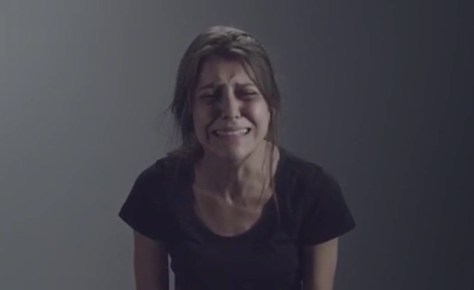
Using a video posted to Polisan Home Cosmetics’ Facebook page July 31, 2015, the campaign unveiled a woman sobbing and crying out for help with her eyes closed for 33 unforgettable seconds. Her plea is muted, entirely unheard and representative of that of many suffering women in Turkey.
At the end, the narrative on violence against women says it best with the Turkish subtitle: “It’s time to raise your voice.”
Said Kara, “We wanted to shine a light on a problem that’s paralyzing many embattled women in Turkey. More than that though, we hoped to reach women anywhere in the world who are unfortunate victims of domestic violence. It’s a shameful social problem and our objective as creatives was to pool together an influential directive and use social media as an effective launch pad to get this out to the world.”
The mission was undoubtedly accomplished.
“Muted Woman” was viewed more than two million times in just three weeks and a massive conversation was sparked on social media addressing domestic violence toward women.
It has nearly 12,000 likes and more than 2,500 shares. It won many prestigious awards in the advertising industry including three 2015 Crystal Apple awards and the 2015 Mixx Awards Gold.
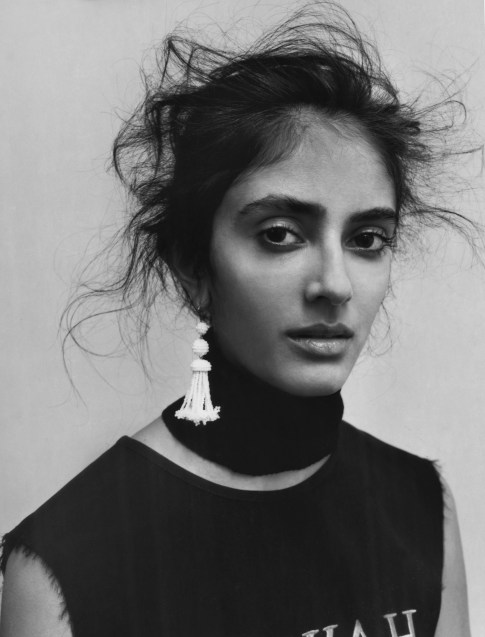
As to the art direction, the woman in the video wears a black t-shirt and sobs in front of a gray backdrop. Her hair is disheveled and she raises her left hand toward her face revealing a wedding ring on her finger. She cries out words, but they are not discernible or audible.
“The colors were designed and selected to convey the needed tone,” Kara said. “It’s a kind of minimalist theme that’s intended to stay secondary to the performance, but it supplements the message. Dark color palettes are of course associated with grieving and distress. We hoped the design would only enhance the message.”
Yurtsever has collaborated with Kara on many ad campaigns including for brands such as Audi, Finansbank, Frito-Lay and CNN.
Of “Muted Woman,” Yurtsever said, “From the conception of the design, Cagri demonstrated his prowess as an intuitive art director with expert command of his craft. He led an entire team to produce the images that we needed for our campaign, determining the overall style and tone that corresponded best to our theme and the production’s statement as a whole.”
Kara, an Istanbul native and award-winning art director for brands such as Coca-Cola, Lamborghini and Fox Television, also wrote and composed music for the “Muted Woman” case video that demonstrates the campaign’s mission and execution.
“Mr. Kara’s presence on the production of “Muted Woman,” added enormous depth and meaning to the project,” said Ciftci. “Cagri completely understood the concept and what we needed to keep the material dignified.”
We are all born with unique gifts that make us different from the rest of the masses. Some know from an early age exactly what those gifts are, while others, arguably the majority, have to go through the sometimes grueling process of trial and error before their true ‘purpose’ shines through clearly.
Today, Toronto-based photographer Peter Tamlin is sought out by major companies like cosmetic leaders including MAC, CoverGirl, Revlon and Clairol to jewelry designers such as Dean Davidson and award-winning stylists like Caffrey Van Horne to use his creative eye to capture their products and designs for all the world to see. But, if you asked Tamlin back in high school how his life would look in 10 years, chances are he wouldn’t have predicted himself having a career as an internationally celebrated photographer, but that’s exactly what has happened. After discovering his love for photography at the age of 19, he dove in full force and hasn’t looked back since.
Aside from the impressive list of clients Tamlin has shot for to date, he has also had his personal photography work featured in gallery shows including the “Vision-Perceptions of Light” exhibition at the Warren G. Flowers Gallery in Montreal, Canada.
In 2011 he earned the award for Best Fashion & Beauty Photography from the prestigious Applied Arts Photography & Illustration Awards for the intriguing black and white photo he took of Tea that is featured below. The way he endows the shot with a feeling of movement and the whimsy of a fairy tale make it a difficult photo to take our eyes away from.
Enter a caption
Tamlin has shot editorials for a diverse collection of some of the most read magazines around the world including Fashion Magazine, Plastik Magazine, Lush Luxury Magazine, Fantastics Magazine and countless others. While he is continually pushing the boundaries of the mainstream with his personal photography style, what has made him such a success in his field is the fact that he is able to strike a balance between what his clients want and what he finds creatively inspiring.
Regardless of whether they are fashion models donning new designs or products for the various companies that hire him to shoot their ad campaigns, Tamlin is a miracle worker when it comes to creating the perfect lighting to capture his subjects. His unique ability to light a model’s skin in a way that glows effortlessly while still looking natural was a huge draw factor for Shoppers Drug Mart, which hired him to shoot their Glowing Skin campaign in 2013.
To find out more about photographer Peter Tamlin, what inspires him and how he got to where he is today, make sure to check out our interview below. You can also check out more of his work through his website: http://www.petertamlin.com/
Where are you from and how did you first begin learning photography?
PT: I was born in Scarborough, but raised in a small town named Stouffville, both in Ontario, Canada. I’m now based in Toronto.
When I was 18, one of the first friends I met in Toronto was a photographer and was an assistant to famed photographer David Lachappelle. My friend would always show me David’s photography books and expose me to the many types of pop-culture photography coming out of New York. When I was 19, I bought my first 35mm film camera and began shooting and experimenting.
Are you self-taught or did you go to school to study photography?
PT: When I was 23, I moved to Montreal and enrolled in the Dawson Institute of Photography. It was a two year program and I graduated at the top of my class.
What is it about photography that first inspired you to pursue it as a profession?
PT: Basically, I love the idea of being creative and creating artwork that is captivating and original. Professionally, I detested the idea of working a 9-5 job and doing the same thing everyday. I wanted a career where I could always be setting new goals and where there is no limit to the success I could have.
I also wanted flexibility with my schedule and to be able to work when and where I want. I love the idea of being able to travel as well.
Can you tell our readers about some of the projects you’ve shot?
PT: In Jan 2015, I was hired as photographer for a campaign and hair competition shoot for Aveda Canada and specifically for Civello, which is an Aveda Salon in Toronto. Over the course of two days we shot 7 different models, each with different hairstyles. The photos were used in a campaign and also entered in the NAHA’s (North American Hair Styling Awards) and also the Constessa’s, which is a Canadian hairstyling competition. The entry was named a finalist in the CONTESSA Awards for Canadian Salon Team.
I was hired for this shoot by Aveda Canada’s Creative Director, Kristjan Hayden. I worked directly with Kristjan to develop the direction for the shoot. The concept was based on movement and motion of the hair, so with the specific lighting I developed with Kristjan, I was able to use a special effect to illustrate the movement.
I believe the reason I was asked to be involved in this project was because of my unique creative vision and my ability to bring original and captivating ideas to this project. Hair photography is not only about showing the detail in the hairstyles, but also about presenting the hairstyles in creative and interesting ways. I think the specific lighting, set, special effects and retouching treatment I produced for this shoot are extremely unique, interesting and effective.
In 2013 I was hired to produce the Glowing Skin advertising campaign for Canada’s largest drugstore chain, Shoppers Drug Mart.For the Glowing Skin Campaign, we shot 4 different models in one day. The purpose of the shoot was to showcase clean, healthy, glowing skin. The photos were used in a national advertising campaign, appearing on billboards, in stores, newspapers, magazines, online and many other advertising outlets.
I was hired again as photographer for Shopper’s Drug Mart in 201 for their 30 Days of Beauty campaign. We shot 30 different models ranging in age from 16-60, over seven days. The purpose of the campaign was to showcase diversity in beauty. Again, the photos were used in a national advertising campaign appearing on billboards, in stores, newspapers, magazines, online and many other advertising outlets, as well. Each model was featured for each day in September 2014.
It was extremely important for these projects that the lighting capture the detail on the skin and the texture and colour of the products used. The lighting I used for both shoots was designed specifically to the needs of each campaign. For the Glowing skin campaign, it was very important that the skin looks healthy and glowing. The lighting that I designed incorporated many different light sources from multiple directions giving the skin enhanced luminosity.
For the 30 Days of Beauty campaign, it was very important that we showcased diversity in beauty, but in many different ethnicities and ages. The lighting that I used was softer and more flattering than standard beauty lighting. This meant that the light helped highlight and enhance each model’s own beauty.
Early in 2015 I was hired by Dean Davidson, a top Toronto based Canadian jewelry designer, to shoot his spring/summer campaign. Being the first time I had a chance to shoot for Dean, I wanted to do something completely original for him, so I suggested that we have the model pose in a pool of water. The model’s name was Hannah Donker from Elite Models in Toronto.
Then in October Dean approached me to shoot his fall/winter campaign. Again, I wanted to do something original, so I suggested shooting in a set of mirrors. The model’s name was Emily Van Raay and she’s represented by Anita Norris Models in London, ON. I worked with a very talented team with Greg Wencel doing the hair and makeup, and George Antonopoulos as the stylist. Both shoots were a great success and very well received.
In June I was hired to shoot an editorial for the September issue of FASHION Magazine, which is Canada’s leading fashion magazine. The editorial was titled “Team Spirit” and the theme for it was androgyny. It was a 10 page editorial and we shot in the ballroom of the historic King Edward Hotel in Toronto. The editorial featured two models, Alice Ma, represented by NEXT Models and David Chiang, represented by Ciotti Models, both in Toronto. Hair and makeup was by Susana Hong and the Fashion Director was George Antonopoulos. The editorial featured many top fashion brands including DSquared, Burberry, Vivienne Westwood, Gucci and Dries Van Noten.
Most of my work is photography, but I am also inspired by music videos and films, so over the past few years I have branched out in that direction. In 2013, I was hired to produce and direct and show package video for one of the top male modeling agencies in Toronto, Elite Model’s.
In one day, we shot nine different male models in the studio in front of a black background. The video was black and white and high contrast. I really enjoyed the editing process of the project and I was able to experiment and create with many different filters and effects. Even though the video is very different from my photography work, it was very popular and gained over ten thousand views online.
What has been your most memorable shoot?
PT: I would have to say that most memorable shoot would be the Elite Models video. It was a project where I had no restrictions or limits to what I could do. I was able to experiment with editing and effects and create something very bold and original. Also, it was great working with all of the models. Shooting photos can sometimes be tedious, but shooting this project was very exciting and enjoyable. It is probably the one project that has gotten me the most exposure.
What is inspiring you as a photographer now?
PT: It’s hard to say what inspires me now. My inspiration changes daily. At the moment I am really inspired to do shoots that are very dark and macabre. When the industry is moving into a more bright and fresh mood for Spring, my gut is telling me to go in the other direction.
Aside from the jobs that you are hired on to shoot, how would you describe your personal photography style?
PT: Captivating, dramatique, intense and unique. My main priority as a photographer and visual artist is to always be creating work that is original and reject the “norm.”
I always try to go against the grain and turn convention on its head. My most successful projects have been ones where I did something unexpected. I also enjoy experimenting with contrasting colours.
How much freedom do you have when it comes to creating the direction of a shoot for brands like Mac and Covergirl?
PT: Unfortunately, with those two clients specifically, I don’t have much freedom. For Covergirl, the direction was very conservative and commercial. Basically, it was a standard beauty shoot. We shot a pretty model with 4 or 5 makeup looks. The lighting was very basic in order to show off the product.
Clients like Dean Davidson, Greta Constantine and Aveda are the ones that give me more creative control. I generally have no limits to how creative I can go with the direction for those shoots.
Do you have a specific area of interest or subjects that you prefer to focus on with your photography?
PT: Commercial. I like to focus on conceptual beauty and hair projects. I find that I can be more creative in that area than the standard fashion shoots.
For my creative work, I like focus on models or subjects that are unusual, bizarre and outside of the norm. I like photographing unique characters that don’t fit in the fashion industry’s molds.
How do you keep productive and retain your creative edge?
PT: I try to keep productive by always exposing myself to different and new experiences and people. I’m constantly researching new concepts and lightings. The best way I’ve been able to retain my creative edge is by always pushing myself to do what no one else is doing, being original and pushing boundaries.
What has been some of the best advice given to you by another photographer?
PT: The best advice I’ve received wasn’t actually from a photographer, but one of my best friends. When discussing what career path I should take, he said I should “do what I love.” It was really the catalyst for me to pursue photography professionally.
What special advice would you like to share with other photographers?
PT: Don’t follow trends.
Be original.
Do what makes you happy.
Who are some of your favorite photographers?
PT: David LaChappelle, Steven Klein, Mert & Marcus, Txema Yeste and Solve Sundsbo.
What equipment would we find in your camera bag or studio for a typical shoot?
PT: Generally, I shoot with a Canon 5d Mark II, my MacBook Pro, and a Profoto ComPact-R kit and lots of colour gels.
What lighting equipment do you favor and why?
PT: Profoto is the brand I learnt with and probably the most popular and versatile.
Everything you ever wanted to know about Hollywood's who's-who.