All posts by Lorraine Wilder

IN BRAZIL & GREECE, MODEL-ROCKSTAR IS PRONOUNCED “TAPIGLIANI”

Image-21

During music award show season, it’s likely that you have seen constant advertisement declaring pairings of artist as “the performance of the century that you cannot miss!” While most of these never match the hype, one collaboration which has been an overwhelming success is fashion-meets-music. Most Americans are very familiar with the Victoria’s Secret special which features their fashion models and popular music artist; in Greece, a similar production is the famous Madwalk. Madwalk is the most popular show of its kind in Greece, combining famous singers and the work of well-known fashion designers. The show airs on television once per year and has done so since 2009. It’s a presentation of what is wonderful and beautiful in Greece, the centerpiece being the lovely models which adorn the creations during each performance. For model Alana Tapigliani it’s an opportunity to do what she is known for and celebrate Greece at the same time. Tapigliani appeared in 2012 presenting the Deux Hommes brand. Madwalk is more than an awards program for Greek citizens; it’s a national event and they take great pride in the artistry of their country. Even though Alana is known for her international modeling career, she admits that appearing on Madwalk had the result of her being stopped by the public to a much greater extent than ever before.

There’s a duality to the attention one receives from being involved in such a prestigious show as Madwalk. Alana’s excitement about appearing on the program was heightened by the exuberance of her friends and family. This is certainly meaningful on a personal scale but professionally, the fruit of this appearance made Tapigliani a very sought after model in Greece. While often admired, models don’t always receive the praise of other entertainment professionals; the praise Alana received from her appearance was a welcome exception to the common rule.

The Ace agency from Athens chose Tapigliani to work with designer Kostantinos Mélis for Madwalk. Mélis found his eponymous haute couture house in 1997 in Greece after a stint in London. Known for designing wedding gowns of exceptional aesthetics and quality, he then turned to a collection of haute couture gowns. His designs have been equally embraced by critics and the public, often donned by celebs on the red carpet.

Appearing as the only model representing the work of Melis was beneficial for any professional, a fact recognized by Alana. However, this was only half of the fun for her involvement in Madwalk. Each model is paired with a famous singer and Tapigliani made her appearance with Giorgios Mazonakis. The iconic Greek singer sang “Parole.” Being sung to by a music artist everyone knows while you are wearing dresses of incomparable beauty; it was no less than a magical moment for this model, but not one without concern. She reveals, “Of course I was very happy and excited to be there. In your mind you think that everything will be perfect and that’s what you want to portray for the audience. It’s their moment, not really your own. In truth, there were a million things going through my mind at the time. As a native of Brazil, the negative-four Celsius winter in Greece while wearing a dress was less than comforting. Towering high heels may look great, but the experience is equally uncomfortable. I wouldn’t trade it for anything but my pleasant expression during the appearance was not completely honest. At some point I was able to be lost in the moment.” For Alana, that moment was when the music took over. There’s an undeniable power to music which allows all people, models included, to don a powerful stance. Tapigliani exhibited this during Madwalk, capturing all eyes as she strutted around the catwalk. The music, the lights, the DJs, and of course the designs which Alana and her fellow performers wore created a spectacle which transfixed the audience.

Image-14

 Madwalk may be a Greek event but it is viewed widely across the world. Tapigliani received attention from even more designers and took part in events like this in other countries. She credits Madwalk with giving her both the exposure and confidence to relax and enjoy them. Because it was the first experience of the kind, she confirms, “Madwalk was my first time doing this kind of a show with singers, the stylists, and the like. You never forget the first time, especially doing a live show like this one for all of Greece. At the risk of sounding trite, the biggest reward was doing Madwalk itself. Big productions such as this one have not been around that long and they give an opportunity for a model to do something completely different. A live event is always more challenging; an internationally televised one is even more so. I love doing work like this where the designs and the music excite me. Madwalk was the beginning of a new era for me and it will always hold a special place in my heart because of the start it gave me.”

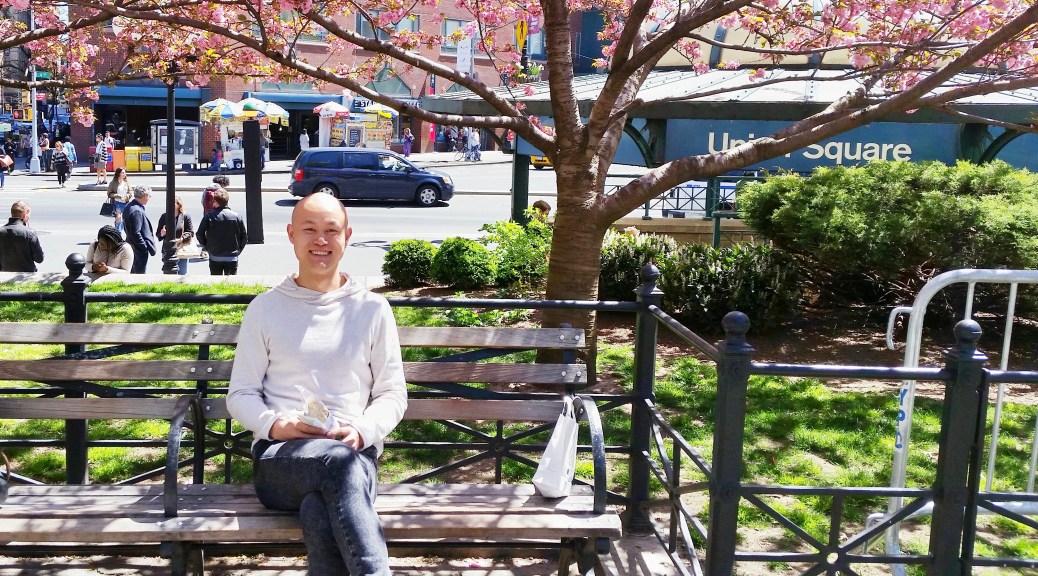
Compositor Aaron Wei talks passion for the arts and working on popular commercials

Coming from a background in fine arts, Aaron Wei had been training in traditional painting since he was only a child. He spent his life imagining what he could do on the canvas, sitting in front of the blank slate for hours before commencing his first strokes. As he grew, he began using his artistic eye for photography. However, when he’d take a picture, he found himself manipulating it into something more. This is what thrilled him; sitting in front of his computer and fusing images together, taking a work of art and turning it into a masterpiece. As this hobby began taking over his life, he began wondering, what if he could do this with a moving image? It was that moment when his astounding career as a VFX compositor began.

With an extensive background in the arts, Wei knows just how to transform a scene in post-production to make his work look like it was part of the original shot. Whether working on the next anticipated blockbuster, like Zoolander 2 or Our Souls At Night, or an award-winning television show such as Quantico or The Affair, Wei knows how to transport an audience with his work. Working with The Molecule, Wei does what he loves on a daily basis.

“Aaron is one of the best talents that I have come across in my many years in the business. He stands out as an exemplary compositor who will make considerable contributions to the industry. He has a great eye and instinct that merges technical and creative skills to achieve a desired look that is extraordinary,” said Andrew Bly, CFO of The Molecule.

Wei’s all-encompassing career has him not only working on prolific film and television productions, but also national commercials. One of the highlights of his career came in 2016 crafting a spot for Toyota.

“It was the best project I hoped I could work on. It meant a lot to a relatively newcomer in this industry, like a milestone, so to speak. This project included some futuristic scenes with spaceships, space and planets, the scale of visual effects work I had never touched at the time. I was crazy about it,” said Wei.

The commercial for the Toyota Prius followed a boy that always looked into the sky, and one day, he realized his dream. He went to another planet and watched earth from there. Wei was lead compositor in this project. He composited the planets in the main scene, and a number of other shots.

One of his shots was from the World Trade Center observation deck, where the child ran over to the window and he looks into the sky. When looking at the city from such height, everything on the ground is very tiny. In the original shot, the view in the window was not recognizable, so Wei had to ensure that the viewer could understand that it was Manhattan. In the shot, he swapped the window view to a much closer up photograph of the Manhattan skyline so that audiences could see everything.

He worked on almost every other scene, responsible for the majority of the visual effects for the commercial, which relied heavily on this.

After the success of the Toyota commercial, Wei once again worked with a car brand in 2016. This time, it was for Smart Car. This commercial project was made to focus on the features of the Smart Car. They turn fast, are easy to park, and capable of going uphill. There were a lot of shots, and Wei helped to clean-up the background, from editing trees and removing the crowds. Smart Car is owned by Mercedes-Benz, and Wei was more than eager to collaborate with such a renowned brand.

“You know when you shoot something in public, there will be a lot of brand names on the street, air conditioners on the wall, satellite disks on the roof, pedestrians, trees etc. I had to clean up all those. I did a matte-painting for the White House background shot. In DC, it’s not possible to shoot a commercial in front of the White House, so for that, I had to recreate the scene from a bunch of photographs. I cleaned up the crowds in the photo, painted the lawn in front of it, and wiped out all the cars in the street,” Wei described.

The entire experience was awesome for the compositor, who loves the fast-paced working environment of a commercial. He looks forward to working on many more throughout his career.

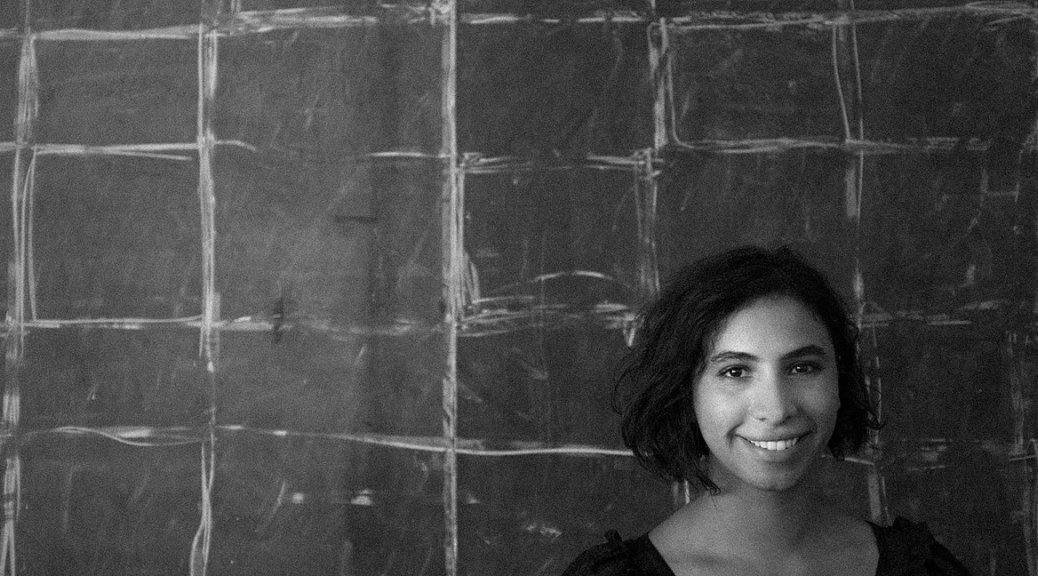
Laura Santoyo Dangond’s sets in ‘Lockdown’ transport audiences to high school

Originally from Bogota, Colombia, Laura Santoyo Dangond has always been a fan of movies. Growing up, she watched her favorite films, like Matilda and Jumanji, and would see more than the story. She would ask her parents how the filmmakers were able to create other worlds and dreamlike elements. Although her parents did not have all the answers, they encouraged their young child to make her own hypothesis as to how “movie magic” was achieved, and she never stopped wondering. As she grew, exploring the world and various cultures, her hypothesizing never stopped, and eventually she turned her passion into a career. Now, Santoyo no longer wonders how to achieve the magic of movies, and as a sought-after production designer, she is now the one creating other worlds.

Throughout her career, Santoyo has shown just what an extraordinary production designer she is. Her work on films such as Tim of the Jungle, The Plague and Falling are just a few examples of what this acclaimed production designer is capable of. However, despite such success, Santoyo considers the pointed drama Lockdown as the highlight of her career.

“It is probably the most challenging and rewarding experience I’ve had in this profession. I loved working with that team of people; we all believed in the story we were telling and together we overcame so many difficulties. Particularly for me, it taught me the importance on trusting the people you are working with and to support each other. In the end it all paid off, because it’s been one of my most successful projects,” she said.

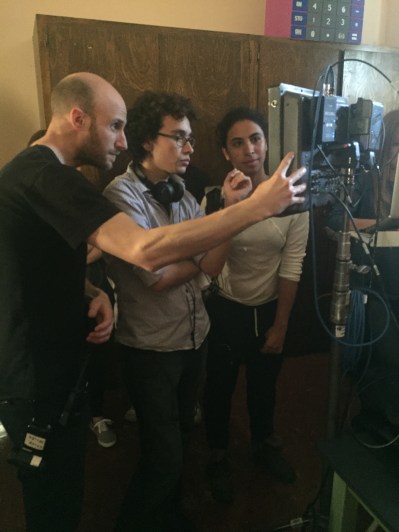
Lockdown set

Max Sokolof, Caleb Heller, and Laura Santoyo Dangond on the set of Lockdown, photo by Jane Hollo

Lockdown is about a 17-year-old boy named Julian. He is a misfit struggling through high school when he is taken hostage in the school restroom by Brandon, a classmate with a gun. Their perilous standoff proves that nothing is as it seems. Julian fights to hold onto the hope that he will survive – not just the hostage situation, but his entire high school experience. Throughout the film, audiences learn of both characters’ complicated backstories.

“This story talks about very important issues, such as depression and anxiety in adolescents, bullying in schools, access to guns, police brutality, and more that are affecting our society. It can help to bring these subjects to the table and encourage people who watch the film to have discussions about them,” said Santoyo.

After its premiere in November 2016 at the American Film Institute, Lockdown went on to be an Official Selection at many prestigious international film festivals, including the Orlando Film Festival, Garden State Film Festival, Sedona International Film Festival, Byron Bay International Television Academy Foundation for Best Screenplay and won the Golden Lion Award at the Barcelona International Film Festival. Such success may never have been possible without Santoyo’s outstanding production design.

“It is a great satisfaction to know that all the hard work, time and effort we as a team put into this project doesn’t go unnoticed and that we accomplished the purpose of telling a story that touched so many people,” she said.

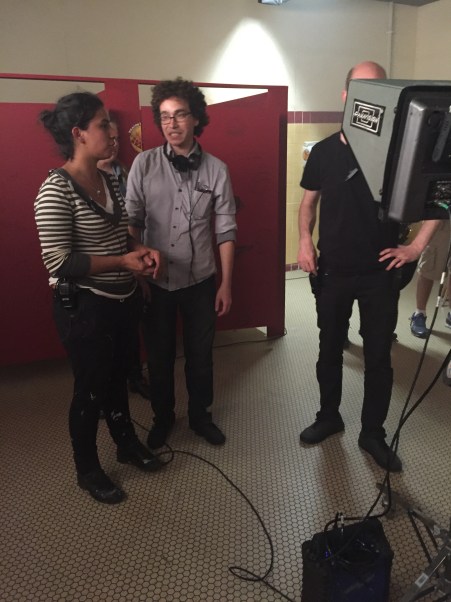
Lockdown bathroom set
Laura Santoyo Dangond, Max Sokolof and Caleb Heller on the bathroom set of Lockdown, photo by Jane Hollo

Having worked with Santoyo on his previous film Hotbed, the Director, Max Skolof, reached out to the production designer knowing the caliber of her work. At the time, he did not even have a clear idea of what the story was going to be, but he trusted Santoyo to help turn his vision into a reality. In the beginning, there was no script, and Skolof only had a newspaper article that he wanted to base a film around. Knowing the difficult but pressing issues the film addressed, Santoyo was immediately onboard.

“Working with Laura is a joy. She’s always curious, always soaking up ideas, always creative. She takes disparate things and puts them together in unexpected and revelatory ways. She has the highest standards for herself. Every detail is thought of. It helps me direct and it helps the actors find real depth. And on top of all that, Laura’s the kindest person you’ll ever meet. It’s also rare to come across someone who has such a strong and unique sense of aesthetics. She’s incredibly precise when it comes to expressing the story and the characters visually. Laura is brilliant in that way. She understands the language of cinema and she uses every tool at her disposal to help tell the story. Whether it’s knowing how to make use of space, or how to evoke a certain subtext with just color,” said Skolof.

When she begins every project, Santoyo makes sure to research her characters, and Lockdown was no different. She looked into what neighborhoods these adolescents would live in, the sociological and economic backgrounds and more, just trying to get to know as much information as she could to create a realistic design that would reflect both her leads.

Upon completion of the script, she did a breakdown of all the locations and noted what bits of the story took occurred in each place. When doing this, she noted the most important location in the story was the bathroom. Its design became her priority, and she began looking for a crew that would help bring her ideas to fruition.

“The design of the restroom was the biggest challenge because is where the two boys meet, and their feelings are revealed. We used a very restrained color palette that reflects the psychological state of both of them,” she described.

Rather than using a real location, Santoyo built the entire bathroom set on a soundstage. She went back to her research and looked for paintings and photographs that evoked the same feelings and emotions that she wanted to convey and saw a pattern in the colors. Most of the references she liked used yellows and reds. With that in mind, she did a preliminary design and presented it to the director. After his approval, she ensured all other departments, such as lighting and cinematography, could work with her concept. Once the designed was approved by everyone, the members of the art team, led by Santoyo, began sourcing the materials and painting samples.

The complexity of the two characters had to come across in the visual design and Santoyo achieved such a feat. She worked closely with the director, the director of photography and costume designer to better express the anguish and anger the characters were going through. The sets that she designed allowed the actors to better understand the characters’ backgrounds and helped facilitate the process of getting into character. In one instance, she even wrote offensive graffiti in the bathroom stalls that bullies may have written about their characters.

Such small details may seem trivial to some, by Santoyo knows how important they can be, and that is what makes her such a distinguished production designer. When watching Lockdown, audiences notice and appreciate how authentic the set is and allow themselves to be fully taken away to the high school. Any moviegoer knows, that is what makes a good film, and Santoyo makes that happen.


Top photo by Caleb Heller

The Power of Networking, Forming Bonds and Working with Friends: Roshan Gidwani’s Unique Path to the Top

Roshan Gidwani
Actor and TV Host Roshan Gidwani shot by Jonathan Catzin

So much of life, and success, comes down to our relationships; and the ability to form strong bonds with like-minded, inspirational people can be a deciding factor in one’s personal success, not to mention the fact that, for most of us, it makes life a whole lot more enjoyable.

For television host and actor Roshan Gidwani, the drive to connect and form ongoing relationships with those he admires and relates to in the entertainment industry is partly responsible for the celebrated career he’s become known for internationally today.

Friendship and creating quality entertainment is what it’s all about,” explains Roshan Gidwani. I think that many professionals do not see networking as a form of socializing… The stigma is that working is not supposed to be social. I disagree… We’re social beings. If someone likes you, understands your unique take on life and why that defines your interests and ambitions then they are more likely to stand by you on your creative journey.”

Roshan, who’s become known for his lead roles as the host of an impressive list of popular TV series such as “Science Quirks,” “Rap Chef,” “Art Bus” and “Discover Guangzhou,” has reached an astonishing level of success in his entertainment career, which ironically started as a way for him to connect with friends across the world.

“I’m a global citizen. I really miss my friends from all over the world. I went to an international school and my friends dispersed all over the globe after we graduated. We’re all separated by water and land,” Roshan admits. “I wanted to rap and the motivation behind that was that my friendships would last forever like a good song. Or, I would always be around at the click of a button. Acting gives me the same incentive… I guess the word I’m looking for is omnipresence.”

In a way, Roshan’s on screen celebrity has given him just that– a level of ‘omnipresence’ that only a select few manage to achieve. Considering the plethora of projects he’s been apart of to date, which also includes his work as an actor starring in major films, such as Tzang Tong’s highly publicized and award-winning dramatic feature “Faeryville,” and the TV series “Drive Me Crazy,” “Dragon’s Inn” and more, it’s relatively easy for anyone these days to click on the television or go to the theatres and see him on screen.

Fluent in English and Mandarin, Roshan enjoyed an incredibly multicultural upbringing, something that, as the host of an impressive list of TV shows catered to viewers across multiple continents, has undoubtedly helped his audience relate to him. Though he was born in Thailand, Roshan spent his formative years in Sydney, Australia before moving to Guangzhou, China where he lived until he was 17 and finally to Singapore, where his career really took off.

While Roshan has always had a powerful voice and the magnetic energy necessary to captivate viewers when he’s on screen, his first foray into show business came over a decade ago when he was rapping and emceeing shows under the pseudonym Rosh G. As a teen back in China, Roshan’s stage presence and lyrical fluency led him to be featured on national television in China during their national holiday with his song “In Guangzhou.” The attention from that led him to be tapped to perform at major events such as the China Miss Bikini Awards, and not long after he landed the lead recurring role as the host of “Discover Guangzhou,” a series that took viewers across the bustling Chinese city and exposed them to China’s unique art and culture.

By the time he moved to Singapore, the reputation he’d created for himself as a strong and talented performer led him to book work instantly. Though it was still early in his career, he was already hosting the SEA Games in Singapore, a major biennial event overseen by the International Olympic Committee and the Olympic Council of Asia, the Miss Bikini Awards and being recognized by popular magazines for his charm and skill, not to mention his aesthetic appeal. He even made it onto the Cleo 50 Most Eligible Bachelors, a highly competitive accolade decided by Cleo Magazine, and was chosen by Seventeen magazine as their Singapore 2010 Summer Hunk.

He was tapped to host the Mediacorp OKTO weekly TV series “Art Bus,” where he interviewed artists and exposed viewers to a plethora of  public art collections across Singapore. Roshan went on to host of the series “Science Quirks,” which aired on Mediacorp’s digital entertainment platform Toggle. Over the course of the show’s 26-episode run he interviewed researchers and scientists working in the field, and helped to educate viewers on everything from primary to upper level science subjects.

Some of the qualities that have made Roshan stand out and become such a sought after host for a wide range of programs is the continuity of his personality on and off camera, and the way he presents the material in an upbeat and relatable way.

“I’m not a different person at the audition and on the actual shoot. I’m consistent. At least my personality is. I’m naturally very happy… Hosting is very easy when you’re smiling and you enjoy talking to the camera. I like people in general. I host as if I’m connecting with an old friend and that friend is a camera lens.”

It’s easy to see from the moment Roshan graces the screen that his presence and conversational abilities are uniquely captivating, just watch the interview below and judge for yourself.

When asked about his technique as a host, Roshan explains, “After doing this for so long you kind of develop some techniques to wake your voice up. You ruffle your lips, you rap while jogging. You stay focused. I imagine everyone in the room as one moving organism. They’re there to respond to me. They’re there to listen and be guided. It’s not the same as imagining everyone naked. It’s just about believing that they like you. It gets easier when you become friends with your audience.”

While Roshan would continue to host several more series, and still does today, he’s also carved out a competitive position for himself as an actor. Upon moving to Singapore he landed the recurring lead role of Bill on the series “Dragon’s Inn” where he starred alongside Rayve Zen (“Siew Lup,” “Million Loves Me”), Caroline Chong (“The Tattooist,” “Pu Chi Kang”) and Benjamin Heng (“Filial Party,” “It’s a Great, Great World”). Roshan and actor Benjamin Heng formed a close friendship and would go on to work together again in the series “Drive Me Crazy” several years later where their characters are actually best friends on screen.

About working with Heng, Roshan says, “I was 19 years old. He was like a mentor to me. To reconnect years later and find out that he did the project [Drive Me Crazy] because he found out I got cast was a huge compliment. He respects me. We work well together and we’re friends.”

In the series “Drive Me Crazy” Roshan played the starring role of Ryan, a bar owner and perpetual bachelor by choice, whose eye for the ladies led him on one wild rampage after another. With the story centering on the tumultuous newlywed relationship of Jeremy (Benjamin Heng) and Chantal (Sheena Chan), Roshan’s character Ryan, Jeremy’s best friend, was the antagonist who always stirred things up, bringing the show’s conflict, as well as its comic relief.

“I remember Roshan giving the scenes many of his own different interpretations and constantly conversing with the director about which performance he enjoyed the most so that he could repeat it,” Heng recalls. “His raw and natural vulnerability was extremely refreshing and definitely lights up the room.”

The series “Drive Me Crazy” served as yet another testament to Roshan’s ability to captivate viewers, this time revealing his capacity for breathing life into a character and building on that over the course of a scripted series.

While Roshan Gidwani has become an undeniable force in the entertainment industry through his roles as both an actor and host, it’s not a stretch to say that his work, and life in general, is more fun because he makes it a point to connect and form meaningful relationships with those he collaborates with.

At the end of the day he says, “Collaborations between professionals occur because both parties respect each other’s individuality and by doing so, are enhancing their own talent by absorbing your unique traits and sharing their own. They are able to mirror themselves off you and sharpen their own knives because you’re working hard to sharpen your own. It takes two to tango in other words.”

Follow Roshan on Instagram @roshanslife and find out more about him on his IMDB Page: http://imdb.me/roshangidwani


SUN SHINES BRIGHTLY WHILE NOT SEEN

IMG_4047

If you’ve ever known an artist, ever read a book about one, seen a film about one, or perhaps been one yourself…then you know that the goal is not to achieve fame (although that’s nice) or riches (also not horrible) but rather true artists simply want to create. The work for them is “work” only in the sense that it requires immense effort but not in a sense of begrudgingly performing a day to day task. Editor Wanqiu Sun eagerly communicates that she loves what she does and that every production she works on allows her to hone her skills. Ranging from TV productions to feature films to web productions and practically everything in between, Sun feels that her job is eternally one which allows her to shape a story, regardless of the medium or its presentation. While she has edited many an award-winning-film, she has also found herself utilizing her talent for commercials like those for Chang’an Automobiles. This series of 3-three minute commercials presented the company’s commitment to consumers and did so with the emotion that Sun’s touch is known for.

Chang’an’s relationship with their customers is analogous to that of editor and director. Passion, beauty, structure, and trust are requirements for a mutually beneficial partnership and pleasing results. People help display the story. In a film they are actors but in these commercials they were real employees of Chang’an. Each commercial presented an employee and how their work led to the benefit of the company’s customers. In one spot, we meet safety engineer Xin Li and the crash test dummy he works with exploring and ensuring the safety of the vehicles. Another presents the Designer Zheng Chen exploring his idea of design, how nature inspired him, and his concept of “power inside.” The final third commercial delves into the future of autonomous vehicles with Zhe Wang. This MIT graduate explains the culture which drew him to Chang’an and what lies ahead for the advancements in automobiles.

The structure of the advertisements were similar to TV and films in the sense that they were based around stories but there were still differences substantial enough to warrant a different approach from the editor. Sun focused on the initial visual impact. The ability of a commercial to attract the viewer’s attention supersedes that of a continual storyline. Wanqiu notes that the story during these productions was more prominent than most, a happy occurrence, but imagery was still the most crucial element for her to present. She explains the process stating, “For commercials, we sometimes won’t break down to what exact shots we will shoot before production. It’s more flexible in comparison to film. For these commercials, they had manuscripts before shooting. They were planning to go with a documentary style, to combine interviews with other footage. The locations were all real locations inside the factory, which meant that it looked different every day. If the majority of shots were planned before, it might have caused more problems during production. As the editor, I had to figure out where these shots could be placed according to the content we had in the manuscript. Cutting according to the original manuscript was around five minutes. I had to combine and rewrite the manuscript to bring the entire thing down to three minutes. Any information we’d lost from the manuscript had to be presented visually.”

Wanqiu’s work on these Chang’an commercials is proof that when there’s a great editor on the production team, especially one involved in pre-production, it makes the production much more efficient. Editors like Sun have the big picture and help the production team to predict problems and also fix those remaining in post. Transforming good material into great material and manifesting the unforeseen, editors are like ninjas who conceal themselves to make the cuts seamless. This analogy resonates with Wanqiu who remarks on her favorite editing, “There’s a fight scene in rain in The Grandmaster (Directed by Karwai Wong, Edited by William Chang), which is one of my favorite scenes in all of Chinese Film. Unlike other action movies, this one doesn’t focus on showing every movement of Kung Fu but more of the atmosphere and the spirit when people are fighting. It is very emotional. Everything seems so vague in the rain but you can feel their exact mood. Some people fight for power and fame and some fight for dignity. It is possible to analyze why we are feeling this way from editing.” The majority of her work has been in English speaking productions; the fact that her family in China gets to see her work every day on these Chang’an commercials gives her the chance to show that she is very much “in the ring.”

THE PRODUCER WITH THE GOLDEN TOUCH: BOHAN GONG

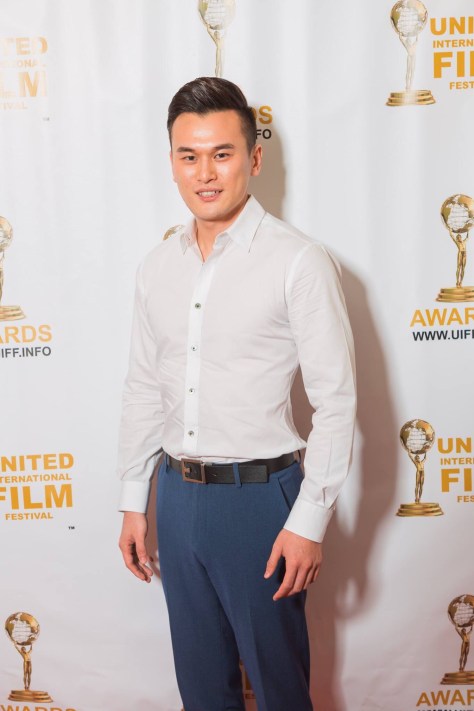
United International Film Festival Red carpet

Chinese producer Bohan Gong takes great pride in the fact that he has been a force behind many successful films in his homeland, Europe, and the US. Establishing yourself as a respected producer in one country is difficult enough, cultivating that reputation and prestige on a global scale is a situation that has only presented itself in recent times. Hollywood used to be the only major player in the game but China, Bollywood, and other locations have made their presence felt. Gong is talented and multilingual by design. His credits are instantly recognizable and he makes a point to work on both huge studio productions and independent films with themes near and dear to his heart. Bohan often remarks that the story of a film is its soul and he always seeks out his connection with this story in order to give it the respect it requires. This is not the typical comment you’ll hear from producers who are more likely to refer to their part in the filmmaking process in terms of schedules and “being in the black” but this producer is not your typical producer. Many of his peers refer to his exceptional talent in screenwriting, editing, and other facets of film. Bohan is a filmmaker who produces rather than a producer who has found his way into filmmaking. The two are inseparable in his work and the success of his many productions vets him as a leader in the modern day film community.

2017’s American Made earned $139 million and is the most recent in the long successful career of Tom Cruise. While it was an immense hit in the US, this may have been eclipsed by the film’s massive attention and earnings in China. Bohan was in charge of designing and coordinating the Chinese distribution plan for American Made. Many of today’s big budget films depend on their international box office to be a key part of a film’s financial earnings. China’s love of film and huge fan base is perhaps the most important contributor of a US production’s non-domestic box office. Gong’s insight into the workings of China’s rules such as Communicating Law procedure, applying Chinese import, and Applying related licenses (such as Chinese region “Permit for Public Projection of Films) were indispensable to the achievements of American Made in the country. James H. Pang (co-executive producer of American Made) professes, “Bohan’s knowledge of the many different international business and production practices makes his a uniquely talented producer in the industry. At the same time, he has a strong understanding of the Hollywood and China film market “game” that actually gets movies made and well-distributed. Those that invest with him do it time and again because he represents the business interests so well.”

For the Hollywood blockbuster and Oscar-award winning Hacksaw Ridge, Bohan also was key in the film’s distribution in China. Communicating and coordinating between Hollywood’s Cross Creek Pictures and China for the director (Mel Gibson) and leading actors to attend publicity activities in China, Gong helped to bring exposure to the film and open the Chinese market to western celebrities. One lasting effect of the producer’s work on Hacksaw ridge was that its reputation as a Hollywood blockbuster helped Gong to build a distribution structure for American films in China’s top tier cities like, Beijing and Shanghai all the way down to small towns.

Los Angeles Kidnapping is a Chinese major studio production that was filmed in Los Angeles. As lead producer who was part of the film since its inception, Bohan’s understanding of the working of Hollywood’s film community and the tastes of China’s audiences led to his insistence that Los Angeles Kidnapping be filmed in the US. Many of the films that were US/China collaborations frustrated Gong because it was obvious to him that they were produced by an American crew with only a few shots actually taking place in China. He explains, “I wanted to do something new. I understand how the film industries of both China and Hollywood create and work. For Los Angeles Kidnapping I still used an American crew. I knew that the stylistic approach of Hollywood storytelling and the American locations would infuse this style and quality into the film, but I wanted to tell a Chinese story. There is a different sentiment to Chinese culture in film and I wanted this to be authentic. I also didn’t hire Hollywood top tier movies stars but chose actors from China whom the audience would relate to.”

In addition to his role as lead producer, Bohan found the script, wrote and revised the script, procured financing, hired the stars, key crews, and developed the Pre-Production, Production, Post-production, marketing and distribution for Los Angeles Kidnapping. His design theory for the film proved well-founded when Los Angeles Kidnapping garnered more than fourteen wins and five nominations including: Los Angeles Film Awards: Best Action (2017), London Independent Film Awards: Best Foreign Feature (2017), and others. It was released on the Iqiyi Platform and sold to China Central TV Movie Channel. To date, Los Angeles Kidnapping has earned five times the production budget.

Every true artist is passionate about some pet underdog cause and for Gong this is the environment. The air pollution in his hometown of Beijing has been alarming for quite some time and sparked the producer’s desire to influence the problem by using his personal talents to illustrate these problems. In the documentary “A Tip of Bottlebegr”, Bohan displayed the worldwide epidemic of plastic bottles and their effect on the planet. While there are many factors that negatively affect the environment, Gong felt that focusing on this singular topic would help the viewer to clearly understand the malevolent repercussions and perhaps by the catalyst to be more aware of similar trends. “A Tip of Bottlebegr” received the Grand Award for Best Picture at the Cherry Blossom Film Festival, Best Experiment Film at the Lake View International Film Festival, Los Angeles Film Awards: Honorable Mention Documentary, Festigious International Film Festival: Honorable Mention Documentary, Focus on Image Festival: The Best Picture Nomination, and a nomination for Best Film at the Atlantis Film Awards.

Bohan Gong has staked a fair portion of his career on the collaboration of artists and filmmakers of different countries. He sees it as the future and it is a future which creates more sincere and entertaining art because it brings even more perspectives and a diversity of talent to the art of filmmaking. Contemplating the work between his homeland and Hollywood he relates, “This artistic collaboration between China and the US will affect parts of each society. For example, nowadays, Artistic collaboration between China and the US have been promoting the communication and cooperation between China and America in factors of culture, economics, tourism, technology, education, etc. China loves storytelling and the Chinese film industry has established itself and matured quickly. In the end of 2016, China surpassed the United States with a total of forty-one thousand film screens. This has attracted American filmmakers to the opportunities China can offer them and this is good for both countries and their people. I could not have picked a better time in the history of film to be a producer from China with this relationship blossoming.”

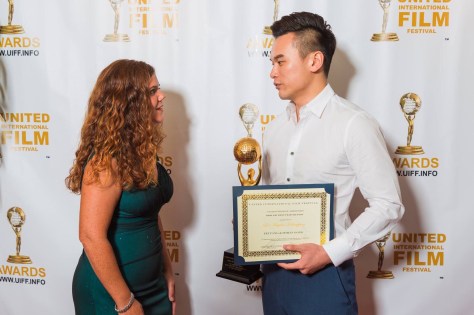
United International Film Festival Red carpet and interview

HOLLYWOOD THROUGH THE EYES OF SHIMAN HU

hollywoodclub


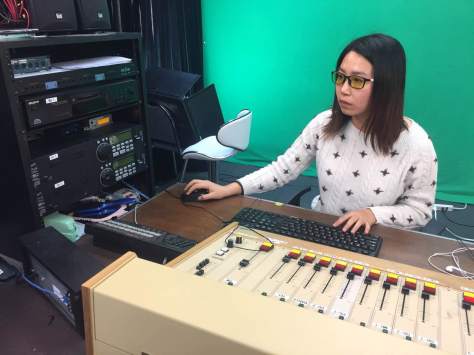
Shiman Hu has loved movies for as long as she can remember. The feeling of being whisked to another reality and feeling that you are placed in the lives, the emotions, the reality of others and allowed to experience any motion that the creators of the film desires for you to experience…it’s been said many times but, it’s magic. This led her to investigate the secret behind this “magic” and to a career in film (and television) as an editor. Her skill and her love of cinema also led Yangyang Mu (the production manager of Hollywood Chinese TV) to offer Hu the position as editor for “Hollywood Club.” Yangyang states, “Our program shows the best part of great films within a limited duration. Beyond the other content we present, the demands of presenting these films and matching the original rhythm and message are quite substantial. It required a truly incredible editor and Shiman did an amazing job.” The program aspires to interest viewers in a wide array of movies, not just American films, in hopes of cultivating wide interest in all that the industry has to offer. The same diversity of films that first enchanted Shiman are what she worked to expose in a modern avenue, as a seed to present day and future film aficionados.

The program presents film as varied as: Avatar, No Country for Old Men, Confessions (famous Japanese film), Jurassic Park, and many others displays a range from Science Fiction to Dark Humor to love stories and much more. Hu divides each film into three different sections: the background (the work, the life and the problems encountered in the film), the climax of the film (how the character solves the problems he/she has encountered), and finally, the end of the film (what are they going to do at the end? Is the end good or bad?). As an editor of acclaimed films like The Sound of the Sea, Plus Slash Minus +/-, and others, Hu feels the weight of responsibility in maintaining a congruent tone to the original filmmakers desired message.

Not all films are equal in the challenge to present them in a condensed time frame. “Confessions” starring Takako Matsu was a formidable challenge to edit. A black comedy with a very tight rhythm to it, the film’s pace and excellence caused Shiman to make several attempts at editing it before she felt that she was respectful to both the film and filmmaker’s original intention. Matching the original film’s rhythm and ensuring the integrity of the narrative, she concedes that she learned an increased respect for the original editor’s work on this film…as with many others she has reviewed since. In particular, the early Hong Kong film “As Tears Go By” with its many complex stories, character cues, relationships between characters, and emotional interlacing created a Rubik’s Cube or editing for an editor. Of course, it’s Hu’s love of discovery that first led her to a career in film and challenges like this only stoked the fire.

“Hollywood Club” is not only for cinephiles. This also allowed the editor to exercise her TV editing chops honed during her time working at many different Sino TV programs. Everything from gossip surrounding celebrities like Justin Bieber and others to the top songs on the charts is covered on this program. The program not only plays the songs to the audience, but more importantly, introduces viewers to the background of the songs, producers and singers of the songs and explains the meaning of them. Hu combines the recordings of the songs and dialogue of the hosts, adjusting the appropriate volume and controlling the length of songs according to the time requirement of the program.

All of this means that the breadth of editing work encompasses serious/award-winning films to playful pop culture. Shiman concedes, “The skill required for this program is quite substantial. I might be reediting an existing movie trailer to meet the length of our program. The trailer’s sense of rhythm is very strong. I’m editing a film and distilling it down while keeping the voice of the filmmakers and the story intact. Hosts are presented on green screen and special effects software is used to give a modern look and accessibility that multimedia presentations demand and viewers expect. There are many layers in the editing software of the program. When we are making up the entire show, we pay careful attention to whether there are missing parts. The appearance must be very high-quality in spite of the limited time that we have to produce this. It takes a lot of work to make it look effortless and that is always my goal.”

Shiman Hu’s work on “Hollywood Club” is an example of how the most talented professionals in the production industry can vacillate between mediums, using their skills to better any scenario which they encounter. Whether at work on feature films, television talk shows, or any combination of these, Shiman Hu has carved out a welcome place for herself in the international production community.


Francesca Nicassio’s Boutique Agency ‘Stars Academy Talent’ boasts a world-class roster

Stars Academy Talent
Stars Academy Talent founder Francesca Nicassio shot by @annawithlove

Being naturally talented and filled with passion for one’s craft is often not enough to make it as a successful working artist in the ever-changing and incredibly competitive world of entertainment. Often times the difference between those who achieve a successful and sustained career and those who don’t comes down to having the support and guidance of an experienced agent or manager.

With offices in Toronto and Los Angeles, and a roster that includes celebrated actors, dancers, musicians and specialty acts, Francesca Nicassio’s boutique agency Stars Academy Talent (SAT), has been a driving force behind the growth and success of her clientele.

Representing a range of talent that spans the gamut, Francesca’s acting clients currently appear as series leads, principal actors and guest stars on major networks including ABC, NBC, A&E, FOX, Universal, Disney, Nickelodeon, Netflix, Amazon, PBS, YTV, Family Channel, BBC, CTV and others. The list of specialty artists she represents through SAT is equally impressive and includes Broadway stars, principal dancers, emerging musicians, Youtube sensations and social media influencers.

“My goal is always the same, to help my clients realize their dreams and further their careers,” explains Francesca. “I am passionate about each and every client no matter the stage in their career. I am intrigued and inspired by talent and superhuman work-ethic. When those two qualities come together, and we have a clear plan, then success is eminent.”

Over the years Stars Academy Talent has become a strong force in the entertainment industry, due in no small part to Francesca’s seasoned eye for recognizing talent and her passion for the process. It was that fiery passion and dedication to helping talents achieve their dreams that first led Francesca to open Stars Academy (SA) in Toronto area back in 2000. SA began as a private performing arts school offering classes in music, dance and the dramatic arts, and Francesca brought in a world-class faculty to ensure her students received the training they needed to both excel and be competitive in the industry.

While she continued to direct the academy for 15 years, Francesca moved into her role as a talent manager rather organically as more and more of the talents she trained began booking professional work and requesting she represent them personally. With an entirely devoted approach, she’s made it a point to let the needs of her clients dictate the direction of her company and services, and it was from there that SA evolved into the boutique talent agency SAT.  

“I took pride in being their backbone and part of their unwavering support system because that is vital in such a challenging industry. I felt as though I was part of their journey experiencing the highs and lows with students who I knew so well and had become like family members,” explains Francesca. “As more and more asked for representation, I knew it was my calling to focus on the agency and artist management.”

With a strong and fruitful relationship already in place, as her young clients grew into adults Francesca expanded her roster to include talents of all ages, with her youngest client today being 3-year-old Canadian Instagram star Luigi Columbo and her most mature being 80-year-old award-winning director and actress Gaylynn Baker who’s based in LA.

Stars Academy Talent
Inside Francesca’s Stars Academy Talent Office. Photo by @annawithlove

Though SAT has grown exponentially, Francesca continues to run the agency with the same founding philosophy of SAT existing as more of a tight-knit family where every client, regardless of where they’re at in their career, receives the attention and support they need in order to progress.

“I now maintain a client list of around 100 artists including star names, emerging and developmental talents of all ages,” explains Francesca. “I am very hands-on and work closely with my talents to make sure they get the guidance and feedback they need to be their very best. They can always count on me to support them through thick and thin. Our roster is a family and it takes a village to become and sustain a career as a working artist. I strive to foster an environment of teamwork, collaborations and encouragement.”

In response to the growing needs of her emerging music clients, she founded the indie record label and music management company FAN ENTERTAINMENT INC., in 2016. She says, “I have been managing distribution, PR and bookings for my musician clients for years now so it was a natural progression to start the label. I have a team of the best writers, producers, video directors, consultants, legal advisors and of course some of the most talented emerging musicians out there, so it was an easy decision.”

The first act she signed was Canadian pop band The Revel Boys, who will be featured on CTV’s highly anticipated music series “The Launch” as one of Canada’s top 30 emerging musical acts. Her music clients have topped world-wide viral and trending charts, charted on iTunes, and have been added to prominent Spotify playlists including New Music Friday, Discover Weekly and many others.

In an article published by Rolling Stone about how Spotify playlists can turn an artist’s song into a hit, Steven Knopper writes, “Big names like Ed Sheeran are almost guaranteed space on prominent playlists. For smaller names, the journey takes longer.” While this is true for the most part, Francesca explains, As an indie record label, it’s all about knowing the right moment to lobby for my artists, getting booked on a music series, going viral and getting placed on any prominent playlist has become as important as radio play and the moves we make in the wake of that are vital.”

Francesca Nicassio
Talent agent Francesca Nicassio shot by @annawithlove

As a strong and fearless woman working in the entertainment industry, and someone who’s successfully managed to build a boutique agency whose talents consistently work at the same level as the biggest international agencies and management firms, Francesca Nicassio is not only helping her artists achieve their dreams, but she’s using her position to support others. She is an Executive Member of Women in Film (WIF) in Los Angeles, an organization that has been working to empower women in the film industry and create an equal playing field for over four decades.

Francesca says, “It’s about women helping women in an industry where we have been statistically underrepresented and treated unfairly. I am strongly committed to equality, diversity, and inclusion in all areas of my life and career, and of course the careers of my clients,  so it is an honor to work towards this with like-minded women. “

She’s contributed to multiple other non-profits focused on arts in education, such as Artists In the Classroom, for which she’s placed professional dance and music educators in participating schools for free extra curricular music theatre arts programs for 17 years. She’s also spent the last 20 years working with local private arts educators to provide thousands of dollars in dance music and theatre training scholarships to underprivileged children and teens, and has recently focused on the anti-bullying movement by placing young stars in schools across Canada to speak to students and bring awareness to the issue. Additionally, Francesca has volunteered as an entertainment booker and director of annual events for CIBC Run for the Cure since 2000 and Toys for Tots since 2002.


PEELERS IS A FRIGHTENING JOY FOR PEREZ

Peelers1

Edwin Perez is an actor who is able to perform very convincingly in a wide variety of roles. There are actors who seem born to play one type and are beloved for it, and then there are those like Perez who seem to adjust in a highly believable manner to just about any genre and type of character. When you seem him perform you’ll likely think “Right, that’s what he is supposed to be.” and the next performance of his will have you saying the same thing. Whether he is Romeo in the romantic comedy “Heart Felt”, the overly optimistic bard in “Standard Action”, the Tio in “Nina’s World” (animated children’s program), he is always likable and endearing. It’s probable that this is what prompted him to accept a role in the Grindhouse film “Peelers.” In the film he can be seen dealing death and very much playing against type. There’s a grin on his face when he talks about it and the reaction that the public had to his complete 180. It’s the very purpose of Perez to keep challenging himself and the audience’s perception of who he is and what he can do.

Prior to his being cast in “Peelers”, Perez had never been in a Horror film. He’s not quick to admit it but he has leading man looks, which doesn’t often transfer to being cast as a villain (unless it’s an 80’s coming of age high school story). Edwin was particularly attracted to the way he could present his character before and after his transformation with contrasting approaches to his nefarious nature. The comical fact that he gets to do so with the name Jesus in the film is not lost on the actor. The film and his character were a constant source of challenging exploration for him as he states, “I imagined Jesus as a guy who came to the country obsessed with escaping poverty but lacking the work ethic do so with honestly. He’s a ‘get rich quick with minimal effort’ kinda guy who wants the luxury with none of the responsibility. When the group thinks they have discovered oil, he’s the one who pushes for everyone to keep their mouths shut about it. I can imagine that, in a very dark moment, he’d betray the guys to get what he wants. He goes along with the Pablo’s [the boss] plan because he is technically their boss and because it doesn’t really benefit him to push back to hard. When he transforms, I imagined that all those dark base feeling were brought to the surface and he is driven by greed that as a bestial creature has turned to a violent hunger. When it comes to these situations it’s really easy to just say, well he’s evil now so he kills people. But that’s very one dimensional and it doesn’t give me as an actor very much depth to work with. It’s really important to base his motivations on something real and true to the character. In the case of Jesus, it’s his selfish nature dialed to an extreme dark place which drives him.”

Peelers3

Peelers is the story of a group of workers who find what they believe to be oil but turns out to be a toxic substance which transforms them into primal and seemingly supernatural creatures. They stalk and kill the humans whom they encounter. The creatures are feral with contorting movements and emitting primal snarls and growls. Between the prosthetics and the black substance that oozes from their pores, Perez spent a great deal of time in the makeup chair. The film utilizes practical effects rather than CGI. Edwin fully embraced the opportunity to approach the physicality of the creature he transformed into. He explains, “I wanted to show that the transformation was so extreme that normal human kinetics no longer applied to the creature. In one particular scene I get shot in the head and appear to be dead, but I get up and keep attacking. I decided to twitch and contort into as much of a grotesque posture as I could push my body into while rising back up. These things would normally be done with special effects, but we were doing it with practical effects so it really was up to myself and the other actors to bring these supernatural abilities to life. I think everyone is familiar with the trope of actors in an acting class pretending to be trees or an animal, or some object. Sometimes the creature would stalk his prey like a wolf, or play with it like a cat, and attack like a hyena. A very visceral and primal nature became the foundation for my creature work. It was cardio work for certain to make sure that energy levels were up and you are pacing yourself. Stretching was the biggest part of daily preparation. Contorting yourself into a feral beast can lead to some serious cramping.” It’s an accepted trope by the public of actors in an acting class pretending to be trees or an animal but this very real exercise proved to be highly useful in this situations for Perez.

His role in Peelers allowed Edwin to perform as two very different characters; one dark and brooding with an undertone of controlled greed and the other as a wild beast moving chaotically. This fed both sides of the actor’s creative imagination and did not go unrecognized by the audience or the cast & crew. Director Sevé Schelenz declares, “An indie horror film is demanding in a number of ways. Actors in particular don’t get the posh treatment that they typically receive in a big studio production but the demands on them are just as great, maybe even greater. Edwin brought it in terms of talent and commitment and was equally exceptional in his understanding that we were there to work hard and within a limited amount of time. I know that he was physically spent while also being covered with ooze, sometimes barely able to see or move…yet he never gave less than an amazing performance and never muttered negatively about the circumstances. He’s a true professional and earned everyone’s respect.”

Peelers2

For Edwin Perez the experience of making Peelers holds no negative aspects. While it may seem redundant to say, an actor’s job is to explore different characters and stories. Being physically exhausted, covered in special effects makeup, vocalizing inhuman sounds…it’s all a part of the experience that he signed on for and relishes. A romantic lead, a professional musician, or a devious man turned to beast; these are all a part of what success looks like for Edwin. Referencing the illustrious career of Christopher Lee who was known for his work in the horror genre Perez confirms, “I was able to check off playing a villain and a monster from my actor’s bucket list. It’s really great to be able to look back at how much I have accomplished professionally. I never thought I would get the kinds of opportunities I have had and I am very grateful that so many professionals whom I respect have come along and taken a chance on me. It’s also really rewarding to know that I was able to deliver high quality work in a role that I had never done before. It really makes me hungry for more opportunities like that.”

DESTING OR DELUSION IN A TECH FORMATTED ROMANCE: MATCHED

Screen Shot 2018-03-29 at 8.46.58 AM

Technology is supposed to make our lives easier. This is the allure and attraction we have to it. Blinking lights and high res displays are not the entirety of the advancements that we embrace. Some of them are unseen and often taken “on faith.” There are certain areas in which the jury is still out and one of these is relationships/dating. Human emotions are so complex and dating rituals are so culturally biased that it’s almost impossible to apply science to matters of the heart. It has been attempted for decades with success and failure. The upcoming release Matched tackles this issue. The soon to be released Brian Enciso film of modern romance via technological assistance is equal parts comedy and sobering drama in its discussion of what society is willing to give up in terms of romance in the search for one’s soulmate. Two tech-crossed would-be lovers Jacob Hill (Ithamar Francois) and Allie Benson (Ariane Ryan) seem both destined and doomed in their love connection in this depiction of the uncertainty of a certain connection.

heart-1244507_1280

While the film is futuristic, it’s a stretch to refer to it as Science Fiction. It’s more accurate to describe Matched as a story about where we are soon headed if we continue along the relationship trend that the world has been careening towards. The story is in no way a condemnation of the integration of tech and one’s relationship status but rather an offering about what the next iteration may be.

When a heartbroken young man named Jacob receives a strange package in the mail, he finds a device inside informing him that a company named E-rose has found his perfect match based on science, data, and profiling. Her name is Allie Benson and while she does seem to be a good match, the discomfort of having her complete profile in the palm of his hand is too much for Jacob to bare. Out of curiosity, he goes to the restaurant where she works as a waitress and confirms that the E-rose profile was accurate. He avoids contacting Allie on this first occurrence but she later seeks him out. The two are forced to deal with the fact that they may be perfect for each other in spite of the sterile/unromantic means which has brought them together. As a proxy for modern couples everywhere, the duo contemplates what love truly is; a mathematical formula, a choice, or something altogether different.

Photo13

More than simple entertainment, the film is a springboard for discussion about love in current times…at least for those seeking love. The discussions and life-planning presented by the characters of the film could appear weighty and cumbersome but this is offset by the score of Matched. The obvious choice of cold digital synths was rejected for this film which instead utilizes Folk music instruments such as acoustic guitar, piano, banjo, mandolin, cello, and assorted folk percussion. There’s an intuitive lighthearted and comedic sensibility to the instrumentation and score that composer Chris Wotherspoon has fashioned for Matched. A primary example of this is when Jacob makes the decision to burn the profile he has received in the mail about Allie. As it is burning, Jacob receives a call from Allie telling him she wants her personal information package back. As he literally and figuratively puts out fires, a series of folk percussion elements and a chaotic pizzicato string arrangement (still organic and folky) creates a feeling of disjointedness and comedy.

Photo14

People seem to be in constant search of a means to improve every aspect of their life. Cars, telephones, dating services…these are all merely modern accoutrements of the courting process. Services similar to the one at the center of Matched are very near existence already, it’s likely that they will soon be here. Matched gives us something to think about as we feel the oncoming changes and we must decide if what we have right now is good enough or do we risk it for what could be better…or worse?