All posts by Lorraine Wilder

China’s Xingpei Shen creates animation masterpiece with ‘Lotus Lantern’

shen_Xingpei
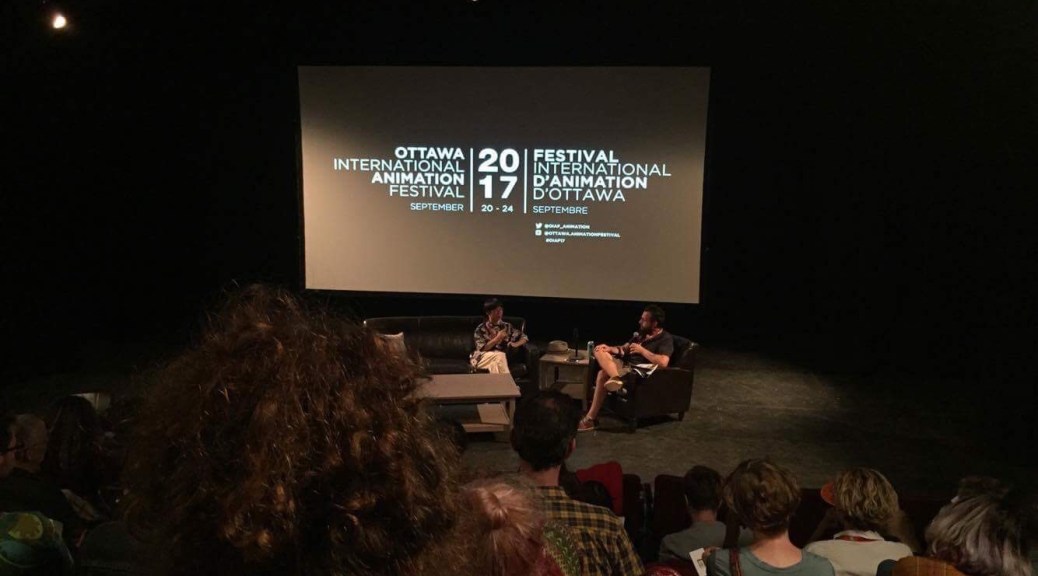
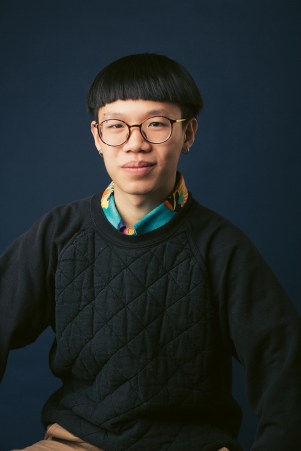
Xingpei Shen, photo by Rob Chron

Despite loving drawing since he was a child, it took Xingpei Shen much longer to discover he was meant to be in animation. He loved art, but in his late teenage years, he did not know how to turn that passion into a career. However, after attending a presentation from Chinese animator Lei Lei (Ray), he started to become intrigued by the idea of a career in animation. One of Lei Lei’s films, This Is Love, stuck with Shen. It was a candy-colored graphic animation paired with a silly yet sweet poem. It made everyone laugh and reminded him why he wanted to be an artist in the first place. Now, years later, he is an in-demand animator impressing worldwide audiences with his work.

Shen has had an expansive career as an animator, working on solo projects and group endeavors. His first independent film, Good Game, Bad Time, and Killer Sportsmanship, went on to international acclaim at several film festivals. This pattern continued with his work on the Huffington Post project What It Means to be Muslim in America, where Shen was one of only nine animators who were invited to make a short animation based on an audio anecdote provided on the topics of Muslim experience in America. He was also one of seven video artists featured in the traveling show Internet Yami-Ichi on December 9th, 2017at the renowned Tate Museum, where he has two animation pieces in the show.

“As a queer Chinese artist, I find my work often looks at overlooked boundaries of existences, the places of in-between, and the sweet vulnerabilities of outsiders,” said Shen.

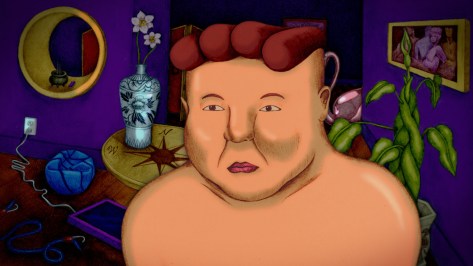
This is exemplified by Shen’s latest film, Lotus Lantern. Lotus Lantern is a tribute to late Chinese singer Zhou Xuan, a missing link between filmmaker’s queer identity and Chinese heritage. Shen wrote, directed and animated the film entirely on his own. He had a vision in the very beginning that he wanted to make a lush and dreamy film that talks about his queerness and Chinese heritage, and he worked intensely hard to realize the goal.

“I think Lotus Lantern is important, because for one, it is a personal story about both queer experience and Chinese heritage. In the media nowadays, there is a tendency to homogenize queerness and overlook the intersectionality of different facets of identities. I believe Lotus Lantern is a genuine and vulnerable film that resists that tendency,” said Shen.

LotusLantern_Stills1
Still from Lotus Lantern

After months of work, Lotus Lantern premiered on July 30th, 2017 at BAMcinématek in Brooklyn for the 14th Animation Block Party. It then made its way to dozens more festivals and is still continuing its run with three upcoming festivals in the next few months. It was featured as Vimeo Staff Pick and Shen was also invited to talk about his process on Animation World Network.

“It feels surreal how far Lotus Lantern has gotten after I finished the film not long ago. I am still currently processing and trying not to go over my head with all the good news. I am very proud and happy, because this film is incredibly personal and vulnerable. It gives me a lot of encouragement to carry out future projects,” he said.

Shen had three main inspirations when creating the concept for his film. The first was to create a tribute for Zhou Xuan, whose music was a large part of Shen’s childhood. Growing up queer in China, Shen did not have many icons in the media that he could look up to or relate with, but he was always fascinated by the singer and related her to a goddess. When he looked back on these pivotal years, he realized his sentiments towards Zhou Xuan all tied into his understanding of his own queerness, ultimately shaping his life. He wanted to reflect that through his art.

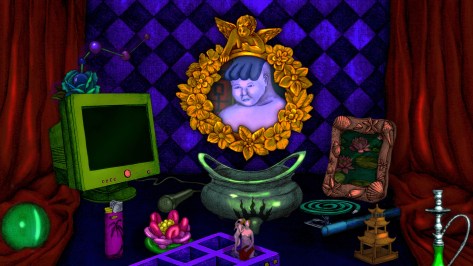
Second, he took the visual style from his grandmother’s praying shrine. His grandmother has a shrine that she prays to daily. When Shen was a child, he was always fascinated by the strange aesthetic of all the artifacts where a gorgeous antique brass double ear incense bowl paired with a cheap oversized disposable lighter she bought at a drug store and crackling chants pour out from a lotus-shaped electronic Buddhist mantra box. The sensibility extruded from his grandmother’s shrine table inspired the campy aesthetic of this film.

LotusLantern_Stills3
Still from Lotus Lantern

“Wow, I am mightily impressed by Xingpei’s work on Lotus Lantern. It’s a steadily emerging style of film that I’m seeing more and more of and this one goes close to top of the class in that style. One of its strengths really struck me as being the very restrained and almost understated way he managed its pacing even as it poured in more and more and more visual elements – in lesser hands the temptation to wind up the tempo would have been succumbed to,” said Malcolm Turner, Animator and Director of the Melbourne International Film Festival.

Shen’s last source of inspiration for his film was his friend and former employer Suzan Pitt, an animator who created the 1979 short film Asparagus. A few years ago, Shen emailed the filmmaker and told her what an inspiration she had been to him. She responded and invited Shen for coffee at her home and a screening of Asparagus, where they had a long conversation about the art of animation. Throughout his entire time making Lotus Lantern, Shen kept the idea and style of Asparagus in his mind. He was haunted by the intricate psychedelic interior space of sexuality and desire in the film. He wanted to create something that was as complex and captivating.

“I really enjoyed Xingpei’s film Lotus Lantern. It seemed to be a deliberate homage to Suzan Pitt’s Asparagus, and it was really great to see an animation refer to another (great) animator’s work in a thoughtful and considerate way rather than just ripping off their style or film for effect. The deep underlying reference to Asparagus opens up ideas about identity, beauty and self, the state of reverie, but Xingpei takes them into new and compelling territory. We are made to think about the common ground of each film and the differences too. It was beautifully made and very thought provoking,” said Artist and Animator, Edwin Rostron.

LotusLantern_Stills7
Still from Lotus Lantern

One of the more outstanding aspects of Lotus Lantern is that Shen made the film with a combination of digital tools (3D software like Maya, and 2D software like Photoshop and AfterEffects) and traditional animation techniques (hand-drawn and rotoscope). It balances two different methods creatively to achieve a lush painterly quality, which is very unique in current animation. The use of these methods exemplifies why Shen is such a formidable animator.

Despite all the critical acclaim and recognition Lotus Lantern has received, the greatest accolade came at the 41st Ottawa International Animation Festival last year. On the last day of the festival, Shen was sitting alone after his film’s second and final screening. A woman from South Africa approached him and told him that Lotus Lantern truly struck her, especially when Shen talked about the influences of women in his family to him as a queer artist. She put her hand on his chest and told him she was touched before tearing up. The women then left in a hurry before Shen could get her name or her story. He calls the experience the highlight of his career.

“It was an incredibly sweet moment. I have never gotten such a genuine and strong response for my work. It reminded me of the reason why I wanted to make films and tell stories in the first place,” he concluded.

Watch Shen’s moving work on Lotus Lantern here.

Ireland’s Jonathon Ridgard talks producing ‘America’s Got Talent’ and working alongside his idols

Hailing from Galway, Ireland, Jonathon Ridgard has come a long way both geographically and figuratively since he received his first camcorder at just eight years old. Even at such a young age, he had a passion that was more than just a childhood hobby. Now, Ridgard is a renowned supervising producer in Hollywood, and is responsible for bringing some of your favorite shows to the small screen.

“My parents recently found old home videos where I am running around interviewing everyone in the family. My brother was sick in the hospital, having his appendix removed and I have the camcorder with me, recording an interview with him – asking him how he feels, and to describe what was happening. With this camcorder, I used to film family parties, birthdays, christenings and cut them together to make short videos for people. I guess I always had a keen interest in telling the stories of what was going on in people’s lives,” said Ridgard.

Ridgard is currently busy getting ready for the highly-anticipated ABC reboot of American Idol, premiering March 11, working alongside such superstars as Lionel Richie, Luke Bryan, and Katy Perry. Ridgard previously produced the show’s 15th and final season on FOX and is glad to be back on such a celebrated program.

American Idol is far from Ridgard’s first taste of international success. This sought-after supervising producer has an esteemed resume, including Simon Cowell’s The X-Factor in the United Kingdom, Gordon Ramsay’s The F Word, and Undercover Boss, during which time the show was awarded an Emmy for “Outstanding Reality Program”.

“It’s hard to pinpoint a single highlight of my career. It would probably be working with Simon Cowell. He is someone I grew up watching on TV. He is an incredibly talented Executive Producer and on-screen talent. Working with Gordon Ramsay is also another career highpoint. I served as Senior Producer for his live show. Overseeing a team of producers and associate producers. I was tasked with creating new, interesting and fun pieces that would feature Gordon. I worked with Gordon on these developed ideas and then we would film them and turn them around in post to feature in the following weeks’ episodes. I am a big fan of Gordon, both as a Chef and a television personality. He is one of the nicest and easiest people I have ever had the pleasure of working with. And of course, being awarded an Emmy for contribution to Undercover Boss is also an incredible highlight. To be recognized for my contribution to such a successful show at an early age was, and still is, a very proud moment,” said Ridgard.

Ridgard is also known for his outstanding work on Simon Cowell’s Got Talent franchise around the world. Beginning with Australia’s Got Talent in 2010 followed by Britain’s Got Talent and contributing greatly to their success, Ridgard received a call from the show’s Executive Producer, Sam Donnelly, asking him to be a part of the U.S. version for its eighth season. Knowing that America’s Got Talent is one of the most iconic shows on American television, Ridgard immediately accepted. The show was about to go through some big changes, from new judges to a shift in the format, and he was ready to lend his talents to making the show an even greater hit than it already was. Ridgard achieved his goal. Since joining the team, the show has continually grown in ratings each year, something that is almost unheard of for a reality competition show that has been around for over a decade.

“I love that the stories we tell on a show like America’s Got Talent could potentially inspire people to get out there and follow their dreams. Maybe someone at home might see an 8-year-old dancer, or an 82-year-old juggler, or a struggling comedian, and these stories might resonate with them and their own story and it might push them to reach their full potential,” he said.

Working on the show was difficult but immensely rewarding for Ridgard. Not only did he enjoy working closely with the judges, Mel B, Heidi Klum, Howie Mandel and Howard Stern, but he travelled the country to find the talent that would be showcased on screen. Every year there are tens of thousands of applicants looking to be on the show, and it is Ridgard and his team that find the ones that will connect with audiences and therefore make the show a success. Going through such a large pool of applicants and narrowing them down can be hard and Ridgard would sometimes feel the pressure, but he let that fuel him. Not only did he understand that it was important to the show to find the right people, he understood the responsibility he had: people’s lives were in his hands. Ultimately, he made every decision based on what he knew from his vast experience would make good television and which contestants could ultimately go on to win the show.

In addition to this, Ridgard also had to decide how to tell the contestants’ stories. Some of the applicants have sad or traumatic backstories, and Ridgard knew that the way these stories were told were almost more important than the actual act; they could affect the viewers lives and needed to be told sensitively and in a way to inspire the contestant and the millions of viewers around the world.

“Telling people’s stories and getting to travel the United States while being one of the first people to see undiscovered talent and knowing that these people had a chance to win $1 million and go on to worldwide fame, well, it was an invaluable experience,” said Ridgard.

With such vital responsibilities, everyone on set recognized the producing team as the core of the show. They were the ones that worked in and were responsible for casting, setting up auditions and auditioning talent, filming back stories and interviews and ultimately being the go-to people for every other aspect of the show. It’s because of this that the show is successful and Ridgard is very proud of that.

“I was lucky enough to work with Jonathon as a producer on America’s Got Talent in 2012 and I was immediately struck by how creative he is. He walked onto a big team and quickly became a standout producer with his fresh approach to problem-solving in the field, his can-do attitude and ability to motivate the team around him. Many producers aren’t able to both supply creative, amazing ideas to take the show from good to great and execute them well, seeing them through to the final product, but Jonathon is skilled at both. He just gets it, the entire process, which I’m sure comes from his long, established career in this industry back in the UK. I love working with Jonathon as he’s extremely gifted at what he does, and I hope I get a chance to work with him again,” said Lindsay Tuggle, Supervising Producer.

After his tremendous success on America’s Got Talent, Ridgard was then asked to help launch the premiere season of Asia’s Got Talent. The spin-off is billed as the biggest talent show in the world with talent stretching across 15 countries from India through to Japan. Asia’s Got Talent delivered ratings ten times higher than its nearest English-speaking rival on its season one premier. Ridgard was contacted by FremantleMedia Asia to oversee the creation the show, based in Singapore. As a consulting producer, he was tasked with getting the show off the ground, imparting his expertise to the Asia team and showcasing how the Got Talent format was produced. He helped to develop the show from nothing, implementing casting plans in every country from India across to Japan. He was instrumental in casting the show, choosing the very best, interesting and diverse talent across all 15 countries. He also cast the two main hosts. Later, he worked with the full production team so they would understand how to produce interviews, b-roll, and stylized reality scenes that would fit in with the franchise. Asia’s Got Talent was one of the most successful show launches for AXN.

“I feel very proud to have worked on a franchise that is known globally. It’s been a career highlight and seeing the show continue to succeed is incredible to see. Being able to make people’s dreams come true is something that we actually do as producers. As cheesy as it sounds, seeing someone go from small town girl/boy achieving their dreams with the world at their feet is a job that not many people get to do, and it never gets old,” Ridgard concluded.

Art Director Phenix Miao creates stunning sets for Lepow Commercials

P9Phenix Miao was eight years old when he began drawing. He believes art is part of his blood. His great grandfather owned a famous antique house in Shanghai, and that passion for design passed through generations. Growing up, his house was always full of antiquated artifacts, and even at a young age, Miao became fascinated by them. As he grew, his love for art and design only intensified and he became interested in decorating, arranging, and building a scene. There was only one path for him that made sense, and it was becoming an art director. Now, he is celebrated in both China and abroad for his art direction, and he has no plans of slowing down.

Whether it be with film, television, or commercials, Miao constantly shows viewers just how much talent he possesses. In the 2016 movie Shanghai Sojourner, Miao helped transport audiences to Japanese-controlled Shanghai during World War II. In the acclaimed film Lottery, Miao created a fairytale like world to show the euphoria of a starving, young orphan getting his hands on a winning lottery ticket. Using his commercial senses, Miao also helped raise hundreds of thousands of dollars with his work on a crowdfunding campaign for Itron Battery. He is extremely versatile with a love for what he does.

“Art direction and production design is a large part of telling a story, so I insist on harmonious and mindful designing. When I’m creating a scene, I make sure to consider the person that will be in it and whether the scene corresponds with the one who lives/uses it. Sets are like extensions of the characters,” he said.

Miao once again achieved this with his work on several commercials for Lepow. The technology company manufactures mobile accessories such as the portable power bank, external battery, and the smart bag. Starting in 2015, Miao took on the role as art director for the premiere commercial for Lepow’s TV Show Box. From there, they made a follow up commercial showcasing the product, and a year later, another long commercial showcasing the brand as a whole.

On the set, Miao was responsible for the entire visual experience. He aimed to make everything the director imagined into the scene a reality. He designed the color and artistic style, selected the best and most suitable materials, maximized every detail, and designed the design space. As the leader of the creative team, he aimed to take the big picture and divide it into small, tangible tasks that would be easy to complete within the timeframe they were working in.

Working closely with the director, Miao discussed every shot individually, wanting to understand the exact feeling the client was looking for. Every aspect was important to create an entire world in the set, from colors to the smell, even though viewers would not experience that. Miao shows such commitment to every detail of a project, that it makes everyone he works with greatly appreciate his talent.

“Phenix is a great leader of the art department and ensures everything goes smoothly. He is essential as an advisor, balancing out my ideas and feelings of the clients through his work. He is a comprehensive creator with a deep understanding of filmmaking, more so than any art director I have worked with. He is constantly curious and always eager to learn new things. In terms of production design, Phenix has an ability to take even the largest set and make everything extremely detailed. Even when I can’t describe exactly what I want, he finds a way to not only make it, but he produces work even better than I imagined,” said Peter “Zhen” Pan, Director.

Miao and Pan have worked together multiple times in the past, and Miao is always the director’s go-to art director. Their personal relationship has transformed to a friendship over many years of collaboration, and Miao knows how to transform Pan’s vision into a reality. Miao appreciates Pan’s different taste and feeling about color and the “rhythm” of the set and props compared to other directors. He understands Pan’s “language” and this connection ensures productivity and efficiency on set, as they communicate seamlessly.

“We work like a family and talk to each other directly no matter what the opinion or issue is. On set, everyone makes sure to do their best work possible. The Lepow commercials were no different. It was a great time and wonderful teamwork. All the guys try to help one another. Working on a series of commercials has allowed us to become familiar with each other, and it is a very relaxed working environment,” he said.

The campaign has been a great success both for Miao and Lepow. Despite this, Miao doesn’t think about what he has achieved when he sets his sight on a new commercial. When he sets out to make something, he expects success because otherwise he would not live up to what he knows he can do. That is what makes him such a formidable art director and production designer.

“We put so much wisdom and effort into these commercials because we had a goal, which was to make Lepow feel satisfied and see sales growth from our work. When that happens, I don’t celebrate, I just know that for the next one we should do even better. The series turned out beautiful for sure, and that is our work. That I can feel proud of,” he concluded.


Tony Nash brings on the laughs and the screams in ‘Secret Santa’

When Tony Nash speaks of his craft, he talks with the passion of someone who truly loves what he does. When he steps onto a set, it doesn’t feel like work for him, but rather it feels like a privilege to have the opportunity to do what he believes he is meant to be doing every day. This young man of Greek-Spanish descent has been acting since his childhood and has taken the Canadian film industry by storm.

Throughout his career, Nash has worked on a series of successful film and television ventures. Movies such as Saving Dreams and Meet the Parents, and shows like Petrol and Condor, the highly anticipated Audience network thriller. With every new project he takes on, it becomes clear that he is doing what he loves.

“What I like about acting is that when it is approached with the sacredness that it deserves, it first and foremost holds a mirror up to me, revealing all my hidden desires, coping mechanisms, repressions, reservations, grudges, vulnerabilities, beauties, gifts, talents and strengths. In so doing, it enables me to understand the souls of others and thereby be qualified and capable of holding a mirror up to the entirety of human nature, as Hamlet advised in Act 3, Scene 2,” said Nash.

Nash’s first true taste of international success came with the 2015 flick Secret Santa. Secret Santa is a feature length film that tells the story of a group of eccentric college kids, struggling to get through the hectic exam period. This horror/comedy is a tribute to B-Movie Slashers but also takes the conventions and turns them upside down. A liquor filled party is planned, adding a Secret Santa exchange for fun. Little do our characters know, a killer is in town and has a special present for all the good (and bad) girls and boys. Dare to open your present? It might be your last. Nash was really drawn to this project because he really wanted a comedic role to add to his repertoire, and his character also had a sweet, love element to his story. More than anything however, he loved that it was an ode to 90’s slasher films.

In Secret Santa, Nash plays Professor Preston Ramsey. The role was a lead and critical to the project as he was the red-herring in the horror plot. Throughout the film, audiences are led to believe he is the secret killer. The role was crucial as he furthers a love story between himself and the other lead, his student, and distracts the viewer from the killer, making the ending more of a surprise, staying true to the horror genre. The character was a sweet, somewhat naive college professor. He also was in a rut romantically and when one of his students started to fall for him, he began to feel alive again. He is an academic and spent his whole life indoors studying while his friends were all outside playing football. He is also a hopeless romantic and had only been in one relationship, which lasted seven years. The character had to be lovable, charming, slightly off beat, and at the same time mysterious. Nash was able to bring all that to the character as well as some humor of his own, which made the set a fun environment to work in and everyone enjoyed themselves. He was able to bring the character to life and give him that nerdy quality he needed to have plus a mature professor vibe amongst a bunch of college kids in an unexpected bloody night. Nash was perfect for the role.

“When I got the role, the first thing I did was went out and bought a pair of glasses and a tweed jacket that I thought would suit the character well. I spent time in university halls watching professors teach their classes to bright students. Also, because my character was being seduced by one of his students I watched The Graduate. I watched Scream and I Know What You Did Last Summer, more times than I can count” said Nash.

Secret Santa premiered in November 2015 at the Blood in the Snow Film Festival. The film was then shown at the Toronto International Spring Horror and Fantasy Festival, and the Buffalo Dreams Film Festival. It was distributed by Wild Eye Releasing and is available at several stores on DVD including Walmart and Best Buy. Nash’s take on the vital role of Professor Preston Ramsey was instrumental to the film’s success.

“Tony was pitch-perfect in this slasher-comedy. He was hilarious, charming and ever-so-subtly mysterious to lead us towards the edge of suspicion. It was a brilliant and nuanced performance by a highly sensitive and skilled actor. Bravo Tony,” said Mike McMurran, Writer and Director of the film.

After a friend reached out to Nash telling him about the role, Nash sent in an audition tape that instantly impressed McMurran, saying there would be no one better to play the role. They instantly connected, sharing the same vision for the character and the film as a whole. As it was Nash’s first time in a comedic role, he was eager to try out something different. His versatility shone, and he perfectly encapsulated the mysterious professor. Not only did he have fun, but he says the entire cast and crew became close friends during filming. Overall, it was an incredibly enjoyable experience for the actor.

“I think it’s important to have fun sometimes and do things I am not used to. I think that life is hard enough and sometimes a little horror and comedy never hurt anyone. It’s important to just take a film and just create something entertaining for people who want to see something different. And I think Mike and his crew were able to do that very well. It was exciting to film and definitely will be exciting to watch as well,” he concluded.

Be sure to check out Secret Santa and let Tony Nash make you laugh and scream at the same time.

Producer Mickey Liu went back to high school for ‘Sail the Summer Winds’

STSW on set with postcards and slate
Mickey Liu on set of Sail the Summer Winds, photo by Aijia Che

Mickey Liu knows that every day he steps onto a film set, it will be different than the day before. Every new project brings something new, and every experience is distinctive. Because of this, he always feels like he is learning something new, and no matter how seasoned of a producer he is, he finds that sometimes his experience can mean nothing in the wake of a new challenge. He is consistently exposed to talented individuals and brings teams together to create a masterpiece. For him, that is the best feeling in the world, and he loves what he does.

“Producing is about lots of instant decisions and last-minute situations, which is challenging and exciting. What’s more, I get to read many good stories… and a lot more bad ones,” he joked.

Hailing from Shenzhen, China, Liu has become a renowned producer. His work on films such as An Ill-Fitting Coat, Marie, Nocturne in Black, and Tear of the Peony have made headlines around the world. He knows what it is to tell a good story, and consistently manages to bring his films great success. However, the first time he truly felt this was in 2014, with his feature Sail in the Summer Winds.

Sail in the Summer Winds tells the story of Michael, a 30-year-old white-collar worker, who is always recalling memories with his 6-year desk mate Cammy and best friends Leon, Joyce and James about when they were 17. Back then, these high schoolers were faced with the biggest challenge of their life – the College Entrance Exam. Michael didn’t know what his future held but got an early admission to Cammy’s dream school; Cammy had feelings for Michael but couldn’t say it out loud; Joyce, once a model student at school, failed to live up to expectations at the very moment; Leon wanted to be an artist but was torn between reality and dream; James worked really hard, but things didn’t turn out great for him. Just like every coming-of-age story, they grew up and changed through the best years of their youth.

“I think the story of the film is important because it is a story focusing on friendship in high school. We’ve seen enough saccharine high school dramas on screens and they almost always center on how to get the guy or girl you like. American high school culture is very different from Chinese high school culture. I think the story provides a fresh perspective of Chinese high school life. The story would remind people of their dreams and courage, and maybe they would want to reconnect with friends they haven’t been in touch with for years,” said Liu.

When the Director of Sail the Summer Winds, Lanxin Yu, approached Liu over social media to produce the feature, Liu was immediately intrigued. Yu went to the same high school that Liu attended and wanted to film the movie there. Upon reading the script, Liu knew he wanted to be a part of the film, as the words took him back to his high school days and brought back memories of his younger self. He knew many others would be able to relate, and his partnership with Yu began.

“Working with Mickey is always a pleasure. His great sense of humor makes everyone chilled and relaxed. When it comes to the set, he’s sensitive, responsive, and caring to every crew member and tries his best to make the set an enjoyable working environment that everyone wants to come back to. When we were shooting Sail the Summer Winds, most of the crew members were first-timers, but he was very patient and made our set run like a real Hollywood set. In addition, his charisma held the crew together, not just as an efficient team, but a real family. Mickey is one of the most creative people I’ve ever met. He always has brilliant ideas about the story and has a deep understanding on the structure. Therefore, as a creative producer, he gives clear notes to writers, constructive advice to directors and inspirational directions for promotions. He’s easygoing and reliable, making him the one person on set that everyone trusts,” said Yu.

As the sole producer of the film, Liu’s work was essential for the film’s success. He held the team together and drastically improved their efficiency, while still providing ample amounts of encouragement and boosting morale. He provided critical creative notes at the script development stage, created the shooting scheduling and supervised the pre-production and production. During post-production, he personally designed the merchandise and arranged for the film’s distribution.

Liu also trained the crew and brought professional help to the production, as he was the most seasoned filmmaker on the set. The majority of the crew were young volunteers looking to experience film production, and therefore required a lot of training. Because of him, he had everyone on the crew working extremely well despite their lack of previous experience.

“Although it was challenging, I actually enjoyed training the crew a lot. They were very smart and hard-working ‘students’, so it felt very rewarding seeing them successfully applying the training to their work. The atmosphere was very loving and full of energy. I loved that good vibe on set very much,” Liu described.

In addition to all of this, Liu employed some American methods of film production to this Chinese movie. The Director was pulling herself in every direction, taking on many tasks beyond what she needed to do. On Chinese film sets, this often happens, as they are very director-centric. Liu however, having experience on American film sets, talked to the director and told her how they could make everything more efficient, and she just needed to focus on her main duties as a director. In the end, it worked seamlessly.

“Producing this film was a very unique experience because I think it would be almost impossible to have this selfless of a cast and crew ever again. Everyone gave their one hundred percent for free and they never complained and never lost morale while working long hours in hot summer. It was definitely a labor of love and I was very moved by what they did and shooting at my high school brought back so many happy memories,” said Liu.

Sail the Summer Winds premiered in August 2014 at a theatre in Shenzhen and then went straight to DVD, where it sold well locally. It was covered by local newspapers and television stations in China, where it received very positive reviews. It is now available to stream online.

Liu and his team decided to donate all the proceeds from the film to his local high school, to support the film and television club there. Liu wanted to motivate the next generation of young filmmakers to follow their dreams, and in his footsteps. For those looking to do so, he offered the following advice:

“Find the stories you really love and try to make them happen. Don’t pursue certain types of stories just because they are “hot and trendy”. It takes such a long time to get them made that you may give up if you don’t love them enough. When in doubt, you can always go back to why you wanted to pursue a career in producing. It can actually give you a lot of strength. It’s all about the nuts and bolts, and your instinct is usually right,” he concluded.


Top photo: Zihao Qin and Mickey Liu on set of ‘Sail the Summer Winds’, photo by Aijia Che

IN BRAZIL & GREECE, MODEL-ROCKSTAR IS PRONOUNCED “TAPIGLIANI”

Image-21

During music award show season, it’s likely that you have seen constant advertisement declaring pairings of artist as “the performance of the century that you cannot miss!” While most of these never match the hype, one collaboration which has been an overwhelming success is fashion-meets-music. Most Americans are very familiar with the Victoria’s Secret special which features their fashion models and popular music artist; in Greece, a similar production is the famous Madwalk. Madwalk is the most popular show of its kind in Greece, combining famous singers and the work of well-known fashion designers. The show airs on television once per year and has done so since 2009. It’s a presentation of what is wonderful and beautiful in Greece, the centerpiece being the lovely models which adorn the creations during each performance. For model Alana Tapigliani it’s an opportunity to do what she is known for and celebrate Greece at the same time. Tapigliani appeared in 2012 presenting the Deux Hommes brand. Madwalk is more than an awards program for Greek citizens; it’s a national event and they take great pride in the artistry of their country. Even though Alana is known for her international modeling career, she admits that appearing on Madwalk had the result of her being stopped by the public to a much greater extent than ever before.

There’s a duality to the attention one receives from being involved in such a prestigious show as Madwalk. Alana’s excitement about appearing on the program was heightened by the exuberance of her friends and family. This is certainly meaningful on a personal scale but professionally, the fruit of this appearance made Tapigliani a very sought after model in Greece. While often admired, models don’t always receive the praise of other entertainment professionals; the praise Alana received from her appearance was a welcome exception to the common rule.

The Ace agency from Athens chose Tapigliani to work with designer Kostantinos Mélis for Madwalk. Mélis found his eponymous haute couture house in 1997 in Greece after a stint in London. Known for designing wedding gowns of exceptional aesthetics and quality, he then turned to a collection of haute couture gowns. His designs have been equally embraced by critics and the public, often donned by celebs on the red carpet.

Appearing as the only model representing the work of Melis was beneficial for any professional, a fact recognized by Alana. However, this was only half of the fun for her involvement in Madwalk. Each model is paired with a famous singer and Tapigliani made her appearance with Giorgios Mazonakis. The iconic Greek singer sang “Parole.” Being sung to by a music artist everyone knows while you are wearing dresses of incomparable beauty; it was no less than a magical moment for this model, but not one without concern. She reveals, “Of course I was very happy and excited to be there. In your mind you think that everything will be perfect and that’s what you want to portray for the audience. It’s their moment, not really your own. In truth, there were a million things going through my mind at the time. As a native of Brazil, the negative-four Celsius winter in Greece while wearing a dress was less than comforting. Towering high heels may look great, but the experience is equally uncomfortable. I wouldn’t trade it for anything but my pleasant expression during the appearance was not completely honest. At some point I was able to be lost in the moment.” For Alana, that moment was when the music took over. There’s an undeniable power to music which allows all people, models included, to don a powerful stance. Tapigliani exhibited this during Madwalk, capturing all eyes as she strutted around the catwalk. The music, the lights, the DJs, and of course the designs which Alana and her fellow performers wore created a spectacle which transfixed the audience.

Image-14

 Madwalk may be a Greek event but it is viewed widely across the world. Tapigliani received attention from even more designers and took part in events like this in other countries. She credits Madwalk with giving her both the exposure and confidence to relax and enjoy them. Because it was the first experience of the kind, she confirms, “Madwalk was my first time doing this kind of a show with singers, the stylists, and the like. You never forget the first time, especially doing a live show like this one for all of Greece. At the risk of sounding trite, the biggest reward was doing Madwalk itself. Big productions such as this one have not been around that long and they give an opportunity for a model to do something completely different. A live event is always more challenging; an internationally televised one is even more so. I love doing work like this where the designs and the music excite me. Madwalk was the beginning of a new era for me and it will always hold a special place in my heart because of the start it gave me.”

Compositor Aaron Wei talks passion for the arts and working on popular commercials

Coming from a background in fine arts, Aaron Wei had been training in traditional painting since he was only a child. He spent his life imagining what he could do on the canvas, sitting in front of the blank slate for hours before commencing his first strokes. As he grew, he began using his artistic eye for photography. However, when he’d take a picture, he found himself manipulating it into something more. This is what thrilled him; sitting in front of his computer and fusing images together, taking a work of art and turning it into a masterpiece. As this hobby began taking over his life, he began wondering, what if he could do this with a moving image? It was that moment when his astounding career as a VFX compositor began.

With an extensive background in the arts, Wei knows just how to transform a scene in post-production to make his work look like it was part of the original shot. Whether working on the next anticipated blockbuster, like Zoolander 2 or Our Souls At Night, or an award-winning television show such as Quantico or The Affair, Wei knows how to transport an audience with his work. Working with The Molecule, Wei does what he loves on a daily basis.

“Aaron is one of the best talents that I have come across in my many years in the business. He stands out as an exemplary compositor who will make considerable contributions to the industry. He has a great eye and instinct that merges technical and creative skills to achieve a desired look that is extraordinary,” said Andrew Bly, CFO of The Molecule.

Wei’s all-encompassing career has him not only working on prolific film and television productions, but also national commercials. One of the highlights of his career came in 2016 crafting a spot for Toyota.

“It was the best project I hoped I could work on. It meant a lot to a relatively newcomer in this industry, like a milestone, so to speak. This project included some futuristic scenes with spaceships, space and planets, the scale of visual effects work I had never touched at the time. I was crazy about it,” said Wei.

The commercial for the Toyota Prius followed a boy that always looked into the sky, and one day, he realized his dream. He went to another planet and watched earth from there. Wei was lead compositor in this project. He composited the planets in the main scene, and a number of other shots.

One of his shots was from the World Trade Center observation deck, where the child ran over to the window and he looks into the sky. When looking at the city from such height, everything on the ground is very tiny. In the original shot, the view in the window was not recognizable, so Wei had to ensure that the viewer could understand that it was Manhattan. In the shot, he swapped the window view to a much closer up photograph of the Manhattan skyline so that audiences could see everything.

He worked on almost every other scene, responsible for the majority of the visual effects for the commercial, which relied heavily on this.

After the success of the Toyota commercial, Wei once again worked with a car brand in 2016. This time, it was for Smart Car. This commercial project was made to focus on the features of the Smart Car. They turn fast, are easy to park, and capable of going uphill. There were a lot of shots, and Wei helped to clean-up the background, from editing trees and removing the crowds. Smart Car is owned by Mercedes-Benz, and Wei was more than eager to collaborate with such a renowned brand.

“You know when you shoot something in public, there will be a lot of brand names on the street, air conditioners on the wall, satellite disks on the roof, pedestrians, trees etc. I had to clean up all those. I did a matte-painting for the White House background shot. In DC, it’s not possible to shoot a commercial in front of the White House, so for that, I had to recreate the scene from a bunch of photographs. I cleaned up the crowds in the photo, painted the lawn in front of it, and wiped out all the cars in the street,” Wei described.

The entire experience was awesome for the compositor, who loves the fast-paced working environment of a commercial. He looks forward to working on many more throughout his career.

Laura Santoyo Dangond’s sets in ‘Lockdown’ transport audiences to high school

Originally from Bogota, Colombia, Laura Santoyo Dangond has always been a fan of movies. Growing up, she watched her favorite films, like Matilda and Jumanji, and would see more than the story. She would ask her parents how the filmmakers were able to create other worlds and dreamlike elements. Although her parents did not have all the answers, they encouraged their young child to make her own hypothesis as to how “movie magic” was achieved, and she never stopped wondering. As she grew, exploring the world and various cultures, her hypothesizing never stopped, and eventually she turned her passion into a career. Now, Santoyo no longer wonders how to achieve the magic of movies, and as a sought-after production designer, she is now the one creating other worlds.

Throughout her career, Santoyo has shown just what an extraordinary production designer she is. Her work on films such as Tim of the Jungle, The Plague and Falling are just a few examples of what this acclaimed production designer is capable of. However, despite such success, Santoyo considers the pointed drama Lockdown as the highlight of her career.

“It is probably the most challenging and rewarding experience I’ve had in this profession. I loved working with that team of people; we all believed in the story we were telling and together we overcame so many difficulties. Particularly for me, it taught me the importance on trusting the people you are working with and to support each other. In the end it all paid off, because it’s been one of my most successful projects,” she said.

Lockdown set

Max Sokolof, Caleb Heller, and Laura Santoyo Dangond on the set of Lockdown, photo by Jane Hollo

Lockdown is about a 17-year-old boy named Julian. He is a misfit struggling through high school when he is taken hostage in the school restroom by Brandon, a classmate with a gun. Their perilous standoff proves that nothing is as it seems. Julian fights to hold onto the hope that he will survive – not just the hostage situation, but his entire high school experience. Throughout the film, audiences learn of both characters’ complicated backstories.

“This story talks about very important issues, such as depression and anxiety in adolescents, bullying in schools, access to guns, police brutality, and more that are affecting our society. It can help to bring these subjects to the table and encourage people who watch the film to have discussions about them,” said Santoyo.

After its premiere in November 2016 at the American Film Institute, Lockdown went on to be an Official Selection at many prestigious international film festivals, including the Orlando Film Festival, Garden State Film Festival, Sedona International Film Festival, Byron Bay International Television Academy Foundation for Best Screenplay and won the Golden Lion Award at the Barcelona International Film Festival. Such success may never have been possible without Santoyo’s outstanding production design.

“It is a great satisfaction to know that all the hard work, time and effort we as a team put into this project doesn’t go unnoticed and that we accomplished the purpose of telling a story that touched so many people,” she said.

Lockdown bathroom set
Laura Santoyo Dangond, Max Sokolof and Caleb Heller on the bathroom set of Lockdown, photo by Jane Hollo

Having worked with Santoyo on his previous film Hotbed, the Director, Max Skolof, reached out to the production designer knowing the caliber of her work. At the time, he did not even have a clear idea of what the story was going to be, but he trusted Santoyo to help turn his vision into a reality. In the beginning, there was no script, and Skolof only had a newspaper article that he wanted to base a film around. Knowing the difficult but pressing issues the film addressed, Santoyo was immediately onboard.

“Working with Laura is a joy. She’s always curious, always soaking up ideas, always creative. She takes disparate things and puts them together in unexpected and revelatory ways. She has the highest standards for herself. Every detail is thought of. It helps me direct and it helps the actors find real depth. And on top of all that, Laura’s the kindest person you’ll ever meet. It’s also rare to come across someone who has such a strong and unique sense of aesthetics. She’s incredibly precise when it comes to expressing the story and the characters visually. Laura is brilliant in that way. She understands the language of cinema and she uses every tool at her disposal to help tell the story. Whether it’s knowing how to make use of space, or how to evoke a certain subtext with just color,” said Skolof.

When she begins every project, Santoyo makes sure to research her characters, and Lockdown was no different. She looked into what neighborhoods these adolescents would live in, the sociological and economic backgrounds and more, just trying to get to know as much information as she could to create a realistic design that would reflect both her leads.

Upon completion of the script, she did a breakdown of all the locations and noted what bits of the story took occurred in each place. When doing this, she noted the most important location in the story was the bathroom. Its design became her priority, and she began looking for a crew that would help bring her ideas to fruition.

“The design of the restroom was the biggest challenge because is where the two boys meet, and their feelings are revealed. We used a very restrained color palette that reflects the psychological state of both of them,” she described.

Rather than using a real location, Santoyo built the entire bathroom set on a soundstage. She went back to her research and looked for paintings and photographs that evoked the same feelings and emotions that she wanted to convey and saw a pattern in the colors. Most of the references she liked used yellows and reds. With that in mind, she did a preliminary design and presented it to the director. After his approval, she ensured all other departments, such as lighting and cinematography, could work with her concept. Once the designed was approved by everyone, the members of the art team, led by Santoyo, began sourcing the materials and painting samples.

The complexity of the two characters had to come across in the visual design and Santoyo achieved such a feat. She worked closely with the director, the director of photography and costume designer to better express the anguish and anger the characters were going through. The sets that she designed allowed the actors to better understand the characters’ backgrounds and helped facilitate the process of getting into character. In one instance, she even wrote offensive graffiti in the bathroom stalls that bullies may have written about their characters.

Such small details may seem trivial to some, by Santoyo knows how important they can be, and that is what makes her such a distinguished production designer. When watching Lockdown, audiences notice and appreciate how authentic the set is and allow themselves to be fully taken away to the high school. Any moviegoer knows, that is what makes a good film, and Santoyo makes that happen.


Top photo by Caleb Heller

The Power of Networking, Forming Bonds and Working with Friends: Roshan Gidwani’s Unique Path to the Top

Roshan Gidwani
Actor and TV Host Roshan Gidwani shot by Jonathan Catzin

So much of life, and success, comes down to our relationships; and the ability to form strong bonds with like-minded, inspirational people can be a deciding factor in one’s personal success, not to mention the fact that, for most of us, it makes life a whole lot more enjoyable.

For television host and actor Roshan Gidwani, the drive to connect and form ongoing relationships with those he admires and relates to in the entertainment industry is partly responsible for the celebrated career he’s become known for internationally today.

Friendship and creating quality entertainment is what it’s all about,” explains Roshan Gidwani. I think that many professionals do not see networking as a form of socializing… The stigma is that working is not supposed to be social. I disagree… We’re social beings. If someone likes you, understands your unique take on life and why that defines your interests and ambitions then they are more likely to stand by you on your creative journey.”

Roshan, who’s become known for his lead roles as the host of an impressive list of popular TV series such as “Science Quirks,” “Rap Chef,” “Art Bus” and “Discover Guangzhou,” has reached an astonishing level of success in his entertainment career, which ironically started as a way for him to connect with friends across the world.

“I’m a global citizen. I really miss my friends from all over the world. I went to an international school and my friends dispersed all over the globe after we graduated. We’re all separated by water and land,” Roshan admits. “I wanted to rap and the motivation behind that was that my friendships would last forever like a good song. Or, I would always be around at the click of a button. Acting gives me the same incentive… I guess the word I’m looking for is omnipresence.”

In a way, Roshan’s on screen celebrity has given him just that– a level of ‘omnipresence’ that only a select few manage to achieve. Considering the plethora of projects he’s been apart of to date, which also includes his work as an actor starring in major films, such as Tzang Tong’s highly publicized and award-winning dramatic feature “Faeryville,” and the TV series “Drive Me Crazy,” “Dragon’s Inn” and more, it’s relatively easy for anyone these days to click on the television or go to the theatres and see him on screen.

Fluent in English and Mandarin, Roshan enjoyed an incredibly multicultural upbringing, something that, as the host of an impressive list of TV shows catered to viewers across multiple continents, has undoubtedly helped his audience relate to him. Though he was born in Thailand, Roshan spent his formative years in Sydney, Australia before moving to Guangzhou, China where he lived until he was 17 and finally to Singapore, where his career really took off.

While Roshan has always had a powerful voice and the magnetic energy necessary to captivate viewers when he’s on screen, his first foray into show business came over a decade ago when he was rapping and emceeing shows under the pseudonym Rosh G. As a teen back in China, Roshan’s stage presence and lyrical fluency led him to be featured on national television in China during their national holiday with his song “In Guangzhou.” The attention from that led him to be tapped to perform at major events such as the China Miss Bikini Awards, and not long after he landed the lead recurring role as the host of “Discover Guangzhou,” a series that took viewers across the bustling Chinese city and exposed them to China’s unique art and culture.

By the time he moved to Singapore, the reputation he’d created for himself as a strong and talented performer led him to book work instantly. Though it was still early in his career, he was already hosting the SEA Games in Singapore, a major biennial event overseen by the International Olympic Committee and the Olympic Council of Asia, the Miss Bikini Awards and being recognized by popular magazines for his charm and skill, not to mention his aesthetic appeal. He even made it onto the Cleo 50 Most Eligible Bachelors, a highly competitive accolade decided by Cleo Magazine, and was chosen by Seventeen magazine as their Singapore 2010 Summer Hunk.

He was tapped to host the Mediacorp OKTO weekly TV series “Art Bus,” where he interviewed artists and exposed viewers to a plethora of  public art collections across Singapore. Roshan went on to host of the series “Science Quirks,” which aired on Mediacorp’s digital entertainment platform Toggle. Over the course of the show’s 26-episode run he interviewed researchers and scientists working in the field, and helped to educate viewers on everything from primary to upper level science subjects.

Some of the qualities that have made Roshan stand out and become such a sought after host for a wide range of programs is the continuity of his personality on and off camera, and the way he presents the material in an upbeat and relatable way.

“I’m not a different person at the audition and on the actual shoot. I’m consistent. At least my personality is. I’m naturally very happy… Hosting is very easy when you’re smiling and you enjoy talking to the camera. I like people in general. I host as if I’m connecting with an old friend and that friend is a camera lens.”

It’s easy to see from the moment Roshan graces the screen that his presence and conversational abilities are uniquely captivating, just watch the interview below and judge for yourself.

When asked about his technique as a host, Roshan explains, “After doing this for so long you kind of develop some techniques to wake your voice up. You ruffle your lips, you rap while jogging. You stay focused. I imagine everyone in the room as one moving organism. They’re there to respond to me. They’re there to listen and be guided. It’s not the same as imagining everyone naked. It’s just about believing that they like you. It gets easier when you become friends with your audience.”

While Roshan would continue to host several more series, and still does today, he’s also carved out a competitive position for himself as an actor. Upon moving to Singapore he landed the recurring lead role of Bill on the series “Dragon’s Inn” where he starred alongside Rayve Zen (“Siew Lup,” “Million Loves Me”), Caroline Chong (“The Tattooist,” “Pu Chi Kang”) and Benjamin Heng (“Filial Party,” “It’s a Great, Great World”). Roshan and actor Benjamin Heng formed a close friendship and would go on to work together again in the series “Drive Me Crazy” several years later where their characters are actually best friends on screen.

About working with Heng, Roshan says, “I was 19 years old. He was like a mentor to me. To reconnect years later and find out that he did the project [Drive Me Crazy] because he found out I got cast was a huge compliment. He respects me. We work well together and we’re friends.”

In the series “Drive Me Crazy” Roshan played the starring role of Ryan, a bar owner and perpetual bachelor by choice, whose eye for the ladies led him on one wild rampage after another. With the story centering on the tumultuous newlywed relationship of Jeremy (Benjamin Heng) and Chantal (Sheena Chan), Roshan’s character Ryan, Jeremy’s best friend, was the antagonist who always stirred things up, bringing the show’s conflict, as well as its comic relief.

“I remember Roshan giving the scenes many of his own different interpretations and constantly conversing with the director about which performance he enjoyed the most so that he could repeat it,” Heng recalls. “His raw and natural vulnerability was extremely refreshing and definitely lights up the room.”

The series “Drive Me Crazy” served as yet another testament to Roshan’s ability to captivate viewers, this time revealing his capacity for breathing life into a character and building on that over the course of a scripted series.

While Roshan Gidwani has become an undeniable force in the entertainment industry through his roles as both an actor and host, it’s not a stretch to say that his work, and life in general, is more fun because he makes it a point to connect and form meaningful relationships with those he collaborates with.

At the end of the day he says, “Collaborations between professionals occur because both parties respect each other’s individuality and by doing so, are enhancing their own talent by absorbing your unique traits and sharing their own. They are able to mirror themselves off you and sharpen their own knives because you’re working hard to sharpen your own. It takes two to tango in other words.”

Follow Roshan on Instagram @roshanslife and find out more about him on his IMDB Page: http://imdb.me/roshangidwani


SUN SHINES BRIGHTLY WHILE NOT SEEN

IMG_4047

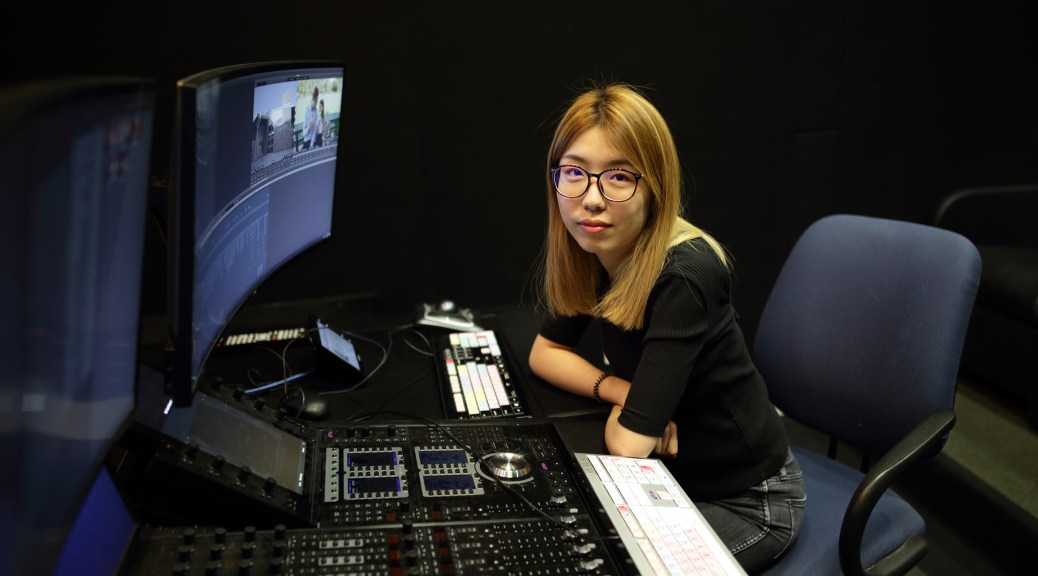
If you’ve ever known an artist, ever read a book about one, seen a film about one, or perhaps been one yourself…then you know that the goal is not to achieve fame (although that’s nice) or riches (also not horrible) but rather true artists simply want to create. The work for them is “work” only in the sense that it requires immense effort but not in a sense of begrudgingly performing a day to day task. Editor Wanqiu Sun eagerly communicates that she loves what she does and that every production she works on allows her to hone her skills. Ranging from TV productions to feature films to web productions and practically everything in between, Sun feels that her job is eternally one which allows her to shape a story, regardless of the medium or its presentation. While she has edited many an award-winning-film, she has also found herself utilizing her talent for commercials like those for Chang’an Automobiles. This series of 3-three minute commercials presented the company’s commitment to consumers and did so with the emotion that Sun’s touch is known for.

Chang’an’s relationship with their customers is analogous to that of editor and director. Passion, beauty, structure, and trust are requirements for a mutually beneficial partnership and pleasing results. People help display the story. In a film they are actors but in these commercials they were real employees of Chang’an. Each commercial presented an employee and how their work led to the benefit of the company’s customers. In one spot, we meet safety engineer Xin Li and the crash test dummy he works with exploring and ensuring the safety of the vehicles. Another presents the Designer Zheng Chen exploring his idea of design, how nature inspired him, and his concept of “power inside.” The final third commercial delves into the future of autonomous vehicles with Zhe Wang. This MIT graduate explains the culture which drew him to Chang’an and what lies ahead for the advancements in automobiles.

The structure of the advertisements were similar to TV and films in the sense that they were based around stories but there were still differences substantial enough to warrant a different approach from the editor. Sun focused on the initial visual impact. The ability of a commercial to attract the viewer’s attention supersedes that of a continual storyline. Wanqiu notes that the story during these productions was more prominent than most, a happy occurrence, but imagery was still the most crucial element for her to present. She explains the process stating, “For commercials, we sometimes won’t break down to what exact shots we will shoot before production. It’s more flexible in comparison to film. For these commercials, they had manuscripts before shooting. They were planning to go with a documentary style, to combine interviews with other footage. The locations were all real locations inside the factory, which meant that it looked different every day. If the majority of shots were planned before, it might have caused more problems during production. As the editor, I had to figure out where these shots could be placed according to the content we had in the manuscript. Cutting according to the original manuscript was around five minutes. I had to combine and rewrite the manuscript to bring the entire thing down to three minutes. Any information we’d lost from the manuscript had to be presented visually.”

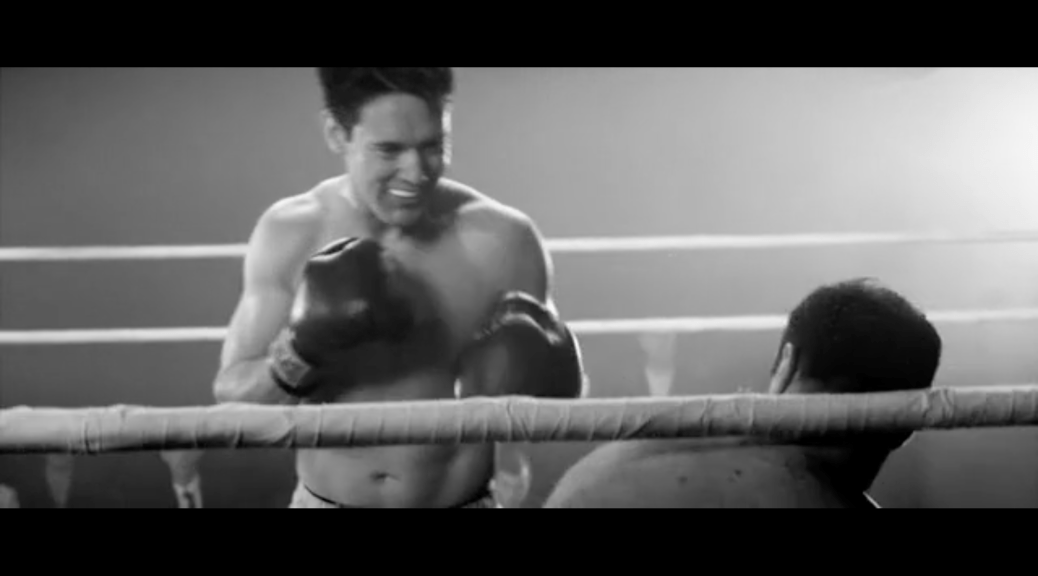
Wanqiu’s work on these Chang’an commercials is proof that when there’s a great editor on the production team, especially one involved in pre-production, it makes the production much more efficient. Editors like Sun have the big picture and help the production team to predict problems and also fix those remaining in post. Transforming good material into great material and manifesting the unforeseen, editors are like ninjas who conceal themselves to make the cuts seamless. This analogy resonates with Wanqiu who remarks on her favorite editing, “There’s a fight scene in rain in The Grandmaster (Directed by Karwai Wong, Edited by William Chang), which is one of my favorite scenes in all of Chinese Film. Unlike other action movies, this one doesn’t focus on showing every movement of Kung Fu but more of the atmosphere and the spirit when people are fighting. It is very emotional. Everything seems so vague in the rain but you can feel their exact mood. Some people fight for power and fame and some fight for dignity. It is possible to analyze why we are feeling this way from editing.” The majority of her work has been in English speaking productions; the fact that her family in China gets to see her work every day on these Chang’an commercials gives her the chance to show that she is very much “in the ring.”