Category Archives: Film

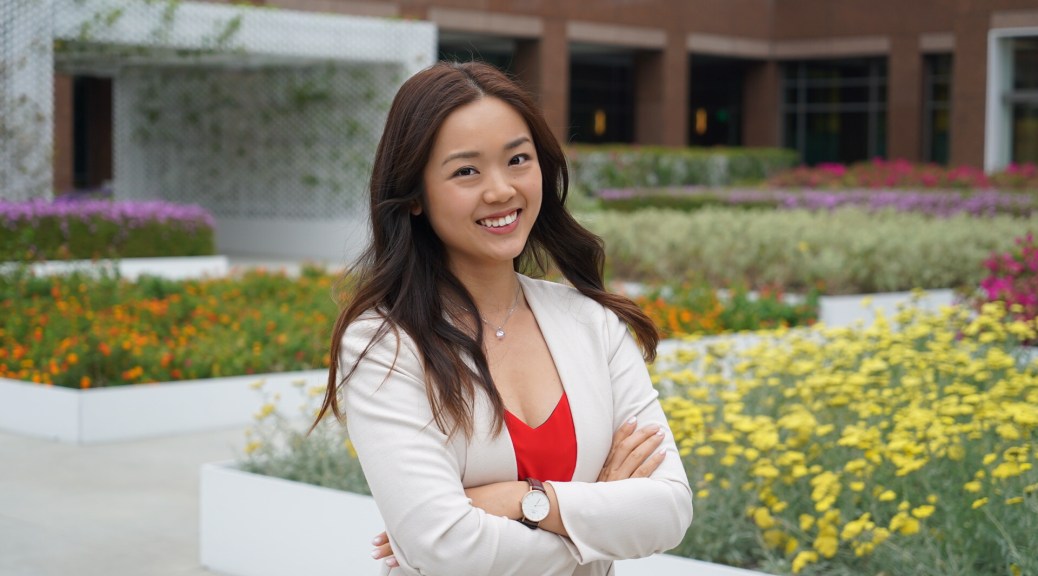
Producer Sonia Bajaj talks new film ‘A Broken Egg’

Headshot 4
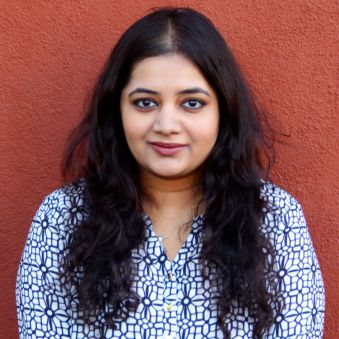
Producer/Director Sonia Bajaj

Sonia Bajaj was born in the city of Mumbai, India, the birthplace of Bollywood. Living in the film capital, she was exposed to films from a very young age. This interest sparked something in her, and Bajaj knew watching films was not enough, she had to make them. She wanted to tell stories, and share with the world the ones she knew needed to be told. Now, she is recognized not just in India, but also internationally for her talent, and is a sought-after director and producer.

While working on films like Rose, Hari, The Best Photograph, Bekah and Impossible Love, Bajaj has earned the reputation as an outstanding filmmaker. Bajaj always had a talent for producing. Her father is a businessman who has dealt with paperwork all his life. At times, she would help him out and during that process; she began to learn the basics of business, and therefore, the basics of producing.

“I’ve always been a good manager of time, deadline serious, and most importantly a team player as well as a leader. My goals are well defined before me and I seldom deviate from them. My experience handling paperwork, education and a creative mind inclined me towards becoming a Producer,” said Bajaj.

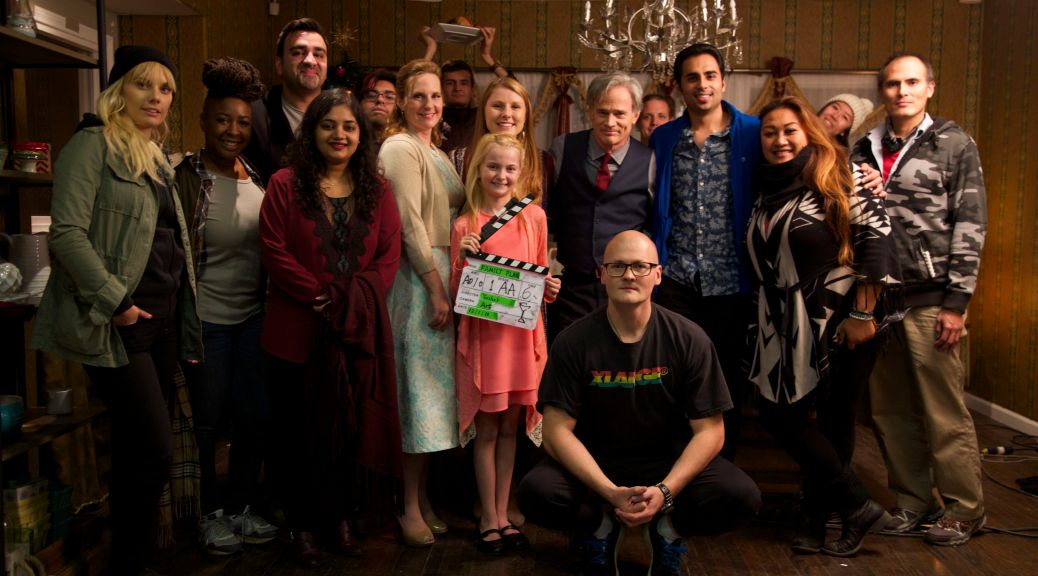
Bajaj’s producing instincts are evident in the new film A Broken Egg. It tells the story of a dysfunctional family that go through varied emotions over dinner due to the recent discovery of their teen daughter being pregnant. The entire film takes place during a family dinner scene.

“This meant that we had no location changes and had to film in a tight space for two days. It was a unique experience to have the beginning, middle and end of a film over the course of dinner. A Production like A Broken Egg is not a traditional style of filmmaking, making the project exciting and different. That’s why I wanted to work on this project,” said Bajaj. “Teenage pregnancy is quite prominent in the United States. Our goal was to make a film that showcases the after effects of teenage pregnancy from the eyes of the teenager as well as the family members, all together under one roof.”

The film premiered in June 2017 at the California International Shorts Festival in Los Angeles, and has since gone on to be an Official Selection at the Barcelona Planet Film Festival, UK Monthly Film Festival, and the Festival de Cannes Short Corner. It was a semi-finalist at the Los Angeles Independent Film Festival Awards, and the Hollywood International Moving Pictures Film Festival, and won the Bronze Award at the NYC Indie Film Awards, and the Gold Award at the Mindfield Film Festival. None of this could have been achieved without Bajaj’s producing savvy.

“Our goal was to create a voice for teenage pregnancy, a film that is relatable to teenagers and families, alike. We’re thrilled with the response the film was received so far and would love to see what happens next,” she said.
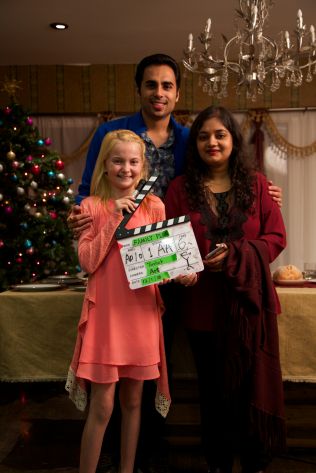
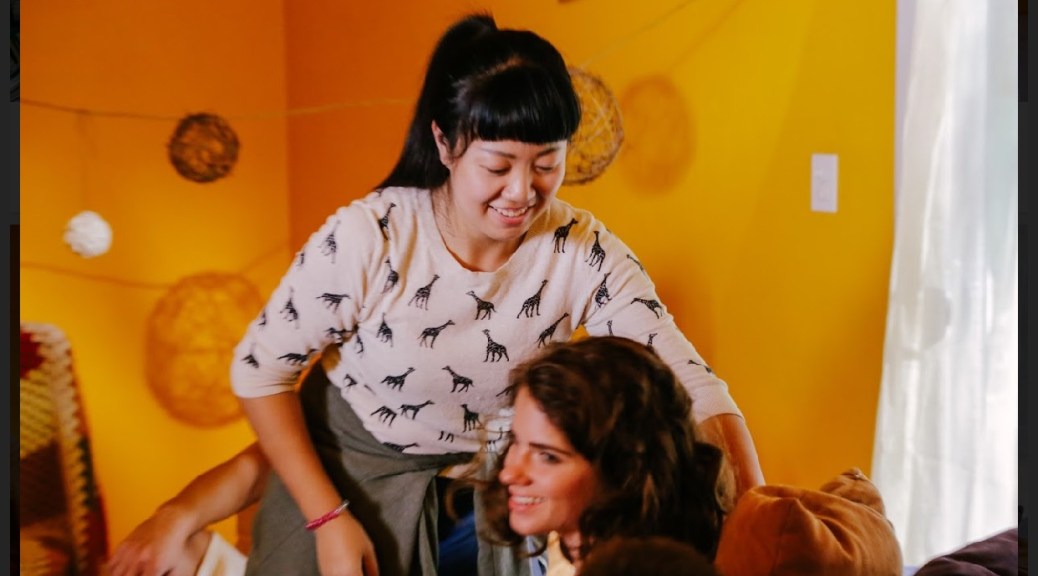
With Director Tushar Tyagi and Actor Lainee Rhodes on A Broken Egg Production Still
Actor Lainee Rhodes, Director Tushar Tyagi, and Producer Sonia Bajaj on set of A Broken Egg

Despite some budget constraints, Bajaj made sure there was still high production quality. Due to her experience producing and directing varied short films, she managed to get most of the crew work on minimum wage daily, which helped to secure a great camera and actors, leading to a successful completion of the production. They only had one day of rehearsals and two days of filming available, which meant that Bajaj had to make important decisions quickly, be on her feet at all times, and make sure that there was clear communication maintained throughout. Not many could pull off such a feat, but Bajaj’s ability to take risks and make swift decisions made her perfect for the job. The Director of the film, Tushar Tyagi, knew she would be able to make his film a success, as he had seen her work on the film Rose.

“No matter the budget level, Sonia has always been able to elevate the production to the highest standards. Whenever there’s been an issue, she’s been quick to resolve it without any setbacks to the schedule.  She is enthusiastic, a positive thinker and has a go-getter attitude,” said Tyagi. “Sonia has a fresh take on the stories she directs. Her style of directing is innovative, powerful and thought provoking. As a Producer, she is the foremost leader in every project she takes on. That’s why all her projects have enjoyed a great deal of success in film festivals both in the U.S. and globally.”

There is no doubt that A Broken Egg will continue to have success as it makes its way to more film festivals this year. For Bajaj, however, that is not why she loves what she does. The accolades and the awards don’t matter as much as getting to do what she is passionate about.

“Being a producer requires a lot of patience as you see through a production from the very beginning to right until the end. It gives one a chance to interact with different cultures, creativities and mindsets from all over the world. I enjoy this amalgamation of creative and business, and that’s why I like being a Producer,” she concluded.
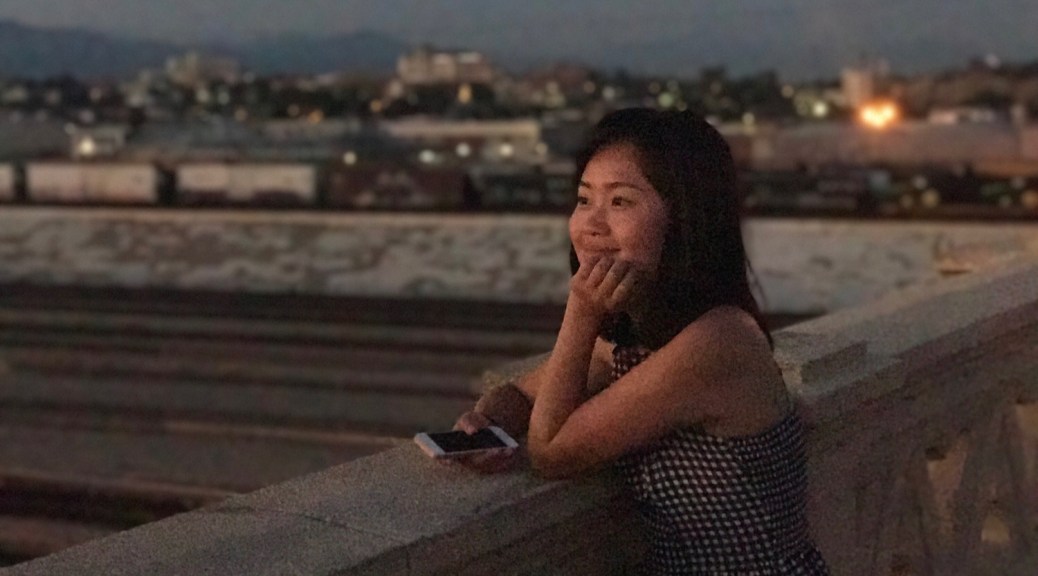
Producer Xueru Tang faces her fears, literally, in critically-acclaimed horror flick Emily

Xueru Tang’s life is making movies, and she loves every minute of it. Her work captivates international audiences, and her name is recognized all over the world. She is an extraordinary producer, and one of the best to recently come out of China.

While working on several esteemed projects, Tang has become an extremely sought-after producer. She has worked on films such as Locked, and Hot Pot Man. Both of these projects have gone on to do very well at several of the world’s most prestigious film festivals. However, what is perhaps the most decorated film of Tang’s career is the award-winning horror flick Emily.

“When I was asked to join the project, I was really interested. I love horror movies, but I always have trouble watching them because they scare me, so I really wanted to know how a horror movie was shot,” said Tang.

Directed by Jun Xia, the film tells the scary story of a woman named Emily. Emily dies giving birth at home after her husband, John, abandons her. However, she will have her revenge from beyond the grave when she returns as a ghost set on killing her widowed husband.

“I liked the script at first, it was short but it was interesting, and once I started working on the film, I began to really like the way the director told the story. He really caught the point at which everyone is frightened. It really made me scared. He really had his style and his visual for everything,” said Tang.

Tang was approached by co-producer Guannan Li to join the project. Li knew he needed a team of the best producers he could find, and having worked with Tang before, he knew she would be the perfect fit. Another producer on the film, Jingming Zhao, could not have agreed more.

“During development of the film, Xueru included her creative input for the film, and helped to polish the script, showcasing her creative abilities. She was responsible for renting equipment, creating and managing our budget and schedule, and making certain that this highly intensive work was made on our budget. Due to Xueru’s preeminent abilities as a creative thinker and a talented producer, she helped us to lay a foundation for the film, without which we would not have been nearly as successful. Of the many producers I have worked alongside, she is the most stand-out talent I can think of,” said Zhao.

Tang’s decisions for the film were very fruitful, as Emily has been a stand out at film festivals. After its premiere at the Los Angeles International Film Festival in August of 2015, it went on to be praised at the following festivals: Winner Best Horror Short Film – Hollywood Horror Festival 2015, Winner Best Short Film – Mad Town Horror 2015, Winner Best Horror Short – Hollywood Boulevard Film Festival 2016, Winner Best Student Horror Short – Hollywood International Moving Picture Film Festival 2016, Winner Best Student Horror Short – United International Film Festival 2016, Winner Best Director – Chandler International Film Festival 2016, Winner Official Selection Award – Chinese American Film Festival 2016, Official Selection London Digital Film Festival 2015, Official Selection International New York Film Festival 2015, Official Selection Full Bloom Film Festival 2015, Official Selection and Screening Big House Invitation Year One 2015, Official Selection Fort Lauderdale International Film Festival 2015, Official Selection Horror Short Video Contest 2015, Official Selection Los Angeles Short Film Festival 2016, Official Selection and Screening Holly Shorts Film Festival 2016, Official Selection AFMA Film Festival 2016, Official Selection and Screening Hanhai Studio 1st Short Film Festival 2016.

“When we won the first festival, we all super happy, and one by one, after like 10, to be honest, we all started to feel like ‘okay, this is normal,’” said Tang. “When we started winning the big festival, we felt happy of course. I felt like it showed how hard we worked and how good we are. When we work it can be a really hard time and not easy for all of us, but we studied from this production and we grew because of it.”

For a film to do so well over such an extended period of time, continuing to impress audiences and critics over a full year, shows just how good it is, and Tang was a big part of that. She dealt with the crew, worked on the budget, and was responsible for hiring a team that she knew could make the film the success it became. One role in particular that she tirelessly searched for was the cinematographer, as the director Jun Xia wanted someone he could work well with and share his vision. Tang spent months searching and interviewing candidates looking for that special director of photography. This effort led to finding the ideal match, and was vital for the film.

The team worked so well together, that they decided to embark on another horror film Inside Linda Vista Hospital, which production companies were eager to be a part of after Emily’s success. The second film has gone on to achieve similar feats at many film festivals, showing audiences all over the world why Tang is so good at what she does.

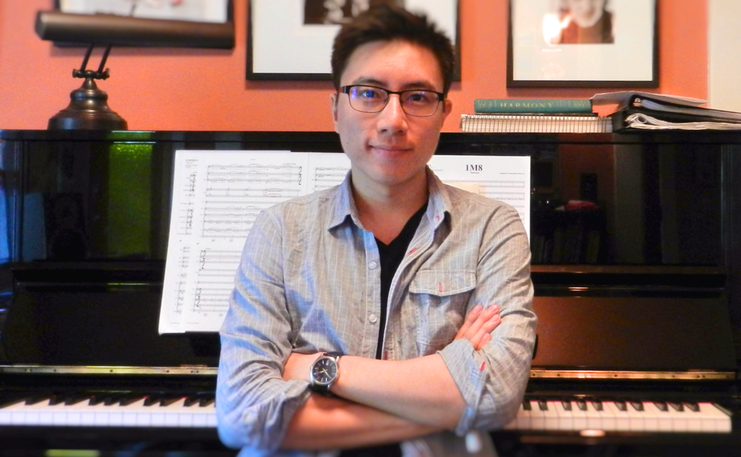
Peter Lam’s musical genius wins Best Score Award for film ‘Lovebites’

When Peter Lam was a child, he, like most other children, loved movies. He would sneak into his parents’ movie collection, eager at any opportunity to experience a new film. However, unlike most children, who would be enthralled by what they saw on the screen, Lam was captivated by what he heard through the speakers.

Now, Lam is an internationally sought-after film composer. He has worked on countless successful projects, including the award-winning films The Ballerina, The Shoemaker, & His Apprentice, and (le) Rebound. He recently worked on the score for the TV movie Menendez: Blood Brothers, which premiered on Lifetime earlier this month, with over a million people tuning in to hear what he is capable of. However, what is perhaps the most celebrated film of his career is Lovebites, a 2015 animated film that catapulted Lam to the top of his field, being recognized as one of the best film composers to come out of Hong Kong in recent memory.

“I am always excited to work on animations. It’s a very imaginative genre and music often plays a big part in shaping the ‘sound world’ of the animated world. A composer often doesn’t come on board on a live-action film until the film has been shot. But in animation, I often start composing while the animation is still being developed or rendered alongside. The whole creative process feels very organic, hence it’s always fun to work on animations,” Lam described.

Lovebites is about the praying mantis Cecil, and tells the story of his first date. Lam’s music is vital for Lovebites, as the story is essentially told through music. It is an animated film with no dialogue and minimal sound effects, and the score runs continuously through the film from start to finish. Lam’s ability to capture the emotions of the two mantises is what makes the film so engaging.

“We bounced back and forth about musical ideas and the storyline, and when I started working on the project, I was presented with the initial character sketches and concept art. I scored the entire film based on the animatics (pre-rendered animation). In a way, the material I was working with then was not as detailed or delicate as the final product, but on the other hand, it offered me a bit more freedom for imagination, and encouraged me to be creative,” he described.

Stuck Truck Studios, the production company of Lovebites, had total trust in Lam’s creative decisions. Knowing they needed the best for a film that relies so heavily on the score, the team quickly invited Lam to be a part of the project after hearing samples of his work. Lam decided to create a score that only featured percussion and plucked instruments to create the quirky world of insects.

“Stuck Truck Studio encouraged me to think outside the box in order to create a colorful and quirky palette for this cute animation. It’s always fun to break away from conventions and experiment with new sounds,” said Lam. “I think the approach I used for the music gave the film a unique character, and I had a lot of fun experimenting with wild percussion sounds that, if not for this film, I would never have thought of using.”

This musical approach proved fruitful. After its premiere at the Original Narrative Festival in Dubai in February 2015, the film went on to see enormous success at film festivals around the world. That same year, it was an Official Selection at BFI Future Film Festival, Chile Monos International Animation Festival 2015, Athens Animfest, Tiltshift Festvial, 9th River Film Festival, Original Narrative Dubai, Reel Teal Film Festival, MICE Valencia, and the Vancouver International Film Festival. It went on to win the Audience Choice Award at the Melbourne International Animation Festival, and the Character Animation Award at the ANIMEX International Festival of Animation and Computer Games. Lam was personally recognized at the Short Sharp Film Festival Australia that year, winning the award for Best Score.

“Given that this was one of my first experiences in working with animations, I was very delighted to know that the film did so well in so many film festivals. Lovebites has been screened around the world and has set foot on almost every continent. I guess winning the Audience Choice Award at the Melbourne International Animation Festival and Best Score in Short Sharp Film Festival in Australia shows how effective my music can be,” said Lam.

After its success at so many film festivals, the film was later featured in the acclaimed animation website and channel CG Bros. It has amassed more than 4.2 million views (on YouTube since that time), making it a viral animation. None of this success would have been possible without Lam’s creative ear for the score, knowing its importance in telling the story. Agaki Bautista, the Art Director for Lovebites, believes Lam is one of the best film composers he has ever worked with.

Peter was always punctual in responding and we always felt comfortable having a dialogue with him. Communication was clear across all fronts. Peter is super receptive towards creative collaboration. We started off by sharing references and bouncing off ideas with each other and he was open throughout the process. It is rare to have the level of creative cooperation that we had with Peter,” said Bautista.

Lam’s talent is evident in everything he does. His work on Lovebites shows the world that his creative instincts are spot on, and he is exceptionally versatile. Be sure to check out his work in the upcoming animation film Slippages – Grace in IMAX later this year.

In the meantime, watch Lovebites here and let your eyes, and ears, capture the essence of the story with Lam’s work.

CINEMATOGRAPHER SHOWS BOTH SIDES AT THE SAME TIME IN PARENT, TEACHER

Chris Lew is someone who enjoys learning. Though he has served on numerous productions as Cinematographer, he is adamant that being creative is not about being comfortable. Anyone who pursues growth comes to the realization that growth only comes about through tension, stress, and (hopefully) release. He accepted the DP position on the film “Parent, Teacher” with the understanding that it would be difficult in a number of ways for him. What he had not expected was that this would be his closest foray into actually becoming a passive actor in a film. It’s an interesting and unusual experience that began when the film’s writer/director Roman Tchjen approached Chris to be the DP for this tense film.

“Parent, Teacher” tells a story that is not completely unheard of. What it does so ingeniously is to communicate the emotional temperature of a room during a stressful situation. In “Parent, Teacher”, a father meets with his son’s teacher after school when his son is accused of attacking a classmate. Who is right and wrong in the situation becomes increasingly harder to define as the father and teacher argue their beliefs.

Roman Tchjen has a long history of collaborating with Lew, creating a high level of trust and understanding between them. When Tchjen wanted to present a story in a very non-traditional manner, he was firm about the need for Chris’s involvement. While most films display the commonly used and accepted approach: shooting coverage, having a protagonist with a clear goal, a clear villain whom the hero must overcome etc., Roman wanted to create something that was more honest and lacked a clear answer because in real life these types of issues aren’t black and white. Going into the film, Lew and Roman made the commitment to have as few cuts as possible. The entire film was to be split it into two takes, foregoing any coverage, any establishing shots, or cut aways. This is the cinematography equivalent of riding a bull at the rodeo while being handcuffed from behind. All of the “go to” tropes of a DP were stripped away leaving Lew to formulate an approach that would still stimulate and entice the viewer. Chris communicates, “We focused solely on the performance and the conflict between these two people. This goes back to taking risks. After reading the script I knew it wasn’t written to be the most visually stimulating film so rather than making the visuals flashy, which Roman really didn’t want, I instead thought of ways to make it immersive and use that to make the film engaging and interesting. It was this approach that contributed to the decision to shoot extremely long takes. It took a lot of work for Roman and even more so for the actors. There were many sessions leading up the shoot where everyone practiced their lines. Once they were feeling comfortable, I came in for my own rehearsal to see how we could block the camera. I needed to know at what point I was going to be on each character and if we were going to see some lines spoken on camera or off screen. Making sure I was on the right actor for an expression was key too. It was a lot like a dance that the actors and I were doing together!”

A reason for which Roman was so insistent concerning Lew coming aboard as DP was due to his style. Just as director’s have a signature which leads many to hire them, Lew has been recognized for his ability to enable the audience to have an intimate experience via his choices and camera work. It appears effortless for Chris to make the camera unnoticed in any way and at the same time pick up every nuance in the actors faces. The question of how does the action on screen affect how much the camera moves really comes down to the content. Film is art and art is subjective. For Lew it comes down to the content of the scene and the emotion the he and the director want to convey.

“Parent, Teacher” required extensive preproduction for Chris which is very atypical for a DP. The story and the unique approach necessitated Lew being there for rehearsals. Because the camera essentially appears as a mute third party witness, Lew needed to almost “perform” as another participant in the scene. Every project prior to this one had this DP engaging in the typical method of planning the scenes out based on the locations with the director as they reviewed photos. By contrast, in this production the camera was very much a character in itself, with blocking and queues that needed to be timed down to lines. If Lew and Tchjen wanted the film to feel completely out of the norm they were going to have to start with this beginning stage. Long takes helped with this. When the father first walks into the classroom at the beginning of “Parent, Teacher”, the camera follows him in but then hangs back as he walks over to the teacher to shake her hand and sit down. This was the wide establishing two shot to set the scene. As the teacher starts to explain what had happened, the camera begins to slowly creep in. Lew’s advance is so slow and subtle that you don’t even notice as he moves in to a close up. Chris describes, “Eventually we’re out of the two shot and just on the father when he starts to explain that he doesn’t see anything wrong with his son’s actions. I wanted to isolate him in the frame at this point to represent that he is in his own world. He’s clearly an immigrant and not used to Western ways of handling situations of violence. The teacher becomes increasingly frustrated as the two cannot agree on what is right and wrong, all the while the camera is slowly getting closer and closer. I tried to hide the walk in with the camera panning back and forth between each character. Just before the climax of the argument, the father has given up and is lashing out at the teacher, feeling targeted and attacked for his beliefs. Here, the front of the lens is inches away from the actor’s face. You see every detail of his expression and all the frustration in his eyes before he jumps up away from camera breaking the tension. Essentially I wanted the entire conversation to be one slow, imperceptible push in that brings the audience closer as the tension rises.”

Chris felt the camera needed to be handheld to create this immersive feeling, to make the audience feel like another person in the scene. It was a decision that Chris would have regreted if not fully committed to achieving the goals he had set for this film. The challenge was the length of the takes and the physically demanding nature of the equipment he chose. “Parent, Teacher” was shot using the Alexa XT which is a large, heavy camera. Hand holding it, trying to keep the frame steady for such long takes is extremely difficult.

Producer Kegan Sant admits to being overwhelmed upon seeing the final product. He declares, “When you are in preproduction of a film you have a vision in your mind of what you hope it will look like. I can honestly say that the idea I had for ‘Parent, Teacher’ pales in comparison to what you see when viewing it. Christopher was essential to the way in which the story was presented to our audiences. His incredibly striking camera work and expert understanding of shadow and lighting allowed for the film to reach impressive narrative heights. The way in which he reflects the overall despair and confusion of our main character throughout the frames is what makes Christopher such a valuable asset to any production that seeks out his talent. His efforts throughout the film solidified the film’s high standing and reception. We would not have received the same overwhelmingly positive reaction without his talent as cinematographer.”

Snowblink set

Chris Lew admits that his work on set left him consistently soaked in sweat from long takes wielding a heavy camera. However, he also admits that taking a risk and trying to create a film which stands apart from the norm is something that he will hold onto much longer than an aching back or sore arms.

Production Designer and Art Director Katsuya Imai brings life to ‘The Next Generation Patlabor’

Patlabor2_by Eri Kobiki
Katsuya Imai on the set of The Next Generation Patlabor

Katsuya Imai is more than an artist. He is a storyteller. His passion for art that started as a child, painting and building models, transformed into something much more as he grew. His love for movies became more prominent; not just watching them, but observing them, noticing the craft and skill that took place behind the scenes. With interests like these, it is no wonder why Imai became a production designer and art director. However, it is his talent that has made him the success he is, and recognized as one of Japan’s best.

Throughout his career, Imai has had the opportunity to work on projects that he was already a fan of throughout his life. As production designer on the film Ninpuu Sentai Hurricaneger: 10 Years After, he was able to design for his childhood heroes. While working on the films and television series The Next Generation Patlabor, he was able to do the same.

“I have loved the animation in the original Patlabor films since I was a student. I watched these so many times and have some books about the art setting and method of directing in them. I have knowledge of these background, so it was very helpful to design it,” said Imai.

The Patlabor franchise includes three films and a television show. Therefore, The Next Generation Paltabor has many background stories that do not need to be mentioned in the script. Imai has worked on many different aspects of The Next Generation Patlabor, including the film The Next Generation Patlabor: Tokyo War.

“It was very exciting. I was so happy that I could read the new script of the film. The script was connected to Patlabor: The Movie 2. That is my favorite film. I really enjoyed designing it. I thought it was one of my dreams coming true,” said Imai.

As a fan of Director Mamoru Oshii’s films (Ghost in the Shell, Ghost in the Shell 2: Innocence, and the original two Patlabor films). Imai also wanted the opportunity to work alongside one of his filmmaking heroes. He immediately impressed all those he worked with, and contributed greatly to the film’s success.

“Katsuya had years of experience and was very skillful, so we could leave the shooting to him. He is very serious and calm as art director. He always directed surely to the other crews,” said Supervising Art Director, Masato Ando.

The film tells the story of an attack that takes place on Rainbow Bridge in Odaiba, Tokyo by the fighter helicopter `Gray Ghost`. Two days earlier, the Gray Ghost was stolen. The perpetrators are followers of Yukihito Tsuge. Yukihito Tsuge planned a coup of Tokyo 13 years earlier. The leader of Special Vehicle Section 2, Keiji Gotoda, sets out to stop the terrorists. It went on to be an Official Selection at the Montreal World Film Festival.

Patlabor3_by Hitoshi Ohta
Katsuya Imai on the set of The Next Generation Patlabor

“I was very happy to hear that. It’s always an honor that the film I worked on is watched by many audiences,” said Imai.

As Art Director, Imai went to location scouting, trying to find the perfect set for the film. His knowledge of the Patlabor series were designed elaborately and rated highly by the fans. This made him an asset to the television series The Next Generation Patlabor as well.

“Normally working on a television show, we shoot each episode at a time. We are given the next script during filming the previous episode. The production has to reflect the review and reaction from the audience to the script. However, this project already has all 12 episodes scripted in the pre-production. This made it easy to plan and design the whole project,” said Imai.

The show is a story of a world where giant robots are built and used for labor, a special police force of robots is created to handle crimes relating to these machines. Imai built two full-size robots. Each one was eight meters high. This made the series a bit conspicuous.

“While we were filming, fans were not aware of a Patlabor revival. However, we had to do shooting at the location with a full-size robot. It was impossible to hide it because it’s too huge. Some people noticed that robot and posted the photo to Twitter. All the Patlabor fans were excited on Twitter,” said Imai. “We ended up using the full-size robot for the promotion. It’s huge and attracts people. The Patlabor fans said the film became reality.”

Episode 10 of the series went on to be screened at the Tokyo International Film Festival in 2014. Without Imai’s keen eye while designing the set and special props, such as the iconic robot, the show may not have achieved what it has. Fans of the original series were immediately enthralled with The Next Generation Patlabor, enjoying how true it kept to its base story. Imai, as a big fan of the show, knew exactly what was needed to win over the hearts of other fans, and he definitely succeeded.

Producer Albee Zhang doubles as Hometown Champion

Many people don’t realize they have a dream until they have already achieved it. This is just what happened for Albee Zhang. The Shanghai native always knew she wanted to make films, but it wasn’t until she realized she had made a career both in China and the United States that this was always what she wanted. She shows the world her culture through her work, and allows audiences to see both where she comes from and where she is now, as an internationally successful film and television producer.

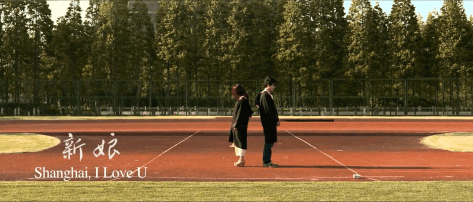
This is exactly what Zhang achieved with the film Bride: Shanghai, I Love You. As a producer on the film, Zhang was essential to its success. She provided creative ideas for story meetings, prepared pitch materials, created and managed the production budget, scouted locations, recruited the crew, oversaw the art department and post-production teams to ensure deadlines, and cast the film. Without her, the film could not have been made.

“The cast she put together, the people that she put together for this project, it was really quite amazing. Albee is the master of multitasking, but never skips out on the small things. She has more drive and passion than anyone I have ever met. She is definitely a go-getter,” said the director of the film, Lian Xin.

Bride: Shanghai, I Love You is a film made for the 15th Shanghai International Film Festival, hosted by SIFF and the Information Office of Shanghai Municipality, as part of city promotional videos during the festival. It’s a story about a young photographer who meets his long-lost ex-girlfriend on her wedding day. Originally, he accused the fast pacing city life of changing them and made them break-up, but he finally realizes without all the tough times in his life, he wouldn’t be who he is right now. He moves on with relief and looks forward to the future with deep love in this city, Shanghai.

“It’s such a compelling life changing story. Any dream seeker in the big cities would find similarities to the character. The release date was in a summer, same as the graduation season in the story, which made the whole story resonate with more people. I love the idea that we started from an ordinary person’s point of view to reveal the beauty of this city,” said Zhang. “It’s a light-hearted and inspirational story to motivate the young professions to following up their dreams. We had a very young team making this film. Although they may lack of professional experience, they brought so much energy and joy to the crew. They gave us lots of ideas of how to capture a city wanderer’s life. And in return, we were trying to give these young professionals an opportunity to work on this film. All they needed was an equal chance, just like everyone else.”

Zhang wanted to share her love for her city through the film, and that is exactly what she did. She worked on the project from start to finish, from the development stage, casting, accountings, getting equipment deal and transportation, to its premiere at the festival. She was working at MT media at the time, and the director, Lian Xin, reached out to her to be a part of the film, knowing he needed the best to make the film a success.

“Lian Xin is a very hands-on director. He likes taking different jobs at the same time while making his films. He directed, wrote, filmed, and even gave lighting directions on our film set. In the editing stage, he would prefer to have a director’s cut. By looking at his works, you would know what’s a ‘Lian’s style’ movie. He was calm and quiet person off-set, but as long as the camera was rolling, he would rule the set. We had worked on few other projects before, so I knew from my heart that he had the capability to do multiple jobs on set. If it was another director, I wouldn’t let him do that. But it’s all about trust and mutual understanding. When he was in charge, I had nothing to worry about,” said Zhang.

The film was a non-profit project, and therefore had a very small crew. This required Zhang to wear many hats at the same time to ensure the production went smoothly. As a producer, she is known for her commitment to her work and to each project she works on, which is why they have gone on to see such success. Her more recent work on the film Caged has gone on to be an Official Selection at many festivals, and win several awards. She knows what it takes to achieve greatness, as that is what she continuously does. Having Bride: Shanghai, I Love You, premiere at a prestigious film festival such as The Shanghai International Film Festival was nothing out of the ordinary for this producer.

“It was a great honor to be part of the film festival program. Producing my own hometown promotion video for SIFF made me think about what my home town means to me. I was born and raised in Shanghai, and lived there for the majority of my life, but I never thought about what impression does this city leave the world, until I started brainstorming ideas for this project. It’s a place you will easily lose yourself in a materialistic life, but after all the struggles, you will eventually be deeply in love the city with and understand how inclusive this city can be,” said Zhang. “Since I am purely from Shanghai, that was a great chance show the world how great my home city is. I am proud that I can become part of the production.”

BRIDE

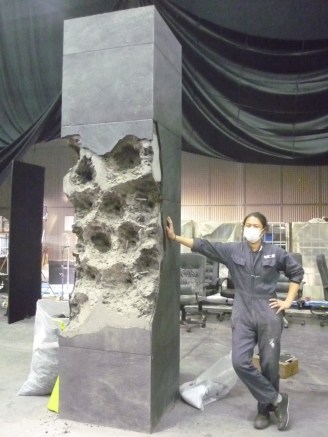
Production Designer Shuhe Wang contributes to the delightful horror of ‘Inside Linda Vista Hospital’

Making something from nothing is what all filmmakers achieve every day. They are creators, they are storytellers, and they are artists. Shuhe Wang knows this well. She takes the pages of a script and transforms them into sets. She creates a visual world, turning each nothing, such as a meaningless prop, into something, creating a masterpiece. She is a one-of-a-kind production designer.

While working on films such as Stay, Dancing for You, Red String, and Cartoon Book, audiences were given the opportunity to see Wang’s ability to transform a drama into a completely immersive experience, making it evident why she is considered one of the best. However, this past year, Wang has brought her extraordinary talent to a new genre: horror. Working on the film Inside Linda Vista Hospital, Wang’s production design skills were on full-display, helping to fully immerse audiences in the terrifying story.

“This is a classic horror style film, so I focused more on how to show and even amplify the emotion and tense by color, texture and overall set dressing. Even each small prop can be an important storytelling step. That quite an adventure for production designer,” said Wang.

Inside Linda Vista Hospital tells the story of a young girl who wakes up in a hospital surrounded by police covered in the blood of her boyfriend. With the help of a video camera, she slowly pieces together what happened, and she may not like what she finds.

“Horror stories are connected with our real lives, but with different point of view. I needed to find and create the elements to scare the audience and keep the emotion of the storyline in the right place, and at the same time the elements should make sense in the world.
Color and tone are always the most important parts in designing a horror story. Even a tiny subtle difference would affect the whole feeling of the set,” said Wang.

The film has gone one to do exceptionally well at some of the world’s most prestigious film festivals. It was an Official Selection at the Festival de Cannes Short Film Corner and the Pasadena International Film Festival, it won Best Director and Best Horror at the Los Angeles Independent Film Festival, Best Editing at the United International Film Festival, and Film of the Year at the AFMA Film Festival of Young Cinema 2017.

“Horror story is always a popular style, but there are a bunch of these type of films that are terrible when it comes to actual storytelling, that is what divides a good horror film from a bad one. This film is a good one because it shows a tense, strong and simple story, which perfectly matches the horror genre, so I think the film totally deserves all those awards,” said Wang.

The production design directly contributed to the film’s success. She had to design in accordance to many special effects and stunt work, and the film is set in a true historical building, and the cultural importance of this influences the story in an important way. To make the set highlight this, she researched and applied this to her work.

“It was a dramatic and kind of emotional showing story. I watched a lot of classic experimental and psychology films to get more inspiration and insight into how to let the audience feel the inner world through the production design,” said Wang.

This commitment to both the genre and the film impressed all that worked alongside Wang on Inside Linda Vista Hospital. The director, Jun Xia, knew no one else could do the job but her.

Working with Shuhe was a great experience, she was familiar with each of the details of the whole story, and her plan for working was effective for the shooting process. Shuhe is sensitive with color and designing, and she knows how to create and decide the correct textile and color to present the emotion. That is actually a really important part of the horror genre,” said Xia.

Xia approached Wang to work on his film, knowing he needed the best to make the film the success that it eventually became. When he sent Wang the reference of the visual style, so knew she wanted to take part in the project, as it was quite similar to the style she always loves.

“I felt confident and interested in designing this film after talking about the film and the story. Jun is a talented horror film director, he is always enthusiastic, and he is really insistent on what he wants which is good for making a great film,” Wang said. “What I really liked was how I could see how the set dressing worked so well when the lights and performance came together. It makes the visual complete and seemed like we accomplish the original idea of the director.”

There are many nuances to production design that are easy to get lost in the big picture of a film, but with Wang as the designer, audiences are sure to take in each and every part of it.

Editor Minghao Shen talks impactful new film ‘Cartoon Book’

Only someone that truly loves what they do can enjoy it the way that Minghao Shen enjoys film editing. His understanding of his craft and his commitment to the artistic elements of it allow him to excel at what he does. Not many people are lucky enough to be so talented and so passionate about their work. Shen is one of those fortunate few, and on top of this, he is considered one of the best Chinese film editors right now.

While working on award-winning films such as Red String, Emily, Inside Linda Vista Hospital, and Stay, Shen’s editing skills were extremely evident for both audiences and critics.

“I am a creative minded person, so I love the re-creative part of editing a lot. There are many ways to make a film, and I feel editing is one of the best ways to engage in the filmmaking production,” said Shen.

Shen engaged in both the filmmaking production and with audiences with his work on the film Cartoon Book. Cartoon Book is about a little boy who tries to go against the school and teacher under severe rules. Afterwards, it seems that the teacher gradually controls the boy by using his vulnerability and letting the rebel boy become a tool to manage other students. The boy draws cartoons, but he feels it is hard to choose between his desire or his morals when the teacher bribes him to be her spy who needs to betray his friends.

“It is a kind of classic tone film, so rather than edit it ‘correctly’, director more like to keep the smooth and stressful feeling by editing. That is why I, as the editor, needed to understand the story indeed,” said Shen. “We had a lot of footage, so it was quite a lot of work at the beginning. But, all the effort and hard work was worth it.
The director had her own style for the entire pace of the film, and the film had really good results.”

The film went on the be an Official Selection at the prestigious Cannes Short Film Corner where it premiered last year, as well as the Berlin Student Film Festival, the Goa Shots International Short Film Festival, and the Accolade Global Film Festival Competition.

“I had a feeling that the film would see a lot of success in festivals, so when I found out the film got some awards I was not surprised, and I think it deserves even more and bigger awards,” said Shen. “The director is good at screenwriting. The first time I read the story I was so intrigued and really connected with the story. I was really looking forward to work with the director and making great film, which we did. It was not the first time we worked together. We know and understand each other very well. She is natural born storyteller and I always looking forward to work with her.”

The film was written and directed by Shuhe Wang, who had previously worked with Shen on her film The Regret, and was immediately impressed by his talents. Knowing they work well together, and that she needed the best to make her new film a success, she reached out to Wang to join her on Cartoon Book.

“I worked with Minghao on my award-winning short film Cartoon Book. I was the director and he was the editor. We worked together really well. He was so full of thoughts and understood the story deeply. When we were on set, Minghao watched the footage carefully on each shooting day. His did the rough cuts very quickly and helped me to get the overall storyline,” said Wang.

Shen was vital to the successful of the film. He says working on Cartoon Book was unlike any project he had worked on in the past. He read a lot of the director’s notes and talked about the story more than just the editing technique with the director. He would meet the cinematographer and communicate about the shot, knowing they all needed to be on the same page for the overall tone of the film. This understanding of not just his role, but the entire filmmaking process, is outstanding.

“The most exciting part of making this film was the journey of the main character. There were many twists and turns in it. It is a bit challenging for editing because the complex storyline, but on another hand, it offered a variety options for editing, and that is what makes my job fun,” Shen concluded.

Actress Gabriella Giardina to fill audience’s small screens in multiple upcoming TV shows

Headshot 2
Gabriella Giardina

Gabriella Giardina believes she was born with the love of acting. She remembers watching movies as a child and being completely mesmerized. At the time, she believed the people on the screen were real, showing their real-life experiences. When her parents explained what film and acting was, she was instantly amazed. After watching a film or television show, she would run to her room and re-enact whatever she had just watched, creating the whole story and scenes from scratch. Since the age of four, she would repeat the lines of any movie she had just watched. There was never any doubt for her as to what she was meant to do, and to this day, that belief is still there. She was destined to be an actress, and audiences around the world are thankful.

Originally from the small town of Ragusa in Sicily, Italy, Gabriella has travelled the world doing what she loves, taking in new cultures and experiences and implementing that into her craft. Working as both as actress and model, she has shown the world what she is capable of, and has emerged one of the top in her field. She has worked on feature films, shorts, commercials, television series, and music videos, never afraid of taking on something different than what she has done before.

“My favorite part of acting in any kind of set, film, television, photo-shoot, music video, is to be able to express everything simply with your eyes and expression. That’s something I find very powerful. It’s really exciting when you are on set having a great song play. But I love it even more when it’s really just you, your feelings and a camera that wants to catch it all,” she said.

Music videos require just that, and Gabriella has been a large part of the success to many. This year, she was played the singer’s muse in the music video Leila by Jah Khalib, a romantic song in which the Jah Khablib sings of the muse that he has dreamed of. Jah Khalib is one of the most famous artists in Kyrgyzstan, Uzbekistan, Russia, Ukraine, Kazakhstan and his popularity is spreading in very short time. In November of last year, he performed live at Flavio Briatore’s Billionaire Manson, at Burj Khalifa Blvd in Dubai.

“I love Leila, it really transported me and made me love it right away, and what the song is about to helped me understand her,” said Gabriella. “Shooting for Leila was like taking a day off to go explore and then represent beauty. The music video is so well represented that, even for those who cannot understand the lyric because of the language, the narrative is very explicit, with powerful, poetic emphasis.”

Giardina was selected for the role by the young but renowned award-winning Director Aisultan Seitov, winner of the 2016 Hollywood Boulevard Film Festival as Best Director in the category Short Meter, and he knew that Giardina had what it took to make the video a success. Published on May 11 2017, in less than one month the video-music “Leila” already achieved more than 2,650,000 views.

“I love music that tells a story, makes you feel all different kinds of emotions, dream the wildest dreams, makes you travel and go places you’ve never been or fantasize about or just travel around the world; that gives you energy and power or makes you vulnerable, makes you reach the sky. Music is very powerful and really reaches the furthest places. And music videos accompany that. They create one of the millions of scenarios of places, stories, emotions that one can express and experience. When an artist makes a song and music, they are sending a message to so many. So, to be a part of all this, to be a part of creating something so beautiful that reaches so many, that’s one of the things I really love about music videos,” she said.

Gabriella Giardina had achieved success with music videos prior to Leila, including the hit Paani Paani. The song was associated the story of the movie Yaariyan, in which Giardina had a leading role. The song sung by rapper Honey Singh and the soulful Neha Kakkar hit the right chords with the youth. The video was an enormous commercial success and registered over 18 Million views on YouTube alone.

Paani Paani was also a great experience. The director, Divya Kumar, created a set of young energic people and the singer, Yo Yo Honey Singh, brought his talent and all of us really enjoyed working on this together, getting to know one another,” she said.

All those that work with Gabriella Giardina know that she is a unique actress, which is why she is extremely sought-after. Her commitment to every project and genuine passion for what she does makes her pivotal to the success of whatever she works on. Alexandra Guarnieri, a Producer at All In Films, first worked with Gabriella in the musical A Night at the Black Cat Cabaret. She was instantly impressed, since the first audition, by Gabriella’s intensity and by her ability to closely relate to the character, and she defines Gabriella gifted of an intuitive talent, which is one of the most important quality to perform characters with emotional dynamics.

Having witnessed Giardina’s talent before and during the performances, Guarnieri cast her to be the female lead of the new television series project Sigueme. With many upcoming television series next year, Giardina is continuing to show audiences how versatile she is.

“I think doing a television show is very challenging because you bring the character you play through a very large continuous change. And you want to do it well, you want to give it justice and understand it, not judge it, love it, like your own self. Sure, you have a script and story to follow, but you have so many opportunities and various facets to take on the journey of portraying this person, this being, that you in your own way create. And it’s not just the character itself, it’s also the character relations with other people, places, life experience and everything that involves a day to day life. So, it’s that big range of opportunities on how is this character going to be, from the inside out that really fascinates me,” said Giardina.

Gabriella Giardina will be playing the role of Monica Muerte in the upcoming TV series The Legend of High Master. The show turns around a man named William who creates his own Kung Fu dojo called High Boxing. Soon Master Willie must defend the honor of his dojo and neighborhood from the attempt of the Corporate’s hegemony, and has to fight the corporation’s masters using high boxing to prove that his Kung Fu is the greatest, keeping his business, and saving his honor. Monica Muerte is the leading female character in the series. Her story is crucial in the series since it is unveiled at the beginning and evolves gaining relevance, episode by episode, as she becomes one of the reasons William is inspired to create his “High Boxing” in defense of the neighborhood. Monica is an expat with problems to settle down in a new environment. The character is complex and peculiar, and it requires uncommon acting skills to smoothly and naturally switch from a romantic to a dramatic or even comedian performance in a blink, all fulfilled at high level by Gabriella Giardina.

“What enhances my feeling about being in the show is the awareness of the complexity of the character. I cannot reveal very much about the plot but I can say that Monica is a complicated young lady. I’m particularly attracted by more complex and troubled roles and definitely Monica is a challenge; I am enthusiastic and eager to work on the series,” she said.

In addition to The Legend of High Master and Sigueme, Giardina is set to be in the upcoming television series The Poe Project, based on the life of Edgar Allan Poe. Giardina will be playing Cora Anne, a character who represents a woman who was a public reader, writer and actress herself, whose radiantly beautiful smile appears unmatched to Edgar Allan Poe. Gabriella Giardina’s experience in theatrical performance is important, as she can understand and better interpret the role.

“Cora Anne is an intriguing character. She is a lady of intellect, since she is a writer, a public reader and an actress of theatre. The role is fascinating and the script immediately captured me. She’s very feminine but strong and powerful at the same time. I love the contrast that goes so well together. It’s something new to explore and I truly look forward to portraying her,” she said.

With so much upcoming, and with so much success already, Giardina is in no way tired of doing what she loves best. Understanding a character and portraying them in a believable and sincere way is a thrill to her, and a thrill for audiences to watch.

“An actor doesn’t only have the job of reading a script and performing it at its best. An actor studies people, understands what’s behind every reason of this being you are introduced to, empathizes with and for this person, which is extremely important. Without judging it. An actor gives a voice to someone who is either not as loud or doesn’t have one. It opens the eyes of the audience, to new possibilities, new ways of seeing or approaching relationships and situations, new realities. An actor brings to life people and their stories. That’s what to me being an actress means,” she concluded.

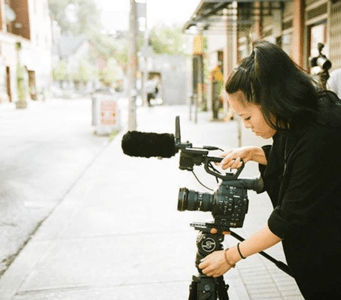
Master Videographer Rosanna Peng Keeps Viewers Engaged

Rosanna Peng
Videographer Rosanna Peng shot by Noah Kendal


Living in an age of information overload brands need visual content creators who are able to create images and videos that strike a viewer on an emotional level and quickly tell a story. Videographer Rosanna Peng is one innovative visual storyteller who’s managed to leave a lasting impression on audiences with the stunning projects she’s created for brands such as J.Crew, New Balance, Canon Canada, Etsy, MTV FORA, The Creator Class and many more.

Originally from Vancouver, Canada, Peng’s artistic approach to visual storytelling draws viewers in and elicits an emotional reaction within them. Last year she was hired to shoot and edit the J.Crew on Film: J.Crew X New Balance® 997 Butterscotch video that launched the collaborative J.Crew x New Balance 997 sneaker. Featured on popular online platforms such as High Snobiety and Hype Beast, the video Peng created takes viewers inside the New Balance factory and reveals the making of the new shoe in a way that humanizes the brand and gives personality to the shoe. Through her ingenious videography and editing, Peng managed to make the inside of a shoe factory look visually stunning, something not many people are capable of achieving.

“I was trying to take the viewer through the journey of seeing the shoe being made by real people then worn in an editorial environment. I wanted to show the craftsmanship of the shoemakers,” explains Peng. “I colored the video tones to compliment the shoe’s tones and textures. The pace of the video was intended to build up the excitement for the viewers to when the shoe is revealed in the final setting.”


Her methodical approach and visual artistry definitely nailed the mark; and considering the viral success of the video for the New Balance 997 Butterscotch shoe, it’s not surprising that Peng was tapped by the companies once again to direct and edit the video for their collaborative J.Crew X New Balance 997 Cortado, which was released shortly after the Butterscotch. With the term ‘cortado’ referring to a coffee drink made of equal parts espresso and warm milk, Peng connected the process of the making of the drink with the new shoe.

She says, “I wanted to convey the art of coffee-making and parallel the creation of a cortado to the beauty of the Cortado shoe. I did this by capturing every step of the cortado-making in a creative and beautiful way, then editing in footage of the shoe to emphasize the textures and tones to the shoe. The pacing and jazz track for the video is a modern spin to the art of espresso.”


From the rattle of the beans being poured into the grinder all the way up to the desirable and creamy finished drink, the precise shots, angles and cuts she used create a feeling of anticipation, a brilliant strategy that effectively connected the anticipatory feeling elicited within the viewer over the coffee to the upcoming release of the Cortado 997.

Capturing the personality of the brand while making the videos relevant and visually appealing to viewers, Rosanna Peng’s work for the J.Crew/ New Balance collaboration is the perfect example of how a master videographer can make the difference between a brand’s message actually breaking through the saturated digital market and making an impression, or being passed over by consumers without a second thought. Clearly Peng’s work lands on the side of the former.

Aside from being exceptionally skilled when it comes to shooting and editing videos, Peng’s international success as a videographer is due in part to the versatile nature of her creativity combined with her keen knowledge of current trends and the understanding of what will pique the interest of specific audiences.

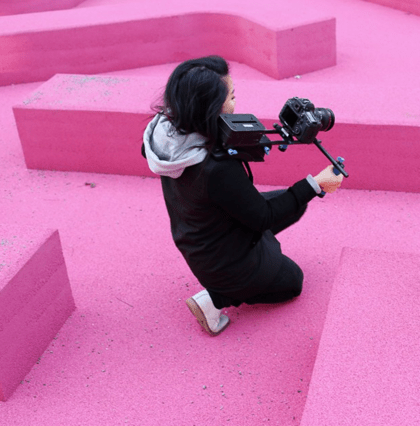
Rosanna Peng
Rosanna Peng shot by Jennifer Cheng


As a lead videographer for MTV FORA, a hip daily blog from MTV Canada and Clean and Clear that covers fashion, beauty, lifestyle and the best of MTV, Peng created a diverse range of videos focusing on everything from fashion and beauty tips to giving viewers a behind the scenes look at photo shoots.

“I enjoyed the freedom the FORA team gave me. They really trusted my creative vision and gave me the opportunity to expand their potential on their youtube channel,” says Peng.

Thanks to her ability to create edgy visual stories that appealed to MTV FORA’s predominantly female millennial audience, the quirky and upbeat videos garnered thousands of views on the popular blog, as well as their YouTube channel. Accompanied by short blog posts, the videos she created, such as Becoming FKA Liz 101, #WCW: Phoebe Dykstra and Audrey Kitching and Natural Beauty DIY: Pumpkin Facial, add a fun and youthful flare to the FORA site that effortlessly keeps viewers engaged while telling interesting stories.


Peng says, “During shooting and editing, I would capture funny and offbeat moments that would make the video more unique. I was able to draw from my graphic design background and edit each video to pair with the accompanying article’s look and feel. The unique combination of design with videography is the merge of my previous experiences as a graphic design student and a videographer.”

For the 30 Shades Of Lips with Liz Trinnear video Peng shot model Liz Trinnear in 30 different shades of lipstick from makeup brand Obsessive Compulsive Cosmetics. While the idea of watching someone try on 30 shades of lipstick might not sound all that interesting, Peng’s shots of Trinnear doing silly poses in each shade combined with her edits and the music she chose made the video incredibly fun and engaging.


She explains, “I laid out the video timeline for every shade and paced the video so the pacing would go from, in regards to Liz’s poses. This spaces out the video and makes it engaging to watch as it has a pulse to it as well.”

One of the aspects of Peng’s talent that makes her such a rare and impactful videographer is her tremendous editing skill. From the New Balance videos to those for MTV FORA, it’s easy to see the way her edits affect the mood and style of the visual story being told. While her cuts on the New Balance videos are virtually invisible and the shot transitions flow seamlessly creating an almost visceral romanticized feeling, those for MTV FORA are the polar opposite. Her inclusion of bold and brightly colored graphics and the often abrupt and in your face nature of the cuts creates an energizing feeling that perfectly supports the cutting edge style of the MTV FORA brand.

“Video editing is more than just telling a story, it’s using certain footage to make a viewer feel a certain way,” explains Peng. “Anyone can point a camera and start capturing footage, but being able to communicate an idea through video editing is a certain skill not many people possess.”  

In a world where people are bombarded by so much content day in and day out, it takes a videographer with more than just technical skill to cut through the fat and actually touch viewers. It requires someone who is able to tap in and drive home an emotion that resonates with audiences, and Rosanna Peng is definitely ahead of the pack on all fronts.