Category Archives: International Creative Talents

BIRDMAN BRINGS SCIENCE FICTION TO REALITY

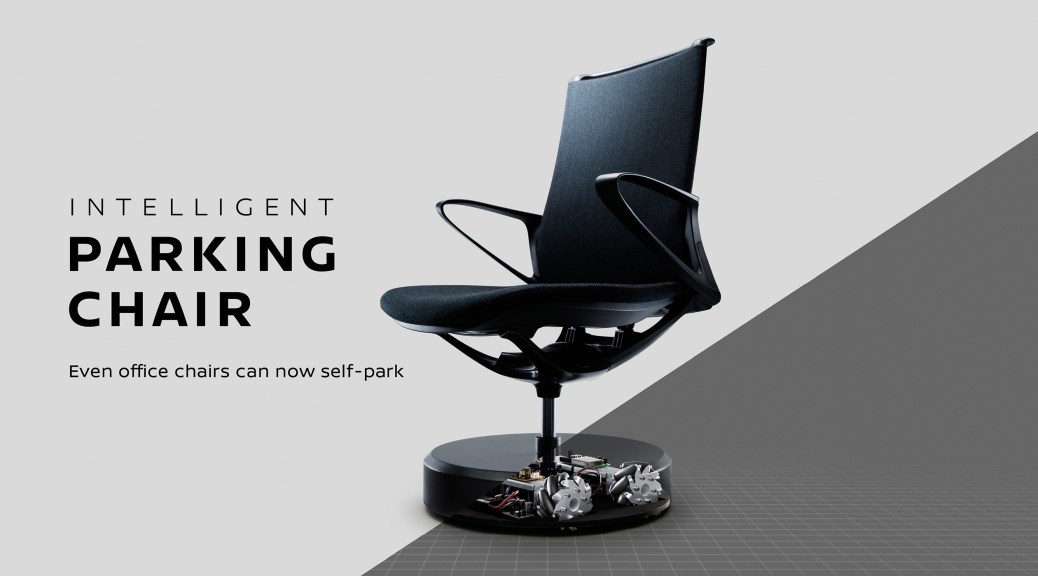
Akane Inada Millar loves electronic gadgets. Honestly, who doesn’t? While there might be a few who don’t embrace the constantly evolving change which electronics bring to everyday life, most of us are waiting with baited breath for the newest and most innovative of these products. Luckily for Millar, she is ahead of the curve. As a member of the interactive design agency Birdman (based in Japan), Akane is part of a creative team that is at the forefront of promotional campaigns presenting a variety of products to the public. The core of Birdman’s approach is the use of technology to interact with the public in ways never before seen. Virtual car races, running against your own life-size avatar in an LED stadium, and many other innovative campaigns have resulted in Birdman’s notoriety as one of the most successful and forward thinking companies in the world. Akane and her Birdman team members have received more than 200 international awards for their work including: the Grand Prix at Spikes Asia, Silver at Cannes Lions, Gold at Adfest, Grand Prix at Code Awards, and countless others. Birdman approaches each project as no other. While many are fixated only on metrics, Birdman appears to sometimes create presentations simply to prove that they are possible. One distinct example of this is the Nissan Intelligent Parking Chair production. This campaign literally appears to be inspired by the Jetsons cartoon and makes viewers feel as if we have reached the space-age future. It was recognized at the Cannes Lions 2016 “PROMO&ACTIVATION” with the Bronze Award as well as the Code Award 2016 “Jury’s Special Award.” Upon viewing the seemingly aware and self-mobile chairs in this presentation, one feels that the title of Visual Producer is a very accurate interpretation of Millar’s skills.

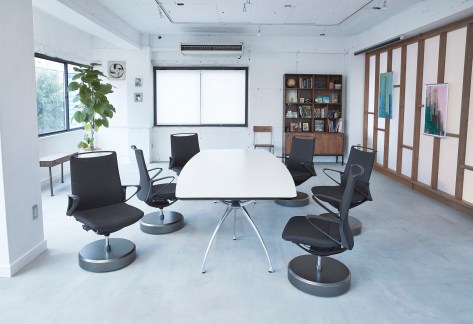
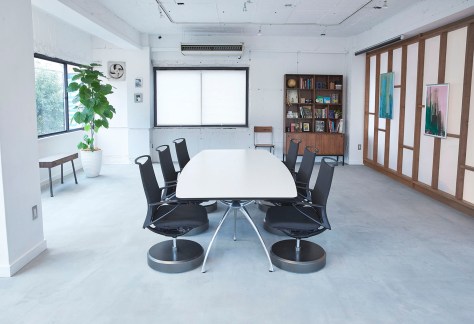
Millar views modern electronic gadgetry as another form of fashion; that’s a unique perspective to say the least. This perspective serves to further reinforce Akane’s positive contributions at Birdman. She embraces both the “techy” excitement and discerning aesthetic approach to the companies many presentations. For the “Nissan Intelligent Parking Chair” production, visuals were of the utmost importance to communicate the impact of this technology. Nissan wanted to exhibit the auto-park technology in a unique and outstanding way. The team at Birdman used the “Intelligent Parking Assist” function as a way of tidying workspace from its unused rolling chairs. With a simple clap of one’s hands, unused chairs would leave an untidy environment and go back to their “parking space.” This demonstrated the ability of using the technology in a very familiar scene, making it both approachable and practical. The system organized the parking movement of the chairs by using the automatic steering device included in each wheel; allowing them to roll by themselves and make a full rotation of 360°. Motion capture cameras monitored the spacial information from the room’s four angles, transmitting a “top view” of the room and wirelessly creating a system that moved the chairs to the previously decided “parking space.” Birdman joined the project from the planning stage and was in charge of the chair development and realization as well as the demonstration display. Upon viewing the presentation Takahiro Hosoda (Creative Director for Nissan Intelligent Parking Chair) commented, “Arthur C. Clarke once said, ‘Any sufficiently advanced technology is indistinguishable from magic.’ To me, Birdman is a team of sorcerers.

They take my out-of-this-world imaginations seriously and bring them to real life. The intelligent Parking Chairs could not have been built with such durability without the Birdman team. Because of them, we can challenge ideas with higher hurdles. I am excited to see what magic they will come up with next.”
160713195042_4

160713195042_5

Birdman’s “thinking outside the box” approach applies to hiring the professionals who make up their team as well as their promotions. While Millar is known for her successful career in fashion before joining Birdman, her talent and perspective have added many components that have strengthened this Japanese company. Roy Tsukiji of Birdman confirms, “As founder, CEO, and creative director of Birdman, it is essential for me to find professionals who are not only creative and forward thinking but those who also add something unique to our team. Birdman strives to always be at the forefront of promotion and brand awareness for our clients. To enlist team members who are any less than the most elite in the industry would weaken us and is therefore unthinkable. Akane Inada meets this criterion in every way. Akane came to us after an already successful career in the fashion industry. That might seem like an odd fit for a company such as Birdman which focuses on such an intensive use of technology; but this is exactly what makes Akane so valuable to us. She understands the changing avenues of promotion and brings her own unique perspective that has served to strengthen our company. As a leading creative force behind promotions such as the Nike Unlimited Stadium, Nissan Intelligent Chair, and Shiseido Red, Akane’s ideas and implementation of these ideas were essential to their creation and success. I can directly attribute the overwhelming success of these brand awareness campaigns to Ms. Inada’s talent and vision. Her achievements at Birdman speak for themselves. Birdman has become so successful that we are now opening an office in New York City and Akane’s mastery of the English language is just another example of how she continually adds to the strength of our company. The possibility of having Ms. Inada be a leading force in our New York location would be of great benefit to both Birdman and the clients in the US that we would serve.”

Akane’s connection to New York is just another example of the positive attributes which she brings to Birdman. Birdman’s entrée into the international market is almost unthinkable without Millar’s involvement. Akane was originally born in Osaka, and moved to Scarsdale, NY with her family when she was only three. She recalls, “Back when I was living in NY there were quite a few Japanese expats living in our neighbor. I went to the local public school and all the Japanese kids tend to gather up but I wanted to play with different group of kids. I spoke Japanese at home but when I was at school I spoke English and hung out with kids with different backgrounds.” Her exemplary talent and ease with both languages and cultures makes Millar the keystone for Birdman’s success as a member of the New York City promotional industry. Contemplating her position as a Visual Producer for Birdman’s NYC office Akane comments, “I think it is necessary to have the experience of actually moving your hands to create something. I admire Visual Producers who not only know about the design but also have knowledge in the technical part. I feel people have more respect for producers and directors who have been in their shoes. When I first came to Birdman it was because I wanted to widen my view of promotion. I had no idea that it would affect me so profoundly. I am so thankful that they want me to have to opportunity to use my expertise to help them with this new growth potential for Birdman. Every time I am stopped in another country by someone who knows Birdman and their innovative promotions, it’s a reminder that I made the right decision.”


 

Taiwanese Filmmaker Diana Chao Directs Visually Stunning Content for Innovative Subjects and Product

The renowned filmmaker Diana Chao has been reaching audiences worldwide through her directorial work for several years. Her past experience spans commercial work, short films, and even features, a few of her most celebrated titles including The Restoration, which Chao both wrote and directed, the informative short film PSA titled Violence in the Closet, and the US-China collaboration, Finding Mr. Right. As a result of her past achievements, Chao was asked to direct two key projects over the past year: an upcoming short film titled Match, and a hit promo video for an innovated product called Emora, both of which have been great successes.

After watching Chao’s first independent short The Restoration, Domingos Antonio, the producer and actor of Match, insisted she direct his forthcoming short. Chao had been referred to Antonio by Brazilian director Alexandre Peralta prior at a film festival.

“Match is a story about the apathy and the emptiness of the virtual relationships through smartphone dating apps,” Chao explained. Initially, because of her strong aversion to dating apps and websites, Chao found it humorous that she was hired as the director of the project. In order to understand the world her characters lived in and accurately depict their loneliness, Chao had to dive deep into the world of online dating and do her research via friends who regularly use various dating apps.

match_01
Diana Chao working on Match

“I didn’t end up enrolling in any dating apps myself,” Chao said. “Some close friends of mine had been using different dating apps (Match, OKCupid, Tinder, etc.) and through them (both male and female users) I got to know the differences between the ways in which these apps functioned and how they targeted different markets. My roommate back then was planning to start online dating, so we went step-by-step through creating her a profile, held discussions involving what types of people would be attracted to certain types of photos and profile descriptions, and then tested our choices and analyzed our results.”

Chao chose to focus on Tinder the most, as the app model created for Match closely resembled the real-life dating app.

Fellow director and 1st AD, Jing Ning, who’s directed commercials for Mercedes Benz, BMW, Audi, and Volkswagen, worked closely with Chao as the 1st AD on both Match and Emora, thus receiving a good impression of her worth ethic in both short film and commercial capacities.

“Chao has a keen insight and fine sentiment,” Ning said of her coworker’s talents. “You can see those qualities in every film that she’s ever done. She created a dark and romantic tone for Match that gave the film a unique and artistic feeling. She brought out our actors’ deepest feelings to tell a story without dialogue, which exemplifies her solid directing skills.”

Match was completed in 2016 and is currently hitting the film festival circuit, including the 2017 CineGlobe International Film Festival at CERN in Switzerland, the 2016 Port Douglas Film Festival in Australia, and the 2016 Los Angeles Brazilian Film Festival in both the United States and Brazil.

Last spring, Chao completed directing the exciting commercial for Emora, a new product created by Innovart, a team of young Taiwanese inventors in the United States. In short, Emora is a smart accessory designed as a bracelet that allows one to express themselves and connect with people via color. This customizable bracelet allows one to show their style and mood by fine-tuning its colors and brightness with elegant gestures, and also has a pulsating light which fades in and out with one’s heartbeat.

Emora_02.jpg
Diana Chao directing Emora

The making of the commercial was comprised of a one-day shoot at a standing set at 2010 Studios in Gardenia, California. According to Chao, the amazing Art Department of the shoot was responsible for creating seven different locations within one space – an apartment hallway, bedroom, dressing room, studio, office, bakery, and café – and did so with astounding success. “Besides the prep day prior to the shoot, the Art Department was basically setting up Location B while we were shooting Location A, and striking Location A while we were shooting Location C. The encounter of a design team, which here in this case is the team that designed and created Emora, and our entire production team must involve labor, but I was thrilled by their passion and faith in their product. Without their patience, flexibility and trust on our ability of execution, this video wouldn’t have been possible,” Chao recollected.

John-Scott Horton played the lead male of the Emora commercial, though this wasn’t his first time working with the accomplished Chao. Horton also starred in Diana’s film The Restoration back in 2013.

emora_04
Diana Chao on the set of Emora

“Truthfully, I wouldn’t have done the project [Emora] if I hadn’t been asked by Diana, but I instantly said yes because I was excited to work with her again. She used much of the same crew that worked on The Restoration and I was reminded of how good she is at assembling the team,” said Horton. “Diana is great at delegating, has an eye for aesthetic, is very efficient, and is a very effective leader. Her artistry is suited for major feature films and was not compromised for a smaller project.”

Emora was ranked as number nine in the top 17 products of CES 2017.

The CES is a global consumer electronics and consumer technology trade show that takes place every January in Las Vegas, Nevada.

Winning it’s 9th position on the best 17 products out of all of the products of 2017 shows that Emora is commercialized. With this being the product’s sole commercial, it shows the impact it’s had on showcasing and promoting the product.


For more information on Diana Chao, please visit:
http://www.imdb.com/name/nm6371027/
https://dianachaos.com/

For more information on Match and Emora, please visit:
For MATCHhttps://vimeo.com/184096007
For Emora: https://myemora.com/


Camera operator Mike Heathcote “moves with grace and precision of a dolly” on upcoming series The Handmaid’s Tale

picture2
Michael Heathcote is from Toronto, Ontario

Michael Heathcote is a storyteller. He does not write them, nor does he read them aloud, but his work allows film to come alive. Perhaps this is not as obvious as an actor, but Heathcote’s work as a camera/Steadicam operator allows the stories we watch on the big and small screen to come alive. It is that we don’t know he is there until his name passes by our eyes in the credits that makes him so outstanding.

In his words, Heathcote describes the camera operator as the one who is responsible for physically operating and composing the camera to best tell the story. The camera operator can operate a camera on a dolly, sticks, remotely on a crane, handheld on the shoulder or with a special camera stabilization device called a “Steadicam”. A Steadicam is a specialized tool that takes years to master. The camera operator wears a vest and connects a spring arm that distributes and supports the weight of the camera counterbalanced on a post. With years of experience the camera operator can move the camera smoothly over uneven terrain, up and down stairs or in locations where a dolly track cannot be laid. The camera operator works with the director and cinematographer to help them execute their vision.

“There was just something about looking through the lens of a camera, seeing the action and performance live and being responsible for composing the frame to tell the story that excited me,” said Heathcote.

Heathcote has already had a career many dream of. The Torontonian worked on award-winning films and television series with Hollywood’s biggest stars. This past year alone, he worked on the critically-acclaimed Canadian television show Cardinal, filmed the pilot for the new show Issues, and worked alongside Academy Award winning director Alexander Payne on the upcoming film Downsizing, starring Matt Damon, Kristen Wiig, Christoph Waltz and Bruce Willis. He also filmed the Hulu original series The Handmaid’s Tale, based on the Margaret Atwood classic, that comes out this Spring.

“I feel incredibly lucky and fortunate to have worked on such an amazing TV series as The Handmaid’s Tale. There were so many talented people involved who worked very hard during pre-production, production and post-production as they prepare for the April release. It was an absolute pleasure to work with them. Every day I came to set I was excited and inspired to do my best work,” said Heathcote.

The Handmaid’s Tale is set in a near-future dystopian England, where a woman named Offred is forced to live as a concubine under a fundamentalist theocratic dictatorship. The director, Reed Morano, wanted the audience to experience the story through the lead character of Offred as though they were right there with her, experiencing and seeing things as she did. To achieve this look and feel, Heathcote would use either handheld or Steadicam very close to the actors.

“As a Director of Photography that has always acted as my own camera operator and someone who has a very particular taste when it comes to composition and framing to capture emotion and light, I had never been impressed with anyone operating for me, much less satisfied. That was until I worked with Mike Heathcote on the series I directed, The Handmaid’s Tale. Not only was I pleased with Mike’s interpretation of the visual language I had set up in the show, but his talent blew me away.  Mike, as a Steadicam operator, moves with the grace and precision of a dolly,” said Morano. “You never feel that the shot is a Steadicam shot.  You’re never aware of the camera- which to me is the sign of an amazing Steadicam move.  It’s the mark of an incredible operator.  Not only that, Mike’s skills as a handheld operator went far beyond my expectations. Operating handheld takes a certain level of intuition that cannot be taught.  You either have ‘it’ or you don’t. Mike has it. The camera was always where I wanted it to be, always elegantly framed.  And there is no greater compliment I can give. I feel so lucky to have found him.”

In addition to working with Morano, Heathcote worked closely with the cinematographer, Colin Watkinson. Morano and Watkinson recognized Heathcote’s talents early on, and encouraged him to express any ideas he had, and gave him the freedom to explore a shot.

The Handmaid’s Tale was one of the most creatively rewarding projects I have had the pleasure to work on,” described Heathcote. “We went against conventional TV framing and were trying to do something different with this project. I really enjoyed trying to find new and interesting compositions that helped tell the story. Every day I was excited to get up for work.”

Watkinson truly believes that choosing Heathcote as a Steadicam operator was one of the best decisions that they made, and his work contributed to the overall success of the series.

“Not only has he maintained a truly professional attitude throughout production, but Mike also delivered Steadicam shots of the highest quality. He has executed perfectly each director’s needs, maintained our style for the show and continues to add his own flair to raise each shot to a beautiful level. It has been an absolute honor and a pleasure to work next to someone who cares so much about his craft and at the same time showing an interest in the project, which makes him a complete team player. High praise indeed yet entirely out of merit,” said Watkinson.

It is without a doubt that with Heathcote’s talent and determination, his work will continue to impress both those who he works with, and audiences that see what he is capable of.

The Handmaid’s Tale premieres Wednesday April 26th, on Hulu. Check out the trailer here.

Alexandre Cornet inspires future artists with TLS Advertising Campaign

img_3090
Artist Alexandre Cornet 

Growing up in Paris, France, Alexandre Cornet loved drawing. As a child, he would read comics and watch cartoons, fascinated by the illustrations. At the age of 11, childhood drawings transformed into graffiti, and while living by an abandoned train station, he would watch people paint words in colors. This keen interest at such a young age meant there was only one thing for him to do with his life, and Cornet became an internationally recognized artist.

Cornet’s reputation as a visual artist, designer, and art director had led to a lot of success in his career. He has had his own exhibitions, as well as worked with large companies to help define the visual aspect of their brand. Currently, Cornet resides in Lima, Peru, and while working with on the advertising campaign for the Toulouse Lautrec Institute for Design (TLS), the entire city was able to see his artwork.

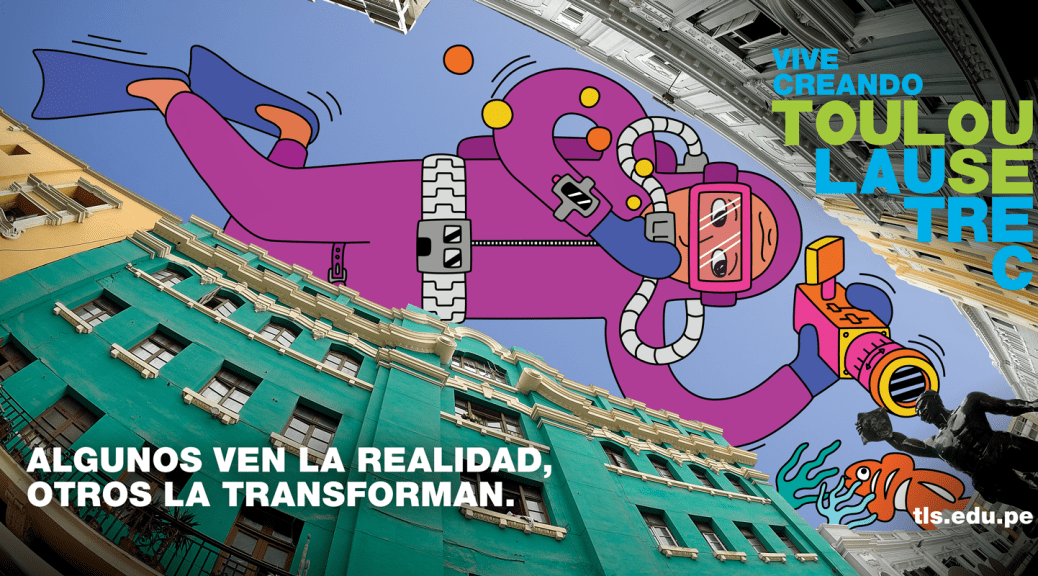
The concept of the campaign was the promotion of creativity, and that is why I wanted to work on it,” said Cornet. “It feels like an honour to have had my work displayed everywhere around town and that the campaign was a success and that it served to bring more people towards a creative career.”

As an artist, promoting creativity and encouraging others to attend to school and follow in Cornet’s footsteps was important to him. This idea motivated him from the beginning, and the creative area of the university’s marketing department was already a fan of Cornet’s work. They wanted him to incorporate his drawings into the skies of wide angle photographs that they had taken previously.

“I liked to be able to intervene photography and to create artwork of massive impact, some panels were about 14 meters wide placed at key intersections in the city,” he said.

To accomplish this vision, Cornet created digital illustrations featuring single characters, doing one action in particular for its easy understanding. He mainly used the color palette from the brand identity guidelines, and respected their rules for the design and layout of the branding and copy. He used an easy urban style with black outlines for easy impact and to connect with the primary target of the campaign; young adults who just finished high school and have some interest into a creative career.

“The panels had to stand out, be seen and understood in the glimpse of an eye at high traffic spots. I had to simplify and focus on the idea they had to transmit. Using colors and shapes in the best manner to fit and contrast with the photographs and the copy,” described Cornet. “I also had to complete the artwork in a record timeline, being the first time the marketing department was acting as its own advertising agency they kept trying different ideas and options.”

This ended up being easy for Cornet to overcome, as he worked director with Jean Paul Du Bois, the chief of marketing, acting as a creative director, and Lorena Solari, the sales manager. Du Bois had previously worked with Cornet, and knew he would capture the essence of the university and bring his own creative aspect to the campaign.

“I had worked with Alex before on two short films that were directed by me. His art contribution and compromise involve high quality standards that were fundamental to achieve a good finishing and to be recognized by the Peruvian Culture Ministry and other festivals around the world,” said Du Bois. “As the Head of Marketing of the Toulouse Lautrec Institute of Design, I hired him to illustrate the advertisement campaign “Some People See Reality, Others Change It,” which needed an unusual point of view, and Alex helped us to reach the pieces with high visual impact. It’s always been stimulating, at the moment of the brainstorming interesting points of view appear. His creative contribution and compromise to get quality on what he does makes him a trustworthy person on any job.”

Cornet previously worked on other campaigns for the college. In the middle of 2015, the Toulouse Lautrec Institute of Design produced the social media campaign “Career” to promote the careers that the Institute had. Cornet made a series of illustrations on digital collage through the Digital Agency Performance Group. He also designed posts of each Institute’s career for a new Instagram campaign, with great success.

As if coming full circle, it is without a doubt that Cornet’s artwork continues to inspire the next generation of artists to study and live their dream.

COELHO CREATES MAGIC BEHIND THE LENS

The film You Cast a Spell On Me is about relationships and magic. Movie magic gives us the escapism and captivating storytelling that we all desire. This magic doesn’t happen without the relationships and communication amongst the creative professionals who produce them for our enjoyment. Director of Photography Johanna Coelho’s job title may imply that she is solely focused on imagery but one of the keys to her success is the emphasis she places on communication in filmmaking. No matter what vocation you are involved in, communication may be the most important factor to success. Johanna’s shrewd understanding of this fact and the benevolent manner in which she utilizes it has made her a much sought after DP in the film industry. As a fluent English speaker who was raised on the outskirts of Paris, Coelho has a heightened awareness of the subtleties of communication and how different individuals receive and interpret information. Of course, being from France makes her very aware of romance; which made her the ideal DP for this production. Talent, communication, and a connection with the story being told were the components of the magic that she created for You Cast a Spell On Me.

It’s an obvious statement but, anyone who speaks more than one language has spent a greater amount of time dissecting and contemplating communication. It creates a deeper understanding of your own intentions as well as those of others. Life can be easier or more difficult based on the level of communication. The success of many films are based on the abilities of its creators to establish a rapport with the audience as well as to accurately depict the vision of the film. Fantasy films like You Cast a Spell On Me require someone like Johanna and Tosca Musk (director/producer) who can manifest visuals that don’t exist in our actual world. Speaking about Coelho’s work on the film, Musk declares, “Johanna’s cinematography work on this film was extremely impressive. She lead a full crew in an enjoyable environment and created visuals that were really uplifting to the story. There were also a lot of magic tricks happening in the story, and in collaboration with the art department, she brought these magic effects to life. Almost everything was done practically and it looks amazing; like real magic! She is a pleasure to work with. She was fully committed to the project and the vision I had as a Director. Johanna also was very mindful of the work of other departments, giving them their space when needed but also collaborating with everyone to have a smooth and organized shoot.”

You Cast a Spell On Me is a romance/fantasy film about a young and handsome warlock named Matt. His power is that he can charm women into finding him irresistible, literally. As one can expect, a young man with this power is apprehensive to settle down with one woman. This journey Matt takes towards finding his soulmate and depicts him losing his powers, others gaining powers, and the conflict and happy endings that one finds in romance films. Due to the nature of Matt’s character, many production departments were required to understand and work together to help create the visual “trickery” to produce the action in this film. The responsibilities of the Director of Photography can vary depending on the personality of a director. Some directors like to have a full control of the creative visuals. They have a very specific idea in mind and have a precise shot list with lighting references they want reproduced for the film. Other directors do not really want to (or know how to) deal with the visual part. They just want to focus on the actors. When similar minds meet…Coelho explains, “Sometimes you have a director in the middle of the two previous options, one that will want to share the creative approach with you. It’s a really fun process when this happens because the two of you have imaginative brains talking together about shots and exchanging visual references to find what would be the best for the story. Tosca Musk is that Director, and it was amazing to prep this film with her because we would really support each other in the process. One idea would lead to another idea and so on, giving life to ideas that might have never existed with only one person brainstorming. We were also both very open minded about each other’s input and this really helped the process.”

This template trickled down through Johanna’s ten-person camera crew. This DP makes sure to involve them in the pre-production process (especially the Gaffer and Key Grip) to keep everyone aware of the plan and prepare for lighting, etc. Johanna understands that a happy and respected crew of professionals are more motivated to work and share in a vison than those who are merely “punching the clock”, a mindset we can all relate to and understand. Perhaps one of the most overlooked parts of communicating on set is with one’s self. Coelho reveals, “It is hard to stop for a second, and really look at the frame and lighting and be sure it’s the right setup. Focusing on one thing at a time is very important. If you do everything in order, your job will go much faster. You can switch back and forth between things quickly but each thing needs to be given its own respectful moment. It is also really important to know the blocking of the scene, because you don’t want to start lighting and discover in the middle of a take that your light is in the wrong place for your actor. So following the steps is key. It’s true that with everything going on at the same time, you can get lost in your own thoughts. It happened on one of my early student movies in 2011 at AFI and I was really angry at myself for having lost my point of view on the film. A teacher who watched it pointed this out to me and told me that when he would get confused on set, he would step out into the bathroom, turn the lights off so his eyes wouldn’t get distracted, take a deep breath, and remember what the movie should be for two minutes. Then he would come back on set fresh and clear minded. This is probably one of the best pieces of advice I have ever received. I don’t go hide in the restrooms, but I do step outside into an empty corner where no one is talking to me and take a deep breath and think for two minutes. When I come back on set everything is fine and back in place in my mind.”

While those of us in the audience are blissfully unaware of all the moving parts behind the scenes of the shows and films which entertain us, the talented professionals creating them are always thinking of us and our subconscious desire to not be taken out of the film. None of that would be possible with the oversight of someone like Johanna Coelho. You Cast a Spell On Me was filmed in a staggering fourteen days; an incredible achievement for such a high quality production. This is only possible with someone such as Coelho who is planning out and paying attention to every possible time saving opportunity. Whether communicating with the AD to prep things while waiting for the actors, or planning the lighting so that the post production process runs more smoothly (Johanna states, “Colorist are key and they should have much more recognition as they’re always saving your back and make your work look better. I was happy I could assist in ways that helped the colorist. We would discuss it together for each shot.”).

It’s an obvious statement that every DP needs talent and the eye to find the images which the director needs. There are so many professionals in the world, it is those like Johanna Coelho whose ability to create a positive and efficient environment for filmmakers the set her above the rest.

ok8a1108-copy

Andrew Searles is seriously funny in upcoming film Cereal Killer

While growing up in Montreal, Andrew Searles always knew he wanted to perform. As a child, he would watch Star Trek: The Next Generation and be captivated not only by the special effects and storyline that made the show what it was, but the performances of the actors. He watched every episode he could, studying how the show was made, fascinating him even more. When was watching other movies and shows, recognizing actors but seeing them play different characters, he was enchanted. He knew that he had to follow in the same footsteps. And he has, Searles is an incredibly versatile actor, just like those whom he idolized as a child.

While also being an established stand-up comedian, Searles is of course capable to deliver a comedic scene. He understands improvisation, and exactly how to deliver a joke that will leave the audience in stiches. However, it is his more serious side of acting that leaves audiences bewitched. He really can do it all.

“I like the aspect of portraying somebody else who isn’t me,” said Searles. “Taking on a new persona, a new identity, embodying their traits and creating an entirely new person, or taking on the personality of whomever I’m supposed to be portraying.”

Searles flexibility as an actor is exemplified further in the upcoming film Cereal Killer, written and directed by Fabrice Barthelemy. Cereal Killer is a comedy that follows Jimmy, a young man who loves eating his cereal. However, things take a turn for the worst when someone in his neighborhood keeps breaking into his apartment and eating his cereal. Jimmy, along with his best friend, Sean, team up to begin an investigation of who keeps eating Jimmy’s cereal. Searles plays Gus, the antagonist in the film. Gus is a very mild mannered, quiet, reserved, caretaker of an apartment building. He often says inappropriate things without realizing he said them. When Jimmy is searching for whomever has been breaking into his apartment and eating his cereal, it eventually turns out Gus was the culprit the whole time.

“Portraying a character like Gus allowed me to ‘get my hands dirty’. I wanted Gus to be a very dark, twisted, soulless type of character. I wanted to use this opportunity to break away from being a ‘comedic’ actor in a sense, and shine as someone playing a character who is disturbed. Even though Gus’s lines would still be comedic in nature, I figured his lines would come off even funnier if they were delivered in a dark, morbid tone, rather than from a goofy, comedic character,” said Searles.

Gus was not originally intended to be a dark character, but it was Searles’ intuition that brought the character to life, and the twist added even more humor to the film.

“I created his personality and traits and integrated them into the film. I also learned how to embody a very serious, dark character, darker than I’ve ever played on camera. I learned how to keep the balance of playing a very serious somber character while playing with the comedic lines and aspects of the film. I wanted to be dark enough so the darkness of his character shined through, and the audience felt that, but not too much where the comedy aspect of the film is off balance,” he explained.

And does his technique ever work. In a pivotal scene in the film, when Gus is being confronted for being the cereal thief, he is extremely serious, as if confessing to an actual murder. He even puts his hands up to be handcuffed after his confession, as if he committed a large crime, but he is just being told he is fired.

“Fabrice originally intended the role to be a fun, goofy, type of character, but wanting to play something different than just a type casted comedic role, I played it my way at the table read and Fabrice lost his mind and hollered at how much he loved my angle on Gus. He was so ecstatic and in awe because he never envisioned his character to be that dark, and it’s his dark humor and awkwardness that made Gus even better on screen. I figured that if funny lines from a funny character are expected and normal, then funny lines from an unfunny and dark character would be even funnier, because it’s not what the audience would be expecting,” said Searles.

Although Searles went in to read for the character of Gus, he was actually approached and asked to play the part without an audition. The Assistant Director and Assistant Writer of the film, Sara Sommers, knew that Searles possessed extraordinary acting capabilities that would make the film even better.

“Andrew is an extremely driven and talented individual. During filming, he displayed his incredible acting and comedic talents. There is no doubt in my mind that he was the correct person for the role. No one else could bring this character to life the way Andrew did. His portrayal was done magnificently and effortlessly and I am sure that he will bring these attributes to all his future roles. Andrew is the type of talent that we do not meet on a day to day basis. He is unique, one of a kind and truly remarkable. He is the type of actor that not only would directors and producers love to work with, but also will be loved by audience members as they will be struck by his presence. I would work with Andrew on a future project in a heartbeat. He truly is a talent to look out for,” said Sommers.

Cereal Killer is expected to be released later this year.

ASHLEY-GIANNA HALLETT: CREATIVELY USING TECHNOLOGY IN THE FASHION WORLD

The way in which we conduct business, just as with our social lives’, has changed dramatically in the past decade. In fact, less than a decade. Cyber Monday is a term that everyone understands. While there are many examples of how technology can be cumbersome, the consumer experience is one which has become much less difficult. Online marketing and shopping was in its early stages in 2009 when Ashley-Gianna Hallett was working at Burberry in London during their entrée into the online world. As a lead force in Burberry’s approach to their website and virtual shopping, Hallett was an important part of enabling fans of this iconic British luxury fashion house with access to ready to wear items while still retaining the signature style for which it has become known. Much of the world approached online shopping with trepidation in these early days but Ashley dove in headfirst with a confidence that resonated with the company and the variety of professionals she worked with, resulting in the successful online shopping presence Burberry has to this day. As during her time with Elite Model Management London (as Talent Manager and Women’s Model Booker), Hallett has always proven that her forward thinking and love of fashion are a union which serves to make each half better.

It’s always a good idea to treat others well because you never know what the future will bring. Ashley has become a force in the London fashion world these days but just a decade ago she was still studying at university. She was just a girl from a big family in South East London who loved the Arts and Fashion. At twenty-one, while finishing up her studies, she began working as a temp Assistant in the showroom of Burberry HQ. She was quickly recognized and would soon join Burberry as a member of the Digital Commerce team. This was a fairly new venture at the time, one which differs greatly from means of the past. Comparing print media and ecommerce, Ashley relates, “E-commerce and print media are different. Print tends to be advertising/advertorial whereas e-commerce is the selling of individual products with detail shots to follow- the customer can directly purchase a product. E-commerce can fit into website advertising via a landing page. A landing page on a website is also like a small scale campaign that focuses on a feel, a look, a story, a collaboration of models wearing several looks from that particular collection. It all depends on the context of the image that is used and where it sits on the website. On most occasions, imagery used for print media will also be used for the site but would can also have a ‘clickable’ feature to purchase individual pieces. These shots would have the same feel although there would be a focal point on each product which is important for the customer. One of the problematic but exciting factors of this avenue is that the aim would be to shoot the collection reflecting the styling of the initial shoot (i.e. Runway show/Advertising campaign). The challenges we faced were reflecting the initial styling whilst also being able to show the customer the product for exactly what it is. An issue that is apparent with all commerce styling from my knowledge and experience of working with several other online brands.”

In creating an online Look book for Burberry, Ashley needed to understand the needs and perspectives of all involved parties from the company through to the production teams and eventually the consumers. This required laying out all aspects and logistics on a granular basis.

The needs and desires of all these groups required a massive amount of preparation, communication, and anticipation. Hallett would meet with the Marketing and Production Design teams to identify the entire collection, breaking down the product lists into Ready-To-Wear and accessories. The collections being shot would be coordinated with the desired models and their schedules. Ashley worked on successful projects/collections such as Prorsum Look Book (2012), ‘Burberry Nude (2011), ‘April Showers(2011), ‘Winter Storm (2010) during her time at Burberry. Coordinating and planning shoots with the studio teams (photographers, stylists, retouchers) while ensuring that the availability of the product, model, and creative teams were all in sync, necessitated that Hallett and her 6-member team were always on top of things and held the Burberry image as paramount. The online shopping presence which Ashley was so instrumental in facilitating during her time at Burberry is the standard of the industry in fashion these days, even though it came into being less than a decade ago. Hallett recalls, “So much has changed in such a short amount of time. When I began at Burberry within the Digital team, some of our processes for shooting were manual. It was a way of being meticulous with the many products housed in the showroom. It was an exciting time as we could develop our own ways of working influenced by the structure and needs of the business. I had a template which was working fine although, as time moved forward and the Digital aspect of the business was rapidly growing, it was only natural for us to refresh our ways of working. I think it was surprising to everyone in the industry how fast things moved. Working closely with styling teams to determine how to shoot from a creative vs e-commerce perspective, model choices for collections, styling guidelines, ensuring we had a faster turnaround of delivering the finished imagery to the website teams…all variables for the normal presentation of products had to evolve quickly. We were growing with the needs of the department and business. Speaking to all teams to ensure we were all aligned with how to produce a slick and seamless structure of shooting key products meant that communication was key and going with a gut decision was most often a necessity.” One of the results that Ashley was proudest of was her oversight of quality control during the re-shoot process. This is often one of the areas which can lead the process to a standstill. Over a two-year period, Ashley was able to minimize the re-shoots by forty percent. Currently considering the further evolution of her career in the Fashion industry, Ashley reveals, “To have a key role in the strategy and brainstorming of creative concepts, to develop an idea and turn a thought and vision into something real and substantial alongside a client, to have creative input into all aspects of a project from the strategy, idea, location, talent, stylist, photographer, budget, retouchers, contractors, set designs…that is a deeper involvement and a lofty goal but I’ve always believed in myself and believed that I could work with other talented and hard working professionals who are committed to greatness as well. Pursuing a career that is creative and in which I am surrounded by creatives, that’s the way I want to look back and see my life.”

ashleygiannahallett5

Art Director Diego Coutinho tackles award-winning film War on Drugo with perfect execution

4
Part of the crew of War on Drugo

They say when you do what you love, you never work a day in your life. Diego “Couts” Coutinho knows this to be true. The art director and motion graphics designer spends every day living his dream, and enjoys everything he does. But what makes his job even more enjoyable is working on projects that he truly believes in. When a film sends an important message and he is part of creating it, there is a sense of purpose that goes far beyond loving what you do.

This is exactly what happened when Coutinho worked on the Brazilian film War on Drugo. Although the film was recognized internationally and received many awards, it was working on something he believed in that was truly special.

“I can honestly say that this movie wouldn’t have been possible without Diego as Art Director/Production Designer. He was my right hand throughout the whole production, responsible for directing the Concept Art Crew while also working as Lead Concept Artist; overseeing the production of puppets and settings to make sure the original visual concept wouldn’t get lost,” said director Gabriel Nóbrega.

Commissioned by the Global Commission on Drug Policy, developed by Almap/BBDO agency and produced by Vetor Zero/Lobo studio, the film was to created to motivate a reflection on the consequences of 40 years of “war on drugs”, and to foster a broader discussion of drug policy reform. War on Drugo is set in a fairytale setting. The movie explains the disastrous war against drugs by telling the story of a dragon banished from an ancient kingdom, and how people who spent time with the dragon were thrown into jail. The visually appealing metaphor uses a simple narrative that is designed to help overcome these barriers and break taboos when it comes to discussing the issue with the public.

“The good work in this project was to create a tool to raise people’s awareness, so they can better understand the issue of drug abuse in the contemporary world,” said Coutinho.

1
Artwork in War on Drugo

Coutinho took on multiple roles to ensure the film’s success. As production designer of the project, he was responsible for pre-production during the beginning stages. He followed storyboarding, creating and developing characters and scenarios. At the same time, he was the lead artist of the team, so beyond the creation of scenarios, characters and special effects, he was required to pay attention to the development of the project, ensuring other artists were consistent with the conceptual proposal of the film.

After the pre-production was finished, he followed the production and preparation of the pieces so that they were faithful to the concepts. In the sequence, he went to work in the post-production, assuming part of the coordination in the final moment. He also worked as a composer, being responsible for the main special effects of the film.

“It is normal not to have the answer to everything, but you must to be prepared to change what is necessary and correct process failures as soon as possible. So, the sooner we make a mistake, the sooner we correct the problem,” said Coutinho.

Despite War on Drugo being an extremely important project, it became Coutinho’s most-awarded project to date. Besides a lot of print and online press coverage, it was acclaimed by many of the most important awards in the field, and went on to win gold at the London International Advertising Awards for Motion Graphics Design, gold in animation at the Cannes Lions 2015, Gold at the IF Design Awards 2015 in Short Animation, and 16 other awards worldwide.

“Couts isn’t just one of the most talented Art Directors I have worked with, he also has integrity in the way he treats the project and the people,” said the animation director of the film, Lee Peffer.

2
Set from War on Drugo

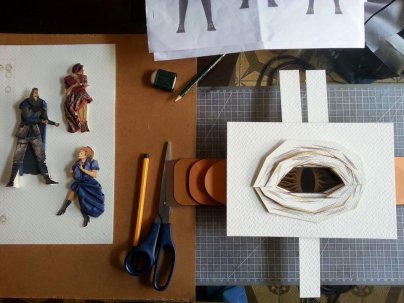
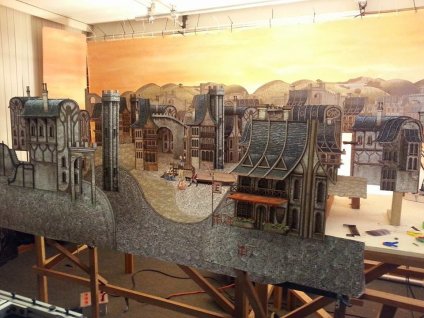
After the success of their previous project, the credits for the Brazilian film Brincante, Coutinho, Nóbrega, and Peffer decided to embark on this project. They knew they worked well together, and therefore used a similar style of artwork for War on Drugo. They used one of the oldest types of animation techniques: stop-motion, using hinged cardboard puppets and miniature sets. Most of the artwork was printed and glued onto pieces of laser-cut MDF, while some settings were hand-painted or created with mixed materials. Coutinho’s team took over 30,000 photographs, and built a total of 13 scenarios and over 300 characters, of which around 80 were animated, meaning they had a structure of articulated joints.

“It was a great time because it was almost like a family, where everyone stopped to talk,” said Coutinho. “We developed the proposal to mix both temporal moments in the film. We can see the logic being applied throughout the film. Early at the beginning of the movie, we see the shot of the king, he’s showed in an American capitol that has a mixed architecture with a castle. The logic also applies to the design of the clothes. In the first scene, you can see two women in medieval clothes walking with shopping bags, as if they were returning from shopping at the mall. The result is a visual of a story of fairytales, but has obvious and direct relationships with today, which helps in having a public identification with the subject, and so we get the opening to about drugs dialogue.”

You can watch the powerful film here.

Dancer Jackson Williams has conquered the United Kingdom


jackson-take-that
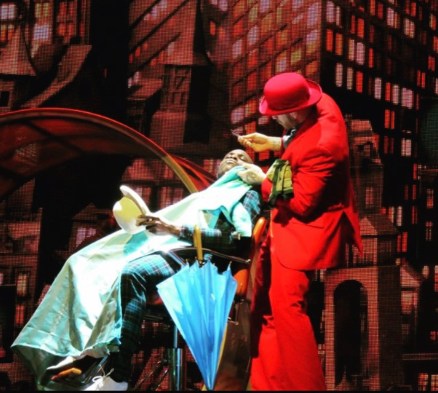
Jackson Williams as a barber during the Take That 3 Tour.

Jackson Williams has already had an extraordinary career. He has toured the world doing what he loves, performed on national television, and worked with those that inspire him. He truly is one of the best dancers in the United Kingdom.

After performing on Simon Cowell’s The X Factor television show, Williams went on tour with the artists around the UK. He journeyed around Europe dancing for Whitney Houston, and went around the Eastern Hemisphere with Kylie Minogue and her Aphrodite Tour. Last year, he travelled all around, performing alongside Ellie Goulding’s Delirium World Tour. But what he says may be the most fun he ever has had on tour was for the celebrated boy band’s Take That 3 Tour.

“They were my favorite boy band growing up. I had posters. I had cassettes. I was young, and I would watch TV and they were in a boxing ring doing break dancing. I remember Take That. They hit the world by storm. They were like The Beatles 2.0. They still pack out stadiums for eight nights,” said Williams. “It was one of the most successful tours that have ever come into the UK. You are on stage with the best, and you can’t complain.”

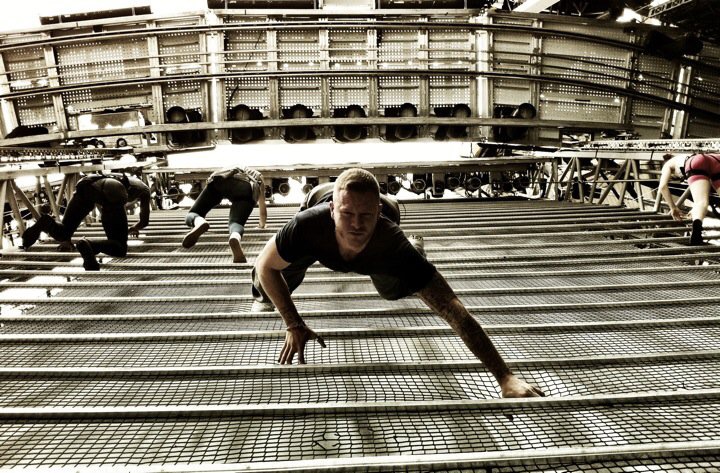
The stadium tour was entirely indoors, and very theatrical. It allowed Williams to not just be a dancer, but a true performer as well. He went from a sea urchin, to a ninja, and then a barber. They incorporated a variety of styles when dancing, including contemporary, break dancing, puppetry, and even judo.

“There is so much to do when you do a show like this. The stage moves in a circle, the B stage goes up and down, it has ramps, the screens are some of the biggest screens you can get. The manpower is like 250 techies. It is the most creative virtual experience. It doesn’t matter if you are a kid or an adult, it is pleasing to the eye. My dad hates stuff like this, but he went and watched the Take That tour and said that was one of the best things he’d ever seen,” said Williams.

take-that-tour
The Take That 3 Tour Stage.

The 3 Tour was Williams’ third time touring with the band. The experience for him is particularly enjoyable because it is always the same people touring. Some of the people on the tour have been with the band for over fifteen years. The creative director and choreographer of the tour, Kim Gavin, has worked with Take That for the last 20 years  and Williams says he has learned more from Gavin than he has with any other choreographer he has worked with.

“Some of the things Kim asks you to do you think is impossible and he wants it to happen, and it does, you adapt. He always pushes you to the limit. He is just a genius. When he tells you stuff, you think it will never happen, and then it comes alive and you are like how did that happen?” said Williams.

Gavin likes pushing Williams to his limits, and describes him as one of the most renowned dancers in the U.K., always in high demand, and says Williams was a critical factor of the success of the tour.

“Jackson backed the group up with extraordinarily skilled and distinct dance moves and incredibly energetic flow that gave the shows explosive energy. He completely stood out among the rest of the dancers as a leader in every routine, and helped the group captivate the masses with an unforgettable concert experience,” said Gavin. “Jackson was always able to pick up on choreography very quickly and was even able to recreate every dancer’s routine in the shows, and would consequentially step in as the replacement of any dancers who were absent and would perfectly execute these routines due to his diverse vocabulary of styles and ability to handle high pressure. He has an incredible audience connection and has shown a unique ability of bringing his own personality to the stage, and this has made Jackson invaluable to the reputation of the shows that keeps fans coming back for more.”

The audience connection is one of Williams’ favorite parts of touring with Take That. The screaming fans that have loved the band for decades create a high when dancing on stage that is contagious, and dancing alongside the same people that he has been for years is like being with a second family.

“I was dancing for the biggest boy band in the country that everyone loves and knows. If there is any tour I would want to do again, it would be with Take That. It is like putting the Piri Piri sauce on. It’s exciting. There is something about it. You never have a dull day. It always feels different,” said Williams. “Sometimes I wish I wasn’t in it; I wish I was out there watching it.”

One of the most unique and exhilarating nights of the tour involved doing a world exclusive in the cinema. There was a night doing a show at the O2 that streamed a live feed to cinemas all over the world.

“You aren’t just doing it for the people in theatre. You are doing it for 30 million people watching at the theatre,” said Williams. “There are cameras everywhere and people running around. You think about the safety of yourself and the band. We have birds flying around the sky with puppets, and we are dodging cables but the audience doesn’t see that, they see these beautiful birds. It was mental. It was hard work, but it was the best.”

Working side by side with his idols since childhood was a surreal experience for Williams. He was part of the choreography, and the band members would ask his opinion on how things should be in the show. Not many get to have their idols turn to them for advice.

“I know all their songs. I couldn’t help but sing along when I was dancing,” he said.

Williams has conquered the dance field in the United Kingdom. There is not much more he can do in his country that he has not already done, which is why he is heading to Vegas to dance in Channing Tatum’s Magic Mike Live after turning down the opportunity to tour once again with Take That’s tour this year. In his words, he is “ticking off the boxes” to a career of perfection.

MAYER BRINGS A BEAUTIFUL SIDE TO “SHUN”

So much of life is about perspective. The way which we view the situation we find ourselves in, the circumstances that surround us, even the interpretation of this by others…all of these things factor into how happy or fulfilled we are at any point in our lives. The 2015 film Shun depicts these factors in the story of two chefs who happen to be father and son. As cinematographer for Shun, Avner Mayer is in charge of so many points of perspective that it’s practically dizzying. Mayer helps the audience (that’s perspective #1) to see things the way that the son (perspective #2) and father (that’s #3) do, by using his (#4) exemplary skills to communicate director/writer Shiyun (Lavi) Hu’s (#5) story. While many might see the cinematographer’s role as sitting at the camera and making sure the action is in focus, they fail to understand the depth of planning and all-seeing overlook of professionals like Mayer. Great cinematographers not only capture the action during filming but they become the eyes of both the production and the audience, coloring the emotional content to heighten what every other aspect of film creation has done, breathing life into the corporal vessel that is film. If that sounds hyperbolic to you, you don’t have experience in the film industry. A smart director understands that a cinematographer will lift a film to new heights or send it all crashing down in spite of its other redeeming qualities. Shun’s director has worked with Avner successfully on two films (the films Beyond and On The River) and it was due to his ability to cultivate depth in a film that she contacted him to be the DP for this production.

Shun is a very emotional movie for a number of reasons. It deals with a conflict between family, work, and self. Kazuki is a fifty-year-old Sushi sous chef and the right hand of his father (Yoshi) in the high-end grip sushi restaurant “Hasimoto”. Kazuki has worked under his father for the past 30 years but they have very different ideologies regarding food and life. Yoshi runs his restaurant with a strict, traditional, and almost sterile approach. He treats his food like a piece of art and believes others should do the same. For Kazuki food is a way to a man’s heart and soul, a tool to connect to people’s emotions. When Yoshi falls ill, he decides to pass the control of the restaurant to his son. Kazuki finds himself trapped between the need to continue his father’s heritage and in his own wishes. The deceptively simple storyline introduces many difficult emotional ideas. Dealing with the ailments and aging of one’s parents, the desire to find your own path in life and career while also desiring the approval of your parents; these are difficulties that many of us can relate to regardless of our country of origin or vocation. The universality of the theme allows everyone to access the filmmaker’s frame of reference but it was Mayer’s role to make it interesting for the audience. It’s obvious that this goal was well attained with Shun as it was an official film selection for such festivals as: Salento international Film festival (2016, Italy), Montreal World Film Festival (2016, Canada), the Toronto Reel Asian international film festival (2016, Canada), and as a finalist in the “Vizio” and “Dolby Vision” Filmmakers Challenge – Cinematography awards – 2016.

The differences between father and son in Shun establish the conflict that Kazuki (and we suspect Yoshi as well) must deal with throughout the film. Kazuki and Yoshi have drastically different approaches and opinions towards food and the process of creating it. Yoshi has an almost surgical, scientific approach to food making. He runs his kitchen like a Swiss clock factory. The work must be done in a precise predetermined order. Improvisation is not allowed. Yoshi’s connection to food is different. Preparing food is instinctual to him, full of flavor and improvisation. For Yoshi, food is a process of connecting with other human beings rather than a planned and organized ritual. To highlight this, Avner explains, “In order to show the differences between the father and son, we used our lights to create different energy. The lighting is clear, blue and bright when Yoshi runs the kitchen. It has an almost ambient/office feeling.  When Kazuki is in charge, the lighting changes to a dimmed yellow-red environment. This creates a much more comfortable and inviting atmosphere; like being at home.”

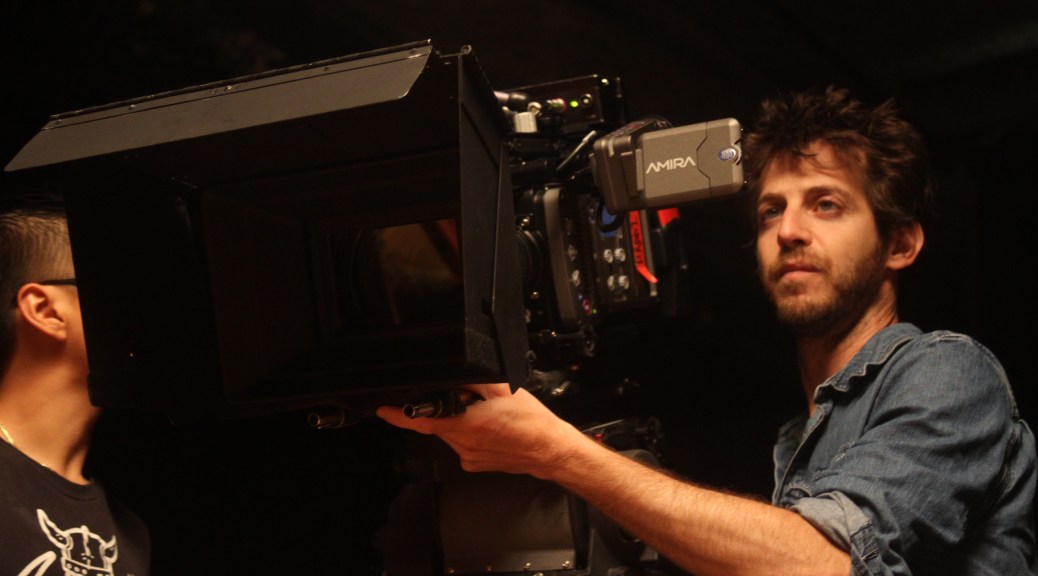
shun-head-shot-with-camera

Mayer also customized the lighting for the lighting for the restaurant location in Shun. The choice to create the restaurant on set rather than a preexisting location gave the production the availability to take the time and movement needed for their shots. Avner chose to use ambient studio lighting from above to again capitalize on the freedom of movement during filming. He notes, “The general approach to the lighting was high key and natural. We didn’t want the movie to feel lit but we still wanted to establish a high key ambience. In order to create this effect, we rigged big top light sources to create a soft, natural light. We aimed for a natural Japanese look and I feel we were very successful in achieving the proper look and feel. Camera wise, we wanted to be patient and static. We decided to tell the story mostly using the blocking and editing (different camera positions) and to keep it as simple as possible. This is the way the characters in Shun see the world so we adopted this approach in telling their story.”

While you can see a great deal of Mayer’s talent and skill as a cinematographer when viewing Shun, you won’t see the largest part of it. Director Shiyun (Lavi) Hu declares, “Avner is very precise in his planning. This was a great benefit to Shun since we shot almost everything in a studio, which limited our shots selection.  Avner’s preparation work with our Production Designer allowed us to maximize the space to our need’s, using lighting built into the design and creating moveable set walls for extra flexibility. I had the pleasure to collaborate with Avner as my cinematographer on previous projects. At this point we have a blind understanding of each other, which makes the filmmaking process fast and efficient.” Shun’s producer, Cedric Gamelin, states, “Usually when you shoot a movie, you have surprises in every step. In this project the process was the smoothest I have ever encountered, I must say that Avner and the team’s preparation work made it seem easy. Avner did all of that without jeopardizing the images, which were magnificent! I’m very proud to be a part of the team who created Shun.” Avner Mayer is happy to be a cinematographer that is appreciated and respected among his peers in the film industry, whether it be for his work on set or the planning of it. He relates, “Since I discovered in my early twenties that I wanted to be a part of filmmaking, to arouse that same excitement that I felt sitting in a theater…I’ve always been excited about all the parts of the process. I feel that the key for a successful project usually lays in the preparation work. It requires a lot of communication between all the key groups involved in order to be synched on one vision. When everybody is synched like that, the set can be a big celebration…and who doesn’t want to be a part of a big celebration!”

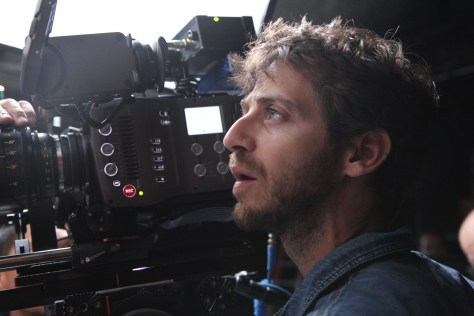
shun-with-director-lavi-hu