Go behind-the-scenes of ‘Pumpkin and Fried Noodle’ with Editor Meibei Liu

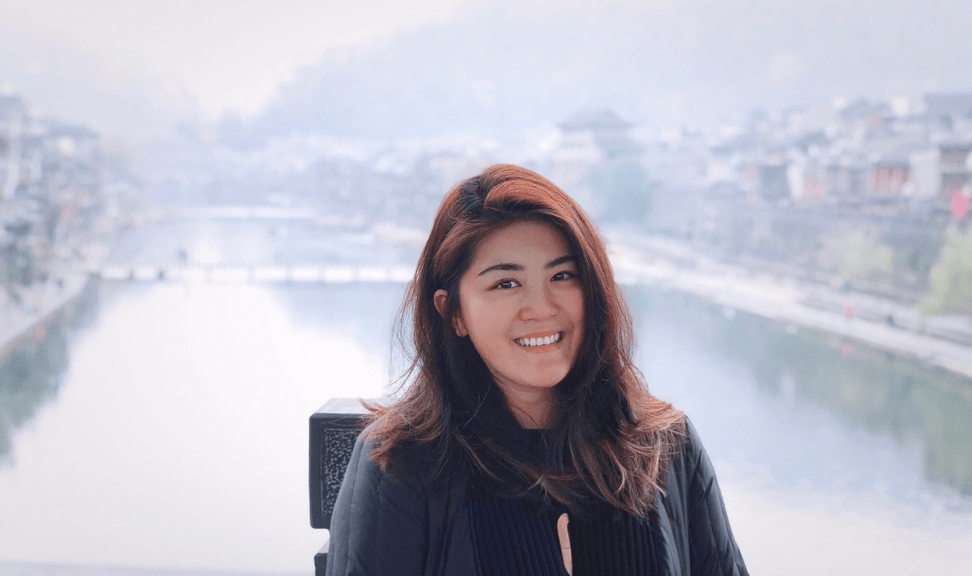
From the time Meibei Liu was a child, growing up in Shanghai, China, she loved watching movies. They would make her laugh, they would make her cry, and spending two hours enjoying a film became her favorite pastime. But being so young she would only take in the entire production, not appreciating the many roles scrolling past in the credits that it took to achieve the movie that just entertained her. However, this all changed when she was a teenager and decided to try making a movie of her own for fun. Despite enjoying films all her life, she knew nothing when it came to actually making one. It was a much harder process than she could have ever imagined, but she found herself constantly playing, pausing, rewinding, and cutting down parts of the film that she had made. She was a natural editor, and it was then when she fell in love with the art of editing. Now, years later, she has never looked back.

“Although the story was as naïve as it could be, the fun of making and editing the film just aroused my huge interest in filmmaking and also changed my life,” she said.

This past year, Liu has seen a lot of success worldwide. Her work on The Ballerina, The Shoemaker, and His Apprentice,Headshot, Dear Mamá, and Faith Need Not Change Her Gown have been celebrated at many international film festivals. Her first taste of such success, however, came back in 2013 when she worked on the documentary Pumpkin and Fried Noodle.

Pumpkin and Fried Noodleis a short documentary shot in Taiwan. It tells the stories of how two different families make their living as an outsider in a small village. Though tough, they still find their ways for inner peace and happiness. The film was selected for the Golden Sugarcane Film Festival, Taiwan’s first film festival where the filmmakers have to shoot and edit on site.

“I really liked that the documentary showed the culture of the village, and documented that beautiful, peaceful and friendly place, which was very different to the culture I was in growing up. It tells stories of outsiders in the villages and shows how they fight to live a better life and struggle to be part of the society over there. It’s also a story about women empowerment, telling how they managed to support the whole family without any help. Making a documentary about them was important because their way of living life and being in a difficult situation needed to be seen by others,” said Liu.

Because of the circumstances of the Golden Sugarcane Film Festival, only a pitch was submitted in hopes of qualifying as one of the ten slots. Once Liu and the rest of her team were selected, they were invited to Taiwan to make the film. During the week, Liu was with other filmmakers finding the subject to shoot and finding structure and stories. This allowed for faster editing, as she was able to spot what would work while filming. Then she finished each day with the editing. On top of this, she conducted interviews each day.

“Going there to make the documentary without knowing whether it will work or not; finding the story during shooting was like an adventure that needed a great sense of filmmaking, which I liked and wanted to be part of,” Liu recalled.

The film exemplifies how important editing is. Liu and the other nine filmmakers on the crew conducted several interviews with over ten different people, but in the editing room, Liu cut that down drastically, only showing two of the subjects that were interviewed. The film focused on their lives in detail, showing their philosophy of living rather than small aspects of many lives. Liu also made the decision of blending the two stories rather than showing one after the other, which helped lead to the warm and touching climax at the end.

“Meibei is very hard working. She edited our entire film within three days. She was very easy to work with, always there in the pre-production, making sure everything was right and very insightful about the story and production. In the post-production, she sacrificed her own personal time, which made the impossible schedule work in the end. Meibei is an editor who is very insightful and creative about creating story structure. She is amazing in terms of editing skills and at the same time, also very sensitive of capturing emotions of characters,” said Song Huang, Director.

Because of the competition, time was limited when making Pumpkin and Fried Noodle, requiring a fast, hardworking and passionate editor like Liu. On top of this, she was able to connect with the two women’s stories in a way that audiences can instantly see when watching the film, making it a true masterpiece.


Aussie Actor Joel Hogan: A Good Judge of Character

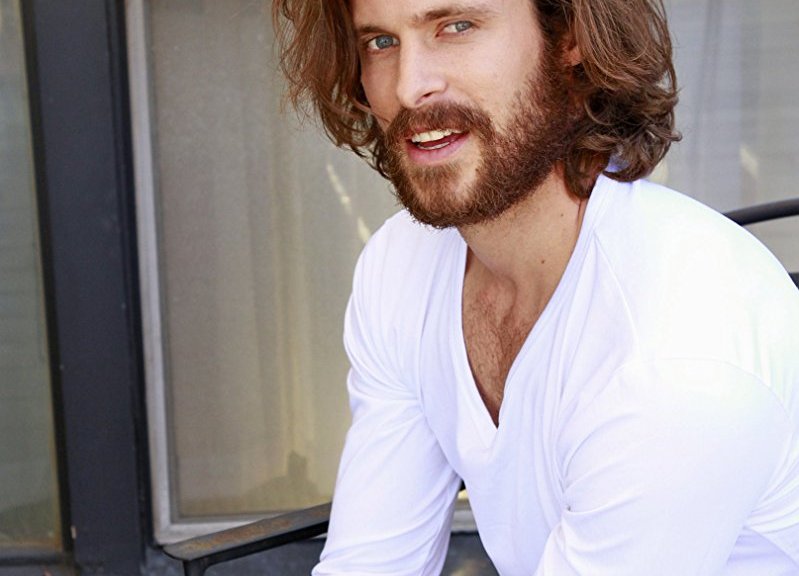
Joel Hogan represents part of the new wave of successful young actors reaching their mark via a variety of platforms and mediums. In the past year alone, the trained thespian has served as an official juror for the Annual Los Angeles Diversity Film Festival (LADFF), and appeared in a lead role in the hit mockumentary series Unverified for Funny Or Die, produced by Will Ferrell, as well as a critical role in long-running Channel Seven hit show, Home and Away.

MV5BMTU4MGRiN2UtNTMwNi00NDQ2LTlkMjMtNTk3OWQ1NDhhZTY0XkEyXkFqcGdeQXVyMjE0MTI4MDM@._V1_
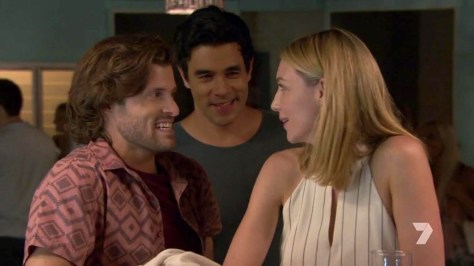
Joel with fellow “Home and Away” stars James Stewart and Tania Dolan.

These accomplishments, all on top of his other leading acting roles around the world, mark what Joel calls “the result of many years of hard work and determination.”

But before we get to that, Joel sits down with us to talk about how his career has reached such awesome heights. “I’ve been extremely blessed.”

After moving to Los Angeles to feature as the lead of innovative filmmaker Marcus Mizelle’s film “Actor for Hire, opposite CSI actor JT Alexander, Joel was invited to attend numerous award ceremonies in celebration of “Actor for Hire’s” success. Additionally, he received an award for his acting work from the Orlando Film Festival for his role in the film. The festivals, which also included the Laugh or Die Comedy Fest, and HollyShorts Film Festival (which qualified the project for Oscar-contention), brought Joel in direct contact with key decision makers in Hollywood.

Screen Shot 2018-04-04 at 10.03.11 am
“Actor for Hire” was profiled right around the world.

“Many people I met along the way were already familiar with my work, so meeting these power players face-to-face I think just gave a more relatable face to my name.” Some of that work with which those power players were familiar include Joel’s leading role in “Dirty Dancing: The Time of your Life,” which brought him worldwide fame to millions of viewers, and the title role in feature “Travis Jenkins.”

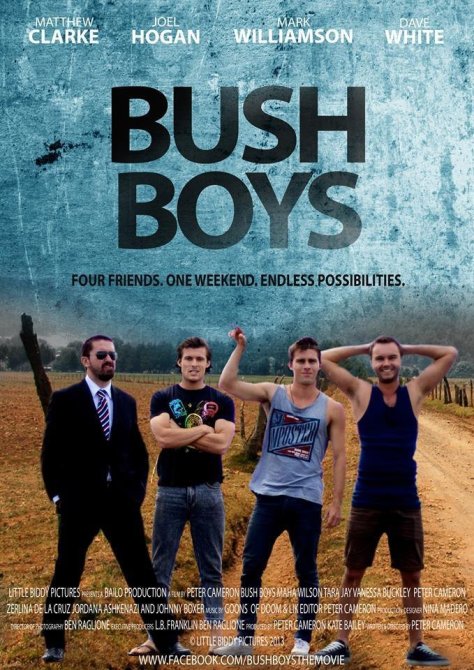
Prior to this, Joel enjoyed starring roles in other Australian films like “Bush Boys.” Since its release “Bush Boys” has been continually screened to audiences worldwide and is well known for selling over 50,000 copies in its first 2 months of release – a significant figure in the Australian entertainment industry. The film’s fan base stems from Mr Hogan’s continued success and high profile in other film productions like Actor for Hire and Home and Away, which screen around the world including the United Kingdom where Home and Away is the highest rated show. 1500 Steps has enjoyed similar levels of extraordinary success, reaching millions of viewers around the world through distribution on Amazon Prime.

MV5BMjE0Mjk5OTIzMV5BMl5BanBnXkFtZTgwODYyMDkxMDE@._V1_
Joel Hogan front and centre, with his co-stars, on the poster for Australia’s “Hangover”, Bush Boys.”
998978_10152886433327841_91645335598331849_n
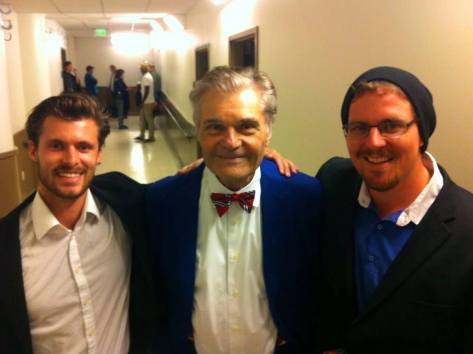
Joel with legendary “Anchorman” actor, Fred Willard, and fellow Australian actor, Myles Forster (“So, You Want to be a Gangster?”) at an event in Hollywood.

Those roles in part attracted the people behind the LADFF, a world-renowned film festival helmed by industry leaders Hollis McLachlan and Sonja Mereu (producer at Flathead Films), to invite Joel to be a judge for their slate of films. Sonja explained that Joel’s vote “specializ[ed] in acting performance and storytelling.”

Joel elaborates on his experience judging at the LADFF. “It was really fun and inspiring – it felt like such an honour to have my opinion about these films valued. One of the films I awarded, For Better, For Worse has gone on to win the Casablanca Award for Best Drama at the Humphrey Bogart Film Festival in Florida, as well as the Audience Choice Award at the DC Shorts film festival.”

Festival founders explained to our editors that judges are appointed based on their accomplishments, and strong standing with respect to a social cause. Joel, they explained, was appointed because of his wealth of acting experience, his position as an extraordinarily successful foreign actor, and his diverse talents across acting, singing and dancing. So well received was Joel’s service, he has since been invited to also judge at the Los Angeles Film Awards, the Actor Awards Los Angeles and Top Shorts, the world’s leading online film festival.

11162034_10153683733802841_2327030812929546261_o copy
Joel Hogan and well-known actor, Paul Michael Draper (“Lucid”, “Lemon Drop”)

But judging films is not entirely what has kept Joel occupied recently. In fact, he’s been busy with a slew of acting and industry projects that have reinforced his position as a trailblazer in entertainment. Impressively, he’s been featured on Access Hollywood as part of his role for the Lionsgate hit, “Open Water 3.” Coming up? He notably stars in a leading role in the US films Newave and Caged, as well as the lead role of Simon in the feature film “C.A.M” opposite “Pirates of the Caribbean” actor, Rupert Raineri. “Rupert was fantastic to work with,” Joel explains. “It’s always nice to share screen-time with people who are working hard, and aren’t distracted by the big-budget nature of the project.”

Joel adds, “We’re just there to tell a good story.”

Showing off his talent for exploring a wide range of genres, Joel moved onto playing the lead role of Derek (also spelled Derequé in a hilarious plot point) in the hit mockumentary series, “Unverified.” Distributed by the comedy powerhouse Funny Or Die, from founders Will Ferrell and Adam McKay (“The Big Short”), “Unverified” found awards success at the Accolade Global Film Festival, was given glowing reviews by TubeFilter and Film Ink among others, and co-starred Alex Cubis (“Mako Mermaids”), Courtney Dlugos (“South Beach”) and Landon Merrell (the upcoming “Dumplin’ with Jennifer Aniston).

Up next for the busy Australian?

“I’ve got a number of big film projects lined up, one of which is a collaboration with the award winning director David Tracy. David, alongside his mentor, David S. Goyer, the writer of “Batman Begins”, “Blade”, “Man Of Steel”, have been developing a film for me to star in for the last two years. I must admit, to say I am excited to work with these two influential Hollywood players would be a great understatement.”

18880004_10155633569052841_6610212903033522505_o
Joel in character from one of his many upcoming film projects.

Maria Venturini’s Style Reminds Viewers of the Creative Power of Cinema

Maria C. Venturini
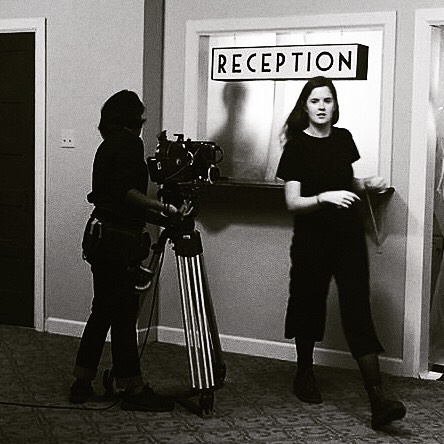
Maria C. Venturini on set of “Waiting for Adams”

Throughout cinematic history, the most exalted and iconic filmmakers have been those who’ve had the vision and audacity to defy convention and blur the line between narrative and art. Italian director Maria Chiara Venturini is reminding audiences of cinema’s origin as an extension of the imagination.

Through her films, Venturini lovingly channels a nostalgic, avant-garde aesthetic that’s been absent from the silver screen for too long. Among her productions is the 2015 film “Ancien Régime,” an ode to the French New Wave and a thinly-veiled critique of vapid materialism. The film captured critics’ attention at festivals around the globe, and was chosen as the winner by judges at the Sprockets Film Festival in Toronto. At the heart of the sophisticated send-up is the iconic brand Chanel and its instantly recognizable style of highbrow black-and-white advertising.

“This was my first approach to black-and-white 16mm film. I liked the idea of creating something that would fit the look of the media itself — a dystopian world where a fashion dictator imposes his fashion rules on society seemed perfect,” Venturini described. “The film takes place in a classroom where the only word that people are allowed to say and teach is ‘Chanel,’ and the only solution for arithmetic problems is ‘N°5,’ like the perfume.”

To the untrained eye “Ancien Régime” is virtually indistinguishable from any of Chanel’s countless ad campaigns. Stark black-and-white cinematography, minimalist mise en scène and a strong focus on physical acting and borderline absurdism are defining characteristics of both “Ancien Régime” and the perfume giant it satirizes. To a great extent, however, Venturini’s affectionately ironic admonishment uses the iconic brand as a synecdochic catch-all for the kind of fanatical devotion many high-fashion brands elicit.

“We live in a society where sometimes we [confuse] real priorities with what’s [secondary]. Fashion… for some people comes before many more important issues. I wanted to pay homage to such a great brand, but also shake that part of the audience that behaves this way,” explained Venturini adding that, “with a smile you can make people understand the concept better too.”

Drawing inspiration from the surrealism of Salvador Dali and the eccentricity of Henry Selick, her 2015 film “The Laboratory of Dr. Enerd” offers a brilliantly dreamlike glimpse into the director’s mind.

“‘The Laboratory of Dr. Enerd’ is made with a stop-motion technique called pixelation that merges animation with human characters,” Venturini described. “I was exploring this new part of the world of animation but I still wanted to make a piece that will make the audience feel the same way I feel when I see other pixelation projects.”

Using the experimental new technology in combination with her years of experience in fine art photography, Venturini created a film which can only be described as simultaneously stop-motion and live-action. What may sound like a contradiction in terms is actually a mesmerizing, almost magical film about a young scientist and the outré experiments she conducts in her laboratory.

“Dr. Enerd is trying to follow her mother’s recipe to make something a little unusual,” explained Venturini. “Also bizarre are the ingredients and tools she decides to use in this preparation: unicorns, gummy bears, syringes and a stethoscope.”

The film is a meticulously calculated spectacle of imagination. From costuming and set design down to the finest details of every prop in the whimsical lab, every frame of “The Laboratory of Dr. Enerd” was crafted and vetted by Venturini with enormous care. That level of attention to color and design are perhaps what most distinguish the director as an artist first, filmmaker second. It’s also what earned the film the honor of being an official selection at the Citizen Jane Film Festival, as well as enabling it to reach audiences as far away as the Chinese festival circuit.

Venturini built on some of the stylistic eccentricities of “The Laboratory of Dr. Enerd” with her 2016 film “Waiting For Adams.” A much less vibrant film in comparison, “Waiting For Adams” instead takes on a more dreary aesthetic in its focus on a mysterious waiting room that seems disconnected from time and reality.

“‘Waiting for Adams’ is so far the most ethereal piece I’ve ever done. The whole project could be seen as just a dream,” she described. “People gave me lots of different interpretations of the story, and I felt like a psychiatrist that shows those inkblots to his patients.”

The film opens on a nun signing in at the reception desk of an indescript doctor’s office. As she takes a seat, keen-eyed cinephiles will recognize that she and the other waiting room patients are all characters from films that were nominated-but-snubbed at the Academy Awards.

“Only a movie geek could possibly know that all those characters are from movies that were nominated for an Oscar but lost. Thus, a desire for redemption brought them to consult one of the craziest plastic surgery doctors in order to change their look and have a second chance,” Venturini explained “Dr. Adams, inspired by Patch Adams, has no real surgery skills and ends up transforming everybody into monsters.”

One-by-one, a string of familiar characters enter the office of the insane Dr. Adams, and one-by-one they return as horrific beasts that would seem right at home in a Tim Burton movie. Meanwhile, the characters in the waiting room engage in awkward banter and show off their idiosyncrasies. The entire film is delightfully unusual and thoroughly original. Every detail is deliberately and painstakingly crafted to be like a dream — ethereal and open to interpretation. With “Waiting For Adams,” Venturini once again proved herself both a visionary director and artiste. Critics in Venturini’s native Italy rallied behind “Waiting For Adams,” choosing the film as an official selection at the Scrittura e Immagine Corto Film Festival.

More than a century ago, cinema began as an exciting new medium for artistic experimentation. Every few years since then, some brilliant mind will break through the mundane and familiar, uncovering for the first time some virgin territory in the limitless expanse of cinema’s artistic potential. In this generation of filmmakers, there are few figures as likely to follow in those revolutionary footsteps as Maria Venturini.


Samantha Van Der Sluis moves from Composing for the Dublin Philharmonic Orchestra to Feature Films & TV

Samantha Van Der Sluis
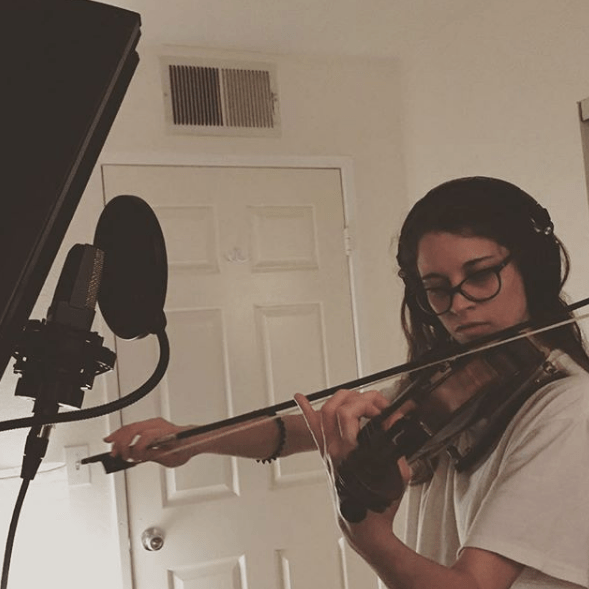
Samantha Van Der Sluis recording violin

Great cinema is far more than just the images projected on the screen. When a film’s score is truly exceptional, it can often tell as rich a story as the film itself. While moviegoers fix their gaze on the characters and places they see, it’s what they hear that often sets the tone and subtly guides their imaginations. Few people understand the relationship between sight and sound in cinema as well as film composer Samantha Van Der Sluis. Fueled by an early love of storytelling, Van Der Sluis strove to find a medium perfectly suited to the tales her mind would weave.

“I was 15 years old when I started learning to play songs on the piano,” Van Der Sluis recalled. “I started venturing toward other instruments like the violin, French horn, bass guitar, and choral singing.”

As she developed an understanding over an array of instruments, her mind became filled with countless unwritten scores desperate to see the light of day. She found the outlet she needed when she began her work as a composer.

“Once I discovered I could perform music, I realized I had the potential to create it too,” she said. “Music is meant to be shared and listened to, and I believe the best form takes place in visual media like film, where music works together with the visuals.”

Samantha Van Der Sluis
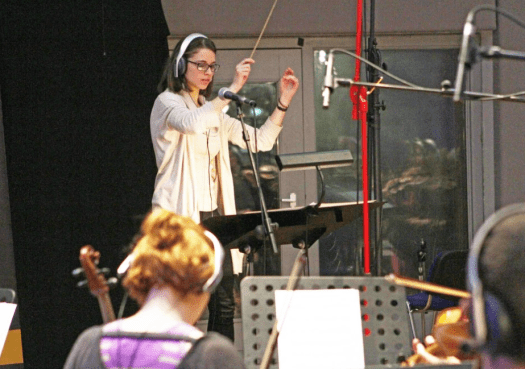
Samantha Van Der Sluis conducting an original composition

Before she began her work as a film composer, Van Der Sluis received critical acclaim for many of her orchestral compositions. One of her pieces, ‘Searching For Home,’ was chosen by the Dublin Philharmonic to be performed as part of their world tour in 2015. Soon after, composer Jeff Russo collaborated with Van Der Sluis as part of his team; and she was given her first big opportunity to shape the musical soundscape of an array of hugely-anticipated television titles. The wide-ranging list of projects Van Der Sluis worked on included the Golden Globe and Emmy-winning FX series “Fargo,” the CBS All Access series “Star Trek: Discovery,” and Netflix’s dystopian thriller “Altered Carbon.”

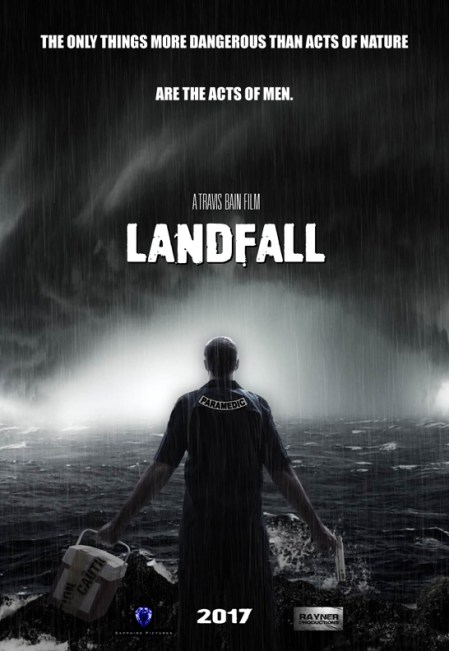
In 2017, Van Der Sluis composed the score for the tensely claustrophobic and relentlessly terrifying feature film “Landfall.” The film centers on a pair of young lovers as they barricade themselves inside their beach house, desperate to keep out something much more sinister than the impending cyclone.

Though “Landfall” was completely unlike any project she’d worked on before, Van Der Sluis’ meticulous and immersive approach to scoring the film was exactly the same as it had always been. She wrote every note of the score around what the characters were experiencing. But because suspense was a major component of the film, she was careful that the story her composition told didn’t tip off audiences to any of the story’s secrets.

“Over the duration of the film, a lot of questions the audience may have at first are answered,” she explained. “Because of these mysteries, I had to be very cautious of the score not to give away the unexpected twists in the plot.”

Directed by Travis Bain, “Landfall” stars two-time Melbourne Underground Film Festival Award winner Kristen Condon (“The Beautiful and the Damned”) as Maisie and Rob Stanfield (“Windscreen Watch”) as Dylan, the film’s main characters. A testament to the power of the film and Van Der Sluis’ work as a composer, “Landfall” was recently purchased for distribution by industry heavyweight Archstone Distributions.

“Landfall” director Travis Bain says, “Thanks in part to Sam’s terrific score for ‘Landfall’, we’ve now secured a worldwide distribution deal, which will see the film be released in multiple countries around the globe… Samantha brought plenty of enthusiasm plus a willingness to help me fulfill my directorial vision… Her professional scores really help elevate all the other elements of my films. Her music adds so much production value, and for international audiences and distributors who expect a certain level of quality, production value is everything.”

Samantha Van Der Sluis
Poster for the upcoming film “Landfall”

As the film progresses and more is revealed about protagonists Maisie and Dylan, it gradually becomes clear that neither is the person they initially seemed to be. In the same way, Van Der Sluis’ score evolves dramatically between the first introductions to the characters and the tense final moments of the film.

“I had to compose themes for the characters dependent of their situation and not who they were, because in Landfall, this has a very different meaning,” she said. “I created tense cues around the main female character, Maisie, utilizing chromatic melodies, atonal harmonies, a variety of rhythmic passage to achieve inconsistency, and cadence that never resolved… Later in the film, when the audience starts to understand the character’s situation, this music turns into something more tonal and warm.”

Masterfully, Van Der Sluis captured the film’s characters not as they were, but as the audience was meant to believe. Together with the action onscreen, her score lulls viewers into a false sense of security and sets them up to be shocked by the film’s big twists.

“For the duration of the film, until the last 20 minutes, we assume Dylan and Maisie are completely innocent — turns out they aren’t,” Van Der Sluis said, careful not to reveal too much. “The music in the last 20 minutes starts to reiterate themes of what was heard previously. The theme used for the bad guys are now being played when Dylan and Maisie are seen.”

As the storm closes in and the main characters’ true natures are seemingly unveiled, Van Der Sluis continues to keep audiences on the edge of their seats. Her score takes on a more sinister tone, building in urgency until the storm makes landfall and at last the full truth is revealed.

Prior to her work on “Landfall,” Van Der Sluis composed a much different score for a much different story. Soulful and nuanced, the 2016 drama “Day Off” is a tragic drama from director Stephen Hall that tells the story of a middle-aged couple whose lifelong love is being taken away by an insidious disease.

“A 50-something year old man is struggling with dementia and having trouble remembering things. He vanishes from his caretaker,” Van Der Sluis described. “His caretaker calls the man’s wife, Laura, explaining that he has walked off and she can’t find him. Laura leaves the cafe she was sitting at with her friend and runs around the city to find him.”

The film follows Laura as she desperately races to find her husband, Brendan. She’s frantic and alone, yet her determination is unwavering. Her search leads her to places from their past, when their life and future together seemed perfect.

“The most important scene was when Brendan wanders around, having flashbacks of his wedding day,” Van Der Sluis explained. “Although these are happy memories, he’s still frustrated because he feels like he’s forgotten something, and therefore, [like he’s] losing something.”

Van Der Sluis’ score for the film is poignant and resonant. The music of “Day Off” perfectly echoes the deeply-nuanced emotions felt by Brendan and Laura. Her compositions tell the same story as the dialogue and images on-screen; they ring with lows every bit as devastating and highs just as euphoric as those of the film itself. Without uttering a single word, it was with “Day Off” that Van Der Sluis proved herself a master storyteller.

“It starts off delicately with a lone piano, which gradually increases in size with strings, winds, and rhythm section. It begins with a sparse, minimal texture and evolves into a more orchestrated, thick texture, which constantly repeats itself,” she explained, before revealing just how meticulously she considered every detail of the piece. “The act of repetition is a little ironic, due to portraying a character who is having trouble remembering certain life moments. But because one of his important memories is still there, his wedding, the repetitive music pieces seems to work.”

Every note of every piece she’s written has been guided by her philosophy that cinema is at its most powerful when the two are weaved together. Her adherence to that guiding tenet, together with her unrivaled skill, earned her quite a bit of attention for “Day Off,” including a nomination for the Best Score award by the Underground Film Festival.

The full breadth of Samantha Van Der Sluis’ work is staggering, yet each of her projects is linked by a common thread. Regardless of how different any two films may be, Van Der Sluis’ defining quality as a composer is her ability to visualize a project from the perspective of a storyteller. That skill, together with a meticulous attention to detail and a virtuosic understanding of music on an instinctual level, are what make Samantha Van Der Sluis an unrivaled composer in modern narrative cinema.


Copywriter Aahana Pereira teams up with celebrity DJs for Motul Rhythm campaign

Despite always having a love for writing, Aahana Pereira never expected in her youth that her passion would translate into advertising. In junior college, she was studying science and math, but she hated it. She quickly switched to Mass Media, not because of an interest in communications, but simply because it would mean she no longer had to take math. However, those three years changed her life. The more she learned about advertising, the more she knew she would be happy in the field. She would watch old advertisements from all over the world, read long copy print ads and learned a great deal about famous copywriters. She wanted to be like them. Combining her interests in writing and advertising, Pereira decided to pursue a career in copywriting, and has never looked back.

“On most days as a copywriter I follow a brief and write copy with as many options I have time for. It is not every day that we get an exciting brief or a project, so day to day is, so to say, average. That being said, I still push to make average better. Most days we work on small budget campaigns, and I aim to make each and every campaign, whatever the size, achieve greatness and make something I am proud of. Then, once in a while, we do get a brief where we get to showcase our creativity at the highest level, and that is just plain fun,” said Pereira.

Throughout her esteemed career, Pereira has worked on many projects for prolific corporations known worldwide. She has travelled the world doing what she loves, and consistently finds unique approaches to promote a product. This is exemplified with her work on commercials for Palmolive, Colgate, IBN 7, and many more. The highlight of her career came when she was given the opportunity to work on the Drink Up campaign, an initiative by First Lady, Michelle Obama in partnership for a Healthier America that encourages people to drink more water. Most recently, she worked with Falcon Agency in Malaysia on several successful campaigns, impressing all she collaborated with.

“Aahana and I have worked on several projects since we first met in 2017 – Motul Rhythm, Meet the Sydneyporeans, just to name a few. I really enjoy working with Aahana as her ideas are strong and always on brief. I love the passion she has for her work,” said Liz Leow, Regional Account Director, Falcon Agency Malaysia.

Working on Motul Rhythm was a project that excited Pereira. It was one of the first projects she worked on at Falcon Agency as a solo copywriter. Motul, a company that produces high-performance motor oils and lubricants, is not typically associated with music, making the campaign extremely original. The idea was to hold an online contest across the Asia-Pacific area where anybody could submit their original music, made completely from the sounds of their motorcycles. They asked fans to create sounds and upload it to the Motul Rhythm website. The prize for the winners was a chance to co-produce their own music track with Asia’s most well-known DJs, such as Terence c, Idham and Flickswitch. The selected winners were also sent to the MOTO GP event held in Malaysia in 2017, and the music track mixed by the DJs was then launched at an event in Kuala Lumpur.

“I thought the idea was good. A brand like Motul, which is such a low involvement category, was getting its fans excited. The idea was true to the brand values that stands by performance. In this campaign, performance has dual application – performance of the lubricant and oils meets performance in music. It was a synergy,” said Pereira.

Although the idea of Motul Rhythm already existed before, Pereira and her team adapted it. The idea was to get audiences to participate in a competition, where they had to submit sounds from their bike and reputable DJs would take the best sounds and mix it into a music track especially for Motul. However, the challenge was to entice them in a way that would encourage motorbike fans. As a team, they concluded that the hook would be that participants would get a chance to co-produce the music track by submitting their audio clip. This was discussed over a period of discussions. However, Pereira had never worked on Motul before or even the oil and lubricant category, so this meant she had to do a lot of research to figure out just the right way to target consumers. She had a sense of the Asian market but wanted to find just the right way to reach bike enthusiasts. It was more than just making them aware of the competition, it was getting them to participate in it. With the help from the team in Singapore and support from the team in Malaysia, they managed to launch this campaign, and those lucky few consumers managed to have their dream come true by working with DJs to create a track.

Other than launching the Motul Rhythm microsite, Pereira’s team created Facebook advertisements and digital banners to get the word across. This was the first point of communication and a way to generate awareness. It was very important to write copy that would make people stop and click, not to mention character limits in digital ads. Pereira met the task with determination and commitment.

“This project was fun. It incorporated bikes and music. I loved working on it and it was amazing to hear what people could create with the sounds of their bikes,” she said.

The Motul Rhythm campaign is just one example of Pereira’s creativity and determination. She took a unique idea and targeted just the right audience. Such talent is required to be a success in her industry, and for those looking to follow in her footsteps, she offers some important advice.

“One, be persistent. Keep aiming for good work even if they are not the big budget briefs.

Two, watch films, shows, read books that will expose you to different stories and styles of writing. You never know what will inspire you. Three, have a voice in your team. No matter what your title is, say something,” she advised.


Photo by Biel Calderon

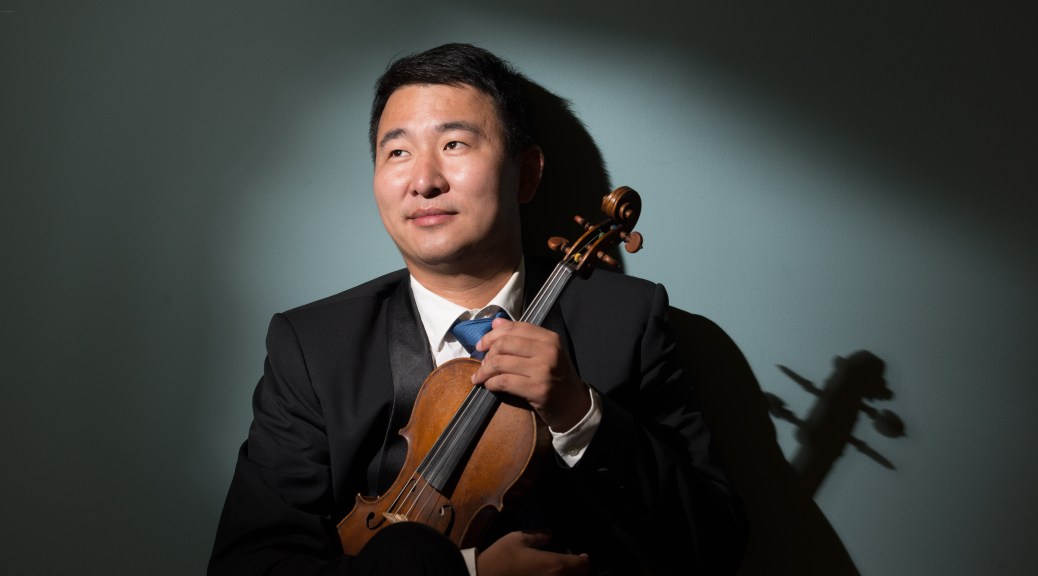
Violinist Hui Cao brings joy of music to Zhuhai Jinwan while leading the Chamber Orchestra

From the time Hui Cao was just a baby, he would listen to his mother sing. As he grew, he began to sing with her, and his innate musical talents were evident even then. He could easily identify each note, and without any lessons, he effortlessly would carry a tune. The same occurred when he first lifted a violin; it felt like he was meant to play the instrument and has been doing so since he was a child. Now, he is one of China’s most prolific violinists.

With an impressive resume both playing and teaching, Cao’s career as a violinist has been extraordinary. He aims to share musical culture with both his admirers and his students. In 2013, he began teaching violin classes at Pooi To Middle School in Macau, a city on China’s South Coast. The popularity of the instrument rose dramatically when he was there, having such a celebrated musician teaching. He is currently practicing for the 2018 Music String Festival in Zhuhai Jinwan, a large festival in China. Not only will Cao be a soloist at the event, but he is also responsible for inviting other violinists to partake in a masterclass that he will then conduct.

“I feel like I can’t live without music. I like to play the violin to audiences and enjoy every moment,” he said.

Cao’s influence in Zhuhai Jinwan began in 2015 when he started playing in the Zhuhai Jinwan Chamber Orchestra. Founded only the year beforehand, Cao was instrumental to making it the success it is today. He was hired as the music director and concertmaster, in charge of every musician in the orchestra. During the three years that Cao has been leading the orchestra, they have played over 30 charity concerts and educated over 60,000 people in music.

We love to perform right in the community, whether that be in schools or small businesses. It brings lots of fun and music to the local people, and playing for charity is always a good thing. I think, as a musician, you play music that will hopefully help some people in this world. That is a wonderful thing, which is why I think performing for charity is so very important,” said Cao.

When Cao was invited to take part in the orchestra, it was still very new. He was immediately interested, wanting to help spread the joy of music whenever possible, and he felt Zhuhai Jinwan was the ideal location to do so. It is a relatively new city, and therefore music and the arts were not as developed as many other cities in the region. The local government wanted to change this, and therefore created the orchestra as a non-profit organization.

“People who lived in Zhuhai Jinwan did not have the opportunity to experience good, classical music the way that so many others do in the larger Chinese cities. I wanted to be the person to help change that,” said Cao.

After getting in touch with the sponsors, Cao began working immediately. He started with finding musicians for the orchestra and followed by choosing the perfect music. He wanted to select pieces that would excite the locals and allow them to appreciate classical music. When recruiting players for the orchestra, he reached out to the residents of the city, allowing them to get excited at the prospect of the first chamber orchestra in Zhuhai Jinwan.

“We are very honored to have Hui as our music director for the chamber orchestra. He is a talented musician and gives us a lot of support. The first day we met Hui we knew he could help us build this chamber group to a great success,” said Mok Ian Ian, Director of Zhuhai Jinwan Cultural Affairs Bureau.

Once Cao filled every spot on the orchestra, they started rehearsing twice a week. He helped the players practice, teaching them how to perform and offering insight from his many professional experiences. Most of the musicians were not trained, and it was Cao’s responsibility to do so. Under his direction, the entire orchestra went from many individual musicians to one entity, playing seamlessly. He also supported the guest conductor during rehearsals while still planning the music for each performance.

“I really admire the local musicians and their love of music. It was my job to help them become better players and make sure they improved, but you can’t teach passion. Directing these musicians was easy because of how much they enjoyed what they were doing,” said Cao. “I am also very thankful to the government and all the support we received from them. It was the people I worked with that made this such a special project. Everyone wanted to bring music to the community.”

Cao and the orchestra held their opening concert at the Zhuhai City Hall in 2015. It was extremely successful, and from there, they have continued to be recognized and praised by all sectors of society. Now, just a couple of years later, the orchestra is seen as a prestigious group of musicians.

“After three years of work, I saw the Zhuhai Jinwan chamber orchestra get more popular and professional. I am very happy, it has been like watching my kids grow up. I put lots of my time and energy into the group, and the results more than paid off,” he said.

Evidently, Cao is an incredible musician and director. What he accomplished with the Zhuhai Jinwan Chamber Orchestra is just one example of what this talented violinist is capable of. He truly loves what he does, and for those looking to follow in his footsteps, he says that is of the most vital importance.

“As a musician, I have only one piece of advice to those who are looking to pursue a career in music, and that is to love the music and enjoy the music. Music is always a great and interesting hobby, but if someone wants to become a professional musician, the path is very difficult. You have to persist and practice and remain focused on your goal every step of the way. That is why passion is key. If you do not have this, you will never be a true musician,” he concluded.

From Mermaids to Mental Health, Actress Brie Kristiansen Does it All in TV, Film, and New Media

Article Written By: Ashley Bower

It’s not always easy to keep up with an industry that is constantly evolving, but when it comes to navigating the busy world of entertainment, working actress Brie Kristiansen is a pro.

“It all started with a musical in Iceland when I was a teenager,” stated Kristiansen, and right from the start, she was propelled into learning how to adapt to the unpredictable curves that life – and the film and television industry – are known for. “The musical was Bugsy Malone and hundreds of people auditioned. In the end, I was cast in the leading role of “Dandy Dan,” which was changed into a female role since they thought I fit very well for the villainous character. Funny story, at the dress rehearsal I fell down and broke my leg and had to do all of the remaining shows in a wheelchair. It actually turned out great in the end, as the wheelchair seemed to add almost another level of authority for this villain.” Ever since this debut, Kristiansen’s career has skyrocketed.

While Kristiansen has numerous projects that span film, television, and new media under her belt, she’s most known for her work on It Takes a Killer, Delirium: What’s Your Worst Fear?, Corrupt Crimes, and her latest role as a series regular on season two of Life as Mermaid.

With over 25 million views and more than 155k subscribers, it’s safe to say that the hit YouTube Series Life as a Mermaid has a passionately committed following. The story follows two mermaid sisters and their journey on land as they work their way around obstacles while adjusting to life with the humans. Kristiansen plays Astrid, a ruthless European villain with an icy demeanor, whose mission is to hunt down the mermaids with the intention of selling them for billions.

life as a mermaid
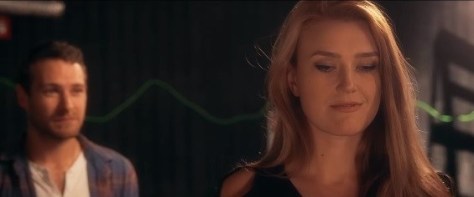
Brie Kristiansen as “Astrid” in Life as a Mermaid

“From the start of when season two started airing, we received such fantastic reactions from people all over the world. We started getting asked for autographs and receiving fan mail which has all been an amazing experience. We truly have the best fans, and they are what made all the hard work worth it in the end,” Kristiansen reminisced.

Though Life as a Mermaid airs on YouTube, one of the entertainment industry’s newer media platforms to publish episodic content on, the production process was exactly the same as any other television show. The only difference: the website makes its content accessible to anyone anywhere in the world.

Starring opposite Kristiansen in the series is Marcella Di Pasquale, who is also credited as casting director and one of the producers of the show.

“Brie is the sweetest person, so it is so interesting to see her play such a brilliantly evil villain,” explained Di Pasquale. “To be able to switch into such a strong character within a matter of seconds just really goes to show Brie’s true talents and acting skills. She is also great at stage combat and I loved watching her film her fight scenes on the show. Brie is very charismatic and naturally talented, which makes her a great addition to any set, and us on the Life as a Mermaid team always love having her around.”

In addition to villainous roles, it’s apparent that Kristiansen has a gift for securing and excelling in roles that encompass very serious, emotional qualities, such as the roles she played in It Takes a Killer, Delirium: What’s Your Worst Fear?, and Corrupt Crimes. Elaborating on her love of playing and process of preparing for such kind of a role, Kristiansen explained, “I always think it’s really funny since I’m actually quite a goofy person, but I guess I look very serious. However, I love doing these roles, especially when there’s an added challenge or something I haven’t done before.” An example of such is Kristiansen’s work she did on Delirium: What’s Your Worst Fear?” where she plays the character of Ava, a teenager with schizophrenia.

Prior to being cast as Ava, Kristiansen wasn’t familiar with the mental disorder outside of what she had seen in other film and television shows. Therefore, it was a role that require extensive research – something which was already a very major component of Kristiansen’s character preparation process. “I try to get closer to my character’s mindset and who they are. I’m a total nerd when it comes to this and will dive into research for significant amounts of time until I feel that I have managed a full understanding of the character, and then I go into the next steps of my preparation,” Kristiansen said.  “With Ava, I did so much research, probably more than I’d ever done before. I thought it was vital for the authenticity of my character to absolutely dive into research. I went to libraries, read books, and even spoke to people with experience in the field.”

Currently, Delirium: What’s Your Worst Fear? is being screened at multiple film festivals around the world.

delirium.png
Brie Kristiansen as “Ava” in Delirium: What’s Your Worst Fear?

Coincidentally, on Kristiansen’s episode of Corrupt Crimes titled Vulture Feeder Fiend, the topic of schizophrenia arose yet again for the actress, though this time the character with the disorder was not her own. Taking place in California in the 1970’s, the storyline of the episode follows a schizophrenic serial killer named Herbert who murders a homeless man while in his altered state of mind. Kristiansen plays a hippie named Mary, who attempts to hitchhike her way to an event only to suffer a similar fate after she’s given a ride by Herbert himself.

Kristiansen not only loves the roles she’s been given the opportunity to play but is also passionate about the impact they make on her viewers, along with the awareness they bring to mental illness in film and television. “I’m a very open and honest person who comes from a very liberal society. The way I was raised is that if there’s a problem, you speak about it, and that you should never judge others for their feelings or behaviors because you don’t know what they’ve been through or are going through. Mental illness is a very serious issue, and the shame and stigma surrounding these issues need to stop. We need to be able to speak about our feelings, experiences, and illnesses openly in order to help or even fix them. There are so many tools one can learn from speaking to a professional, or by simply opening up to a friend. Love conquers all,” she said.

While some roles help to expand the knowledge and understanding of one’s mind, others do the same for the heart. This is the case for one of Kristiansen’s earlier television series: It Takes a Killer. “In my role as Charlotte, I played an emotionally unstable teenager who goes through a horrible tragedy,” Kristiansen discussed, revealing her journey of portraying the sixteen-year-old character left parentless after discovering her father murdered her mother.  “Charlotte is extremely vulnerable and has moments where she has emotional breakdowns. For me personally, this role was a great opportunity to showcase my talents with vulnerability and fully diving into the character. It was a great experience, and also helped me become more vulnerable and open as a person.”

There’s no question that Kristiansen’s vast experience and success as an actress has helped her grow not only as an artist within the film and television industry, but also as a person. There’s no doubt that this is something she’ll continue to do throughout her acting career in the years to come. Regarding this idea of both personal and career evolution, Kristiansen stated, “I’m incredibly lucky to be a working actress in different parts of the world, and on a variety of project types portraying completely diverse characters. Each time I take on a new role there’s something new I learn about people from the character I’m portraying. As a people person, this job will never become boring. The challenges, in drama, in comedy – all of it – just makes you really grow as an individual and you learn so much about yourself. I’m all about figuring out your dream and making it happen, and I find it to be one of the perks that I am able to grow both personally and professionally while living mine.”

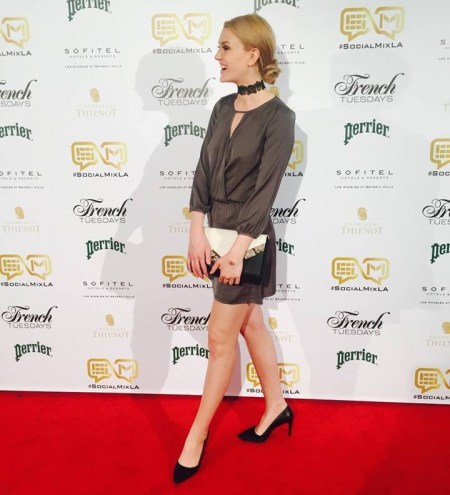
17191018_10155909301804942_8971055201274809684_n
Brie Kristiansen walking the red carpet

For more information on Brie Kristiansen, please visit:

www.imdb.me/briekristiansen
https://www.briekristiansen.com/

Actor Ben Prendergast takes up boxing to play Australian icon Jo Sparro

Ben 2
Ben Prendergast

Ben Prendergast says his love of film is genetic. His mother’s side of the family constantly watched classic “talkies” on repeat, watched Sunday matinees, and had a general love for iconic starlets and stories. His father’s side still had that same love for movies, but there was a passion for science-fiction and action films, with regular trips to the video store. As a child, Prendergast was immersed in all aspects of film from a young age, loving Star Wars and Casablanca before even Mickey Mouse.

“In Australia, the notion of being in the movies is so foreign, but as I got older and started to build a profile it became evident that I could actually make a go of being involved in an industry that I’d loved for decades,” he said.

As an acclaimed film and television actor, Prendergast has many notable projects on his resume. He has worked alongside Hollywood’s best, including Ethan Hawke in the feature Predestination, and starred in award-winning films like The Marker and Post Apocalyptic Man. Australians everywhere recognize his voice and face from many national commercials, and his versatility is constantly evident, ranging from genres and mediums. With every character he embodies, he does not just portray them, he becomes them. This is perhaps most evident when he took on the role of the iconic boxer Jo Sparro in the celebrated film Punch Drunk.

“Punch Drunk deals with a very real issue in Australia: the marginalization of the elderly and mentally unwell. I loved that the main protagonist was a hero in his day, someone that was very much valued as part of society, but after an unfortunate event he’s literally left to rot in an institution until he fights his way out. I wanted to be a part of the project as it dealt with a sport I love and tackled a real issue within the heart of a fantastic story,” he said.

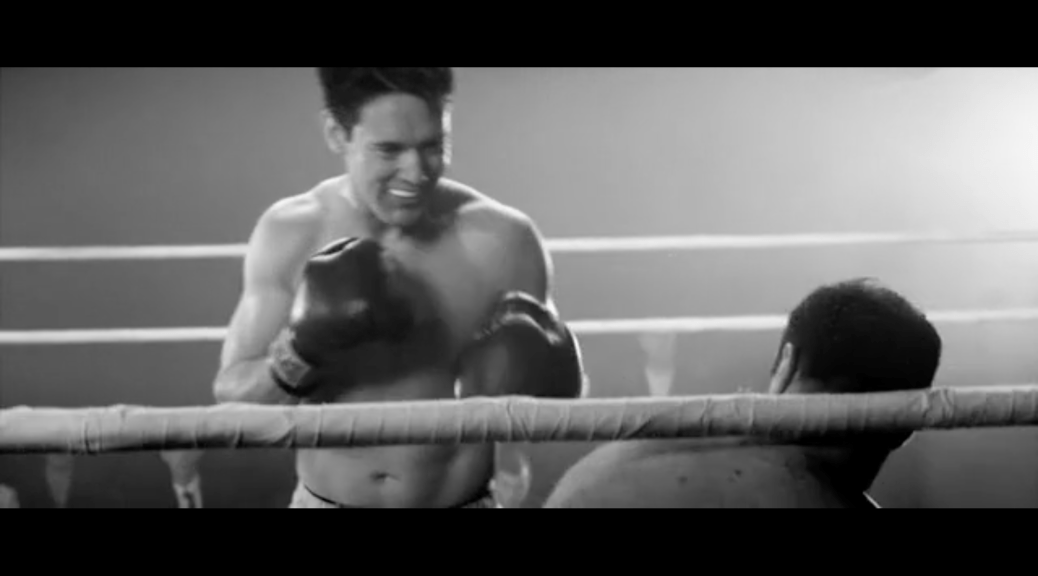
Punch Drunk is the story of the Mighty Joe Sparro, a champion boxer who is cut down in his prime. Years later, he is in a care facility that shuts down and he needs to fend for himself one last time. Prendergast played the younger Joe Sparro, depicting his early career, showing his courage and man-of-the-people charm, and illustrating for the audience what might have been.

“Jo Sparro was a post-war young man trying to make a living to support his wife and child, so in a lot of ways his natural gift for fighting made him a more loving partner. He loves his wife Millie to death, so when they are separated it is heartbreaking. For so long, he has been confused about where he is, but when the film starts we realize he is coming out of an extremely long coma,” Prendergast explained.

Punch Drunk was distributed to a number of festivals, including Telluride and the New York Short Film Festival where it played in Times Square to an estimated 50,000 people. From there it went to the St Kilda Film Festival, where it was nominated for best screenplay, Young at Heart Film Festival, where it won the Audience Award for Best Film, Adelaide Shorts Film Festival, where it took home the Audience Merit Award, Byron Bay Film Festival, winning Best Cinematography, and an Official Selection at Dungog Film Festival, Heart of Gold International Film Festival, Little Rock Film Festival Official Selection, and Woods Hold Film Festival. After its film festival run, Punch Drunk was distributed digitally and has since been viewed millions of times online. The Director, Sam Wark, believes Prendergast’s portrayal of the young Jo Sparro was pivotal to the film’s success.

“Ben is a pro. He is so proactive in finding the way into his characters and has a limitless supply of positivity and fresh ideas. As a director looking to fulfill a vision and shape a story, it’s a joy to have someone who can bring me a hundred different bold choices on any one idea and then go further and further into the rabbit hole as the story unveils itself. He’s an actor’s actor, so he goes way beyond what you’d think an actor should do in order to prepare for a role, not only mentally and spiritually, but also physically. In the boxing scenes, he worked over the course of three months to not only become fit enough to perform the role, but also to perfectly imitate a 1950s’ boxer style, and then also the stunt falls required. The miraculous thing though is he’s able to do all of this while embodying a character and creating the empathy in the audience needed to touch people. Our audiences fell in love with that character,” said Wark.

Wark had the script for Punch Drunk in his drawer for seven years with no real plans on making it. He knew the script was a gem but didn’t know just how to turn such an important story into a film. That was until he sent the script to Prendergast, who was so passionate about the project, the director knew he had something there. Immediately, Prendergast was the only choice for the role of Jo.

“The film needed someone who could play a champion boxer without the arrogance or coldness that we see from boxers in the modern era. He needed to be a people’s champion, and completely likeable, even to his opponents. By doing this, the film could create the payoff needed to touch audiences and make them think about the mentally ill in a new and perhaps impactful way. That is what I kept in mind when preparing, and while filming,” Prendergast described.

When preparing for the film, Prendergast relentlessly trained for three months to not only get in the shape of a professional boxer, but to realistically fight in required scenes. He also took extensive stunt training in order to be ready to be hit and fall on command. In one boxing scene, he chose to fall a lot heavier than he had initially planned and ended up knocking himself out. The shot was so brilliant, it was used in the final cut of the film.

“I was introduced to the sport of boxing in a new way. I always loved to watch, but to participate and continue to practice to this day is something that the film gave me. I was also drawn into the world of past champions and the history of the sport,” said Prendergast.

Punch Drunk depicts an Australian sporting hero that never made it, someone who showed so much promise but was robbed of it, and audiences ultimately see him victorious after 60 years of solitude. Getting to be a part of such a story was truly one of the most satisfying parts of working on the film for Prendergast, beyond all the awards and accolades they later received. The best part for the actor, however, audiences may not have noticed.

“This ended up being a family affair. My Nana was featured as an extra in the film,” he said.

Check out Punch Drunk to see Prendergast’s outstanding performance.

Acclaimed Director/Photographer Liam Cushing’s Mix of Substantive Realism and Ethereal Beauty

With a world-class resume of successful, high-profile collaborations with such famed luxury brands as Jimmy Choo, Valentino, H&M, Sandro Paris and Tommy Hilfiger, director/photographer Liam Cushing is one of the most acclaimed craftsmen in his field. But his extraordinary international renown and impressive achievements came about almost as a fluke, the unlikely result of a loving mother’s thoughtful gesture to her teenaged son.

“I was going on a [student] exchange in Spain and my mother took me to a second hand camera store,” Cushing said. “She bought me a Nikon F5 with 50mm lens and I was hooked right away, but had no real technical knowledge. There was a lot of trial and error after I arrived in Spain, but it really started to shape my eye, knowledge and love for photography. I took photos of everything, anyone and everywhere and I really attribute the growth of my style to my time in Spain.”

An entirely new world opened up for the Toronto-born, London-based Cushing. “My mother had always had a love of photography and it was always a part of my life growing up, but I had never really learned how to shoot,” he said. “She thought it would be great for me to learn on my own camera as I embarked for Spain and as I learned Spanish and adapted to a new culture, my photos deeply reflected this new curiosity. I still own that Nikon F5 to this day, and every once and a while I will use it just too once again have that feeling of shooting for the first time.”

Cushing quickly parlayed that youthful enthusiasm into a dedicated career path. Having completed studies at the University of Toronto with degrees in Art History and Cinema Studies, Cushing’s romance with photography—and his readily evident aptitude—enabled him to gain a foothold in this particularly fast-paced arena.

“After graduating, I applied for an internship where I could learn from the best photographers in the world,” Cushing said. “I ended up at the prestigious fashion photo agency Art Partner’s London office, which subsequently connected me to the highest levels of the industry and propelled me to get a job working for world famous photographer Mario Testino. Mario was famous for shooting the campaigns for brands such as Burberry, Versace, Gucci and Dolce and Gabbana, and who had also shot the royal family, and countless celebrities including Katy Perry, Madonna, Brad Pitt, Julia Roberts.”

Testino, of course, wouldn’t hire anyone who wasn’t an absolutely first rate talent, and Cushing really came into his own, developing the visual style which became his very formidable calling card.

“During my time working under Mario, my career really started growing,” Cushing said. “I spent countless days researching, learning about my craft, investing in my tools, pursuing personal projects, chasing clients, all of which helped me get to where I am today in my career.”

“I developed I strong affinity for directing video and while I was hesitant to stop working for Mario, I felt as if I wouldn’t be able to have creative independence if I did not take the jump—I subsequently left and pursued an independent career as director/photographer.”


Liam-Cushing-B

On his own, Cushing was compelled to make his mark, a feat that required considerable drive and fortitude.

“Finding my own path was difficult as first,” Cushing said. “I was competing with some of the most talented creative minds in the world. In the first year it became apparent how difficult it was to find my place and stand out in a city where I had very little professional connections. Rejection started to feel familiar, but I persevered and began to pursue my interest in video work. My deep passion for video rubbed off on my photography, I felt more engaged than ever, and I really started to hit my stride.”

Cushing’s ace-in-the-hole was a deep passion for a particular type of communicative aesthetics unique unto himself. “I always thought of my work as something like a dream—the imagery can be abstract and ethereal while emotions and tone feel real and weighted,” he said.  “I look at every project as a challenge, so if there is no element of discomfort then I know I am not getting better at my craft. I also really value working with creative professionals at the top of their respective crafts, as it forces me to continuously push myself to higher levels of excellence.”

This creative zeal quickly distinguished Cushing from his contemporaries and his career began to ascend.

“Around this time I was hired to do stills and some video work for a Tommy Hilfiger campaign with world famous models Naomi Campbell and Claudia Schiffer. As my skills sets grew, I felt my confidence and client lists grow as well. I felt very fortunate to have worked with Mario as it opened doors for me and illustrated the standard of professionalism I had to live up to, but also the confidence to find my own path, which I continue to be on to this day.“

An in-demand professional with a sterling international reputation, Cushing’s peerless instinct and ability to wed technology to human emotion in a way that evokes power responses from his viewers—a gift that’s elevated him to the very pinnacle of success. Cushing’s gorgeously rendered evocative visuals have led to assignments in fashion with his highly successful Jimmy Choo/Off White and Sandro Paris campaigns but also in the entertainment industry, taking jobs with Capitol Records and a memorably spontaneous collaboration with UK indie rock band Glass Animals.

“I was introduced to the band Glass Animals when I was hired to be still photographer during a video shoot for the song ‘Black Mambo,’” Cushing said. “There was some downtime during the shoot, and their manager asked if I could take some band shots, so I obliged. The band and the label liked them so much, they commissioned me to shoot the press photos for the release of the upcoming album. The photos were then featured in all promotional materials and could be seen in the New York Times, Billboard magazine, SPIN and many others. I was really encouraged about the success of the images—then, Capitol Records contacted me to have my photo featured in their commemorative, Taschen-published 75th anniversary coffee table book, where the photo would be featured alongside some of the greatest photographers of the last 100 years. The book was distributed globally and elevated my work and name to a worldwide level that I had yet to experience.”

That type of creative serendipity is typical of Cushing’s methodology, a wide open, perceptive approach based as much on instinct as it is technical skill. As one Cushing collaborator, the famed Global Creative Strategist for Facebook/Instagram/Whatsapp Dr. Jane Han, said “Having worked with many producers and directors in my lifetime, it was clear that Liam was on top of his craft with an expert sense of his work both on a technical and artistic level.  In the capacity of director, he ensured the deliverables were at the highest of levels and showed a vast amount of skill in his trade.“

The key to his impressive commercial success is, uniquely, based almost entirely on his need for purely creative expression.

“I gravitate to anything that demands emotion and exists beyond the world of pure aesthetic,” Cushing said. “That is not to say I don’t continually strive to create incredibly beautiful imagery, but it has to evoke some feeling inside the viewer that goes beyond the present physical world. It is why I always have thought of my work as falling between the abstract, ethereal world of the mind and the sheer beauty of the physical world.  Where imagery can be both associative and dissociative as it moves between real and abstract, thus giving the viewer’s imagination the opportunity to run free—where the imagery exists on a level beyond the confines of the superficial and reaches something more human and emotive.”

Brazilian triple threat Rita Shukla is an indomitable force on stage

Rita Sjukla
Brazilian Performer Rita Shukla

You may have seen performer Rita Shukla on stages across Los Angeles as a lead singer with the classic rock band Lloyd Moss & The Rock Collective, singing jazz-style Brazilian bossa nova with the Electrobossa band, or heavy rock n’ roll with Redemptrix. Her strength and dynamic range as a vocalist coupled with her lively and magnetic stage presence has made her a go-to performer for a number of bands in need of a strong lead singer.

As part of Lloyd Moss & The Rock Collective, Rita is a vocalist alongside Andrey Tsvetkov Nazarbekian, who made it to the semifinals on the incredibly popular TV series “The Voice Russia” season 2, and was also a contestant on the 8-time Primetime Emmy Award winning “American Idol” season 15.

“Working with Rita is a constant exchange. Her vast knowledge in music and her stage experience are the factors that give all of our band members a new perspective on the way things should be done, how harmonies should be written and songs should be sung,” explains Nazarbekian. “What really makes her good at what she does is her natural gift for music supported by the education and training she acquired in Brazil ”

Rita began cultivating her talent as a performer at the age of 4 whilst growing up in Campinas, Brazil where music and performance are a vibrant part of the country’s colorful culture. First immersing herself in music classes, Rita immediately fell in love with the way music made her feel.

It’s just like being in nature for me… I feel joy when I sing. it brings me so much peace and happiness, as if I don’t think of anything else. I’m just there present in the moment,” admits Rita. “For you to be able to sing well, you first need to breathe well… the whole process of singing is just therapeutic and healing.

Knowing the competitive nature of being a lead singer, Rita didn’t rely solely on her natural vocal strengths as a high soprano. Instead she devoted herself to perfecting her skills by training with some of the best in the industry internationally, including vocal coaches such as Molly Rocklind (who’s shared the stage with the likes of Stevie Wonder, popular classic rock band America and Chaka Khan), Dawn Bishop (who’s performed with household names like Brian McKnight and the Black-Eyed Peas,) Brazilian soprano Lucila Tragtenberg and maestro Thiago Gimenes, among others.

It didn’t take long for Rita to be tapped to begin performing on stages across Brazil. By the age of 16 she was playing starring roles in popular theatre productions such as “A Receita” by Jorge Andrade, followed by “Um Cadillac Para as Estrelas” and “Quero a Lua” at the Tao Theatre.

With many of her major theatrical projects back home in Brazil utilizing her talent as an actress and singer, she quickly stood out as a rarely gifted performer capable of flawlessly executing both with equal pizazz. But there’s another area of Rita’s ‘gift’ as a performer that has made her so unique amongst others in the industry– and that is her skill as a dancer.

In the same way that her impressive vocal range and natural rhythm has led her to lead bands with musical styles ranging from jazz and bossa nova to classic and hard rock, her skill as a dancer has given way to a multitude of dance performances ranging from flamenco and belly dancing to jazz and tap for musical theatre.

Beginning flamenco dance training at 11 and belly dance at 13,  Rita explains, “First, I fell in love with flamenco, for its strength, rhythm, passion, and history, but dancing in general makes me feel good as I feel the energy of the music and the beat flowing through my body.”

The way she translates music into her movements as a dancer, embodying the rhythm in human form on stage, has not only been a highlight for the audiences who watch her, but a draw factor for those who cast her in their shows. Whilst in Brazil, she was cast as a lead dancer in numerous shows such as “Noche Caliente,” “Bombardeio de Dança” and “Noite Flamenca” with leading Brazilian flamenco dancer and choreographer Karina Maganha. She also made a name for herself as a lead dancer with the Jimena Lourenço Dance Company, starring in shows like  “A Arte Milenar Da Dança Do Ventre,” “1° Festival de Dança Do Ventre,” “2° Festival de Dança Do Ventre,” “Clip” and many more.

By college Rita had not only perfected her individual skills making herself known among the country’s best young performers in each area, but she had blended all of these talents, making her an undeniable triple threat– an asset that boosted her reputation within the world of musical theatre.

About her beginnings, Rita explains, “Growing up studying and doing theatre [in Brazil], and feeling on my skin the importance of embodying the character as a dance, the music as a text and the acting as music, made me a very open, strong and vulnerable actress and singer.”

After completing her bachelor’s in drama at the Pontifical Catholic University of São Paulo, scholarship offers began rolling in from schools in the U.S. for her to continue her education in the performing arts. And in 2013 she packed her bags and relocated to California on a scholarship to study Musical Theatre at the American Musical and Dramatic Academy.

As a singer she’s quickly became a lead member in several bands in the states, while also writing her own songs and embarking on many other fruitful collaborations. After being recognized by music producer and songwriter Ted Perlman, who’s known for his work with renowned stars such as Whitney Houston, Harry Belafonte, Bob Dylan and Diana Ross, the two collaborated in writing a praise and worship rock tune.

Perlman recalls, “As soon as she sang one note, I knew she was special… Rita is one of the most soulful white girls anywhere! She has everything- talent, beauty, brains, and joy. She’s as close to perfect as it gets.”

In the states her seasoned skill as a performer coupled with the fiery nature of Brazilian culture pulsing through her veins, led her to be viewed as a unique talent in the industry.

Last year Rita was personally invited to perform as a singer and dancer alongside some of the most recognizable Broadway stars in the world in the production of “Broadway to the Rescue.” A concert gala for charity, Rita shared the stage with the likes of Tony Award Winner LiLlias White and Tony Award nominees John Tartaglia and Sharon McNight where she gave a memorable performance in numbers from the hit Broadway shows “Hair,” “Memphis,” “Hairspray” and more.

“Training and performance skill once you reach a higher level is not hard to find in Los Angeles. But one thing that I look for in performers, and Rita is one of a few that has it, is personality and unique instinct,” explains Rodrigo Varandas, one of the choreographers behind “Broadway to the Rescue.”

“I feel that her Brazilian culture makes her unique already. But she is able to incorporate American culture in her performance as well and that is just impossible to find. She mesmerized me every time she sang and danced.”

Rita Shukla is one performer who’s managed to excel as singer, actress and dancer, and while she spent years training in order to get where she is today, the natural and vibrant energy she brings to the stage is something that just can’t be taught– and it’s definitely something that has set her apart from the pack.


Everything you ever wanted to know about Hollywood's who's-who.