Tag Archives: Movies

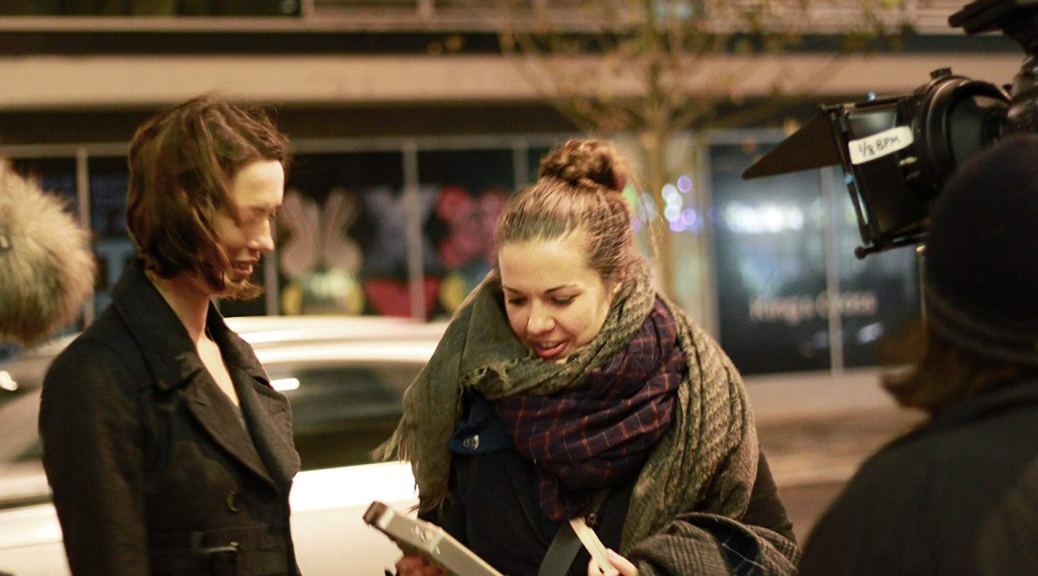
Producer and Director Ace Yue tells heartwarming LGBTQ love story with new film

As a filmmaker, Ace Yue takes an idea and brings it to life. Originally from Shenyang, a north east city of China, Yue has always had a passion for the art form and has dedicated her life to bringing captivating stories to the big and small screen. As a producer, she finds just the script and team to make a vision a reality, and as a director, she follows her instincts and provides a sound voice of leadership for her entire team.

“I like to give every character in my stories an entire life, no matter how old they are. I am building up an entire world for my cast, allowing them to feel the character, making friends with them, then, becoming them. I want the audience to be taken away by the story, creating a cathartic experience for every viewer,” said Yue.

This in-demand producer and director made headlines last year with her award-winning film Gum Gum, which she wrote based off her own life experiences, but Yue is no stranger to success. She also has highlights on her resume such as By Way of Guitar, La Pieta, K.a.i., and many more.

“I think this is a job that requires a sense of responsibility. It’s fun and full of creativity. In fact, creativity and on-the-spot ability are my most important skills of being a producer and director, because we can never predict what will happen on the set. So, having a very high ability to adapt is key,” said Yue.

Recently, Yue has seen great success with one of her newest films, the drama Hank. The film tells the story of Hank and his husband Tommy who are struggling to save their 15-year marriage and entertain the idea of an open relationship. While this might be working well for Tommy, Hank struggles to cope with the change as well as the challenges of being old.

Telling an LGBTQ story was important for Yue, who immediately said yes to the film after reading the script. She has worked on many genres and is incredibly versatile, but this was her first time telling a story about this community. She feels film can provide a voice for underrepresented groups and educate viewers on key issues, and taking such a heartfelt look into the loving marriage of two homosexual men touches on all the reasons she wanted to become a filmmaker to begin with.

“Learning to understand who we are, and respect everyone as they are, is of the utmost importance. It is the greatest aspect of this film. In real life, most people like to look at things with a preconceived perspective. In other words, people just want to see what they want to see. Rarely will we analyze and understand the problem from the perspective of others, and then everyone will have such a state of mind that they are freaks and not understood by others, and then generate inferiority and escape from life. What this film tells is that no matter how others treat themselves, they must first face themselves honestly, don’t treat themselves as aliens, bravely accept themselves, pursue what they want, each of us is equal. The gender orientation, the preference of the things themselves can be different. Don’t worry about the eyes of others. It’s right to be happy for being myself,” she said.

Hank premiered at the Burbank International Film Festival and was an Official Selection at the Hollywood International Film Festival. It was an Honorable Mention at the Los Angeles Music Awards 2019 and has a lot more expected for the year. This month, Yue and Hongyu Li, the director of Hank, are heading to HRIFF 2019, the Hollywood Reel Independent Film Festival Red Carpet Press Event on February 15th.It is also an Official Selection for the world-renowned Cannes Film Festival later this year.

“The success is sensational. We use our profession to tell meaningful stories in a visual way, working hard on every detail. Being recognized by audiences around the world is also a way to make us more motivated and more determined to go do what we want to do, to tell the story, to shoot the film,” she said.

As the co-producer on the film, Yue made sure that any unexpected situation that arose on set was instantly taken care of. She helped the director create a good working environment, allowing everyone to focus solely on creating a work of art.

Yue knew the importance of the film they were creating, making it her sole focus and drive every day she was on set. The feeling was infectious, with the entire cast and crew feeling the same.

“I have a lot of LGBTQ friends. We are just like them, everyone is human, there is no difference. What I want to say is that they are not special groups. The discrimination of many people is that their own starting point is wrong. True love does not mean that men and women together breed the next generation, but a soul meets another soul that can truly understand each other,” she concluded.

Zekun Mao talks importance of editing and new film ‘And The Dream That Mattered’

Beginning her career working on documentaries, Zekun Mao knows the power of editing in terms of filmmaking. Simply changing the order of a couple of shots can create a huge difference. Editing, therefore, is very crucial, and the final step in the storytelling process. A good editor can lift the story, not only telling the story itself, but also creating this beautiful flow for the audience. A good editor can not only tell the most powerful story, but also bring the entire audience into the film, letting them experience the story by themselves. An editor, according to Mao, can not only guide audiences’ eyes, but also their hearts.

The Chinese native is now an internationally sought-after editor, having worked on several critically acclaimed films, including Our Way HomeJie Jie, and Janek/Bastard. She always aims to be storyteller first, editor second, and this commitment to her craft is evident in all of her work.

One of Mao’s more recent films, And The Dream That Mattered, once again impressed audiences and critics alike. It follows an ambitious Asian actor who’s well on his way to Hollywood success when he returns home to Korea and soon discovers that even while reconnecting with family and loved ones, his creative journey ahead is even more lonely and difficult than he could have ever imagined.

“The ideas shown in the film are very contemporary and universal. They speak to a lot of young artists today, and the struggles they face in the modern world. I hope that by watching this, such people can find answers through their own interpretations of the film. I also hope it can encourage a lot of young artists today to pursue their dreams no matter what comes in their way. The film shows that even after a struggle, hard work eventually pays off,” said Mao.

Mao feels that the story, although it is about an actor, can apply to all artists. As an editor, she related to the story and the struggles the character goes through. She hopes many young people can feel something and know they aren’t alone when they watch the film.

Working on And The Dream That Mattered was an incredible experience for Mao. The film was shot without a typical script, in the style of a documentary, a genre she is extremely adept in. Her first step was to categorize the footage according to the emotions portrayed in it. Thereafter, she started building the narrative based on the ebb and flow of emotions in the footage. In doing so, Mao realized the film could play out like reading a book, and she decided to give each story segment a chapter name, summing up the main theme in each story.

“This project gave me a lot of creative freedom. Coming from a documentary background, the shooting style and the structure was very familiar to me. I enjoyed having nearly complete freedom in shaping the story according to what emotions I sensed throughout the footage. Because of this, I myself started reflecting on a lot of the questions that were posed in the characters’ lives. It felt not only like an editing process, but a life journey,” she said.

Mao lent a unique perspective to the narrative. The director and the actor both had their own ideas of what emotions they would emphasize in the film. Mao was able to filter through a lot of ideas from many team members and eventually put together a version that combined the best of everyone’s ideas, including her own. While working on the editing process, she suggested that the lead actor write letters to various important people in his life. These letters ended up being used as voice-overs throughout the film, which tied the film together.

And The Dream That Mattered has yet to make its way to film festivals, but it already took home the Best Independent Film Award at the Korean Cultural Academy Awards. Mao could not be more thrilled by the success the film has seen thus far. It has a lot of experimental elements to it, and it’s heartening for the editor to see such experimentation being appreciated.

“I’m happy that the writer, who is also the lead actor in the film, Jongman Kim, is getting the recognition he deserves. As the editor of this film, I’m thrilled that our hard work has the potential to bring about change to people’s lives,” she said.

Undoubtedly, Mao has had quite a career so far, and And The Dream That Matteredis just another example of what a force to be reckoned with she is. For those looking to follow their dreams and take on a career as a film editor, Mao says practice makes perfect.

“It is a hard job. It might seem very easy, just putting things together, but there is a lot more to it than meets the eye. It is an art form. You need to practice a lot. Editing is not just knowing how to use some software. It’s more about telling the stories. I would say be prepared. Be prepared to work very hard and be prepared to be criticized very hard too. Be patient, because it takes a very long time to figure out the best version of the story. Most importantly, be passionate, because it is a very exciting job,” she advised.

Britain’s Janine Gateland stars in award-winning new horror flick

As an actress, Janine Gateland’s primary responsibility is simple: to tell stories. She takes words off a page and transforms them into a living, breathing person. Whether it be through a camera lens, on stage, or just with her voice and a microphone, she brings a character to life, causing an emotional reaction from her audience. For Gateland, she loves the world of make believe and being able to portray different people in different situations, dealing with life’s obstacles and challenges is what she lives for.

“Acting is unpredictable. It’s never mundane, it’s always an adventure because you don’t always know what job is going to come next. One minute you could be filming in a studio lot or on stage and the next in the woods or up a mountain. From the moment you pick up the script you are at the start of a journey of that character and their story. I love the fact that you learn so much about yourself through storytelling,” she said.

Gateland’s passion translates directly into every project she takes on and is exactly why she is such a sought-after actress both in her home of the United Kingdom and internationally. This is exemplified with her films such as Modern American Nightmare, which will soon be available on Amazon Prime’s streaming service,and The Closing, as well as the highly-anticipated new television series Illville.

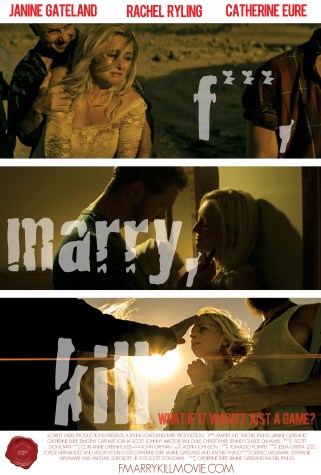
One of the highlights of Gateland’s esteemed career came when working on the 2017 film F***, Marry, Kill. The horror flick follows three sisters traveling through the Mojave Desert on their way to their brother’s wedding. A sinister turn of events leads them to a twisted, maddening town where a psychotic, cult-like community kidnaps women and forces them to marry, procreate or be sacrificed. These residents seem hell bent on making it their final destination.

“I like the story because it is so real. F***, Marry, Killis actually based on a game.  People tend to play it at office parties, and I had heard Howard Stern was playing it on the radio. In the film we are playing the game in the car journey for fun, little did we know that would end up being our fate. The main guy in the film who you think is sweet and harmless ends up kidnapping my sister. Like most siblings, we knew we had to go on this car journey and somehow get along. What I like about the film is, even though all 3 sisters come from different lifestyles and bicker, they become a girl powered strong team when things go badly wrong,” said Gateland.

The film is, in Gateland’s words, “very girl powered”. Her character, Tiffany, is the oldest of the siblings. She had a great job, husband, and she was happy. However, everything went wrong when her husband cheated on her. She turned to drowning her sorrows with alcohol and becoming a bit too much of a free spirit. She shows up on the road trip to her brother’s wedding with her new fling of the month, who also happens to be a drug dealer. As the eldest sibling, she knows she’s always being judged by her sisters, but after everything she has been through, she doesn’t care anymore.  When the journey takes a turn for the worst and their lives are in danger, Tiffany realizes she has to step up and becomes the strong, ballsy sister who has to protect her sisters. The role really pushed Gateland’s boundaries both physically and mentally as an actor.

fmk poster

F***, Marry, Kill premiered in 2017 at Sunscreen Film Festival. From there, it had an incredible film festival run. It has won several awards, including the Semi-Finalist Award at Los Angeles CineFest, Honorable Mention at Los Angeles Movie Awards, and was a winner at Hollywood Verge Film Awards and Direct Monthly Online Film Festival, to name a few. Such success could never have been possible without Gateland’s captivating performance as Tiffany.

“It is a wonderful feeling and I am so proud to be a part of it. A lot of hard work went into the film and I know I worked hard to make my role as memorable as possible. We were very lucky because we made time for rehearsals too, which doesn’t always happen in film. I am so pleased the film has got into so many festivals around the world and there is still more we are waiting on,” said Gateland.

Undoubtedly, Gateland is an exceptional actress, with an impressive career behind her and much more to look forward to. She has no plans on slowing down, as each time she steps onto a film set, she feels the same adrenaline rush that she did the first time. For those looking to follow their dreams into acting, she offers some wise words based off her years of experience.

“Make sure it’s something that you can’t imagine living life without. It has to be your passion and you have to be good. The amount of rejection you get can have an effect on your confidence. You have to be able to take risks and have a real drive to really want it, otherwise go home. You can’t be lazy, you have to put in the work 150 per cent and keep at it. To be successful can take years of training, experience and building relationships. It’s usually very rare to get that ‘big break’ when someone notices you, so you have to go out and find the work yourself.  Plus having a strong support system is tremendously important and having a motivated and well-connected representation that has your back,” she advised.

Check out F***, Marry, Kill, and be sure to keep an eye out for Gateland’s future works.


Top photo by Joseph Sinclair

Writer and Director Claire Leona Apps takes showcases the Great North Run in acclaimed film

Writing has always come naturally to Claire Leona Apps. She loves telling stories and loves how they serve society; they can teach us and warn us, they can entertain while serving a greater purpose. A good story can create conversation and express ideas that help us relate to new points of view. It’s a powerful tool, and Apps understands that. Her passion for storytelling translates directly into her work as both a screenwriter and a director, from the words she puts down on a page to the way she puts it together in front of a camera, and she captivates worldwide audiences with films.

Apps is an in-demand writer and director, with a series of decorated projects highlighting her esteemed resume. These include her acclaimed films Gweipo, Aceh Recovers, Ruminate, and And Then I Was French. She is known for her ability to showcase the lives of underrepresented characters and bring a dark sense of humour to a story.

“I try not to get so caught up on the real world with my work. I have to deal with that every day anyway. I like a little surrealism, a little irony, and films that are a little self-aware,” she said.

That is exactly the message Apps puts out with her film Girl Blue Running Shoe. The film follows the daughter of a runner participating in the Bupa Great North Run as she makes a film as he trains and runs the race. The film begins calmly with a serene domestic set-up, building pace as the race begins, cutting between the training day and the marathon. At points which demonstrate the intensity of running, a special zoetrope effect is used, breaking down the movement of running into paused actions, reflecting the rhythm of the action – the steady thumping of shoes on gravel, a beating heart, breathing. The piece is shot solely on Super 8, edited to emulate both the excitement of the daughter as an observer and the adrenaline of the participator. With a soundtrack of enhanced natural noises, Girl Blue Running Shoeis an evocative celebration of the human body whilst also telling the simple story of a father-daughter relationship.

“It’s a story about loving and sharing in the experiences of the people you love. It also dissects the movements of running,” said Apps. “Usually I do pretty dark things. It was nice to do something that ended up in a children’s film festival line up. It’s nice to just show love, simple straight forward love between a father and daughter,” she said.

Apps wrote the story and pitched it to the British Arts Council to commission the film. When she got the commission, she immediately began directing, coming up with a new camera technique for the film. The story has two components. One is a daughter watching her father run the race. He is doing his hobby, running, and she is doing hers, filmmaking. She films him running on a Super 8 camera. Therefore, as the director, Apps decided to shoot the whole film on Super 8 cameras. This truly allowed audiences to immerse themselves in the girl’s point of view. Apps also had the idea to use the sprocket holes of the physical film and the division between the different pictures to create a zoetrope like film effect. She did this all by hand: slowing the footage down and cranking it through a projector to be re-filmed.

Shooting took place at the Great North Run in Newcastle, England, one of the biggest half marathons in the world. This presented a unique challenge for Apps, who had to shoot a fictional story around a live marathon. Therefore, the actual shoot was extremely fast. She had to make quick decisions to deal with whatever came their way. There were roads shut off, spectators everywhere, and of course the runners themselves, and they had to move all around them with a child actress.

“The hardest thing about this project was finding the right kid to play the lead. It is a large ask to have a child give you full energy for a few hours of extreme intensity, but Adrianna Bertola, who played the lead, was a dream,” said Apps.

The film premiered on BBC during the Great North Run the following year. It went on to be at the Great North Museum for an exhibition. It was also an Official Selection at the Cork International Film Festival. The success was wonderful for Apps, as the shoot was a chaotic and fun experience.

Now, Apps is currently working on another feature film. She is a truly exceptional filmmaker, engaging viewers of all ages, which is evident with her work on Girl Blue Running Shoe. She knows the key to her success is working hard, and she encourages all those looking to follow in her footsteps to do the same.

“Prepare yourself for a lot of hard work and don’t expect anyone to discover you. We live in a world at the moment where you can generate a lot of attention by yourself and you can make films on your phone. Make something and keep going,” she advised.

Visual Effects Artist Jie Meng is living his childhood dream

One of Jie Meng’s most distinctive childhood memories is watching The Lord of the Rings movies for the first time. After watching the first film, he was left speechless. Not only were these movies entertaining, but also artistic masterpieces. He began watching the films over and over again, constantly overcome by the magnitude of the stunning visual effects. He realized, even at that young age, that filmmaking could make fantasy a reality, and that was when he knew he had to be a part of that world.

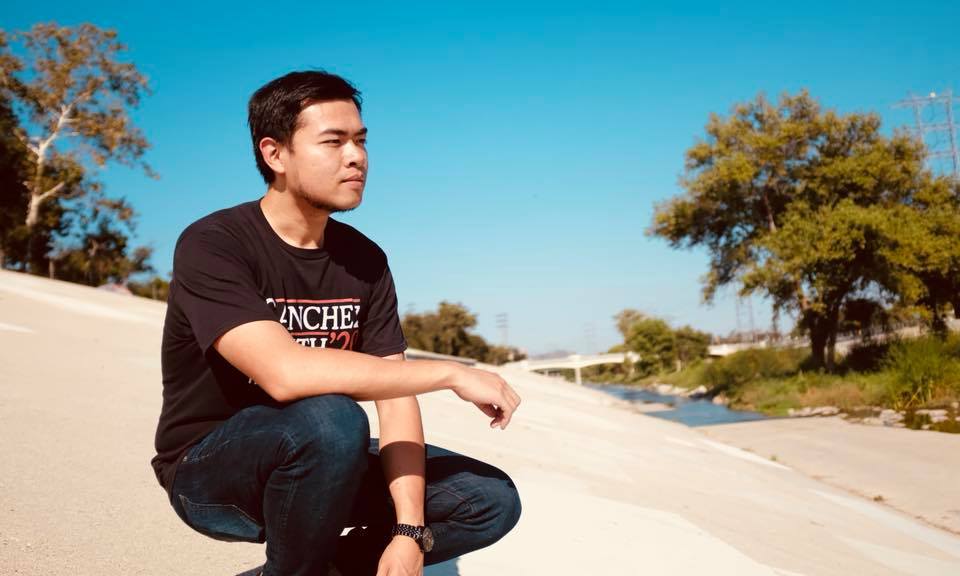
Now, Meng is an in demand Visual Effects Artist. He is known for his work on countless films, including Avengers: Infinity War, King Arthur: Legend of the Sword, Guardians of the Galaxy Vol. 2, and more. His talents extend to television, such as The Americans, and Freaky Friday, as well as video games, like Quake Champions and Call of Duty: Black Ops III.

“I worked with Jie on Call of Duty: Black Ops IIIand later on Captain America: Civil War.

Jie is a talented FX artist. He strives to create the highest level of quality and is constantly pushing himself to learn new techniques, either independently or from the team around him. He listens to positive feedback and can build FX setups and tools that are used by multiple artists. This makes him extremely productive, a pleasure to work with and I hope to work with him again in the future.” said Peter Claes, FX supervisor and Lead VFX artist at The Mill.

Captain America: Civil War was Meng’s first true taste of movie blockbuster success with his work. The film, the third Captain America movie and the 13thof the Avengers franchise, grossed over $1 billion at the box office. It was nominated for 17 awards at various festivals and award shows and took home five. Meng worked tirelessly to make this a possibility.

“It was a huge pleasure and honor working on this film. The success made me think of those days when I devoted myself to the work, and now I realize that all my efforts paid off,” said Meng.

The movie sees the beloved Captain America pitted against Iron Man due to political differences. A vast array of Avengers appear throughout the film, taking sides. It’s a story about friends and brothers. It’s a debate between freedom and obeying the rules. Meng had always been a fan of the Marvel franchise and the Captain America films, but he knew this film would be something special and that he had to be a part of it.

“After watching the movie, I thought a lot. It actually reflects a lot of problems in our current society, an individual always wants to be free but also needs to follow the laws. I like movies that reflect the social status and will bring up a topic and let me think about it, and Captain America: Civil War is one of them,” said Meng.

When it came to the effects, Meng worked on many shots in several different sequences. His focuses were the roof helicopter fighting sequence and the final battle scene. He finished all different kinds of effects for various sequences, with little touches that dramatically added to the film.

Meng’s main task, however, was developing the Ironman thruster tool in the final combat sequence between Captain America and Ironman, the climax of the film. Therefore, he knew that his role was of the utmost importance for the film’s success. The tool needed to be packed and shared with other artists at both Los Angeles and Vancouver studios to finish every shot that contains Ironman’s thruster. It needed to be designed as a “one-click and automatically build the thruster” tool, but also contains all kinds of functions to modify and art-direct the thruster effects. Meng re-designed the thrusters from Iron Man 3and packed in a whole new digital asset. Every time he modified and polished the tool, he optimized it and made the tool easier to use. In doing this, he gathered the feedback from different artists and made it more and more productive. The whole process of building the tool was a very valuable experience for Meng and bettered the film as a whole.

“Being part of this feature film, witnessing the whole VFX workflow in the post-production made me completely understand that the VFX process is never easy. The most comforting, and also most important part was I have learned a lot from this project about how to build a digital asset tool that can be used in the visual effects production and was inspired by all the VFX artists around me,” he said.

Meng also worked on other different effects like the debris, smoke, sparks, snow, etc. Those photo-realistic effects elements completed the movie sequence and created a stronger visual impact on the audience. The experience, overall, was a great honor for the visual effects artist, and he wouldn’t change a thing.

“When I saw the film premiere and my name on the credit list, I was so proud of myself and the whole crew members, and that was the most exciting moment to me for watching all my effort paid off and it was so worth it,” he concluded.

Colorist Cynthia Chen shows emotion behind Sichuan Opera masks in award-winning film

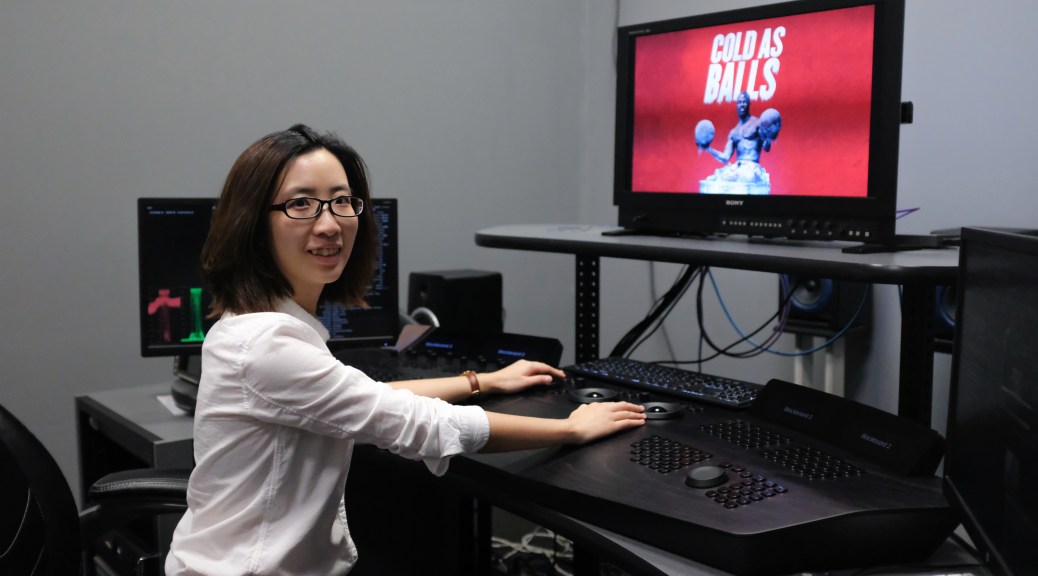
When Cynthia Chen was a little girl growing up in China, she was always inspired by her mother. She was an art teacher, and a young Chen therefore began painting from a young age. She was always sensitive about the different colors she used and playing around with color always amused her. As she grew, this fascination only intensified, and she found it impacting her hobbies. She began to have an interest in photography just to play around with the photos while editing, changing the colors and enhancing them to create a captivating piece of art. When she began filmmaking, she realized how impactful color is to every shot in a piece, conveying emotions and acting as another way to tell a story. It can impact film styles, she realized, and when she already had an interest in editing films, she realized that being a colorist would allow her to explore this interest she had from childhood and turn it into a fruitful career.

Chen is both a highly successful editor and colorist. Her passion for what she does is unwavering, her talent unparalleled. Every project she has been a part of, including I Don’t Want to Sleep Alone, OffsprungSlingshot Prince, and The Last Page, have gone on to critical acclaim at many of the world’s most prestigious film festivals thanks to Chen’s efforts.

“Just like editing has a rhythm to tell a story, the color, as another method to express the emotions, also can have a “rhythm” when it comes to contributing to create a film. I believe a film masterpiece must be treated and polished as a great art piece. Color grading enhances the texture of a film picture which makes it become a completed art piece. Every time I finish the color grading works, the group of filmmakers I am working with are always shocked after seeing the before and after pictures. That is my proudest moment. The whole color grading process makes me believe that my talent brings this film into a higher level,” she said.

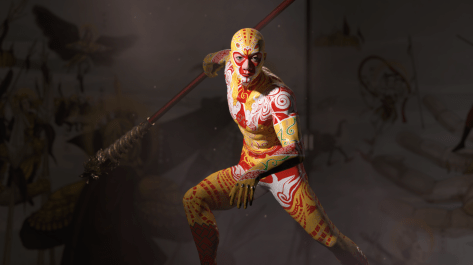
One of Chen’s greatest successes as a colorist was the film Mask. The animated drama looks into masks in Sichuan opera that are traditionally used to reveal the changes of inner feelings and emotions of the characters participating in the drama. The masks turn abstract emotions and mental states into visible and sensible concrete images, and reveal the feelings of the characters inside the story. By raising the hand, swinging a sleeve or tossing the head, an actor uses different masks to show different emotions, expressing invisible and intangible feelings through visible and tangible masks. Mask, is inspired by Sichuan Opera Face changing. It is a story behind a mysterious mask, which shows different patterns as different lights go through.

The three characters in the film are heroes from different traditional Chinese historical contents. Qingshi Huang, represents as the breadth of vision, is the first king in Qing Dynasty.  Monkey King, one of the most famous and classical characters in Chinese fairy story, the guardians of his master, as the leader protected his group on the West Road, through eighty-one trials and finally reached the goal. Zhuge Liang, the smartest military advisors from three kingdoms era, served for Bei Liu, represents wisdom and loyalty. Those characters are also three heroes in Chen’s heart. For the Chinese native, it was an honor to work on this film that has a deep Chinese culture background.

MASK_still_6

According to those three different characters, Chen decided basic color tunes for each one. The king Qingshi Huang has a yellow and green color tune because in Ancient China, yellow means power in social classes. Zhuge Liang, who represents wisdom and loyalty, uses a blue color tune as the main color base. In the color theory, blue connects to calmness and cool emotions. Chen set golden and orange color tune for the brave Monkey King as those colors stand for positive minds, passion and braveness. Therefore, the scenes where those three characters appear, and the weapons on their hands, have the unite color tunes.

As the entire film was CGI, the renders had a strong contrast in colors, which Chen thought looked very digital. To solve this problem, she decreased the contrast of the entire picture, adding some yellow color tune and film grains. She then adjusted each scene for each character, and finally finished the color grading work. She helped to bring the whole picture to a new stylized level.

“This short film had a very large creative space for me to try on the different color palettes and stylize the picture, which made this piece very interesting and fun to work with. The CGI images contain more color information than the images shot by cameras, so there was a lot of space for me to adjust the color for this film,” said Chen.

Mask had a tremendous film festival run with the help of Chen. It was an Official Selection at the New Media Film Festival and the Asian Film Festival of Dallas 2018. It also went on to win the Award of Excellence at both the Best Shorts Competition 2018 and the One-Reeler Short Film Competition 2017. Chen could not be happier about the film’s many accolades.

“It was such an honor to work on this project that explores such an important part of Chinese culture. This is a milestone project in that it was a brand-new experience for me. The success of this film encouraged me to do more color grading work in the future which has more culture background,” she said.

The new works Chen has contributed to, feature film Indivisible and documentary Fantastic Fungi, are expected to be released later this year. Be sure to check them out to witness this colorist’s talent first hand.

Cinematographer Yang Shao talks ‘The Great Guys’ and philosophical filmmaking

Yang Shao always knew he wanted to be a filmmaker. He loved the idea of sharing his views with the world, and filmmaking is the ultimate way to do so. Born and raised in the Eastern part of China, he wants to share his passion and viewpoints with the world and bring heartfelt stories to the cinema.

“Modern cinema being predominantly shaped by the western culture is in my opinion missing some jigs of the puzzle which I think eastern culture can offer. Films can be entertaining without having one guy kill everybody around him. Life is so much more than just guns and murders. Beauty and soul of the world – that’s what I want to share with the world through my cinematography,” he said.

It is such a philosophy that has made Shao an internationally sought-after cinematographer. His contributions to films such as A Better World, Under, and Once More have asked audiences some of life’s biggest questions while captivating them with their stories, and the comedy horror television series Life is Horrible has brought joy and tears of laughter to viewers all over the world.

In Shao’s most recent film, The Great Guys, he explores a magical world through the lens of his camera. The film follows a fairy who comes to earth to look for the greatest kid to keep in her home, which is in a fairytale world. She meets eight kids and hears eight different stories. At the end of the story, she decides to bring all those eight kids back to her home together. The story reminded Shao of his childhood.

“To be honest with you, as a kid I always believed in magic. I was a naïve kid when I was growing up and I think that helped me become and achieve those results in the film industry. I try to always stay curious and allow things to surprise me. I think that’s what drew me to this story. I wanted to share this magical world with the young generation, including my own kids who are growing up in a completely different world today,” said Shao.

The Great Guys premiered at the San Francisco International Film Festival where it received the Best Director Award. The movie then was distributed in theaters across China. After a successful run, The Great Guys was sold to one of the biggest streaming platforms in China iQiyi. The Director, Jin Zhang, thanks Shao for the success the film received.

“An artist friend of mine recommended Yang as a highly professional and aesthetically exceptional cinematographer. Talented artists have their own vision of things, of ideas and scripts. We managed to find the midpoint where our visions met. To create an outstanding product, you need an extraordinary talent. I’m lucky to have had Yang on my movie,” said Jin Zhang.

Shao did indeed find ways to make each scene visually shine. He aims to light up every scene in a way that drives the story forward. There are different ways to do that, but specifically for this project, he decided to experiment with using only soft filling light of warm colors. He wanted to put more emphasis on the characters. The light therefore is what draws audiences’ attention to various parts of the scene, highlighting what to focus on. In this story, it also shows the difference between the protagonist and the antagonist.

Shao also used a hand-held camera to film, having long takes between cuts. With a magical story, he wanted that feeling to be conveyed at all times. Lots of colored filling light helped to achieve bright and colorful picture that played well with the story and highlighted the emphatic world saturated with magic.

“One thing that I particularly like is the dedication of the crew and the entire team to the craft. I really enjoy working with people who are not only professionals but who also are passionate about what they do. Passion is really what shapes the work and how you see yourself dealing with those people. Nine out of ten times when I’ve seen people had some issues on the set is when they were not driven by their passion. Passionate-driven people on set come from a very different place and in my opinion the final outcome is different in this case. More intimate and personal,” said Shao.

Shao’s favorite part of making the film, however, is the interest he received from his daughter. At the time he was reviewing the screenplay, she was only five years old. He was unsure if he had the time to take on the project, so he read the script many times trying to make a decision. When his daughter asked what he was doing, he began to explain the technical aspects of filmmaking. He realized, that rather that talk to a young child about these things, he’d explain the fairy tale script instead. Immediately, his daughter was enthralled.

“At that moment I thought that with this movie maybe I can get her closer to the magic and not let her think that our life depends only on technological progress. And I did. With that movie my daughter and I started talking about more fun and kid stuff,” he said.

So, what’s next for this industry leading cinematographer? Keep an eye out for Shao’s three upcoming features, NeedIn the Middle of the Night, and Excel on the Highway.

Ukraine’s Alina Smolyar enchants audiences in award-winning performance

Actress Alina Smolyar knows the challenges of her chosen career path. Memorizing large amounts of text, researching characters, drastic physical appearance changes, lack of sleep, transforming into another person, working in extreme weather conditions, the list goes on. However, without such challenges, acting wouldn’t be what she fell in love with when she was only a child. For this internationally sought-after actress, these obstacles are what drives her.

Every project any actor takes on has its own set of challenges, and Smolyar not only accepts this fact, but enjoys it. When working on her film Molehill, which is perhaps the actress’ most decorated film to date, she was faced with what seemed like an endless list of obstacles to overcome, and although it was daunting, this is where she shined.

“Honestly, Molehill was one of the most challenging projects I’ve ever worked on. I thought it would be a disaster! No jokes. But this journey made it all the more rewarding when everything came together,” said Smolyar.

Molehill is an artistic film that follows a group of friends at a party. Audiences are kept guessing until the very end, never knowing what is going to happen next. The ending is completely unpredictable, encouraging audiences to think long after the film concludes, giving the impression that it is a beginning rather than an end.

“I like when it’s unexpected in movies, we as an audience always remember this type of film,” said Smolyar.

Smolyar’s character in Molehill is Leigh, an adult in her early 20s who became older earlier than she’s supposed to. She has a full-time job, her mother is going through health issues, and she has a lot to deal with at home. She finds the need to protect her younger brother Sid, who upon turning 21 becomes very wild. For him, he is having fun, but for Leigh, it is another problem to take care of. She doesn’t have time for herself, to enjoy life or to go out and find a guy. She is incredibly stressed. Her character works in a contrast with everybody and everything around her. From the very beginning we can hear and see a party, people are having fun and this black spot named Leigh who’s so serious and stressed and everything goes wrong for her.

“You know when we are over stressed and it’s so hard to focus on something positive, because it’s like a tornado? You just keep dealing with all this craziness around you. That is the exact struggle Leigh is facing,” said Smolyar.

Smolyar faced a similar struggle when she began working on the film. As a writer of Molehill, she had a different idea of where to take the story, but it wouldn’t work for the film. At the time, she had no idea what else she wanted to share or how to share it. Upon meeting with her director and producers, inspiration struck and she was able to come up with a story she liked.

“You know that feeling when you have to do everything very fast, but you have a white sheet or a monkey with plates in your head? That was me. I had no idea what else I wanted to tell, and we were running out of time,” she recalled.

When making the film, Smolyar was also one of the producers, a role she had never taken on before as she typically focuses on acting. She found her experience as an actress helped with her producing role.

When it came to acting, she put herself fully into Leigh, understanding her struggles and motivation behind every move she made. The arc of the character was important to Smolyar. It was part of her initial idea and was vital for the film.

“It was complicated for me. I guess at one point it worked very well for my acting perspective, because you can definitely see that contrast which I needed for Leigh. I was as stressed in my real life as Leigh was in hers. However, all my preparation for the project as both producer and actress helped to create my Leigh,” said Smolyar.

Being the writer, producer, and star of the film was an enormous amount of responsibility for Smolyar, but she enjoyed that. Molehill truly felt like her film, more so than any other project she had done before. She found wearing so many hats allowed her to become a better actress, and when the film became so successful, she knew she had done her job right.

Molehill premiered last May and then made its way to several festivals both in the United States and around the world. It was an Official Selection at Cine Fest, Festigious International Film Festival, and Mindfield. Smolyar herself was also awarded with Best Actress at the Actors Awards, New York Film Awards, Los Angeles Film Awards, and Oniros where she won Best Acting Duo. The result astounded Smolyar, who although had tremendous success with past projects, did not expect it for her own film.

“It still feels pleasurable, especially when you didn’t expect this kind of success. It feels great when you’re getting recognition for what you’ve been working on and especially when you do what you love,” she concluded.

Be sure to check out Smolyar’s upcoming films 1stBorn, and Skeleton in the Closet.

Yun Huang talks editing powerful new film ‘Stardust’

Editing is about emotion, and Yun Huang knows this well. In order to be successful in her field, she knows that understanding every detail in a script is a necessity. She does not simply put footage together, she tells a story, and she has to know the best way to captivate an audience.

“Being an editor provides me with a chance to tell the story to the audience in my way. I can alter a script if necessary and trust my emotional instincts. I connect with people. This job provides me with a great sense of accomplishment,” she said.

No matter what project she takes on, Huang is sure to keep the story at the forefront of her mind while editing. This is evident in all she does, from the powerful commercial “Choice” encouraging girls to follow their hearts, to the informative and telling docuseries Unveil China Outside China, educating its viewers all over the world on the country’s social and political happenings.

The challenge of any new project is that I have to figure out how I can attract the audience best; for example, how to make an audience laugh at the point that we set up. I always go to the cinema or some film festivals to watch with audiences to see their reactions based on the editing. I should know their thoughts and therefore know how to make my work resonate with the audience,” said Huang.

Huang’s most recent film exemplified just how she connects with viewers. Stardust tells the story ofa male Chinese agent who, loyal to the country, finds out that his most trusted partner, a female Chinese agent, betrays their country. However, as the story progresses, he begins to question his beliefs and the truth.

“I like the story. I’m touched by the soldier’s loyalty to the country and their missions. I believe that showing this kind of emotion is what film is all about,” said Huang.

After premiering earlier this year, Stardust has gone on to several prestigious international film festivals. It was an Official Selection at both the Austin Spotlight Film Festival and Direct Monthly Online Film Festival, an Award Winner at Accolade Global Film Competition, and the winner of Best Action Short Film at Five Continents International Film Festival. With all this, Huang herself was awarded Best Editing at Festigious International Film Festival.

“I was so excited that it got so many awards, and I got an editing award. It just goes to show that hard work and determination will pay off,” she said.

Huang was both the video editor and colorist of this short film, and it was her first time working on a film in the action genre. Initially, she was unsure if she wanted to work on the project, normally leaning towards relevant dramas and documentaries. Before deciding to take part in the film, she talked with the director, Shihang Qu, several times. He told her that he really loved Wing Chun and other kinds of Kung Fu since he was a child, and he always dreamed of directing an action film. She was moved by his efforts, so she decided to take on the project and help the director achieve his dream.

“Shihang is very nice, and he listened to me and considered my suggestions. He accepted all my recommended changes. I really like being respected,” said Huang.

It took over six months to generate a final cut of Stardust. With every day they were shooting, Huang would then look at the footage. This is not a common process, and normally the editor receives all the footage at once in post-production. However, by adopting this style, Huang not only got a better understanding of the story, but also an idea of what the director envisioned. This also allowed her to make suggestions that were instantly implemented. For example, there is a shot of the main character in a scene when they were fighting with bad guys. The director had initially planned for it to be put in the middle of the film as it showed in the script, but Huang thought it would be better if it was moved forward in the story, as the opening scene. It instantly captivated audiences and allowed for the story to be told as a memory, slowing the pace of the beginning and speeding up at the end.

In the end, Huang changed the structure of the story which made the short film more attractive and meaningful. Her instincts as both an editor and storyteller are always fruitful, and she will no doubt continue to have an impressive career. Keep an eye out for her future work.

Aida King brings on the laughs in hilarious comedy ‘Desert Drive’

Photo 2018-05-28, 1 11 53 AM
Aida King

To succeed in acting, Aida King knows there is nothing more important than self-confidence. Never be conceited but know who you are as a person and how much you are capable of. This is her mantra that drives her and is why she is such a renowned Canadian actress. She has never lost belief in herself, and when audiences watch her on both the big and small screen, she radiates.

King is known for her work in celebrated films like The Convicted, Hemorrhage, and War of Mind. She has worked with award-winning filmmakers and well-known actors, including Alexander Michael Helisek, a veteran actor and producer in Hollywood. Known for his work on the Golden Globe Award-winning television series This Is Us, the Golden Globe Award-winning hit feature film Interstellar, which starred Matthew McConaughey and the two-time Golden Globe Award-nominated popular television series Silicon Valley, Helisek was greatly impressed with King when they worked together on Desert Drive.

“I was lucky enough to have the opportunity to work alongside Aida, as an actor, in her leading role of Missy Lee on the comedy film titled Desert Drive.Aida was absolutely essential to the critical acclaim and commercial success of the film. Her character needed to be depicted by an actress who could convey the necessary warmth, romance, comedy and sincerity that makes her a relatable character to the audience. Aida was able to accomplish all of this and more in a performance that was at once full of force and subtlety,” said Helisek.

Desert Drive follows the life of four Los Angeles based musicians who travel from Hollywood to Palm Springs for the Coachella Music Festival. Instead of harping on aimless debauchery and excessive drunkenness, the story documents the eventful two-hour ride and all the intimate conversations and crazy obstacles that transpire on the action-packed pilgrimage.

“It’s a fun slice of life story that I think people that travel together would appreciate. When travelling in close uncomfortable quarters for a long period of time, sometimes patience can run thin and emotions run high. It’s a fun comedy with interesting characters of substance,” said King.

This movie was filmed in May 2015 and premiered at a Hollywood movie theatre later that year. Not only is the trailer featured on the distinguished website “Funny or Die”, Desert Drive was also an Official Selection at the Ozark Short Film Festival in the Summer 2016. King was proud to be part of a team and found that the chemistry between the characters is why the film went on to do so well.

“I cannot deny that I love hearing people laugh when they watch this film, as that’s the biggest thrill of all for me,” she said.

King’s character, Missy Lee, is a musician who is determined to spice up intimate conversations with the other traveling musicians as they travel for many hours to their destination.

Missy Lee was a happy-go-lucky girl that was content with being in the company of friends, no matter what the situation was. She was definitely a people pleaser and tried to make the best of any situation. While she knew that she was naïve, she was comfortable with that role among her small group of oddball friends.

While she was a bit of a third wheel friend, this character brings balance to the oddball group. While every person was completely different from one another, she played the comic relief to offset tension in the storyline and also the confident when moments were more intimate. The controversial and hilarious lines are the most pivotal plot points in the entire narrative. With such an important role, King knew she had to deliver a captivating performance to bring the film to success, and that is exactly what she did.

As The Convicted was a drama, flipping over to a comedy was a great chance to present a completely different character. This was a huge opportunity to show her versatility and show her comedic creativity. As a Canadian, the comedy culture is highly regarded, so it was natural for King to want to be a part of this film.

“I appreciated working on a character that was light hearted and fun. This was my first time doing comedy, and I loved it,” said King.

King was brought on board after the successful completion of The Convicted, the Director and Producer of the film, Josh Mitchell, decided to bring the actress onto his new projects after being greatly impressed by her talent and work ethic, both of which King is well known for.

While filming, King’s greatest challenge came from filming in the desert. Far from the climate in her home in Canada, spending hours in a small van in hot temperatures was a new experience. However, she would never let this get her down, and found that it only helped her feel as if she was truly on her way to a music festival with a group of her close friends. Eventually, that is what the cast became.

Be sure to watch Desert Drive on Vimeo on Demand to catch out King’s comedic performance.