IN BRAZIL & GREECE, MODEL-ROCKSTAR IS PRONOUNCED “TAPIGLIANI”

Image-21

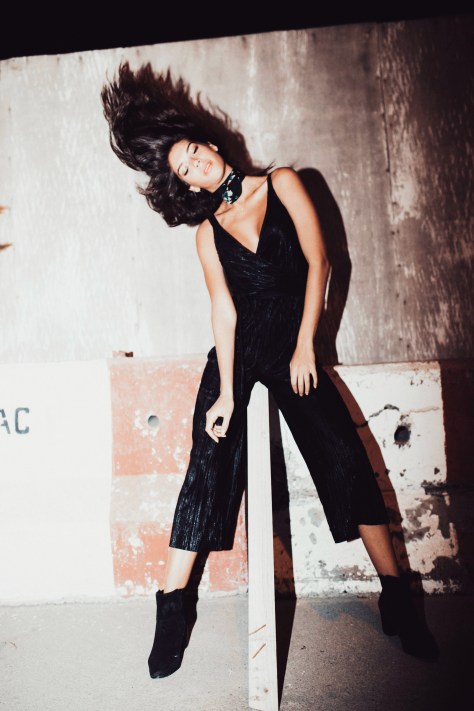
During music award show season, it’s likely that you have seen constant advertisement declaring pairings of artist as “the performance of the century that you cannot miss!” While most of these never match the hype, one collaboration which has been an overwhelming success is fashion-meets-music. Most Americans are very familiar with the Victoria’s Secret special which features their fashion models and popular music artist; in Greece, a similar production is the famous Madwalk. Madwalk is the most popular show of its kind in Greece, combining famous singers and the work of well-known fashion designers. The show airs on television once per year and has done so since 2009. It’s a presentation of what is wonderful and beautiful in Greece, the centerpiece being the lovely models which adorn the creations during each performance. For model Alana Tapigliani it’s an opportunity to do what she is known for and celebrate Greece at the same time. Tapigliani appeared in 2012 presenting the Deux Hommes brand. Madwalk is more than an awards program for Greek citizens; it’s a national event and they take great pride in the artistry of their country. Even though Alana is known for her international modeling career, she admits that appearing on Madwalk had the result of her being stopped by the public to a much greater extent than ever before.

There’s a duality to the attention one receives from being involved in such a prestigious show as Madwalk. Alana’s excitement about appearing on the program was heightened by the exuberance of her friends and family. This is certainly meaningful on a personal scale but professionally, the fruit of this appearance made Tapigliani a very sought after model in Greece. While often admired, models don’t always receive the praise of other entertainment professionals; the praise Alana received from her appearance was a welcome exception to the common rule.

The Ace agency from Athens chose Tapigliani to work with designer Kostantinos Mélis for Madwalk. Mélis found his eponymous haute couture house in 1997 in Greece after a stint in London. Known for designing wedding gowns of exceptional aesthetics and quality, he then turned to a collection of haute couture gowns. His designs have been equally embraced by critics and the public, often donned by celebs on the red carpet.

Appearing as the only model representing the work of Melis was beneficial for any professional, a fact recognized by Alana. However, this was only half of the fun for her involvement in Madwalk. Each model is paired with a famous singer and Tapigliani made her appearance with Giorgios Mazonakis. The iconic Greek singer sang “Parole.” Being sung to by a music artist everyone knows while you are wearing dresses of incomparable beauty; it was no less than a magical moment for this model, but not one without concern. She reveals, “Of course I was very happy and excited to be there. In your mind you think that everything will be perfect and that’s what you want to portray for the audience. It’s their moment, not really your own. In truth, there were a million things going through my mind at the time. As a native of Brazil, the negative-four Celsius winter in Greece while wearing a dress was less than comforting. Towering high heels may look great, but the experience is equally uncomfortable. I wouldn’t trade it for anything but my pleasant expression during the appearance was not completely honest. At some point I was able to be lost in the moment.” For Alana, that moment was when the music took over. There’s an undeniable power to music which allows all people, models included, to don a powerful stance. Tapigliani exhibited this during Madwalk, capturing all eyes as she strutted around the catwalk. The music, the lights, the DJs, and of course the designs which Alana and her fellow performers wore created a spectacle which transfixed the audience.

Image-14

 Madwalk may be a Greek event but it is viewed widely across the world. Tapigliani received attention from even more designers and took part in events like this in other countries. She credits Madwalk with giving her both the exposure and confidence to relax and enjoy them. Because it was the first experience of the kind, she confirms, “Madwalk was my first time doing this kind of a show with singers, the stylists, and the like. You never forget the first time, especially doing a live show like this one for all of Greece. At the risk of sounding trite, the biggest reward was doing Madwalk itself. Big productions such as this one have not been around that long and they give an opportunity for a model to do something completely different. A live event is always more challenging; an internationally televised one is even more so. I love doing work like this where the designs and the music excite me. Madwalk was the beginning of a new era for me and it will always hold a special place in my heart because of the start it gave me.”

Compositor Aaron Wei talks passion for the arts and working on popular commercials

Coming from a background in fine arts, Aaron Wei had been training in traditional painting since he was only a child. He spent his life imagining what he could do on the canvas, sitting in front of the blank slate for hours before commencing his first strokes. As he grew, he began using his artistic eye for photography. However, when he’d take a picture, he found himself manipulating it into something more. This is what thrilled him; sitting in front of his computer and fusing images together, taking a work of art and turning it into a masterpiece. As this hobby began taking over his life, he began wondering, what if he could do this with a moving image? It was that moment when his astounding career as a VFX compositor began.

With an extensive background in the arts, Wei knows just how to transform a scene in post-production to make his work look like it was part of the original shot. Whether working on the next anticipated blockbuster, like Zoolander 2 or Our Souls At Night, or an award-winning television show such as Quantico or The Affair, Wei knows how to transport an audience with his work. Working with The Molecule, Wei does what he loves on a daily basis.

“Aaron is one of the best talents that I have come across in my many years in the business. He stands out as an exemplary compositor who will make considerable contributions to the industry. He has a great eye and instinct that merges technical and creative skills to achieve a desired look that is extraordinary,” said Andrew Bly, CFO of The Molecule.

Wei’s all-encompassing career has him not only working on prolific film and television productions, but also national commercials. One of the highlights of his career came in 2016 crafting a spot for Toyota.

“It was the best project I hoped I could work on. It meant a lot to a relatively newcomer in this industry, like a milestone, so to speak. This project included some futuristic scenes with spaceships, space and planets, the scale of visual effects work I had never touched at the time. I was crazy about it,” said Wei.

The commercial for the Toyota Prius followed a boy that always looked into the sky, and one day, he realized his dream. He went to another planet and watched earth from there. Wei was lead compositor in this project. He composited the planets in the main scene, and a number of other shots.

One of his shots was from the World Trade Center observation deck, where the child ran over to the window and he looks into the sky. When looking at the city from such height, everything on the ground is very tiny. In the original shot, the view in the window was not recognizable, so Wei had to ensure that the viewer could understand that it was Manhattan. In the shot, he swapped the window view to a much closer up photograph of the Manhattan skyline so that audiences could see everything.

He worked on almost every other scene, responsible for the majority of the visual effects for the commercial, which relied heavily on this.

After the success of the Toyota commercial, Wei once again worked with a car brand in 2016. This time, it was for Smart Car. This commercial project was made to focus on the features of the Smart Car. They turn fast, are easy to park, and capable of going uphill. There were a lot of shots, and Wei helped to clean-up the background, from editing trees and removing the crowds. Smart Car is owned by Mercedes-Benz, and Wei was more than eager to collaborate with such a renowned brand.

“You know when you shoot something in public, there will be a lot of brand names on the street, air conditioners on the wall, satellite disks on the roof, pedestrians, trees etc. I had to clean up all those. I did a matte-painting for the White House background shot. In DC, it’s not possible to shoot a commercial in front of the White House, so for that, I had to recreate the scene from a bunch of photographs. I cleaned up the crowds in the photo, painted the lawn in front of it, and wiped out all the cars in the street,” Wei described.

The entire experience was awesome for the compositor, who loves the fast-paced working environment of a commercial. He looks forward to working on many more throughout his career.

Laura Santoyo Dangond’s sets in ‘Lockdown’ transport audiences to high school

Originally from Bogota, Colombia, Laura Santoyo Dangond has always been a fan of movies. Growing up, she watched her favorite films, like Matilda and Jumanji, and would see more than the story. She would ask her parents how the filmmakers were able to create other worlds and dreamlike elements. Although her parents did not have all the answers, they encouraged their young child to make her own hypothesis as to how “movie magic” was achieved, and she never stopped wondering. As she grew, exploring the world and various cultures, her hypothesizing never stopped, and eventually she turned her passion into a career. Now, Santoyo no longer wonders how to achieve the magic of movies, and as a sought-after production designer, she is now the one creating other worlds.

Throughout her career, Santoyo has shown just what an extraordinary production designer she is. Her work on films such as Tim of the Jungle, The Plague and Falling are just a few examples of what this acclaimed production designer is capable of. However, despite such success, Santoyo considers the pointed drama Lockdown as the highlight of her career.

“It is probably the most challenging and rewarding experience I’ve had in this profession. I loved working with that team of people; we all believed in the story we were telling and together we overcame so many difficulties. Particularly for me, it taught me the importance on trusting the people you are working with and to support each other. In the end it all paid off, because it’s been one of my most successful projects,” she said.

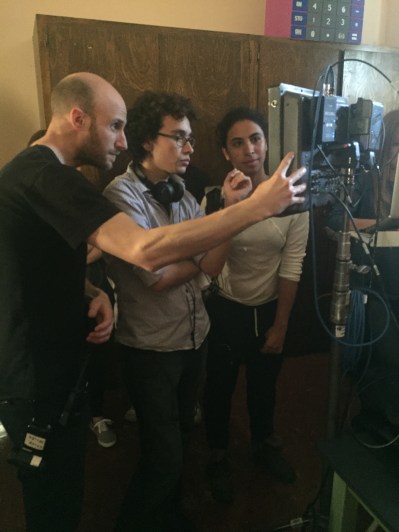
Lockdown set

Max Sokolof, Caleb Heller, and Laura Santoyo Dangond on the set of Lockdown, photo by Jane Hollo

Lockdown is about a 17-year-old boy named Julian. He is a misfit struggling through high school when he is taken hostage in the school restroom by Brandon, a classmate with a gun. Their perilous standoff proves that nothing is as it seems. Julian fights to hold onto the hope that he will survive – not just the hostage situation, but his entire high school experience. Throughout the film, audiences learn of both characters’ complicated backstories.

“This story talks about very important issues, such as depression and anxiety in adolescents, bullying in schools, access to guns, police brutality, and more that are affecting our society. It can help to bring these subjects to the table and encourage people who watch the film to have discussions about them,” said Santoyo.

After its premiere in November 2016 at the American Film Institute, Lockdown went on to be an Official Selection at many prestigious international film festivals, including the Orlando Film Festival, Garden State Film Festival, Sedona International Film Festival, Byron Bay International Television Academy Foundation for Best Screenplay and won the Golden Lion Award at the Barcelona International Film Festival. Such success may never have been possible without Santoyo’s outstanding production design.

“It is a great satisfaction to know that all the hard work, time and effort we as a team put into this project doesn’t go unnoticed and that we accomplished the purpose of telling a story that touched so many people,” she said.

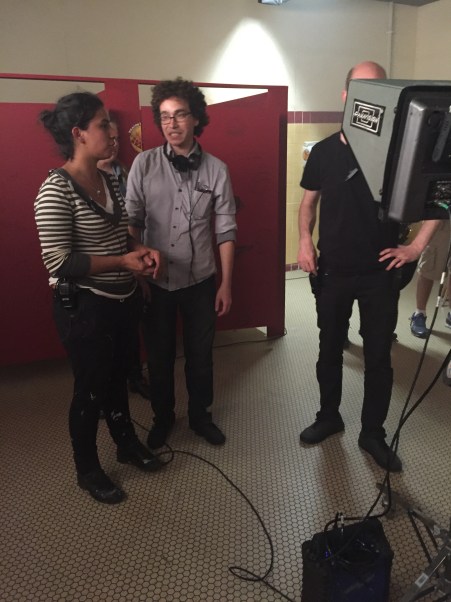
Lockdown bathroom set
Laura Santoyo Dangond, Max Sokolof and Caleb Heller on the bathroom set of Lockdown, photo by Jane Hollo

Having worked with Santoyo on his previous film Hotbed, the Director, Max Skolof, reached out to the production designer knowing the caliber of her work. At the time, he did not even have a clear idea of what the story was going to be, but he trusted Santoyo to help turn his vision into a reality. In the beginning, there was no script, and Skolof only had a newspaper article that he wanted to base a film around. Knowing the difficult but pressing issues the film addressed, Santoyo was immediately onboard.

“Working with Laura is a joy. She’s always curious, always soaking up ideas, always creative. She takes disparate things and puts them together in unexpected and revelatory ways. She has the highest standards for herself. Every detail is thought of. It helps me direct and it helps the actors find real depth. And on top of all that, Laura’s the kindest person you’ll ever meet. It’s also rare to come across someone who has such a strong and unique sense of aesthetics. She’s incredibly precise when it comes to expressing the story and the characters visually. Laura is brilliant in that way. She understands the language of cinema and she uses every tool at her disposal to help tell the story. Whether it’s knowing how to make use of space, or how to evoke a certain subtext with just color,” said Skolof.

When she begins every project, Santoyo makes sure to research her characters, and Lockdown was no different. She looked into what neighborhoods these adolescents would live in, the sociological and economic backgrounds and more, just trying to get to know as much information as she could to create a realistic design that would reflect both her leads.

Upon completion of the script, she did a breakdown of all the locations and noted what bits of the story took occurred in each place. When doing this, she noted the most important location in the story was the bathroom. Its design became her priority, and she began looking for a crew that would help bring her ideas to fruition.

“The design of the restroom was the biggest challenge because is where the two boys meet, and their feelings are revealed. We used a very restrained color palette that reflects the psychological state of both of them,” she described.

Rather than using a real location, Santoyo built the entire bathroom set on a soundstage. She went back to her research and looked for paintings and photographs that evoked the same feelings and emotions that she wanted to convey and saw a pattern in the colors. Most of the references she liked used yellows and reds. With that in mind, she did a preliminary design and presented it to the director. After his approval, she ensured all other departments, such as lighting and cinematography, could work with her concept. Once the designed was approved by everyone, the members of the art team, led by Santoyo, began sourcing the materials and painting samples.

The complexity of the two characters had to come across in the visual design and Santoyo achieved such a feat. She worked closely with the director, the director of photography and costume designer to better express the anguish and anger the characters were going through. The sets that she designed allowed the actors to better understand the characters’ backgrounds and helped facilitate the process of getting into character. In one instance, she even wrote offensive graffiti in the bathroom stalls that bullies may have written about their characters.

Such small details may seem trivial to some, by Santoyo knows how important they can be, and that is what makes her such a distinguished production designer. When watching Lockdown, audiences notice and appreciate how authentic the set is and allow themselves to be fully taken away to the high school. Any moviegoer knows, that is what makes a good film, and Santoyo makes that happen.


Top photo by Caleb Heller

Executive Producer Ed Egan talks reviving his childhood favorite “Catchphrase”

Headshot 1
Ed Egan

Ed Egan has been a television addict all his life. Ever since he can remember, he has loved watching television, and knew from an early age that he would work in the industry. Now, he is an executive producer working on some of the world’s biggest game shows. He is not only an industry leader in Britain, but internationally as well.

Ever since he began working in the industry, Egan has had ideas for new formats and ways to tweak current ones. Starting from the bottom, he worked his way up to executive producer and showrunner, now being able to create the shows that he has always wanted. His work on ABC’s hit 500 Questions was then recreated in Germany and the United Kingdom after its success in the United States, and he developed the concept for ITV’s 1000 Heartbeats, which went on a very successful run for the network. He started Tipping Point at its inception, which now has hundreds of episodes, and his newest series, Genius Junior starring Neil Patrick Harris, premieres this Spring on NBC.

Despite this success, however, the British native says the highlight of his career came when he revived the classic game show Catchphrase. The original was a childhood favorite and was one of the shows that gave birth to his love of television. Being able to bring it back to air, and film it in his hometown where the show first began, was a special moment for this seasoned executive producer.

“I had been a massive fan of this show when it was on TV when I was young, and so I jumped at the chance to bring it back to our screens so that people could watch it again, or discover it for the first time. The show is perfect. It is the ultimate play-along show, which I love, as people can’t help but try to shout answers out when they are watching. It is a game show that anyone can play and is suitable for the whole family which is quite rare these days. It appeals to people from 8 to 80,” he said.

In the original series, two contestants, one male and one female, would have to identify the familiar phrase represented by a piece of animation accompanied by background music. The show’s mascot, a golden robot called “Mr. Chips”, appears in many of the animations. In the revived version of the show, the same format remains, but there are three contestants and there is no particular attention paid to gender.

Egan’s thorough understanding of the original format was essential to bringing the show back and making it a success. He knew just what was important for the new version to be a hit again. He was able to bring on board some of the best game show producers and production staff in the country, and together they knew the right type of contestants to cast and the right level to set the gameplay at. Not only did he update the format, but he got a younger generation interested in the show, applying to be contestants and also watching each week. The casting producer of the show, Helen Finnimore, was extremely impressed with his talents when they worked together.

“I have known Ed Egan for many years as both a television production professional and a friend. Without doubt, he is one of the most respected executive television producers in the industry. Prior to being head-hunted to relocate and work in the United States, Ed had worked on many internationally recognised programmes here in the United Kingdom and has maintained his position at the forefront of the entertainment business through these incredible accomplishments,” said Finnimore. “I had the pleasure of working closely with Ed on the Catchphrase revival series here in the UK in 2013 and again in 2014. Ed is a rare talent, one of the few executive producers I have met who truly understands the British and American audiences. He’s fantastic to work alongside, maintains a level of professionalism throughout and moreover, has an unparalleled ability to develop and adapt new and exciting formats. This unique flair has become his trademark in the industry both sides of the pond.”

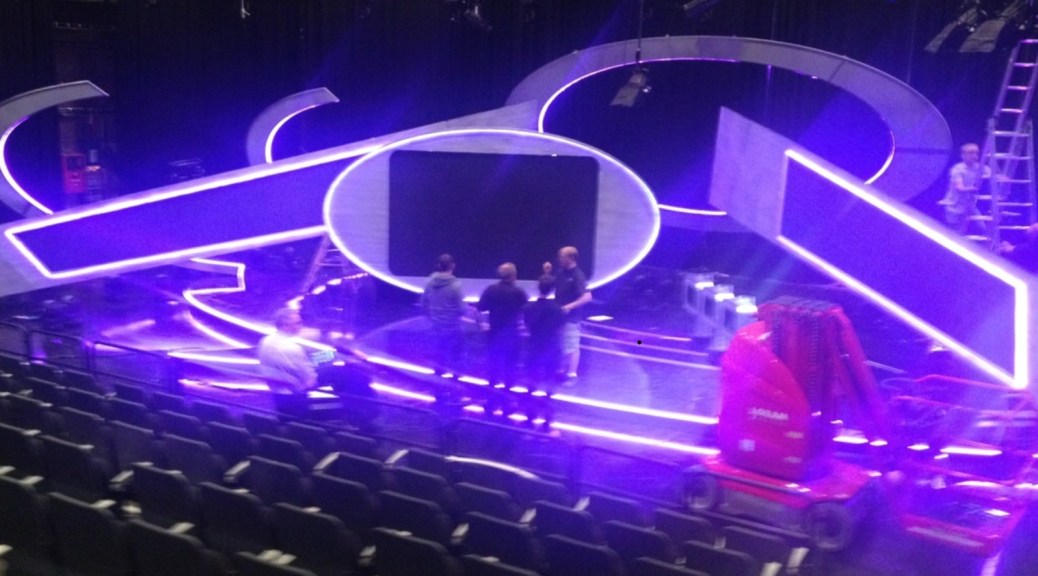
When STV was looking to revive the hit show, they approached Egan knowing of his reputation as a tremendous showrunner. At their first meeting, they offered him the job. Egan wanted to keep as many parts of the original format as possible, but he knew the necessity of updating the show to bring in a newer and more modern audience. The show is very graphics heavy, so he knew that one of his main roles was developing the new look for the animations, as the technology had moved on so much since the original series. Egan wanted to keep up with what people were used to seeing in the modern era of apps. To do all this, he put together a team that not only worked together well but formed a strong bond.

“I loved the fact that the team who I put together all became great friends, and it was a real pleasure to work on. It is a fun format and we had great fun making it. I became good friends with our host Stephen Mulhern, who is the nicest and most professional host a producer could hope to work with,” Egan said.

The relationship Egan forged with his host meant that they were able to be very open and honest with each other, which Egan says is essential to get the best performance from on-screen talent. It also helped calm his nerves about reviving a cherished show for so many people, but once the show aired, his worries immediately evaporated.

“I was nervous about bringing this show back as it had been such as huge show back in the 80s and 90s and I wanted people to like our new, updated and modernised version. I was so pleased that it did so well on its return and I’m very proud that it’s still doing well today,” he said.

The revival began airing in 2013 and Egan produced its first three seasons. The show is now on its sixth season, and since Egan brought it back, it has been the top-rated Saturday night show on ITV. His production and development work with Catchphrase and ITV, as well as such well-known production companies as BBC, Endemol, RDF Television, STV Productions and Warner Horizon in the United States, confirms his reputation as one of the industries go-to executive producers and a highly sought-after talent. He’s achieved a level of prominence rivalled by few in the industry and continues to build upon his achievements.  

Be sure to check out the revival of Catchphrase to see how Egan modernized a classic.


Showrunner Séamus Murphy-Mitchell dons Red Nose to raise millions for charity

Séamus Murphy-Mitchell has always loved television. As a child, he would constantly flick through the only two channels his family received, tuning into his favorite shows. Now, he makes his favorite shows. As an executive producer, Murphy-Mitchell is involved in the entire creation process, from beginning to end, and has a say in every aspect of a production; that is what he likes about being a showrunner. He gets to be creative whilst still being collaborative, and work alongside him have the same passion for television that he does.

“When I was a kid, I was once sent to a child psychologist to evaluate my lack of attention in class. Her final analysis was that I shouldn’t continue to watch Aaron Spelling serial dramas late into the night before school the next morning,” he joked.

This Irish-native has made a name for himself internationally, leading not only his country’s industry, but abroad as well. Having led shows such as hit BBC America series Almost Royal and the multi-award-winning BBC talk show Friday Night with Jonathan Ross to great success, Murphy-Mitchell has shown the world what he is capable of. His work on The Adam Buxton Podcast and 50 Ways to Kill Your Mammy show audiences just how versatile this executive producer is, and he is always looking for new challenges. This is exactly what he got when he decided to run the very ambitious, live broadcast of 24 Hour Panel People.

“Working on 24 Hour Panel People was very challenging, but in many ways illustrated all the best bits about working in television. We were working as part of a large team to deadline on a ground-breaking project. I’ve probably never been so sleep deprived as I was when we finally came off air, but we still went out and had fun afterwards to celebrate,” said Murphy-Mitchell.

24 Hour Panel People was a 24-hour, live broadcast to raise money for Comic Relief and run up to the United Kingdom’s famous “Red Nose Day”. Since its launch in 1988, Red Nose Day has become something of a British institution. It’s the day, every two years, when people across the land can get together and do something funny for money at home, school and work. There’s a fantastic night of TV on the BBC, with comedy and entertainment to inspire the nation to give generously. Comic Relief spends the money raised by Red Nose Day to help people living tough lives across the United Kingdom and Africa, tackling issues like poverty, hunger, and mental health.

“Comic Relief is a huge charity that raises an enormous amount of money and does a huge amount of good around the world. 24 Hour Panel People was a great example of how this charity always embraces new ways of engaging with an audience, and for that reason it was a great success,” said Murphy-Mitchell.

Taking on the network’s first 24-hour broadcast was a challenge Murphy-Mitchell was more than up for. Live from BBC Television Centre, from midday March 5th to midday March 6th, 2011, the epic event featured comedian David Walliams front and center alongside a revolving door of eminent comedians, sports stars and actors as he took on the challenge of hosting a mammoth and constant succession of the UK’s greatest panel shows past and present.

Including such beloved panel show institutions as Blankety Blank, QI, The Generation Game, Call My Bluff, Have I Got News For You and Whose Line Is It Anyway, Murphy-Mitchell produced the live show nonstop and seamlessly throughout the night, single handedly running autocue and the floor and ensuring Walliams was mentally alert, focused, funny and robust as he persevered throughout the night. He also brought a considerably younger audience to Comic Relief, ensuring the broadcast would succeed for years to come.

“Once the live broadcast came to its finale, Séamus then edited the entire 24 hours into 5 half hour compilation specials which were broadcast nightly on the BBC over the week of the Red Nose campaign. 24 Hour Panel People went down in charity history as a seminal, ground-breaking occasion which not only raised millions of pounds for Comic Relief but set the bar for future fundraising events across the globe, all with the help of Séamus,” said Suzi Aplin, executive producer of Comic Relief and 24 Hour Panel People.

When Aplin was looking for a showrunner to produce the show, which in the end amounted to 22 different comedy entertainment formats in 24 hours, she knew she needed an experienced executive producer to lead the broadcast to a success. Having worked with Murphy-Mitchell in the past, she knew he not only had the talent, but would be up for the challenge. Once he was approached, Murphy-Mitchell knew he wanted to produce the show. The BBC had never attempted a 24-hour broadcast before, and he knew he could help lead the inaugural broadcast.

“It was a really exciting project from the very beginning. I had worked for Comic Relief in the past and I was very keen to work for the charity again, particularly on a project so unique and unprecedented,” he described.

From the moment pre-production began, Murphy-Mitchell and his team were frantically busy. They had to secure the format rights for the 22 different shows they were going to have on the show, and once they achieved such a feat, they had to then break them down and figure out how to adapt them into a 24-hour time period.

“Securing rights was a big part of the project’s success. I spent a long time convincing Sir David Frost that we wouldn’t destroy his Through the Keyhole format. In the end, he was delighted with its contribution to the success of the night,” he said.

After achieving this, they had to book tickets and fill the chairs for each of the shows. Murphy-Mitchell had three teams assigned to this Herculean task, as hundreds of people were needed to fill all the chairs. Each team looking after an average of five formats, along with three directors to work eight hours each throughout the night.

“Most of us didn’t sleep at all for 40 hours or so as we were all up at the crack of dawn on the morning of the broadcast. David Walliams was completely heroic. The point of the show was that David would appear in all 22 of the formats over 24 hours. At some points he was so tired that he was incoherent, but he still managed to be funny in every single show,” Murphy-Mitchell described.

In 2011, Comic Relief managed to raise a whopping £108,436,277 (over $150 million USD) for Red Nose Day, and Murphy-Mitchell’s 24 Hour Panel People was a large part of that. Not only does this showrunner entertain his audiences, but he also gives back, and that is what makes his work so enjoyable.

Sijia Huang shows the importance of music in animation

When Sijia Huang animates a film, she sees herself almost like a choreographer. She aims to make every movement as seamless and fluid as possible, almost like an infinite tide. This is her priority with every project she takes on. She always ensures she has the perfect balance between tension and looseness, generating the ideal rhythm for all of her films. She does not limit herself to one type of animation, and as long as the audience is moved by her work, she is happy. It is this mantra that makes her one of China’s best animators, and why she is taking the industry by storm.

Huang’s style is evident in every one of her films and is perhaps best displayed in her award-winning film Hear No Evil, Speak No Evil, See No Evil, a film conveying the struggles of humanity. Since then, Huang has seen continued success. Quitting Brave Victory, a film about warrior who begins a journey to find his strongest opponent, has over 2.6 million views online. BoxHome, is a story of a couple who live in a box, went on to win several awards. Breakfast, a fun film about a child’s imagination, made its way to several prestigious international film festivals.

“As an animator, I work for a variety of fields including film, television and commercials. I animate characters based on designs and stories. I would like to say animators are like magicians who bring things to life,” she said.

Huang’s flair for animated choreography is exemplified in the collaborative film for the event Measures & Frames. A partnership between a group of filmmakers and a group of composers, Measures & Frames featured the internationally renowned Pendrecki String Quartet performing five pieces of contemporary classical music paired with original visuals projected against a three-screen display for an unforgettable pairing of image and sound.

Measures & Frames aimed to create a conversation between the pictures and the music. They made something more like a painting: a world that embodies a story-like idea or emotion. It’s an audio-visual experience that gives the audience a new entryway into the music. Suddenly, audiences see structure and form that we couldn’t see before. What seemed impenetrable and unfamiliar can suddenly become inviting and enjoyable, especially with a very conceptual, sophisticated piece like Arcadiana, the film that Huang worked on for the event, which was a main part of the entire production. Music is a large part of Huang’s life, and this project gave her the opportunity to showcase this passion. It was also her first opportunity to animate to the music of a strong quartet.

“I was so happy that I could be the animator for this project. It made me want to make more music related projects. If an opportunity comes up to work on a music video in the future, I will jump all over it,” she said.

When the Director of the project, Michael Patterson, was looking for an animator to bring such a unique film to fruition, he thought of Huang’s work on her film Hear No Evil, Speak No Evil, See No Evil and knew she was just who he needed, knowing she was capable of choreography, which was very important to Arcadiana. He invited her to take part, and she immediately said yes. Patterson is famous his work on the animation for the famous A-ha music video “Take on Me” as well as creating the characters Stray Mob and MC Skat Kat, who appeared in Paula Abdul’s music video “Opposites Attract”.

“Music is abstract and invites the audience in—the visuals have to do this too,” said Patterson when speaking of why Huang’s animation was vital to the project. “The multi-sensory experience invites the audience to understand the form of the music in an expanded way. If you’re depicting the music too literally, you’re limiting the freedom to personally engage.”

Huang designed the main character that was used in the film and did the stop-motion animation. At the beginning of the production, she wanted to shoot the animation using the down shooter with paper cut puppets. When she showed the director her work, he asked me if she could also try to animate another 2D version using After Effect. In order to create a more defined looking for the skeleton puppets, she used the latest character pin and created the dance for two skeletons. With each revision, Huang got closer and closer to their vision, until finally she achieved perfection.

“I had the opportunity to collaborate with Sijia on a project titled Measures & Frames Sijia created the portion of the show that featured two skeletons dancing with one another. This part of the production was crucial to Measures & Frames, and Sijia was the only animator capable of combing choreography and animation to make our vision a reality. Her mastery of a variety of animation techniques made her indispensable to the project. Specifically, her utilization of Adobe After Effects, a digital visual effects, motion graphics, and compositing post-production application, was key to finishing the animation on the project. Sijia’s high skill level in using the latest animation techniques, as well as her remarkable versatility and distinct style, vastly elevated the visual portion of Measures & Frames,” said Michael Patterson, Grammy Award-winning filmmaker and Director, specializing in TV spots and music videos.

Huang stands by famous composer Veronika Krausas, who once said, “For some audiences not familiar with new music and it’s their first time hearing not one but five new works, it’s tough. I think that the added dimension of the video helps smooth that out a bit. This is a way for audiences to actually experience the music more and become more familiar with it. The video helps acclimatize people to the sounds, and then they’re more able to appreciate them.”

Those who attended Measures & Frames on March 28th, 2015, were wildly impressed with both Huang’s animation and the event as a whole. Experiencing music in a visual way was captivating, and Huang thinks it is of great importance.

“If the diverse crowd that delivered a standing ovation at the evening’s conclusion is any indication, this type of visual music experience has opened the doors of classical composition to a newer, younger crowd than the form has seen in quite some time,” Huang concluded.

Filmmaker Shaan Memon celebrates the holidays in commercials for Dickens Fair

Article04-dickensfair01
Shaan Memon

As far back as Shaan Memon can remember, his family had a VCR player at their home in Ahmedabad, a city in Gujarat state in India. Every Sunday, he would watch all of his favorite cartoon shows, and his father used to help him record the shows on video cassettes. When his father would travel to Bombay for work, he would return with movies for Shaan and his elder sister. It was then, in his living room in his childhood home, that his love of film was born.

Now, Shaan is an in-demand Screenwriter, Director, and Editor. He first impressed international critics with his work on the horror The Unreal and continued to do so with his films Fitting In and Bullied, as well as the documentary Purpose Driven Study for Dharoi Canal Command Area. He is extremely knowledgeable in every aspect of filmmaking, from pre-production to post-production, and using this knowledge to expand his skillset. At the end of last year, his work on a commercial for the Dickens Christmas Fair showed that in addition to Director and Editor, this versatile filmmaker can even take on the role of Videographer and achieve tremendous results.

“I found Shaan to be reliable, assiduous, hard-working, and intuitively creative – as well as being extremely patient in performing multiple re-cuts of the material. Shaan impressed me so much that I recommended him for other work and hope to engage his services next year on a separate video for the Dickens Fair,” said David Hakim, Producer/Director who worked alongside Shaan on the commercial.

The Great Dickens Christmas Fair is a one-of-a-kind holiday adventure into Victorian London and is an elaborate party with around 800 of costumed players performing and interacting with patrons in over 120,000 square feet of theatrically-lit music halls, pubs, dance floors, and Christmas shops. It’s a twilight evening in Charles Dickens’ London Town – a city of winding lanes filled with colorful characters from both literature and history. Enticing aromas of roasted chestnuts and hearty foods fill the air. Cries of street vendors hawking their wares ring out above the bustling crowd. Dozens of lamplight shops are filled to overflowing with Christmas gifts. The Dickens Christmas Fair is a treasured Bay Area tradition since 1970 and a splendid way to celebrate the holidays. Thousands of people attend this event every year.

“I had never visited the fair before, so the first time when I visited it, I was spellbound. They have created a different world in itself. One can never imagine what would it be inside until they visit it, and that is exactly I wanted to capture. I therefore insisted on not visiting the fair before shooting, as I wanted to feel like a traveler who is experiencing it for the first time and I captured those moments,” said Shaan.

Shaan is a multi-talented filmmaker with an outstanding about of expertise in writing, directing, editing, videography and sound design. Because he has so much experience in such a variety of roles, he is a one-man army who can execute a project as clearly and as nearly to how it was conceived during the consultation. Having thorough knowledge of different fields makes him a force to be reckoned with and proved vital while shooting this commercial.

“Every filmmaker works hard with his/her sweat and blood to make a project the best it can possibly be and make their name in the industry. I had huge responsibility as Diane Baker put trust in me and suggested me to work on this project. I’m happy that I could reach her and David’s expectations,” said Shaan.

When Diane Baker and David Hakim were trying to find someone who could make a captivating commercial for Dicken’s Christmas Fair, they immediately thought of Shaan and approached him to take the lead on the project. Initially, Hakim had planned on creating a competition to decide who would create the commercial, but after seeing Shaan’s work, he knew he no longer needed to find someone to take over.

Working closely together for the entire shoot, Shaan consulted Hakim regarding what kind of shots, pace and feel would be required. After brainstorming, they decided on getting more front faced shots of the visitors, showing how happy they were and enjoying their time. Getting the best shots of artists performing, vendors selling beautiful products, the decorations, the grandness of the fair and much more. Shaan then attended the fair with his assistant to get as many shots as possible. During the editing process, he consulted with Kevin Patterson, Executive Director of Dicken’s Fair. He edited the best possible 30-second commercial. He is now working on the 90-second advertisement after the success of its predecessor.

“This is what I love about filmmaking. I never get bored of being a filmmaker. I enjoy working every time I have to go through this process of starting a new project, working on it and at the end looking at its result. Every project takes me on a whole new journey. In this one I met around hundreds of artists working together at same place. Watching Dickens’s characters alive and performing in front of you was a treat! This project was great to work on and entertaining also. David was very supportive throughout and I’m happy that he trusted my creativity and I could deliver up to his expectations,” Shaan concluded.

Check out Shaan’s work on the commercial on the Dicken’s Fair website.

Actor Yifan Luo channels his teenage years in ‘Talentik’

Yifan Luo knows what it takes to become a sought-after actor. The Chinese native recognizes the importance of patience; success does not come over night, and acting isn’t easy. You have to study and constantly be looking to improve yourself. He knows that even the most renowned actors spent years not hearing back from auditions but never giving up. That is exactly what he did, and now he is a leading actor in China’s film industry and has begun making headlines around the world.

“During some difficult times, you may not get a chance to work for months. Under this circumstance, will you still be sure that you want to be an actor? Can you be patient enough to go for auditions one after another with the best performance you can give although none of them gives you a callback? Will you be as passionate for some work that might give you $200 in total as those big things that you have done before? If the answers are no, then you should not be an actor,” he advised.

Those days are now long gone for Luo, but he constantly remembers them and remains humble despite what he has achieved. Just last year, he was recognized for his portrayal of a schizophrenic psychopath in the thriller SAM, and even received an Honorable Mention for Best Actor at Festigious 2017. He has many exciting projects upcoming, working alongside some of Hollywood’s elite. He also is incredibly versatile, exploring different genres and mediums. Just last year, his film Talentik was released online, allowing audiences to stream the film when they chose.

“Yifan played an important role as one of main characters in our production Talentik. He is such an energetic actor while everyone can see his talent and profession on set. Yifan always spends lots of time on his character and script before shooting, so it’s easily worked with him, saving time and money for our production. Also, his attitude and enthusiasm are often infectious to the other actors and the crew. We are so fortunate to have had Yifan in our production,” said Steven Li, Director.

Talentik 2
The cast and crew of Talentik

The movie is about three Chinese college freshmen who get accepted by a United States Ivy League school. They arrive in the US without anybody helping them and get a text message telling them to look for any possible clues that can lead them to finding the school. While looking for clues, a strong relationship is gradually built among the three characters. One day, one of them gets kidnapped by the villain. The remaining two characters try very hard to find her and save her from the bad guy. Finally, they realize that everything has been set up by the school in order to help them to learn how to work with each other. At the end, they find the school and all get accepted.

“The story tells us the importance of cooperation. Nobody can succeed without the help of other people. Individualistic heroism no longer works for society. We all need to help each other. This movie gives a very good example of how three spoiled kids finally learn how to trust and rely on each other in order to reach the same goal,” Luo said.

The movie tells the story of the three characters on their journey, and Luo plays one of those three characters. Everything happens around the three of them. Luo plays Luke, a college freshman. He initially failed the college entrance exam in China, but happens to be accepted by a college in United States that comes out of nowhere. He comes from a rich family in China. His parents love him so much and they want to control everything in his life. This is why he finally decides to go to the US, so that he can break away from his parents. And interestingly, he is a mind-reader. His favorite thing is to read other people’s mind and make fun of them. The character is quite a few years younger than Luo, who was ready for the challenge of taking on a different generation.

“It was amazing to work with such a professional actor like Yifan who always came prepared and donates himself into the character. The film wouldn’t be such a success without Yifan’s participation. He is a true artist who concentrates on his goal and is in the character with all his heart. It was such an honor that we worked with Yifan in the film and will definitely keep working with him again in the future,” said Olina Wang, Producer.

Wang approached Luo to work on the film, knowing he is an extraordinarily talented actor, and playing comedy without overdoing it and simultaneously having to act 8 years younger than you actually are can be challenging for many actors. Luo was eager to try something different, and immediately accepted the role.

While shooting Talentik, Luo decided to method act, and stayed in character at all times, not only in front of the camera, but also when he was waiting, getting ready for makeup, having lunch, taking a break, etc. He tried to really become the character. He did funny things that he normally would not have. He forced himself to eat twice as much food as he really needed, just like a growing teen. He joked around on the set, making everybody laugh. All these things were to help get himself into character.

“Working on Talentik was awesome. Everyone liked each other. The set was full of laughter. We helped each other with whatever we could. There was no conflict nor any argument during the whole shooting process. I believe that’s the most important thing in a film shoot. Once there is an argument going on, everybody stops and tries to deal with the argument, which delays the process a lot. With good relationships between all the casts and crews, we didn’t have to think about too much and could focus on making the movie good,” he said.

They definitely achieved that. After shooting the film in 2016, the film was released on Sohu Video, one of the largest online distributors in China. It quickly received over 10 million views and is still going strong almost a year later. At the time, Luo was not expecting such a response, as he had so much fun making the film that he considered that enough.

“I have to say that I was deeply surprised. I didn’t know it was getting so many views until one of my friends called me and told me about it. At the beginning, I thought he was lying. I didn’t believe him until I went online and checked it myself. I still feel proud of what I did, what the team did. We brought something to the public and got realization. That’s enough for me. The only thing I ever want is for people to like what I have done and for people watching my work to have fun,” he concluded.

And that’s exactly what viewers feel when watching Talentik. Be sure to watch Luo’s performance in the film on Sohu Video.

Q&A with leading British actor Pezh Maan

Throughout his career, Britain’s Pezh Maan has shown audiences he is a force to be reckoned with as an actor. His work as a villain in the James Bond blockbuster Spectre was an international success, and the actor quickly became recognized around the world. Since then, he has starred in television shows like BBC’s Eastenders, the award-winning French series The Bureau, and the immensely popular FX series Tyrant.

We had a chance to sit down with this dynamic actor and find out about the beginnings of his career and get some advice for those looking to follow in his footsteps. He also gives a brief preview to his upcoming American television show Deep State, which premieres on FOX in over 50 countries later this year.

Check out this interview!

Pezh Maan Promotional 2 (2017)

EWG: Where are you from?

PM: I was born in Plymouth, United Kingdom, a naval town on the south-west Coast bridging the counties of Devon and Cornwall. I spent most of my childhood and youth there before moving away at 18. Since then, I’ve lived in Cambridge in the UK, spent most of the past 20 years making London my home, except for several lengthy stints traveling the globe, once circumnavigating from the UK eastwards and arriving back via Brazil a year later, and several months in different cities in India and the Far East. My star sign is Leo born in the year of the Chinese Wood Tiger.

EWG: In your own words, how would you describe what you do as an actor?

PM: I think what I do is to interpret the words of the writer and turn them into all the facets of the living breathing human being that I am being asked to play. I get into the skin of the character whilst still being myself with all my own emotional responses. When the character is somewhat at odds with my own experiences then imagination can come to one’s aid in creating a way to relate to the character. Imagination is the lifeblood of an actor’s work and interpreting the text is an imaginative endeavor and an extremely rewarding one for me.

EWG: What initially sparked your interest in acting?

PM: Like a lot of kids, I was involved in school productions and I remember just enjoying being on the stage and being in a position to influence the audience with humor or different emotions. I developed a love for performing over the years that was nurtured as I moved through high school and began reading more about plays and watching films and I had some great teachers who inspired in us a love of drama and life, which was invaluable for us. Acting was part and parcel of understanding life it seemed to me and felt like a natural place for me to express myself.

EWG: Why did you want to be a professional actor?

PM: For several years I was involved in amateur productions in London on stage as well as on camera in low-budget short films. After a while it became clear that I needed to be doing it full-time and so it became a natural progression to take the steps of a professional actor. I began the actor’s journey of auditions, castings, knock backs and small successes. None of the joys would have been possible for me if I hadn’t taken the plunge and signed up to be full committed to the activity that was my passion since childhood. And I sort of fell into small successes that led to further work and I’ve been lucky enough to see my career grow.

EWG: What do you like about being an actor?

PM: It’s now such an integral part of my life I can’t see myself doing anything else. I like the work, and the people who are drawn to this particular way of telling stories. One thing we all have in common is the need to tell stories and actors are charged with bringing stories to audiences in a collaborative endeavor that can move people. It’s also a lot of fun. I feel in acting we are given free rein to experience the whole gamut of emotions that in everyday life we don’t get to experience that often (and rightly so!). It’s a very invigorating activity and I find it hugely inspiring.

EWG: What are the challenges to being an actor and how do you overcome them?

PM: The work you need to do as an actor on your mind body and probably soul to be best equipped to be able to produce performances that move people, that are specific and bring characters to life in that believable way that keeps audiences attentions. That entails a lot of preparation and study, especially learning lines and cues of when to make actions necessary for the story and so forth. Then there are the challenges of how to make a life and a living from a profession that has been described as the most competitive one out there. Being rejected is something that you accept as an actor and an experience you become accustomed to and probably the major part of any working actor’s success is having the resilience to keep working despite fallow periods of little or no success. It’s a real test of one’s self-belief as actors. Actors need to be in tune with their sensitivity as humans to be good actors and so it can be quite a challenge to maintain that equanimity and take the challenges in your stride.

EWG: What would you consider the highlight of your career?

PM: That is an interesting question because initially the early successes made a huge impact and it felt as if I was moving from highlight to highlight. Now that my career has a steady momentum I feel as if the highlight of my career is having a career. I’m very grateful to have had the honor of working with some great actors and directors on film and television and being cast in the Bond film Spectre will always be an experience I will remember. I’d like to think that the highlight has yet to happen and wait to see what the future will bring. That attitude keeps me fresh and not complacent which I think is detrimental for any artist.

EWG: How would you describe your style of acting?

PM: I think that is something that critics are better placed to comment on this. Words such as naturalistic and minimalistic are ideas that resonate with me when thinking of performances on camera. I’m excited by seeing performances with those qualities and I like to think that I do my best to try and achieve that on camera. Acting for the camera is an art in itself as the camera picks up on everything you are doing, and so minimalism is amplified and goes a long way. Apart from that I would say that having no style works best for the camera, trying to be as truthful to the moment as possible without embellishing unnecessarily and being economical with gestures and actions can really enhance the portrayal you achieve on screen.

EWG: What advice would you give to those looking to pursue a career in acting?

PM: That’s an interesting question. I’ve read other actor’s responses in the past to that question which fall into the “Do/Don’t do it and Keep going you’ll get there in the end” categories. I would say that either you know you want to do it or you don’t and that you should listen to your gut and heart because then you can never go wrong and in the end if you followed your heart you will be a success whatever happens. And to avoid becoming negative or cynical because life is bigger than all of us and to keep a perspective on it is to have cracked the secret to a successful life. One I’m still trying to achieve myself.

EWG: What are your plans for the future?

I have a really interesting role in a brilliant new thriller series Deep State in Spring 2018, which was great fun to shoot and I can’t wait to see the final cut. I also have another film project that I can’t talk too much about now and a television project to shoot this year. 2018 promises to be an exciting one and we have only just begun.

The Power of Networking, Forming Bonds and Working with Friends: Roshan Gidwani’s Unique Path to the Top

Roshan Gidwani
Actor and TV Host Roshan Gidwani shot by Jonathan Catzin

So much of life, and success, comes down to our relationships; and the ability to form strong bonds with like-minded, inspirational people can be a deciding factor in one’s personal success, not to mention the fact that, for most of us, it makes life a whole lot more enjoyable.

For television host and actor Roshan Gidwani, the drive to connect and form ongoing relationships with those he admires and relates to in the entertainment industry is partly responsible for the celebrated career he’s become known for internationally today.

Friendship and creating quality entertainment is what it’s all about,” explains Roshan Gidwani. I think that many professionals do not see networking as a form of socializing… The stigma is that working is not supposed to be social. I disagree… We’re social beings. If someone likes you, understands your unique take on life and why that defines your interests and ambitions then they are more likely to stand by you on your creative journey.”

Roshan, who’s become known for his lead roles as the host of an impressive list of popular TV series such as “Science Quirks,” “Rap Chef,” “Art Bus” and “Discover Guangzhou,” has reached an astonishing level of success in his entertainment career, which ironically started as a way for him to connect with friends across the world.

“I’m a global citizen. I really miss my friends from all over the world. I went to an international school and my friends dispersed all over the globe after we graduated. We’re all separated by water and land,” Roshan admits. “I wanted to rap and the motivation behind that was that my friendships would last forever like a good song. Or, I would always be around at the click of a button. Acting gives me the same incentive… I guess the word I’m looking for is omnipresence.”

In a way, Roshan’s on screen celebrity has given him just that– a level of ‘omnipresence’ that only a select few manage to achieve. Considering the plethora of projects he’s been apart of to date, which also includes his work as an actor starring in major films, such as Tzang Tong’s highly publicized and award-winning dramatic feature “Faeryville,” and the TV series “Drive Me Crazy,” “Dragon’s Inn” and more, it’s relatively easy for anyone these days to click on the television or go to the theatres and see him on screen.

Fluent in English and Mandarin, Roshan enjoyed an incredibly multicultural upbringing, something that, as the host of an impressive list of TV shows catered to viewers across multiple continents, has undoubtedly helped his audience relate to him. Though he was born in Thailand, Roshan spent his formative years in Sydney, Australia before moving to Guangzhou, China where he lived until he was 17 and finally to Singapore, where his career really took off.

While Roshan has always had a powerful voice and the magnetic energy necessary to captivate viewers when he’s on screen, his first foray into show business came over a decade ago when he was rapping and emceeing shows under the pseudonym Rosh G. As a teen back in China, Roshan’s stage presence and lyrical fluency led him to be featured on national television in China during their national holiday with his song “In Guangzhou.” The attention from that led him to be tapped to perform at major events such as the China Miss Bikini Awards, and not long after he landed the lead recurring role as the host of “Discover Guangzhou,” a series that took viewers across the bustling Chinese city and exposed them to China’s unique art and culture.

By the time he moved to Singapore, the reputation he’d created for himself as a strong and talented performer led him to book work instantly. Though it was still early in his career, he was already hosting the SEA Games in Singapore, a major biennial event overseen by the International Olympic Committee and the Olympic Council of Asia, the Miss Bikini Awards and being recognized by popular magazines for his charm and skill, not to mention his aesthetic appeal. He even made it onto the Cleo 50 Most Eligible Bachelors, a highly competitive accolade decided by Cleo Magazine, and was chosen by Seventeen magazine as their Singapore 2010 Summer Hunk.

He was tapped to host the Mediacorp OKTO weekly TV series “Art Bus,” where he interviewed artists and exposed viewers to a plethora of  public art collections across Singapore. Roshan went on to host of the series “Science Quirks,” which aired on Mediacorp’s digital entertainment platform Toggle. Over the course of the show’s 26-episode run he interviewed researchers and scientists working in the field, and helped to educate viewers on everything from primary to upper level science subjects.

Some of the qualities that have made Roshan stand out and become such a sought after host for a wide range of programs is the continuity of his personality on and off camera, and the way he presents the material in an upbeat and relatable way.

“I’m not a different person at the audition and on the actual shoot. I’m consistent. At least my personality is. I’m naturally very happy… Hosting is very easy when you’re smiling and you enjoy talking to the camera. I like people in general. I host as if I’m connecting with an old friend and that friend is a camera lens.”

It’s easy to see from the moment Roshan graces the screen that his presence and conversational abilities are uniquely captivating, just watch the interview below and judge for yourself.

When asked about his technique as a host, Roshan explains, “After doing this for so long you kind of develop some techniques to wake your voice up. You ruffle your lips, you rap while jogging. You stay focused. I imagine everyone in the room as one moving organism. They’re there to respond to me. They’re there to listen and be guided. It’s not the same as imagining everyone naked. It’s just about believing that they like you. It gets easier when you become friends with your audience.”

While Roshan would continue to host several more series, and still does today, he’s also carved out a competitive position for himself as an actor. Upon moving to Singapore he landed the recurring lead role of Bill on the series “Dragon’s Inn” where he starred alongside Rayve Zen (“Siew Lup,” “Million Loves Me”), Caroline Chong (“The Tattooist,” “Pu Chi Kang”) and Benjamin Heng (“Filial Party,” “It’s a Great, Great World”). Roshan and actor Benjamin Heng formed a close friendship and would go on to work together again in the series “Drive Me Crazy” several years later where their characters are actually best friends on screen.

About working with Heng, Roshan says, “I was 19 years old. He was like a mentor to me. To reconnect years later and find out that he did the project [Drive Me Crazy] because he found out I got cast was a huge compliment. He respects me. We work well together and we’re friends.”

In the series “Drive Me Crazy” Roshan played the starring role of Ryan, a bar owner and perpetual bachelor by choice, whose eye for the ladies led him on one wild rampage after another. With the story centering on the tumultuous newlywed relationship of Jeremy (Benjamin Heng) and Chantal (Sheena Chan), Roshan’s character Ryan, Jeremy’s best friend, was the antagonist who always stirred things up, bringing the show’s conflict, as well as its comic relief.

“I remember Roshan giving the scenes many of his own different interpretations and constantly conversing with the director about which performance he enjoyed the most so that he could repeat it,” Heng recalls. “His raw and natural vulnerability was extremely refreshing and definitely lights up the room.”

The series “Drive Me Crazy” served as yet another testament to Roshan’s ability to captivate viewers, this time revealing his capacity for breathing life into a character and building on that over the course of a scripted series.

While Roshan Gidwani has become an undeniable force in the entertainment industry through his roles as both an actor and host, it’s not a stretch to say that his work, and life in general, is more fun because he makes it a point to connect and form meaningful relationships with those he collaborates with.

At the end of the day he says, “Collaborations between professionals occur because both parties respect each other’s individuality and by doing so, are enhancing their own talent by absorbing your unique traits and sharing their own. They are able to mirror themselves off you and sharpen their own knives because you’re working hard to sharpen your own. It takes two to tango in other words.”

Follow Roshan on Instagram @roshanslife and find out more about him on his IMDB Page: http://imdb.me/roshangidwani


Everything you ever wanted to know about Hollywood's who's-who.