All posts by Lorraine Wilder

Copywriter Aahana Pereira teams up with celebrity DJs for Motul Rhythm campaign

Despite always having a love for writing, Aahana Pereira never expected in her youth that her passion would translate into advertising. In junior college, she was studying science and math, but she hated it. She quickly switched to Mass Media, not because of an interest in communications, but simply because it would mean she no longer had to take math. However, those three years changed her life. The more she learned about advertising, the more she knew she would be happy in the field. She would watch old advertisements from all over the world, read long copy print ads and learned a great deal about famous copywriters. She wanted to be like them. Combining her interests in writing and advertising, Pereira decided to pursue a career in copywriting, and has never looked back.

“On most days as a copywriter I follow a brief and write copy with as many options I have time for. It is not every day that we get an exciting brief or a project, so day to day is, so to say, average. That being said, I still push to make average better. Most days we work on small budget campaigns, and I aim to make each and every campaign, whatever the size, achieve greatness and make something I am proud of. Then, once in a while, we do get a brief where we get to showcase our creativity at the highest level, and that is just plain fun,” said Pereira.

Throughout her esteemed career, Pereira has worked on many projects for prolific corporations known worldwide. She has travelled the world doing what she loves, and consistently finds unique approaches to promote a product. This is exemplified with her work on commercials for Palmolive, Colgate, IBN 7, and many more. The highlight of her career came when she was given the opportunity to work on the Drink Up campaign, an initiative by First Lady, Michelle Obama in partnership for a Healthier America that encourages people to drink more water. Most recently, she worked with Falcon Agency in Malaysia on several successful campaigns, impressing all she collaborated with.

“Aahana and I have worked on several projects since we first met in 2017 – Motul Rhythm, Meet the Sydneyporeans, just to name a few. I really enjoy working with Aahana as her ideas are strong and always on brief. I love the passion she has for her work,” said Liz Leow, Regional Account Director, Falcon Agency Malaysia.

Working on Motul Rhythm was a project that excited Pereira. It was one of the first projects she worked on at Falcon Agency as a solo copywriter. Motul, a company that produces high-performance motor oils and lubricants, is not typically associated with music, making the campaign extremely original. The idea was to hold an online contest across the Asia-Pacific area where anybody could submit their original music, made completely from the sounds of their motorcycles. They asked fans to create sounds and upload it to the Motul Rhythm website. The prize for the winners was a chance to co-produce their own music track with Asia’s most well-known DJs, such as Terence c, Idham and Flickswitch. The selected winners were also sent to the MOTO GP event held in Malaysia in 2017, and the music track mixed by the DJs was then launched at an event in Kuala Lumpur.

“I thought the idea was good. A brand like Motul, which is such a low involvement category, was getting its fans excited. The idea was true to the brand values that stands by performance. In this campaign, performance has dual application – performance of the lubricant and oils meets performance in music. It was a synergy,” said Pereira.

Although the idea of Motul Rhythm already existed before, Pereira and her team adapted it. The idea was to get audiences to participate in a competition, where they had to submit sounds from their bike and reputable DJs would take the best sounds and mix it into a music track especially for Motul. However, the challenge was to entice them in a way that would encourage motorbike fans. As a team, they concluded that the hook would be that participants would get a chance to co-produce the music track by submitting their audio clip. This was discussed over a period of discussions. However, Pereira had never worked on Motul before or even the oil and lubricant category, so this meant she had to do a lot of research to figure out just the right way to target consumers. She had a sense of the Asian market but wanted to find just the right way to reach bike enthusiasts. It was more than just making them aware of the competition, it was getting them to participate in it. With the help from the team in Singapore and support from the team in Malaysia, they managed to launch this campaign, and those lucky few consumers managed to have their dream come true by working with DJs to create a track.

Other than launching the Motul Rhythm microsite, Pereira’s team created Facebook advertisements and digital banners to get the word across. This was the first point of communication and a way to generate awareness. It was very important to write copy that would make people stop and click, not to mention character limits in digital ads. Pereira met the task with determination and commitment.

“This project was fun. It incorporated bikes and music. I loved working on it and it was amazing to hear what people could create with the sounds of their bikes,” she said.

The Motul Rhythm campaign is just one example of Pereira’s creativity and determination. She took a unique idea and targeted just the right audience. Such talent is required to be a success in her industry, and for those looking to follow in her footsteps, she offers some important advice.

“One, be persistent. Keep aiming for good work even if they are not the big budget briefs.

Two, watch films, shows, read books that will expose you to different stories and styles of writing. You never know what will inspire you. Three, have a voice in your team. No matter what your title is, say something,” she advised.


Photo by Biel Calderon

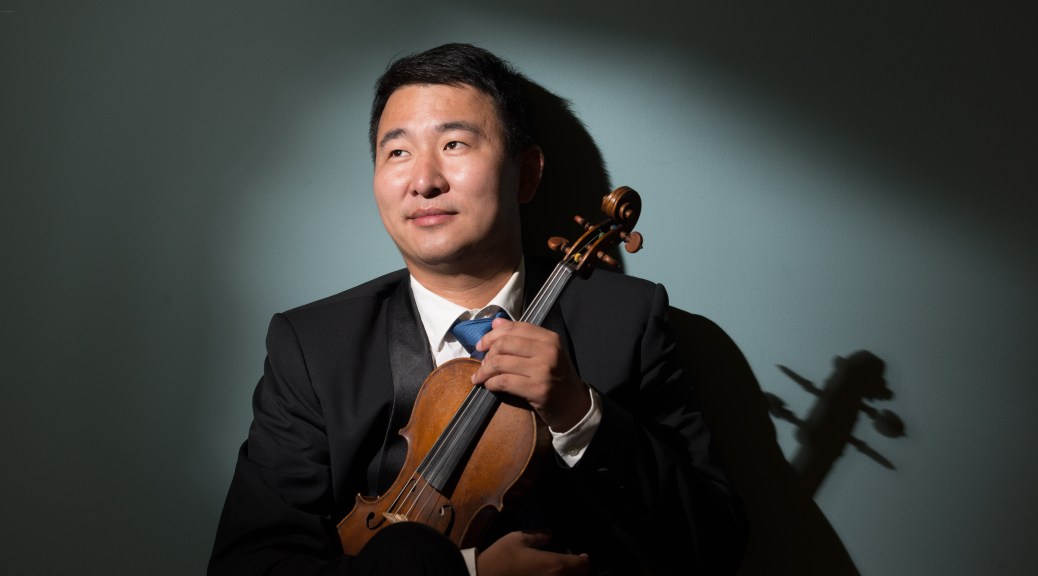
Violinist Hui Cao brings joy of music to Zhuhai Jinwan while leading the Chamber Orchestra

From the time Hui Cao was just a baby, he would listen to his mother sing. As he grew, he began to sing with her, and his innate musical talents were evident even then. He could easily identify each note, and without any lessons, he effortlessly would carry a tune. The same occurred when he first lifted a violin; it felt like he was meant to play the instrument and has been doing so since he was a child. Now, he is one of China’s most prolific violinists.

With an impressive resume both playing and teaching, Cao’s career as a violinist has been extraordinary. He aims to share musical culture with both his admirers and his students. In 2013, he began teaching violin classes at Pooi To Middle School in Macau, a city on China’s South Coast. The popularity of the instrument rose dramatically when he was there, having such a celebrated musician teaching. He is currently practicing for the 2018 Music String Festival in Zhuhai Jinwan, a large festival in China. Not only will Cao be a soloist at the event, but he is also responsible for inviting other violinists to partake in a masterclass that he will then conduct.

“I feel like I can’t live without music. I like to play the violin to audiences and enjoy every moment,” he said.

Cao’s influence in Zhuhai Jinwan began in 2015 when he started playing in the Zhuhai Jinwan Chamber Orchestra. Founded only the year beforehand, Cao was instrumental to making it the success it is today. He was hired as the music director and concertmaster, in charge of every musician in the orchestra. During the three years that Cao has been leading the orchestra, they have played over 30 charity concerts and educated over 60,000 people in music.

We love to perform right in the community, whether that be in schools or small businesses. It brings lots of fun and music to the local people, and playing for charity is always a good thing. I think, as a musician, you play music that will hopefully help some people in this world. That is a wonderful thing, which is why I think performing for charity is so very important,” said Cao.

When Cao was invited to take part in the orchestra, it was still very new. He was immediately interested, wanting to help spread the joy of music whenever possible, and he felt Zhuhai Jinwan was the ideal location to do so. It is a relatively new city, and therefore music and the arts were not as developed as many other cities in the region. The local government wanted to change this, and therefore created the orchestra as a non-profit organization.

“People who lived in Zhuhai Jinwan did not have the opportunity to experience good, classical music the way that so many others do in the larger Chinese cities. I wanted to be the person to help change that,” said Cao.

After getting in touch with the sponsors, Cao began working immediately. He started with finding musicians for the orchestra and followed by choosing the perfect music. He wanted to select pieces that would excite the locals and allow them to appreciate classical music. When recruiting players for the orchestra, he reached out to the residents of the city, allowing them to get excited at the prospect of the first chamber orchestra in Zhuhai Jinwan.

“We are very honored to have Hui as our music director for the chamber orchestra. He is a talented musician and gives us a lot of support. The first day we met Hui we knew he could help us build this chamber group to a great success,” said Mok Ian Ian, Director of Zhuhai Jinwan Cultural Affairs Bureau.

Once Cao filled every spot on the orchestra, they started rehearsing twice a week. He helped the players practice, teaching them how to perform and offering insight from his many professional experiences. Most of the musicians were not trained, and it was Cao’s responsibility to do so. Under his direction, the entire orchestra went from many individual musicians to one entity, playing seamlessly. He also supported the guest conductor during rehearsals while still planning the music for each performance.

“I really admire the local musicians and their love of music. It was my job to help them become better players and make sure they improved, but you can’t teach passion. Directing these musicians was easy because of how much they enjoyed what they were doing,” said Cao. “I am also very thankful to the government and all the support we received from them. It was the people I worked with that made this such a special project. Everyone wanted to bring music to the community.”

Cao and the orchestra held their opening concert at the Zhuhai City Hall in 2015. It was extremely successful, and from there, they have continued to be recognized and praised by all sectors of society. Now, just a couple of years later, the orchestra is seen as a prestigious group of musicians.

“After three years of work, I saw the Zhuhai Jinwan chamber orchestra get more popular and professional. I am very happy, it has been like watching my kids grow up. I put lots of my time and energy into the group, and the results more than paid off,” he said.

Evidently, Cao is an incredible musician and director. What he accomplished with the Zhuhai Jinwan Chamber Orchestra is just one example of what this talented violinist is capable of. He truly loves what he does, and for those looking to follow in his footsteps, he says that is of the most vital importance.

“As a musician, I have only one piece of advice to those who are looking to pursue a career in music, and that is to love the music and enjoy the music. Music is always a great and interesting hobby, but if someone wants to become a professional musician, the path is very difficult. You have to persist and practice and remain focused on your goal every step of the way. That is why passion is key. If you do not have this, you will never be a true musician,” he concluded.

Actor Ben Prendergast takes up boxing to play Australian icon Jo Sparro

Ben 2
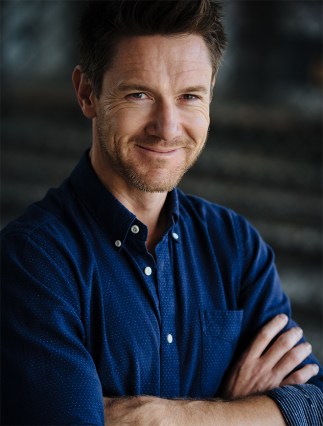
Ben Prendergast

Ben Prendergast says his love of film is genetic. His mother’s side of the family constantly watched classic “talkies” on repeat, watched Sunday matinees, and had a general love for iconic starlets and stories. His father’s side still had that same love for movies, but there was a passion for science-fiction and action films, with regular trips to the video store. As a child, Prendergast was immersed in all aspects of film from a young age, loving Star Wars and Casablanca before even Mickey Mouse.

“In Australia, the notion of being in the movies is so foreign, but as I got older and started to build a profile it became evident that I could actually make a go of being involved in an industry that I’d loved for decades,” he said.

As an acclaimed film and television actor, Prendergast has many notable projects on his resume. He has worked alongside Hollywood’s best, including Ethan Hawke in the feature Predestination, and starred in award-winning films like The Marker and Post Apocalyptic Man. Australians everywhere recognize his voice and face from many national commercials, and his versatility is constantly evident, ranging from genres and mediums. With every character he embodies, he does not just portray them, he becomes them. This is perhaps most evident when he took on the role of the iconic boxer Jo Sparro in the celebrated film Punch Drunk.

“Punch Drunk deals with a very real issue in Australia: the marginalization of the elderly and mentally unwell. I loved that the main protagonist was a hero in his day, someone that was very much valued as part of society, but after an unfortunate event he’s literally left to rot in an institution until he fights his way out. I wanted to be a part of the project as it dealt with a sport I love and tackled a real issue within the heart of a fantastic story,” he said.

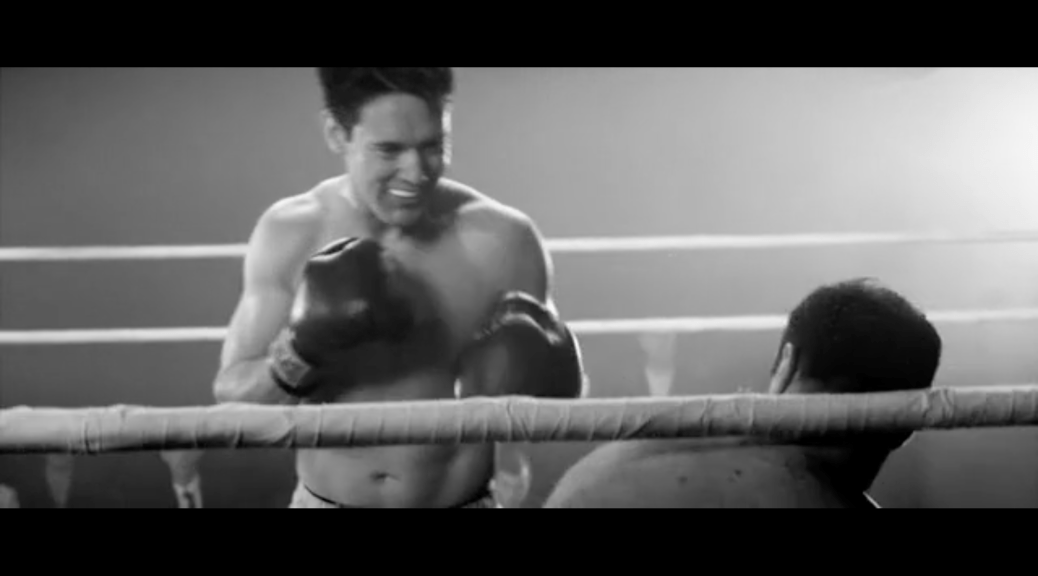
Punch Drunk is the story of the Mighty Joe Sparro, a champion boxer who is cut down in his prime. Years later, he is in a care facility that shuts down and he needs to fend for himself one last time. Prendergast played the younger Joe Sparro, depicting his early career, showing his courage and man-of-the-people charm, and illustrating for the audience what might have been.

“Jo Sparro was a post-war young man trying to make a living to support his wife and child, so in a lot of ways his natural gift for fighting made him a more loving partner. He loves his wife Millie to death, so when they are separated it is heartbreaking. For so long, he has been confused about where he is, but when the film starts we realize he is coming out of an extremely long coma,” Prendergast explained.

Punch Drunk was distributed to a number of festivals, including Telluride and the New York Short Film Festival where it played in Times Square to an estimated 50,000 people. From there it went to the St Kilda Film Festival, where it was nominated for best screenplay, Young at Heart Film Festival, where it won the Audience Award for Best Film, Adelaide Shorts Film Festival, where it took home the Audience Merit Award, Byron Bay Film Festival, winning Best Cinematography, and an Official Selection at Dungog Film Festival, Heart of Gold International Film Festival, Little Rock Film Festival Official Selection, and Woods Hold Film Festival. After its film festival run, Punch Drunk was distributed digitally and has since been viewed millions of times online. The Director, Sam Wark, believes Prendergast’s portrayal of the young Jo Sparro was pivotal to the film’s success.

“Ben is a pro. He is so proactive in finding the way into his characters and has a limitless supply of positivity and fresh ideas. As a director looking to fulfill a vision and shape a story, it’s a joy to have someone who can bring me a hundred different bold choices on any one idea and then go further and further into the rabbit hole as the story unveils itself. He’s an actor’s actor, so he goes way beyond what you’d think an actor should do in order to prepare for a role, not only mentally and spiritually, but also physically. In the boxing scenes, he worked over the course of three months to not only become fit enough to perform the role, but also to perfectly imitate a 1950s’ boxer style, and then also the stunt falls required. The miraculous thing though is he’s able to do all of this while embodying a character and creating the empathy in the audience needed to touch people. Our audiences fell in love with that character,” said Wark.

Wark had the script for Punch Drunk in his drawer for seven years with no real plans on making it. He knew the script was a gem but didn’t know just how to turn such an important story into a film. That was until he sent the script to Prendergast, who was so passionate about the project, the director knew he had something there. Immediately, Prendergast was the only choice for the role of Jo.

“The film needed someone who could play a champion boxer without the arrogance or coldness that we see from boxers in the modern era. He needed to be a people’s champion, and completely likeable, even to his opponents. By doing this, the film could create the payoff needed to touch audiences and make them think about the mentally ill in a new and perhaps impactful way. That is what I kept in mind when preparing, and while filming,” Prendergast described.

When preparing for the film, Prendergast relentlessly trained for three months to not only get in the shape of a professional boxer, but to realistically fight in required scenes. He also took extensive stunt training in order to be ready to be hit and fall on command. In one boxing scene, he chose to fall a lot heavier than he had initially planned and ended up knocking himself out. The shot was so brilliant, it was used in the final cut of the film.

“I was introduced to the sport of boxing in a new way. I always loved to watch, but to participate and continue to practice to this day is something that the film gave me. I was also drawn into the world of past champions and the history of the sport,” said Prendergast.

Punch Drunk depicts an Australian sporting hero that never made it, someone who showed so much promise but was robbed of it, and audiences ultimately see him victorious after 60 years of solitude. Getting to be a part of such a story was truly one of the most satisfying parts of working on the film for Prendergast, beyond all the awards and accolades they later received. The best part for the actor, however, audiences may not have noticed.

“This ended up being a family affair. My Nana was featured as an extra in the film,” he said.

Check out Punch Drunk to see Prendergast’s outstanding performance.

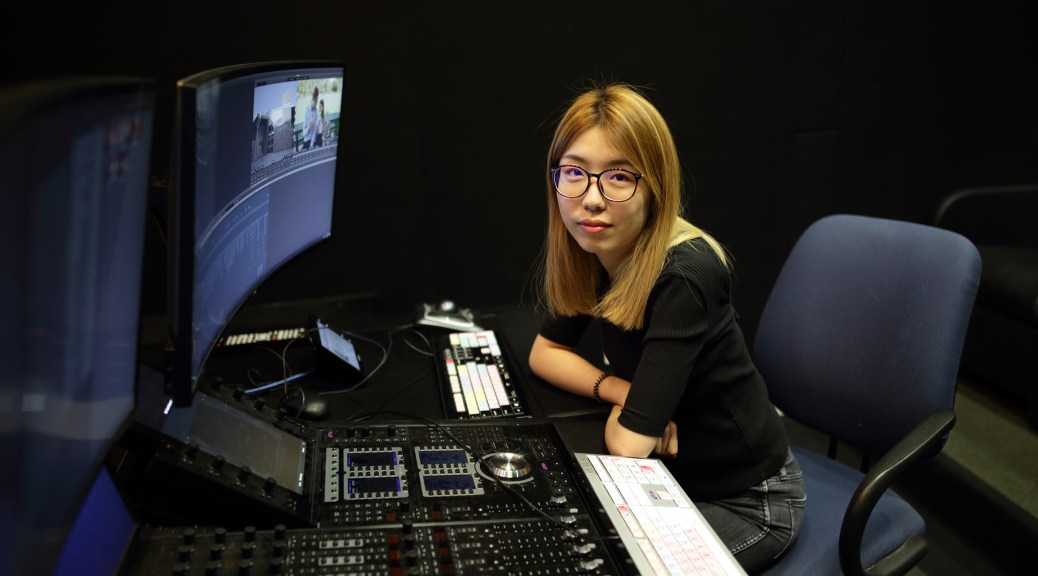
Editor Xiaodan Yang refines artistic story in upcoming film “Summer Orange”

Xiaodan “Christy” Yang was a teenager when she realized she was meant to be a filmmaker. At the time, she and her friends at their high school in China were just having fun with a video camera. They were so excited and curious about the tool and would pretend to interview students during lunch breaks. Quickly, this transformed to casting classmates in small productions, and Yang was the leader.

“The most classic one was a Titanic parody where I picked two leading characters to play Jack and Rose from the “audition”. Then we shot the “I’m flying” scene. Their acting was so hilarious and the whole process was a lot of fun. I really enjoyed it and that’s the first time I started thinking that maybe I could be a real filmmaker someday. I wanted to bring larger audiences to tears of laughter and allow them to experience all sorts of emotions through my work,” said Yang.

Despite being in charge of her high school short films, Yang found her way to a more behind-the-scenes role in editing. Now, she is an award-winning editor and is recognized far beyond China for her talent. Through her work on dramatic films such as Kayla, Witness, Sixteen and It’s Not Just About a Film, Yang’s contributions as an editor shape these important stories into pieces of art, and all those who work with her know what an asset she is.

“I worked with Xiaodan on my film, Ashram, as well as a short film called The Review. I directed the films and she was my editor for both of them. To work with Xiaodan is to have a very smart, skilled and sensitive creative partner. She is very thoughtful about her editing decisions, and a very even-keeled and well-balanced guiding creative force for the project. She’s very competent and efficient, but also artistic and intuitive. She has strong communication and learning skills, which make us work efficiently,” said Matt Marlin, Writer and Director. “Xiaodan is a strong creative presence and also very flexible with working with different types of personalities. She often juggled multiple projects when working with me, and still made me feel like my project was at least an equal priority with the other things she was working on. She can roll with any notes I throw her way, and also push back when she believes in a creative decision strongly. She has a great intuition for how to best bring out the story from the footage provided.”

When working on the upcoming film Summer Orange, an artistic story, Yang knew it would be defined by the editing. When she first read the script, she was immediately captured by the characters and could feel the desolation they felt in every word. She instantly said yes to the project.

Summer Orange is about a filmmaker dealing with his real life and the film he’s shooting. As a filmmaker myself, I felt close to him. As I was editing the film, the film also affected me in many ways. I was thinking deeply while working on this one,” said Yang.

The film follows Da, a film student in Los Angeles. During the time shooting his thesis film, his old friend, Lu, comes to visit him. It has been a few years since the two have seen each other, and they both have changed. At the same time, the relationship between Da and Xintong, the leading actress of his film, becomes ambiguous. With so many things going on, Da feels confused about film and reality.

“This is a very personal story for the director. Some plots and details come from his actual life experience. If other films are considered novels, this one is more like a prose. The story is sincere, but also abstract. Although nothing dramatic happens, the tone of the story is attractive. Sometimes life is just overwhelming, and people can’t do anything about it. The best part of this story is the dynamic between the characters. That was also my emphasis during editing,” said Yang.

Summer Orange is directed by Chen Xu, who also wrote the film. He had previously worked with Yang on Witness and It’s Not Just About a Film and knew her extraordinary editing talents would help captivate audiences to his subtle story. As the editor, Yang understood the director’s intentions of this story precisely. When going through the footage, every decision Xu made while shooting made sense to her and she knew just how to approach the editing. She could transform and breakdown the script without disrupting the artistic conception. As it was a calm story, the director chose to shoot the film in an objective way, meaning most of the shots were long takes. When Yang was editing, she watched each shot over and over to make sure she was choosing to highlight the best performances from each actor. After doing this, she still made sure not to cut the long takes, therefore ensuring the dynamic between each character was as close as possible to how it was originally shot, refining every take. She also slowed down her pace while editing and instead of simply thinking about what would be useful, she cared more about what felt right for the atmosphere.

Undoubtedly, Summer Orange will be a tremendous film and showcase what a formidable editor Yang is. It will premiere this May at none other than the prestigious Cannes Film Festival Short Film Corner and will expectedly make its way to several more festivals in the coming year.

“I feel so excited about the Cannes Film Festival, since it’s one of the best film festivals in the world. I believe this is just a good beginning, and more and more will come,” Yang concluded.

Producer Kegan Sant helps TELUS give back with inspiring charitable campaign

It seems funny to Kegan Sant that there was once a time where he thought he wanted to be a director. Many people going into filmmaking initially see themselves leading the film set, and Sant was no different. However, when he found his way into producing, he realized it was exactly where he was meant to be. Sant understands the nuances to the role, that it isn’t just balancing a budget. The producer is responsible for making sure every single aspect of the production goes off without a hitch. That, for Sant, is what makes it so thrilling.

“I like to be busy and being a producer, there is always something to do. No matter how simple a project is, attention to detail is everything to me. I find that fun and challenging. Not many positions offer the flexibility in schedule, opportunity to see the world and ability to employ thousands of people over short periods of time. It’s invigorating to work with different directors as everyone has unique ways of working and dynamic thought processes. It’s incredibly satisfying to conceptualize a project with a director, budget it out, execute it, and see it come to life in post,” said Sant.

Sant’s passion for what he does translates into every project he takes on. He is perhaps most well-known for his work on the Westjet Christmas Miracle, one of the first real people/real time commercials that went viral online. He also made the award-winning Grey Cup flagship commercial for the CFL, What We’re Made Of, and last year, his work on Woods Is There campaign celebrated the company’s 100th anniversary and Canada’s 150th birthday while captivating viewers across the country with stunning scenery. His work extends to film, and his movie The Bear went on to several international film festivals, taking home prizes and impressing viewers and critics alike.

Sant’s creativity is ignited when he believes in what a project represents, and his 2016 commercial for TELUS was no different. The commercial promoted #TheGivingEffect, a campaign to encourage acts of kindness. With every act of kindness, big or small, TELUS encouraged citizens across Canada to share themselves giving back to their community with the hashtag #TheGivingEffect, with the goal of having the entire nation help each other. TELUS would then select up to five individuals who took part in the challenge and award them with $5000 to donate to the charity of their choice.

“I think this campaign is important because it sways social consciousness in the direction of doing something about problems and issues they see. It lets people know that everything counts – small or big and that it doesn’t have to be material or monetary to count. Having more of that in the world is inspiring change in the right direction and I believe this stemmed from the actual employees of TELUS giving back to their own organizations, which inspired the corporation to do the same. Truly the spirit of giving,” said Sant.

The campaign began with a 90-second video with short stories ranging from an informal bottle cleanup on a beach to a young woman shaving off her long hair to support a sick friend. The tagline is “every act of giving inspires another.” The commercial was shot in over five locations in just one day in April of 2016. There was a national TV buy for this campaign and it also lived on an online platform. It was also picked up and recognized by a couple of national marketing magazines.

“I liked that we were able to defy all norms on this project, like shooting in several locations in a single shoot day with actresses that had special FX makeup, and first-time experiences like shaving their head. I liked that this project pushed boundaries and forced me to constantly think on my feet. Being able to produce a job that matched the director’s vision was incredibly satisfying and having a happy production company, agency, client and director means I did my job well,” said Sant.

What is perhaps the most interesting and challenging part of the commercial is the scene with the girl donating her hair for her sick friend. Sant had to find an actress that was actually willing to shave her head for the scene and donate her hair. He vowed that they would make it happen, despite the casting director being confident they wouldn’t find one. The director, Stash Capar, had a vision, and it involved an actress actually shaving their head. Sant made sure to deliver. At the last minute, Sant found an actress who was happy to show her support for the cause, really selling the authenticity of the piece. Because of his commitment to the project, Sant immensely impressed all those he worked with, who he now continues to collaborate with to this day.

“You know you’re in good hands with Kegan. No matter what problems befall the project, he will find solutions and the show will go on. Kegan is the hardest working producer I know.  He finds efficiencies and strategies that other producers later mimic. He is an agent of change in the world of commercials.  An example of this was the Westjet Christmas Miracle spot, which Kegan masterminded. His methods were later copied, spawning an entire genre of copycat “surprise and delight” commercials,” said Stash Capar, Director.

When Sant was given the opportunity to work on #TheGivingEffect it felt like he had come full circle. As a teenager, his first “real job” was working for TELUS in their customer service department. He remembers wondering what it would be like to produce a commercial for them one day. Getting to do so while promoting a good cause and giving back to his community was more than he could ever have dreamed of.

“It’s a great feeling to know that the project was so successful. I’m happy to have delivered a job that met the expectations of everyone involved and was instrumental in reaching people, promoting the idea of giving back. It’s on my reel as a heartfelt piece of emotional storytelling, not only for the final product itself but the messaging it shares,” he concluded.


Photo by Kevin Sarasom

China’s Xingpei Shen creates animation masterpiece with ‘Lotus Lantern’

shen_Xingpei
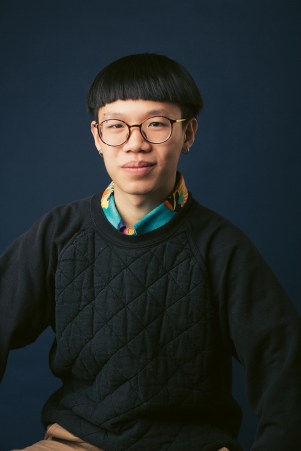
Xingpei Shen, photo by Rob Chron

Despite loving drawing since he was a child, it took Xingpei Shen much longer to discover he was meant to be in animation. He loved art, but in his late teenage years, he did not know how to turn that passion into a career. However, after attending a presentation from Chinese animator Lei Lei (Ray), he started to become intrigued by the idea of a career in animation. One of Lei Lei’s films, This Is Love, stuck with Shen. It was a candy-colored graphic animation paired with a silly yet sweet poem. It made everyone laugh and reminded him why he wanted to be an artist in the first place. Now, years later, he is an in-demand animator impressing worldwide audiences with his work.

Shen has had an expansive career as an animator, working on solo projects and group endeavors. His first independent film, Good Game, Bad Time, and Killer Sportsmanship, went on to international acclaim at several film festivals. This pattern continued with his work on the Huffington Post project What It Means to be Muslim in America, where Shen was one of only nine animators who were invited to make a short animation based on an audio anecdote provided on the topics of Muslim experience in America. He was also one of seven video artists featured in the traveling show Internet Yami-Ichi on December 9th, 2017at the renowned Tate Museum, where he has two animation pieces in the show.

“As a queer Chinese artist, I find my work often looks at overlooked boundaries of existences, the places of in-between, and the sweet vulnerabilities of outsiders,” said Shen.

This is exemplified by Shen’s latest film, Lotus Lantern. Lotus Lantern is a tribute to late Chinese singer Zhou Xuan, a missing link between filmmaker’s queer identity and Chinese heritage. Shen wrote, directed and animated the film entirely on his own. He had a vision in the very beginning that he wanted to make a lush and dreamy film that talks about his queerness and Chinese heritage, and he worked intensely hard to realize the goal.

“I think Lotus Lantern is important, because for one, it is a personal story about both queer experience and Chinese heritage. In the media nowadays, there is a tendency to homogenize queerness and overlook the intersectionality of different facets of identities. I believe Lotus Lantern is a genuine and vulnerable film that resists that tendency,” said Shen.

LotusLantern_Stills1
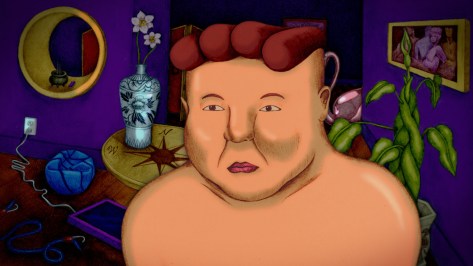
Still from Lotus Lantern

After months of work, Lotus Lantern premiered on July 30th, 2017 at BAMcinématek in Brooklyn for the 14th Animation Block Party. It then made its way to dozens more festivals and is still continuing its run with three upcoming festivals in the next few months. It was featured as Vimeo Staff Pick and Shen was also invited to talk about his process on Animation World Network.

“It feels surreal how far Lotus Lantern has gotten after I finished the film not long ago. I am still currently processing and trying not to go over my head with all the good news. I am very proud and happy, because this film is incredibly personal and vulnerable. It gives me a lot of encouragement to carry out future projects,” he said.

Shen had three main inspirations when creating the concept for his film. The first was to create a tribute for Zhou Xuan, whose music was a large part of Shen’s childhood. Growing up queer in China, Shen did not have many icons in the media that he could look up to or relate with, but he was always fascinated by the singer and related her to a goddess. When he looked back on these pivotal years, he realized his sentiments towards Zhou Xuan all tied into his understanding of his own queerness, ultimately shaping his life. He wanted to reflect that through his art.

Second, he took the visual style from his grandmother’s praying shrine. His grandmother has a shrine that she prays to daily. When Shen was a child, he was always fascinated by the strange aesthetic of all the artifacts where a gorgeous antique brass double ear incense bowl paired with a cheap oversized disposable lighter she bought at a drug store and crackling chants pour out from a lotus-shaped electronic Buddhist mantra box. The sensibility extruded from his grandmother’s shrine table inspired the campy aesthetic of this film.

LotusLantern_Stills3
Still from Lotus Lantern

“Wow, I am mightily impressed by Xingpei’s work on Lotus Lantern. It’s a steadily emerging style of film that I’m seeing more and more of and this one goes close to top of the class in that style. One of its strengths really struck me as being the very restrained and almost understated way he managed its pacing even as it poured in more and more and more visual elements – in lesser hands the temptation to wind up the tempo would have been succumbed to,” said Malcolm Turner, Animator and Director of the Melbourne International Film Festival.

Shen’s last source of inspiration for his film was his friend and former employer Suzan Pitt, an animator who created the 1979 short film Asparagus. A few years ago, Shen emailed the filmmaker and told her what an inspiration she had been to him. She responded and invited Shen for coffee at her home and a screening of Asparagus, where they had a long conversation about the art of animation. Throughout his entire time making Lotus Lantern, Shen kept the idea and style of Asparagus in his mind. He was haunted by the intricate psychedelic interior space of sexuality and desire in the film. He wanted to create something that was as complex and captivating.

“I really enjoyed Xingpei’s film Lotus Lantern. It seemed to be a deliberate homage to Suzan Pitt’s Asparagus, and it was really great to see an animation refer to another (great) animator’s work in a thoughtful and considerate way rather than just ripping off their style or film for effect. The deep underlying reference to Asparagus opens up ideas about identity, beauty and self, the state of reverie, but Xingpei takes them into new and compelling territory. We are made to think about the common ground of each film and the differences too. It was beautifully made and very thought provoking,” said Artist and Animator, Edwin Rostron.

LotusLantern_Stills7
Still from Lotus Lantern

One of the more outstanding aspects of Lotus Lantern is that Shen made the film with a combination of digital tools (3D software like Maya, and 2D software like Photoshop and AfterEffects) and traditional animation techniques (hand-drawn and rotoscope). It balances two different methods creatively to achieve a lush painterly quality, which is very unique in current animation. The use of these methods exemplifies why Shen is such a formidable animator.

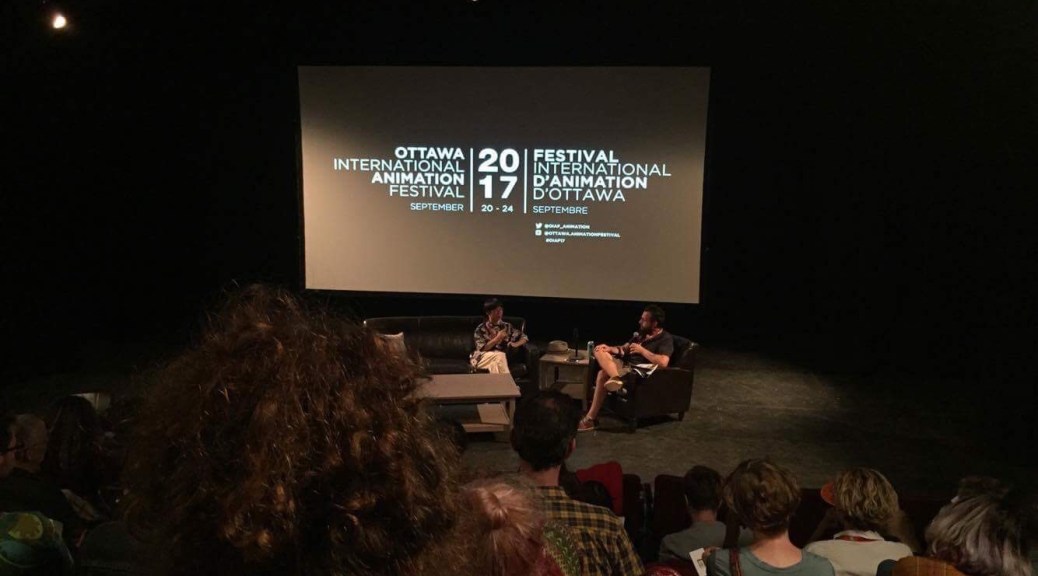
Despite all the critical acclaim and recognition Lotus Lantern has received, the greatest accolade came at the 41st Ottawa International Animation Festival last year. On the last day of the festival, Shen was sitting alone after his film’s second and final screening. A woman from South Africa approached him and told him that Lotus Lantern truly struck her, especially when Shen talked about the influences of women in his family to him as a queer artist. She put her hand on his chest and told him she was touched before tearing up. The women then left in a hurry before Shen could get her name or her story. He calls the experience the highlight of his career.

“It was an incredibly sweet moment. I have never gotten such a genuine and strong response for my work. It reminded me of the reason why I wanted to make films and tell stories in the first place,” he concluded.

Watch Shen’s moving work on Lotus Lantern here.

Ireland’s Jonathon Ridgard talks producing ‘America’s Got Talent’ and working alongside his idols

Hailing from Galway, Ireland, Jonathon Ridgard has come a long way both geographically and figuratively since he received his first camcorder at just eight years old. Even at such a young age, he had a passion that was more than just a childhood hobby. Now, Ridgard is a renowned supervising producer in Hollywood, and is responsible for bringing some of your favorite shows to the small screen.

“My parents recently found old home videos where I am running around interviewing everyone in the family. My brother was sick in the hospital, having his appendix removed and I have the camcorder with me, recording an interview with him – asking him how he feels, and to describe what was happening. With this camcorder, I used to film family parties, birthdays, christenings and cut them together to make short videos for people. I guess I always had a keen interest in telling the stories of what was going on in people’s lives,” said Ridgard.

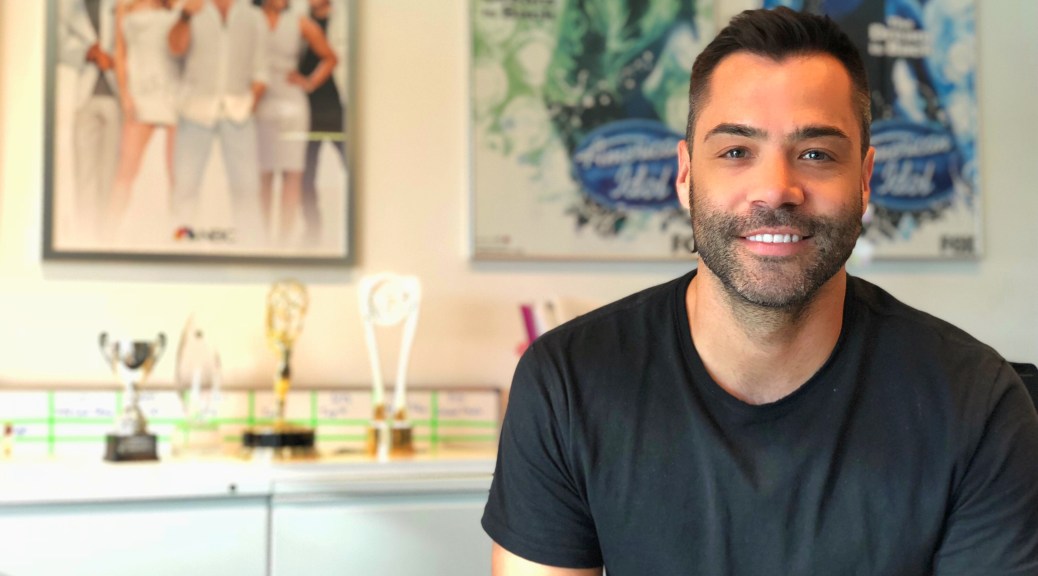
Ridgard is currently busy getting ready for the highly-anticipated ABC reboot of American Idol, premiering March 11, working alongside such superstars as Lionel Richie, Luke Bryan, and Katy Perry. Ridgard previously produced the show’s 15th and final season on FOX and is glad to be back on such a celebrated program.

American Idol is far from Ridgard’s first taste of international success. This sought-after supervising producer has an esteemed resume, including Simon Cowell’s The X-Factor in the United Kingdom, Gordon Ramsay’s The F Word, and Undercover Boss, during which time the show was awarded an Emmy for “Outstanding Reality Program”.

“It’s hard to pinpoint a single highlight of my career. It would probably be working with Simon Cowell. He is someone I grew up watching on TV. He is an incredibly talented Executive Producer and on-screen talent. Working with Gordon Ramsay is also another career highpoint. I served as Senior Producer for his live show. Overseeing a team of producers and associate producers. I was tasked with creating new, interesting and fun pieces that would feature Gordon. I worked with Gordon on these developed ideas and then we would film them and turn them around in post to feature in the following weeks’ episodes. I am a big fan of Gordon, both as a Chef and a television personality. He is one of the nicest and easiest people I have ever had the pleasure of working with. And of course, being awarded an Emmy for contribution to Undercover Boss is also an incredible highlight. To be recognized for my contribution to such a successful show at an early age was, and still is, a very proud moment,” said Ridgard.

Ridgard is also known for his outstanding work on Simon Cowell’s Got Talent franchise around the world. Beginning with Australia’s Got Talent in 2010 followed by Britain’s Got Talent and contributing greatly to their success, Ridgard received a call from the show’s Executive Producer, Sam Donnelly, asking him to be a part of the U.S. version for its eighth season. Knowing that America’s Got Talent is one of the most iconic shows on American television, Ridgard immediately accepted. The show was about to go through some big changes, from new judges to a shift in the format, and he was ready to lend his talents to making the show an even greater hit than it already was. Ridgard achieved his goal. Since joining the team, the show has continually grown in ratings each year, something that is almost unheard of for a reality competition show that has been around for over a decade.

“I love that the stories we tell on a show like America’s Got Talent could potentially inspire people to get out there and follow their dreams. Maybe someone at home might see an 8-year-old dancer, or an 82-year-old juggler, or a struggling comedian, and these stories might resonate with them and their own story and it might push them to reach their full potential,” he said.

Working on the show was difficult but immensely rewarding for Ridgard. Not only did he enjoy working closely with the judges, Mel B, Heidi Klum, Howie Mandel and Howard Stern, but he travelled the country to find the talent that would be showcased on screen. Every year there are tens of thousands of applicants looking to be on the show, and it is Ridgard and his team that find the ones that will connect with audiences and therefore make the show a success. Going through such a large pool of applicants and narrowing them down can be hard and Ridgard would sometimes feel the pressure, but he let that fuel him. Not only did he understand that it was important to the show to find the right people, he understood the responsibility he had: people’s lives were in his hands. Ultimately, he made every decision based on what he knew from his vast experience would make good television and which contestants could ultimately go on to win the show.

In addition to this, Ridgard also had to decide how to tell the contestants’ stories. Some of the applicants have sad or traumatic backstories, and Ridgard knew that the way these stories were told were almost more important than the actual act; they could affect the viewers lives and needed to be told sensitively and in a way to inspire the contestant and the millions of viewers around the world.

“Telling people’s stories and getting to travel the United States while being one of the first people to see undiscovered talent and knowing that these people had a chance to win $1 million and go on to worldwide fame, well, it was an invaluable experience,” said Ridgard.

With such vital responsibilities, everyone on set recognized the producing team as the core of the show. They were the ones that worked in and were responsible for casting, setting up auditions and auditioning talent, filming back stories and interviews and ultimately being the go-to people for every other aspect of the show. It’s because of this that the show is successful and Ridgard is very proud of that.

“I was lucky enough to work with Jonathon as a producer on America’s Got Talent in 2012 and I was immediately struck by how creative he is. He walked onto a big team and quickly became a standout producer with his fresh approach to problem-solving in the field, his can-do attitude and ability to motivate the team around him. Many producers aren’t able to both supply creative, amazing ideas to take the show from good to great and execute them well, seeing them through to the final product, but Jonathon is skilled at both. He just gets it, the entire process, which I’m sure comes from his long, established career in this industry back in the UK. I love working with Jonathon as he’s extremely gifted at what he does, and I hope I get a chance to work with him again,” said Lindsay Tuggle, Supervising Producer.

After his tremendous success on America’s Got Talent, Ridgard was then asked to help launch the premiere season of Asia’s Got Talent. The spin-off is billed as the biggest talent show in the world with talent stretching across 15 countries from India through to Japan. Asia’s Got Talent delivered ratings ten times higher than its nearest English-speaking rival on its season one premier. Ridgard was contacted by FremantleMedia Asia to oversee the creation the show, based in Singapore. As a consulting producer, he was tasked with getting the show off the ground, imparting his expertise to the Asia team and showcasing how the Got Talent format was produced. He helped to develop the show from nothing, implementing casting plans in every country from India across to Japan. He was instrumental in casting the show, choosing the very best, interesting and diverse talent across all 15 countries. He also cast the two main hosts. Later, he worked with the full production team so they would understand how to produce interviews, b-roll, and stylized reality scenes that would fit in with the franchise. Asia’s Got Talent was one of the most successful show launches for AXN.

“I feel very proud to have worked on a franchise that is known globally. It’s been a career highlight and seeing the show continue to succeed is incredible to see. Being able to make people’s dreams come true is something that we actually do as producers. As cheesy as it sounds, seeing someone go from small town girl/boy achieving their dreams with the world at their feet is a job that not many people get to do, and it never gets old,” Ridgard concluded.

Art Director Phenix Miao creates stunning sets for Lepow Commercials

P9Phenix Miao was eight years old when he began drawing. He believes art is part of his blood. His great grandfather owned a famous antique house in Shanghai, and that passion for design passed through generations. Growing up, his house was always full of antiquated artifacts, and even at a young age, Miao became fascinated by them. As he grew, his love for art and design only intensified and he became interested in decorating, arranging, and building a scene. There was only one path for him that made sense, and it was becoming an art director. Now, he is celebrated in both China and abroad for his art direction, and he has no plans of slowing down.

Whether it be with film, television, or commercials, Miao constantly shows viewers just how much talent he possesses. In the 2016 movie Shanghai Sojourner, Miao helped transport audiences to Japanese-controlled Shanghai during World War II. In the acclaimed film Lottery, Miao created a fairytale like world to show the euphoria of a starving, young orphan getting his hands on a winning lottery ticket. Using his commercial senses, Miao also helped raise hundreds of thousands of dollars with his work on a crowdfunding campaign for Itron Battery. He is extremely versatile with a love for what he does.

“Art direction and production design is a large part of telling a story, so I insist on harmonious and mindful designing. When I’m creating a scene, I make sure to consider the person that will be in it and whether the scene corresponds with the one who lives/uses it. Sets are like extensions of the characters,” he said.

Miao once again achieved this with his work on several commercials for Lepow. The technology company manufactures mobile accessories such as the portable power bank, external battery, and the smart bag. Starting in 2015, Miao took on the role as art director for the premiere commercial for Lepow’s TV Show Box. From there, they made a follow up commercial showcasing the product, and a year later, another long commercial showcasing the brand as a whole.

On the set, Miao was responsible for the entire visual experience. He aimed to make everything the director imagined into the scene a reality. He designed the color and artistic style, selected the best and most suitable materials, maximized every detail, and designed the design space. As the leader of the creative team, he aimed to take the big picture and divide it into small, tangible tasks that would be easy to complete within the timeframe they were working in.

Working closely with the director, Miao discussed every shot individually, wanting to understand the exact feeling the client was looking for. Every aspect was important to create an entire world in the set, from colors to the smell, even though viewers would not experience that. Miao shows such commitment to every detail of a project, that it makes everyone he works with greatly appreciate his talent.

“Phenix is a great leader of the art department and ensures everything goes smoothly. He is essential as an advisor, balancing out my ideas and feelings of the clients through his work. He is a comprehensive creator with a deep understanding of filmmaking, more so than any art director I have worked with. He is constantly curious and always eager to learn new things. In terms of production design, Phenix has an ability to take even the largest set and make everything extremely detailed. Even when I can’t describe exactly what I want, he finds a way to not only make it, but he produces work even better than I imagined,” said Peter “Zhen” Pan, Director.

Miao and Pan have worked together multiple times in the past, and Miao is always the director’s go-to art director. Their personal relationship has transformed to a friendship over many years of collaboration, and Miao knows how to transform Pan’s vision into a reality. Miao appreciates Pan’s different taste and feeling about color and the “rhythm” of the set and props compared to other directors. He understands Pan’s “language” and this connection ensures productivity and efficiency on set, as they communicate seamlessly.

“We work like a family and talk to each other directly no matter what the opinion or issue is. On set, everyone makes sure to do their best work possible. The Lepow commercials were no different. It was a great time and wonderful teamwork. All the guys try to help one another. Working on a series of commercials has allowed us to become familiar with each other, and it is a very relaxed working environment,” he said.

The campaign has been a great success both for Miao and Lepow. Despite this, Miao doesn’t think about what he has achieved when he sets his sight on a new commercial. When he sets out to make something, he expects success because otherwise he would not live up to what he knows he can do. That is what makes him such a formidable art director and production designer.

“We put so much wisdom and effort into these commercials because we had a goal, which was to make Lepow feel satisfied and see sales growth from our work. When that happens, I don’t celebrate, I just know that for the next one we should do even better. The series turned out beautiful for sure, and that is our work. That I can feel proud of,” he concluded.


Tony Nash brings on the laughs and the screams in ‘Secret Santa’

When Tony Nash speaks of his craft, he talks with the passion of someone who truly loves what he does. When he steps onto a set, it doesn’t feel like work for him, but rather it feels like a privilege to have the opportunity to do what he believes he is meant to be doing every day. This young man of Greek-Spanish descent has been acting since his childhood and has taken the Canadian film industry by storm.

Throughout his career, Nash has worked on a series of successful film and television ventures. Movies such as Saving Dreams and Meet the Parents, and shows like Petrol and Condor, the highly anticipated Audience network thriller. With every new project he takes on, it becomes clear that he is doing what he loves.

“What I like about acting is that when it is approached with the sacredness that it deserves, it first and foremost holds a mirror up to me, revealing all my hidden desires, coping mechanisms, repressions, reservations, grudges, vulnerabilities, beauties, gifts, talents and strengths. In so doing, it enables me to understand the souls of others and thereby be qualified and capable of holding a mirror up to the entirety of human nature, as Hamlet advised in Act 3, Scene 2,” said Nash.

Nash’s first true taste of international success came with the 2015 flick Secret Santa. Secret Santa is a feature length film that tells the story of a group of eccentric college kids, struggling to get through the hectic exam period. This horror/comedy is a tribute to B-Movie Slashers but also takes the conventions and turns them upside down. A liquor filled party is planned, adding a Secret Santa exchange for fun. Little do our characters know, a killer is in town and has a special present for all the good (and bad) girls and boys. Dare to open your present? It might be your last. Nash was really drawn to this project because he really wanted a comedic role to add to his repertoire, and his character also had a sweet, love element to his story. More than anything however, he loved that it was an ode to 90’s slasher films.

In Secret Santa, Nash plays Professor Preston Ramsey. The role was a lead and critical to the project as he was the red-herring in the horror plot. Throughout the film, audiences are led to believe he is the secret killer. The role was crucial as he furthers a love story between himself and the other lead, his student, and distracts the viewer from the killer, making the ending more of a surprise, staying true to the horror genre. The character was a sweet, somewhat naive college professor. He also was in a rut romantically and when one of his students started to fall for him, he began to feel alive again. He is an academic and spent his whole life indoors studying while his friends were all outside playing football. He is also a hopeless romantic and had only been in one relationship, which lasted seven years. The character had to be lovable, charming, slightly off beat, and at the same time mysterious. Nash was able to bring all that to the character as well as some humor of his own, which made the set a fun environment to work in and everyone enjoyed themselves. He was able to bring the character to life and give him that nerdy quality he needed to have plus a mature professor vibe amongst a bunch of college kids in an unexpected bloody night. Nash was perfect for the role.

“When I got the role, the first thing I did was went out and bought a pair of glasses and a tweed jacket that I thought would suit the character well. I spent time in university halls watching professors teach their classes to bright students. Also, because my character was being seduced by one of his students I watched The Graduate. I watched Scream and I Know What You Did Last Summer, more times than I can count” said Nash.

Secret Santa premiered in November 2015 at the Blood in the Snow Film Festival. The film was then shown at the Toronto International Spring Horror and Fantasy Festival, and the Buffalo Dreams Film Festival. It was distributed by Wild Eye Releasing and is available at several stores on DVD including Walmart and Best Buy. Nash’s take on the vital role of Professor Preston Ramsey was instrumental to the film’s success.

“Tony was pitch-perfect in this slasher-comedy. He was hilarious, charming and ever-so-subtly mysterious to lead us towards the edge of suspicion. It was a brilliant and nuanced performance by a highly sensitive and skilled actor. Bravo Tony,” said Mike McMurran, Writer and Director of the film.

After a friend reached out to Nash telling him about the role, Nash sent in an audition tape that instantly impressed McMurran, saying there would be no one better to play the role. They instantly connected, sharing the same vision for the character and the film as a whole. As it was Nash’s first time in a comedic role, he was eager to try out something different. His versatility shone, and he perfectly encapsulated the mysterious professor. Not only did he have fun, but he says the entire cast and crew became close friends during filming. Overall, it was an incredibly enjoyable experience for the actor.

“I think it’s important to have fun sometimes and do things I am not used to. I think that life is hard enough and sometimes a little horror and comedy never hurt anyone. It’s important to just take a film and just create something entertaining for people who want to see something different. And I think Mike and his crew were able to do that very well. It was exciting to film and definitely will be exciting to watch as well,” he concluded.

Be sure to check out Secret Santa and let Tony Nash make you laugh and scream at the same time.

Producer Mickey Liu went back to high school for ‘Sail the Summer Winds’

STSW on set with postcards and slate
Mickey Liu on set of Sail the Summer Winds, photo by Aijia Che

Mickey Liu knows that every day he steps onto a film set, it will be different than the day before. Every new project brings something new, and every experience is distinctive. Because of this, he always feels like he is learning something new, and no matter how seasoned of a producer he is, he finds that sometimes his experience can mean nothing in the wake of a new challenge. He is consistently exposed to talented individuals and brings teams together to create a masterpiece. For him, that is the best feeling in the world, and he loves what he does.

“Producing is about lots of instant decisions and last-minute situations, which is challenging and exciting. What’s more, I get to read many good stories… and a lot more bad ones,” he joked.

Hailing from Shenzhen, China, Liu has become a renowned producer. His work on films such as An Ill-Fitting Coat, Marie, Nocturne in Black, and Tear of the Peony have made headlines around the world. He knows what it is to tell a good story, and consistently manages to bring his films great success. However, the first time he truly felt this was in 2014, with his feature Sail in the Summer Winds.

Sail in the Summer Winds tells the story of Michael, a 30-year-old white-collar worker, who is always recalling memories with his 6-year desk mate Cammy and best friends Leon, Joyce and James about when they were 17. Back then, these high schoolers were faced with the biggest challenge of their life – the College Entrance Exam. Michael didn’t know what his future held but got an early admission to Cammy’s dream school; Cammy had feelings for Michael but couldn’t say it out loud; Joyce, once a model student at school, failed to live up to expectations at the very moment; Leon wanted to be an artist but was torn between reality and dream; James worked really hard, but things didn’t turn out great for him. Just like every coming-of-age story, they grew up and changed through the best years of their youth.

“I think the story of the film is important because it is a story focusing on friendship in high school. We’ve seen enough saccharine high school dramas on screens and they almost always center on how to get the guy or girl you like. American high school culture is very different from Chinese high school culture. I think the story provides a fresh perspective of Chinese high school life. The story would remind people of their dreams and courage, and maybe they would want to reconnect with friends they haven’t been in touch with for years,” said Liu.

When the Director of Sail the Summer Winds, Lanxin Yu, approached Liu over social media to produce the feature, Liu was immediately intrigued. Yu went to the same high school that Liu attended and wanted to film the movie there. Upon reading the script, Liu knew he wanted to be a part of the film, as the words took him back to his high school days and brought back memories of his younger self. He knew many others would be able to relate, and his partnership with Yu began.

“Working with Mickey is always a pleasure. His great sense of humor makes everyone chilled and relaxed. When it comes to the set, he’s sensitive, responsive, and caring to every crew member and tries his best to make the set an enjoyable working environment that everyone wants to come back to. When we were shooting Sail the Summer Winds, most of the crew members were first-timers, but he was very patient and made our set run like a real Hollywood set. In addition, his charisma held the crew together, not just as an efficient team, but a real family. Mickey is one of the most creative people I’ve ever met. He always has brilliant ideas about the story and has a deep understanding on the structure. Therefore, as a creative producer, he gives clear notes to writers, constructive advice to directors and inspirational directions for promotions. He’s easygoing and reliable, making him the one person on set that everyone trusts,” said Yu.

As the sole producer of the film, Liu’s work was essential for the film’s success. He held the team together and drastically improved their efficiency, while still providing ample amounts of encouragement and boosting morale. He provided critical creative notes at the script development stage, created the shooting scheduling and supervised the pre-production and production. During post-production, he personally designed the merchandise and arranged for the film’s distribution.

Liu also trained the crew and brought professional help to the production, as he was the most seasoned filmmaker on the set. The majority of the crew were young volunteers looking to experience film production, and therefore required a lot of training. Because of him, he had everyone on the crew working extremely well despite their lack of previous experience.

“Although it was challenging, I actually enjoyed training the crew a lot. They were very smart and hard-working ‘students’, so it felt very rewarding seeing them successfully applying the training to their work. The atmosphere was very loving and full of energy. I loved that good vibe on set very much,” Liu described.

In addition to all of this, Liu employed some American methods of film production to this Chinese movie. The Director was pulling herself in every direction, taking on many tasks beyond what she needed to do. On Chinese film sets, this often happens, as they are very director-centric. Liu however, having experience on American film sets, talked to the director and told her how they could make everything more efficient, and she just needed to focus on her main duties as a director. In the end, it worked seamlessly.

“Producing this film was a very unique experience because I think it would be almost impossible to have this selfless of a cast and crew ever again. Everyone gave their one hundred percent for free and they never complained and never lost morale while working long hours in hot summer. It was definitely a labor of love and I was very moved by what they did and shooting at my high school brought back so many happy memories,” said Liu.

Sail the Summer Winds premiered in August 2014 at a theatre in Shenzhen and then went straight to DVD, where it sold well locally. It was covered by local newspapers and television stations in China, where it received very positive reviews. It is now available to stream online.

Liu and his team decided to donate all the proceeds from the film to his local high school, to support the film and television club there. Liu wanted to motivate the next generation of young filmmakers to follow their dreams, and in his footsteps. For those looking to do so, he offered the following advice:

“Find the stories you really love and try to make them happen. Don’t pursue certain types of stories just because they are “hot and trendy”. It takes such a long time to get them made that you may give up if you don’t love them enough. When in doubt, you can always go back to why you wanted to pursue a career in producing. It can actually give you a lot of strength. It’s all about the nuts and bolts, and your instinct is usually right,” he concluded.


Top photo: Zihao Qin and Mickey Liu on set of ‘Sail the Summer Winds’, photo by Aijia Che