Tag Archives: Film

Laura Santoyo Dangond’s sets in ‘Lockdown’ transport audiences to high school

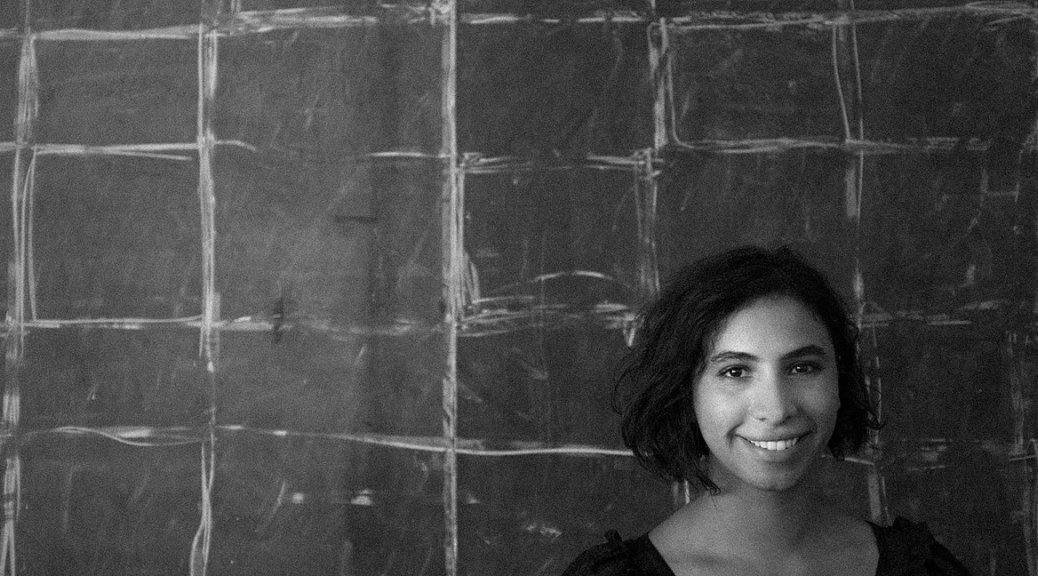
Originally from Bogota, Colombia, Laura Santoyo Dangond has always been a fan of movies. Growing up, she watched her favorite films, like Matilda and Jumanji, and would see more than the story. She would ask her parents how the filmmakers were able to create other worlds and dreamlike elements. Although her parents did not have all the answers, they encouraged their young child to make her own hypothesis as to how “movie magic” was achieved, and she never stopped wondering. As she grew, exploring the world and various cultures, her hypothesizing never stopped, and eventually she turned her passion into a career. Now, Santoyo no longer wonders how to achieve the magic of movies, and as a sought-after production designer, she is now the one creating other worlds.

Throughout her career, Santoyo has shown just what an extraordinary production designer she is. Her work on films such as Tim of the Jungle, The Plague and Falling are just a few examples of what this acclaimed production designer is capable of. However, despite such success, Santoyo considers the pointed drama Lockdown as the highlight of her career.

“It is probably the most challenging and rewarding experience I’ve had in this profession. I loved working with that team of people; we all believed in the story we were telling and together we overcame so many difficulties. Particularly for me, it taught me the importance on trusting the people you are working with and to support each other. In the end it all paid off, because it’s been one of my most successful projects,” she said.

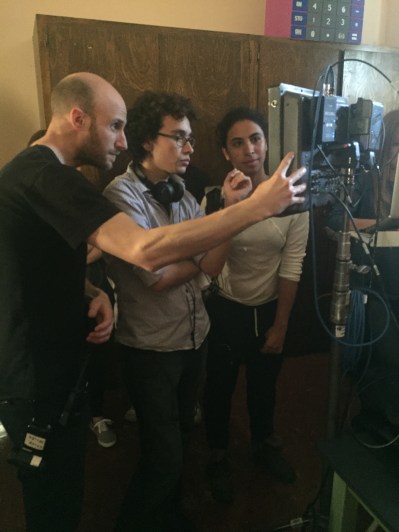
Lockdown set

Max Sokolof, Caleb Heller, and Laura Santoyo Dangond on the set of Lockdown, photo by Jane Hollo

Lockdown is about a 17-year-old boy named Julian. He is a misfit struggling through high school when he is taken hostage in the school restroom by Brandon, a classmate with a gun. Their perilous standoff proves that nothing is as it seems. Julian fights to hold onto the hope that he will survive – not just the hostage situation, but his entire high school experience. Throughout the film, audiences learn of both characters’ complicated backstories.

“This story talks about very important issues, such as depression and anxiety in adolescents, bullying in schools, access to guns, police brutality, and more that are affecting our society. It can help to bring these subjects to the table and encourage people who watch the film to have discussions about them,” said Santoyo.

After its premiere in November 2016 at the American Film Institute, Lockdown went on to be an Official Selection at many prestigious international film festivals, including the Orlando Film Festival, Garden State Film Festival, Sedona International Film Festival, Byron Bay International Television Academy Foundation for Best Screenplay and won the Golden Lion Award at the Barcelona International Film Festival. Such success may never have been possible without Santoyo’s outstanding production design.

“It is a great satisfaction to know that all the hard work, time and effort we as a team put into this project doesn’t go unnoticed and that we accomplished the purpose of telling a story that touched so many people,” she said.

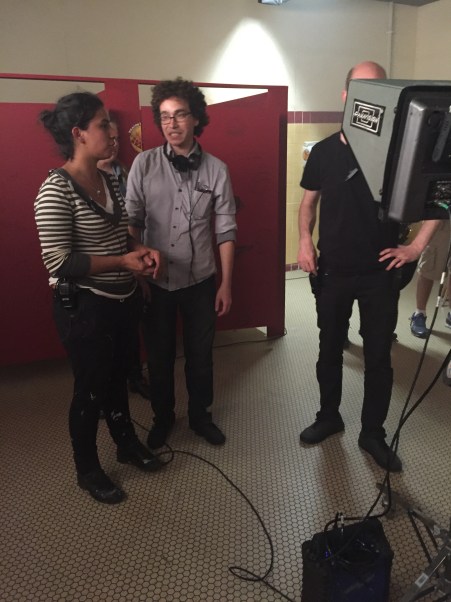
Lockdown bathroom set
Laura Santoyo Dangond, Max Sokolof and Caleb Heller on the bathroom set of Lockdown, photo by Jane Hollo

Having worked with Santoyo on his previous film Hotbed, the Director, Max Skolof, reached out to the production designer knowing the caliber of her work. At the time, he did not even have a clear idea of what the story was going to be, but he trusted Santoyo to help turn his vision into a reality. In the beginning, there was no script, and Skolof only had a newspaper article that he wanted to base a film around. Knowing the difficult but pressing issues the film addressed, Santoyo was immediately onboard.

“Working with Laura is a joy. She’s always curious, always soaking up ideas, always creative. She takes disparate things and puts them together in unexpected and revelatory ways. She has the highest standards for herself. Every detail is thought of. It helps me direct and it helps the actors find real depth. And on top of all that, Laura’s the kindest person you’ll ever meet. It’s also rare to come across someone who has such a strong and unique sense of aesthetics. She’s incredibly precise when it comes to expressing the story and the characters visually. Laura is brilliant in that way. She understands the language of cinema and she uses every tool at her disposal to help tell the story. Whether it’s knowing how to make use of space, or how to evoke a certain subtext with just color,” said Skolof.

When she begins every project, Santoyo makes sure to research her characters, and Lockdown was no different. She looked into what neighborhoods these adolescents would live in, the sociological and economic backgrounds and more, just trying to get to know as much information as she could to create a realistic design that would reflect both her leads.

Upon completion of the script, she did a breakdown of all the locations and noted what bits of the story took occurred in each place. When doing this, she noted the most important location in the story was the bathroom. Its design became her priority, and she began looking for a crew that would help bring her ideas to fruition.

“The design of the restroom was the biggest challenge because is where the two boys meet, and their feelings are revealed. We used a very restrained color palette that reflects the psychological state of both of them,” she described.

Rather than using a real location, Santoyo built the entire bathroom set on a soundstage. She went back to her research and looked for paintings and photographs that evoked the same feelings and emotions that she wanted to convey and saw a pattern in the colors. Most of the references she liked used yellows and reds. With that in mind, she did a preliminary design and presented it to the director. After his approval, she ensured all other departments, such as lighting and cinematography, could work with her concept. Once the designed was approved by everyone, the members of the art team, led by Santoyo, began sourcing the materials and painting samples.

The complexity of the two characters had to come across in the visual design and Santoyo achieved such a feat. She worked closely with the director, the director of photography and costume designer to better express the anguish and anger the characters were going through. The sets that she designed allowed the actors to better understand the characters’ backgrounds and helped facilitate the process of getting into character. In one instance, she even wrote offensive graffiti in the bathroom stalls that bullies may have written about their characters.

Such small details may seem trivial to some, by Santoyo knows how important they can be, and that is what makes her such a distinguished production designer. When watching Lockdown, audiences notice and appreciate how authentic the set is and allow themselves to be fully taken away to the high school. Any moviegoer knows, that is what makes a good film, and Santoyo makes that happen.


Top photo by Caleb Heller

Sijia Huang shows the importance of music in animation

When Sijia Huang animates a film, she sees herself almost like a choreographer. She aims to make every movement as seamless and fluid as possible, almost like an infinite tide. This is her priority with every project she takes on. She always ensures she has the perfect balance between tension and looseness, generating the ideal rhythm for all of her films. She does not limit herself to one type of animation, and as long as the audience is moved by her work, she is happy. It is this mantra that makes her one of China’s best animators, and why she is taking the industry by storm.

Huang’s style is evident in every one of her films and is perhaps best displayed in her award-winning film Hear No Evil, Speak No Evil, See No Evil, a film conveying the struggles of humanity. Since then, Huang has seen continued success. Quitting Brave Victory, a film about warrior who begins a journey to find his strongest opponent, has over 2.6 million views online. BoxHome, is a story of a couple who live in a box, went on to win several awards. Breakfast, a fun film about a child’s imagination, made its way to several prestigious international film festivals.

“As an animator, I work for a variety of fields including film, television and commercials. I animate characters based on designs and stories. I would like to say animators are like magicians who bring things to life,” she said.

Huang’s flair for animated choreography is exemplified in the collaborative film for the event Measures & Frames. A partnership between a group of filmmakers and a group of composers, Measures & Frames featured the internationally renowned Pendrecki String Quartet performing five pieces of contemporary classical music paired with original visuals projected against a three-screen display for an unforgettable pairing of image and sound.

Measures & Frames aimed to create a conversation between the pictures and the music. They made something more like a painting: a world that embodies a story-like idea or emotion. It’s an audio-visual experience that gives the audience a new entryway into the music. Suddenly, audiences see structure and form that we couldn’t see before. What seemed impenetrable and unfamiliar can suddenly become inviting and enjoyable, especially with a very conceptual, sophisticated piece like Arcadiana, the film that Huang worked on for the event, which was a main part of the entire production. Music is a large part of Huang’s life, and this project gave her the opportunity to showcase this passion. It was also her first opportunity to animate to the music of a strong quartet.

“I was so happy that I could be the animator for this project. It made me want to make more music related projects. If an opportunity comes up to work on a music video in the future, I will jump all over it,” she said.

When the Director of the project, Michael Patterson, was looking for an animator to bring such a unique film to fruition, he thought of Huang’s work on her film Hear No Evil, Speak No Evil, See No Evil and knew she was just who he needed, knowing she was capable of choreography, which was very important to Arcadiana. He invited her to take part, and she immediately said yes. Patterson is famous his work on the animation for the famous A-ha music video “Take on Me” as well as creating the characters Stray Mob and MC Skat Kat, who appeared in Paula Abdul’s music video “Opposites Attract”.

“Music is abstract and invites the audience in—the visuals have to do this too,” said Patterson when speaking of why Huang’s animation was vital to the project. “The multi-sensory experience invites the audience to understand the form of the music in an expanded way. If you’re depicting the music too literally, you’re limiting the freedom to personally engage.”

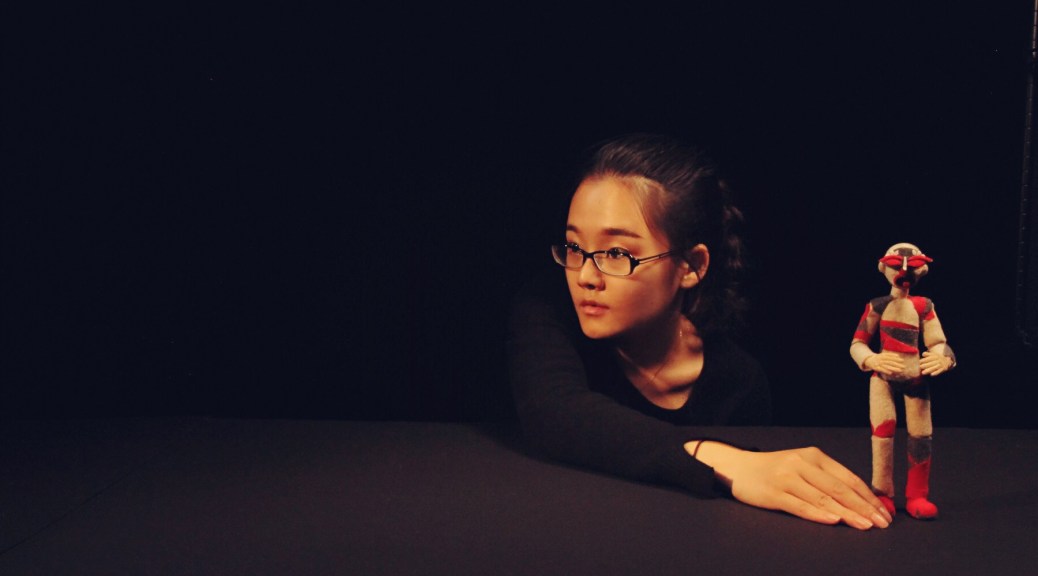
Huang designed the main character that was used in the film and did the stop-motion animation. At the beginning of the production, she wanted to shoot the animation using the down shooter with paper cut puppets. When she showed the director her work, he asked me if she could also try to animate another 2D version using After Effect. In order to create a more defined looking for the skeleton puppets, she used the latest character pin and created the dance for two skeletons. With each revision, Huang got closer and closer to their vision, until finally she achieved perfection.

“I had the opportunity to collaborate with Sijia on a project titled Measures & Frames Sijia created the portion of the show that featured two skeletons dancing with one another. This part of the production was crucial to Measures & Frames, and Sijia was the only animator capable of combing choreography and animation to make our vision a reality. Her mastery of a variety of animation techniques made her indispensable to the project. Specifically, her utilization of Adobe After Effects, a digital visual effects, motion graphics, and compositing post-production application, was key to finishing the animation on the project. Sijia’s high skill level in using the latest animation techniques, as well as her remarkable versatility and distinct style, vastly elevated the visual portion of Measures & Frames,” said Michael Patterson, Grammy Award-winning filmmaker and Director, specializing in TV spots and music videos.

Huang stands by famous composer Veronika Krausas, who once said, “For some audiences not familiar with new music and it’s their first time hearing not one but five new works, it’s tough. I think that the added dimension of the video helps smooth that out a bit. This is a way for audiences to actually experience the music more and become more familiar with it. The video helps acclimatize people to the sounds, and then they’re more able to appreciate them.”

Those who attended Measures & Frames on March 28th, 2015, were wildly impressed with both Huang’s animation and the event as a whole. Experiencing music in a visual way was captivating, and Huang thinks it is of great importance.

“If the diverse crowd that delivered a standing ovation at the evening’s conclusion is any indication, this type of visual music experience has opened the doors of classical composition to a newer, younger crowd than the form has seen in quite some time,” Huang concluded.

Actor Yifan Luo channels his teenage years in ‘Talentik’

Yifan Luo knows what it takes to become a sought-after actor. The Chinese native recognizes the importance of patience; success does not come over night, and acting isn’t easy. You have to study and constantly be looking to improve yourself. He knows that even the most renowned actors spent years not hearing back from auditions but never giving up. That is exactly what he did, and now he is a leading actor in China’s film industry and has begun making headlines around the world.

“During some difficult times, you may not get a chance to work for months. Under this circumstance, will you still be sure that you want to be an actor? Can you be patient enough to go for auditions one after another with the best performance you can give although none of them gives you a callback? Will you be as passionate for some work that might give you $200 in total as those big things that you have done before? If the answers are no, then you should not be an actor,” he advised.

Those days are now long gone for Luo, but he constantly remembers them and remains humble despite what he has achieved. Just last year, he was recognized for his portrayal of a schizophrenic psychopath in the thriller SAM, and even received an Honorable Mention for Best Actor at Festigious 2017. He has many exciting projects upcoming, working alongside some of Hollywood’s elite. He also is incredibly versatile, exploring different genres and mediums. Just last year, his film Talentik was released online, allowing audiences to stream the film when they chose.

“Yifan played an important role as one of main characters in our production Talentik. He is such an energetic actor while everyone can see his talent and profession on set. Yifan always spends lots of time on his character and script before shooting, so it’s easily worked with him, saving time and money for our production. Also, his attitude and enthusiasm are often infectious to the other actors and the crew. We are so fortunate to have had Yifan in our production,” said Steven Li, Director.

Talentik 2
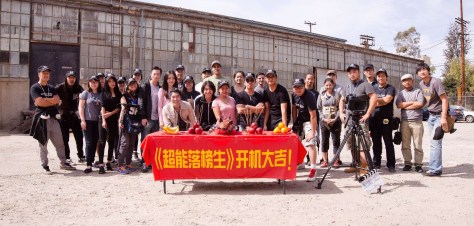
The cast and crew of Talentik

The movie is about three Chinese college freshmen who get accepted by a United States Ivy League school. They arrive in the US without anybody helping them and get a text message telling them to look for any possible clues that can lead them to finding the school. While looking for clues, a strong relationship is gradually built among the three characters. One day, one of them gets kidnapped by the villain. The remaining two characters try very hard to find her and save her from the bad guy. Finally, they realize that everything has been set up by the school in order to help them to learn how to work with each other. At the end, they find the school and all get accepted.

“The story tells us the importance of cooperation. Nobody can succeed without the help of other people. Individualistic heroism no longer works for society. We all need to help each other. This movie gives a very good example of how three spoiled kids finally learn how to trust and rely on each other in order to reach the same goal,” Luo said.

The movie tells the story of the three characters on their journey, and Luo plays one of those three characters. Everything happens around the three of them. Luo plays Luke, a college freshman. He initially failed the college entrance exam in China, but happens to be accepted by a college in United States that comes out of nowhere. He comes from a rich family in China. His parents love him so much and they want to control everything in his life. This is why he finally decides to go to the US, so that he can break away from his parents. And interestingly, he is a mind-reader. His favorite thing is to read other people’s mind and make fun of them. The character is quite a few years younger than Luo, who was ready for the challenge of taking on a different generation.

“It was amazing to work with such a professional actor like Yifan who always came prepared and donates himself into the character. The film wouldn’t be such a success without Yifan’s participation. He is a true artist who concentrates on his goal and is in the character with all his heart. It was such an honor that we worked with Yifan in the film and will definitely keep working with him again in the future,” said Olina Wang, Producer.

Wang approached Luo to work on the film, knowing he is an extraordinarily talented actor, and playing comedy without overdoing it and simultaneously having to act 8 years younger than you actually are can be challenging for many actors. Luo was eager to try something different, and immediately accepted the role.

While shooting Talentik, Luo decided to method act, and stayed in character at all times, not only in front of the camera, but also when he was waiting, getting ready for makeup, having lunch, taking a break, etc. He tried to really become the character. He did funny things that he normally would not have. He forced himself to eat twice as much food as he really needed, just like a growing teen. He joked around on the set, making everybody laugh. All these things were to help get himself into character.

“Working on Talentik was awesome. Everyone liked each other. The set was full of laughter. We helped each other with whatever we could. There was no conflict nor any argument during the whole shooting process. I believe that’s the most important thing in a film shoot. Once there is an argument going on, everybody stops and tries to deal with the argument, which delays the process a lot. With good relationships between all the casts and crews, we didn’t have to think about too much and could focus on making the movie good,” he said.

They definitely achieved that. After shooting the film in 2016, the film was released on Sohu Video, one of the largest online distributors in China. It quickly received over 10 million views and is still going strong almost a year later. At the time, Luo was not expecting such a response, as he had so much fun making the film that he considered that enough.

“I have to say that I was deeply surprised. I didn’t know it was getting so many views until one of my friends called me and told me about it. At the beginning, I thought he was lying. I didn’t believe him until I went online and checked it myself. I still feel proud of what I did, what the team did. We brought something to the public and got realization. That’s enough for me. The only thing I ever want is for people to like what I have done and for people watching my work to have fun,” he concluded.

And that’s exactly what viewers feel when watching Talentik. Be sure to watch Luo’s performance in the film on Sohu Video.

Q&A with leading British actor Pezh Maan

Throughout his career, Britain’s Pezh Maan has shown audiences he is a force to be reckoned with as an actor. His work as a villain in the James Bond blockbuster Spectre was an international success, and the actor quickly became recognized around the world. Since then, he has starred in television shows like BBC’s Eastenders, the award-winning French series The Bureau, and the immensely popular FX series Tyrant.

We had a chance to sit down with this dynamic actor and find out about the beginnings of his career and get some advice for those looking to follow in his footsteps. He also gives a brief preview to his upcoming American television show Deep State, which premieres on FOX in over 50 countries later this year.

Check out this interview!

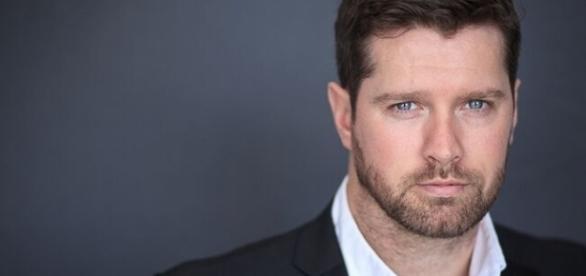
Pezh Maan Promotional 2 (2017)

EWG: Where are you from?

PM: I was born in Plymouth, United Kingdom, a naval town on the south-west Coast bridging the counties of Devon and Cornwall. I spent most of my childhood and youth there before moving away at 18. Since then, I’ve lived in Cambridge in the UK, spent most of the past 20 years making London my home, except for several lengthy stints traveling the globe, once circumnavigating from the UK eastwards and arriving back via Brazil a year later, and several months in different cities in India and the Far East. My star sign is Leo born in the year of the Chinese Wood Tiger.

EWG: In your own words, how would you describe what you do as an actor?

PM: I think what I do is to interpret the words of the writer and turn them into all the facets of the living breathing human being that I am being asked to play. I get into the skin of the character whilst still being myself with all my own emotional responses. When the character is somewhat at odds with my own experiences then imagination can come to one’s aid in creating a way to relate to the character. Imagination is the lifeblood of an actor’s work and interpreting the text is an imaginative endeavor and an extremely rewarding one for me.

EWG: What initially sparked your interest in acting?

PM: Like a lot of kids, I was involved in school productions and I remember just enjoying being on the stage and being in a position to influence the audience with humor or different emotions. I developed a love for performing over the years that was nurtured as I moved through high school and began reading more about plays and watching films and I had some great teachers who inspired in us a love of drama and life, which was invaluable for us. Acting was part and parcel of understanding life it seemed to me and felt like a natural place for me to express myself.

EWG: Why did you want to be a professional actor?

PM: For several years I was involved in amateur productions in London on stage as well as on camera in low-budget short films. After a while it became clear that I needed to be doing it full-time and so it became a natural progression to take the steps of a professional actor. I began the actor’s journey of auditions, castings, knock backs and small successes. None of the joys would have been possible for me if I hadn’t taken the plunge and signed up to be full committed to the activity that was my passion since childhood. And I sort of fell into small successes that led to further work and I’ve been lucky enough to see my career grow.

EWG: What do you like about being an actor?

PM: It’s now such an integral part of my life I can’t see myself doing anything else. I like the work, and the people who are drawn to this particular way of telling stories. One thing we all have in common is the need to tell stories and actors are charged with bringing stories to audiences in a collaborative endeavor that can move people. It’s also a lot of fun. I feel in acting we are given free rein to experience the whole gamut of emotions that in everyday life we don’t get to experience that often (and rightly so!). It’s a very invigorating activity and I find it hugely inspiring.

EWG: What are the challenges to being an actor and how do you overcome them?

PM: The work you need to do as an actor on your mind body and probably soul to be best equipped to be able to produce performances that move people, that are specific and bring characters to life in that believable way that keeps audiences attentions. That entails a lot of preparation and study, especially learning lines and cues of when to make actions necessary for the story and so forth. Then there are the challenges of how to make a life and a living from a profession that has been described as the most competitive one out there. Being rejected is something that you accept as an actor and an experience you become accustomed to and probably the major part of any working actor’s success is having the resilience to keep working despite fallow periods of little or no success. It’s a real test of one’s self-belief as actors. Actors need to be in tune with their sensitivity as humans to be good actors and so it can be quite a challenge to maintain that equanimity and take the challenges in your stride.

EWG: What would you consider the highlight of your career?

PM: That is an interesting question because initially the early successes made a huge impact and it felt as if I was moving from highlight to highlight. Now that my career has a steady momentum I feel as if the highlight of my career is having a career. I’m very grateful to have had the honor of working with some great actors and directors on film and television and being cast in the Bond film Spectre will always be an experience I will remember. I’d like to think that the highlight has yet to happen and wait to see what the future will bring. That attitude keeps me fresh and not complacent which I think is detrimental for any artist.

EWG: How would you describe your style of acting?

PM: I think that is something that critics are better placed to comment on this. Words such as naturalistic and minimalistic are ideas that resonate with me when thinking of performances on camera. I’m excited by seeing performances with those qualities and I like to think that I do my best to try and achieve that on camera. Acting for the camera is an art in itself as the camera picks up on everything you are doing, and so minimalism is amplified and goes a long way. Apart from that I would say that having no style works best for the camera, trying to be as truthful to the moment as possible without embellishing unnecessarily and being economical with gestures and actions can really enhance the portrayal you achieve on screen.

EWG: What advice would you give to those looking to pursue a career in acting?

PM: That’s an interesting question. I’ve read other actor’s responses in the past to that question which fall into the “Do/Don’t do it and Keep going you’ll get there in the end” categories. I would say that either you know you want to do it or you don’t and that you should listen to your gut and heart because then you can never go wrong and in the end if you followed your heart you will be a success whatever happens. And to avoid becoming negative or cynical because life is bigger than all of us and to keep a perspective on it is to have cracked the secret to a successful life. One I’m still trying to achieve myself.

EWG: What are your plans for the future?

I have a really interesting role in a brilliant new thriller series Deep State in Spring 2018, which was great fun to shoot and I can’t wait to see the final cut. I also have another film project that I can’t talk too much about now and a television project to shoot this year. 2018 promises to be an exciting one and we have only just begun.

THE PRODUCER WITH THE GOLDEN TOUCH: BOHAN GONG

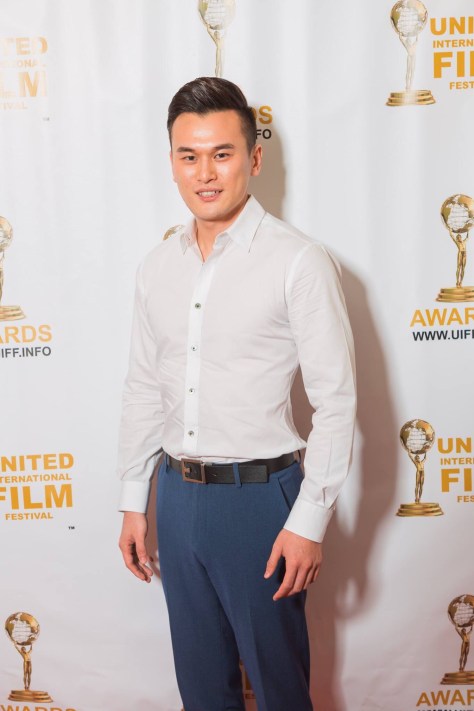
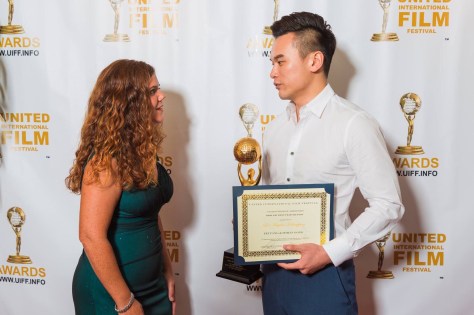
United International Film Festival Red carpet

Chinese producer Bohan Gong takes great pride in the fact that he has been a force behind many successful films in his homeland, Europe, and the US. Establishing yourself as a respected producer in one country is difficult enough, cultivating that reputation and prestige on a global scale is a situation that has only presented itself in recent times. Hollywood used to be the only major player in the game but China, Bollywood, and other locations have made their presence felt. Gong is talented and multilingual by design. His credits are instantly recognizable and he makes a point to work on both huge studio productions and independent films with themes near and dear to his heart. Bohan often remarks that the story of a film is its soul and he always seeks out his connection with this story in order to give it the respect it requires. This is not the typical comment you’ll hear from producers who are more likely to refer to their part in the filmmaking process in terms of schedules and “being in the black” but this producer is not your typical producer. Many of his peers refer to his exceptional talent in screenwriting, editing, and other facets of film. Bohan is a filmmaker who produces rather than a producer who has found his way into filmmaking. The two are inseparable in his work and the success of his many productions vets him as a leader in the modern day film community.

2017’s American Made earned $139 million and is the most recent in the long successful career of Tom Cruise. While it was an immense hit in the US, this may have been eclipsed by the film’s massive attention and earnings in China. Bohan was in charge of designing and coordinating the Chinese distribution plan for American Made. Many of today’s big budget films depend on their international box office to be a key part of a film’s financial earnings. China’s love of film and huge fan base is perhaps the most important contributor of a US production’s non-domestic box office. Gong’s insight into the workings of China’s rules such as Communicating Law procedure, applying Chinese import, and Applying related licenses (such as Chinese region “Permit for Public Projection of Films) were indispensable to the achievements of American Made in the country. James H. Pang (co-executive producer of American Made) professes, “Bohan’s knowledge of the many different international business and production practices makes his a uniquely talented producer in the industry. At the same time, he has a strong understanding of the Hollywood and China film market “game” that actually gets movies made and well-distributed. Those that invest with him do it time and again because he represents the business interests so well.”

For the Hollywood blockbuster and Oscar-award winning Hacksaw Ridge, Bohan also was key in the film’s distribution in China. Communicating and coordinating between Hollywood’s Cross Creek Pictures and China for the director (Mel Gibson) and leading actors to attend publicity activities in China, Gong helped to bring exposure to the film and open the Chinese market to western celebrities. One lasting effect of the producer’s work on Hacksaw ridge was that its reputation as a Hollywood blockbuster helped Gong to build a distribution structure for American films in China’s top tier cities like, Beijing and Shanghai all the way down to small towns.

Los Angeles Kidnapping is a Chinese major studio production that was filmed in Los Angeles. As lead producer who was part of the film since its inception, Bohan’s understanding of the working of Hollywood’s film community and the tastes of China’s audiences led to his insistence that Los Angeles Kidnapping be filmed in the US. Many of the films that were US/China collaborations frustrated Gong because it was obvious to him that they were produced by an American crew with only a few shots actually taking place in China. He explains, “I wanted to do something new. I understand how the film industries of both China and Hollywood create and work. For Los Angeles Kidnapping I still used an American crew. I knew that the stylistic approach of Hollywood storytelling and the American locations would infuse this style and quality into the film, but I wanted to tell a Chinese story. There is a different sentiment to Chinese culture in film and I wanted this to be authentic. I also didn’t hire Hollywood top tier movies stars but chose actors from China whom the audience would relate to.”

In addition to his role as lead producer, Bohan found the script, wrote and revised the script, procured financing, hired the stars, key crews, and developed the Pre-Production, Production, Post-production, marketing and distribution for Los Angeles Kidnapping. His design theory for the film proved well-founded when Los Angeles Kidnapping garnered more than fourteen wins and five nominations including: Los Angeles Film Awards: Best Action (2017), London Independent Film Awards: Best Foreign Feature (2017), and others. It was released on the Iqiyi Platform and sold to China Central TV Movie Channel. To date, Los Angeles Kidnapping has earned five times the production budget.

Every true artist is passionate about some pet underdog cause and for Gong this is the environment. The air pollution in his hometown of Beijing has been alarming for quite some time and sparked the producer’s desire to influence the problem by using his personal talents to illustrate these problems. In the documentary “A Tip of Bottlebegr”, Bohan displayed the worldwide epidemic of plastic bottles and their effect on the planet. While there are many factors that negatively affect the environment, Gong felt that focusing on this singular topic would help the viewer to clearly understand the malevolent repercussions and perhaps by the catalyst to be more aware of similar trends. “A Tip of Bottlebegr” received the Grand Award for Best Picture at the Cherry Blossom Film Festival, Best Experiment Film at the Lake View International Film Festival, Los Angeles Film Awards: Honorable Mention Documentary, Festigious International Film Festival: Honorable Mention Documentary, Focus on Image Festival: The Best Picture Nomination, and a nomination for Best Film at the Atlantis Film Awards.

Bohan Gong has staked a fair portion of his career on the collaboration of artists and filmmakers of different countries. He sees it as the future and it is a future which creates more sincere and entertaining art because it brings even more perspectives and a diversity of talent to the art of filmmaking. Contemplating the work between his homeland and Hollywood he relates, “This artistic collaboration between China and the US will affect parts of each society. For example, nowadays, Artistic collaboration between China and the US have been promoting the communication and cooperation between China and America in factors of culture, economics, tourism, technology, education, etc. China loves storytelling and the Chinese film industry has established itself and matured quickly. In the end of 2016, China surpassed the United States with a total of forty-one thousand film screens. This has attracted American filmmakers to the opportunities China can offer them and this is good for both countries and their people. I could not have picked a better time in the history of film to be a producer from China with this relationship blossoming.”

United International Film Festival Red carpet and interview

Q&A with Actor Dominic Kay of ‘Allies’

There is little doubt as to why Dominic Kay has become a force to be reckoned with in the United Kingdom’s film and television industry. This revered actor has proven what he is capable of in a series of demanding and versatile roles, captivating audiences around the world. Whether it is with his work in the horror White Settlers or in a comedic role in ITV’s iconic soap Coronation Street, Kay is always on the top of his game.

This year, audiences can look forward to Kay once again gracing the big screen in the upcoming 20th Century Fox feature Walk Like a Panther. The film that tells the comedic story of a group of 1980s wrestlers are forced to don the lycra once last time when their beloved local pub is threatened with closure. They put on one last show for their local town, which becomes legend.

One of the highlights of Kay’s career came when making the 2014 historical drama Allies. The film, directed by Dominic Burns and stars Downten Abbey’s Julian Ovenden. The film is close to Kay’s heart, and we had a chance to sit down and talk to him about his role in the endearing World War II movie, and once reading, be sure to check out Kay’s dynamic work in Allies. 

EWG: What made you want to work on the film?

DK: Well what had me interested in this particular project was pretty much everything about it. Firstly, the genre, being a period war movie set during World War II. Ever since I first watched Band of Brothers I have always wanted to be in a period war project. I just love everything about them to be honest. The uniforms, weaponry, language and dialogue are all factors in my interest in a project like this. Also having family members who fought in the war and hearing harrowing stories from my grandfather was a key factor. I had often imagined what it was like to be fighting in a war and I guess this was an opportunity to experience a little bit of that. It was kind of a way of experiencing what it would have been like back then. I love watching movies like these and period dramas. I love everything about them really. It’s not every day you get to go back into the past and wear those uniforms, fire those old classic weapons and act in a way fitting with that period. I guess I’m a classic soul.

The script was a big positive for me as well. It was great and had me hooked from start to finish. It gave a very accurate representation of the war as we know it.

EWG: What is the film about?

DK: The film is set around the ‘D Day’ landings in Normandy France in World War II.
The Germans were occupying France and obliterated pretty much all of the resistance. The next step for them was crossing the English Channel and invading the United Kingdom. The Brits had set up a crack team enlisting the help of the French resistance and help from an American captain. Their mission was to be dropped behind enemy lines in France and to connect with the French resistance, causing as many problems for the Germans as possible in an attempt to shorten and even end the war. The story of the film is particularly important as it is based on true events that hold significant importance in European history. Hundreds of thousands of people lost their lives during this grueling war and many of them were children. To give an accurate and believable performance and do justice to a topic with this magnitude is of paramount importance. Many people growing up today don’t realize what sacrifices their predecessors made for them and I think giving them a glimpse of what it was like can be a good thing.

EWG: What character do you play? How does your character fit into the story?

DK: My character is ‘Coresman’. He is a soldier and field medic. His duties are to firstly fight but also patch up injured soldiers as best as he can and save as many lives as possible. He is placed in amongst this group of elite soldiers and assists them in their mission in trying to push the Germans back, retrieving as much land as possible and ultimately defeat them. He has a lot riding on him as the team is constantly under fire and involved in some pretty ferocious battles. His abilities are constantly called upon and heartache ensues when he realizes he can’t save everyone.

EWG: What was a day on set like?

DK: For me personally it was a complete joy to be on set daily. It was my first experience of anything like this. Even when the weather turned sour it didn’t really dampen anyone’s spirits due to the fact it was so much fun. That being said, it comes with a lot more pressure than usual as to reset and re-shoot scenes took time and a lot of money. So, everyone knew they had to be on point all of the time.

EWG: What did you like about working on this film?

DK: With a production like this there is obviously a lot of fighting and battle scenes with a lot of cast and extras. I mean, you know you have to give an accurate account of what happened, but sometimes you just can’t help your inner child coming out. Running around with firearms and weapons, riding motorcycles, riding around in tanks, fighter planes flying overhead and not to mention huge explosions and pyrotechnics going off all over the place. It was just brilliant.

EWG: What was the highlight about working on the film?

DK: There were quite a few highlights for me regarding working on this film to be honest with you. It was just such an absolute adrenaline rush from start to finish. Long days, bad weather, delays, etc. didn’t distract from the fact that I was having a ball every day I was on set.

The cast was just awesome. There were no bad apples complaining or whining, just great people pulling their socks up and mucking in. Everyone really worked for each other which made it that much more special to be involved in. The main highlight for me though has to be being involved in such a good factual representation of a piece of history that is not just close to my heart but to hundreds of millions of people. Having watched this with my grandfather and seeing the emotion on his face was a real sobering moment for me. Although it did show me that the film had got across what it wanted and was a huge success.

Join Dixie Chan in honoring Borneo’s unsung environmental heroes

At the outset of her career as a documentary film producer, Dixie Chan made it a long-term goal to one day use her talents to cast a light on an important social issue. For Chan, being a film producer allows her to research compelling people, places, and customs across the globe and share them with interested audiences alike. In her eyes, it is a privilege to be able to take advantage of the social platform that her profession provides her and if she can make a difference in the life or social awareness of even one individual, she’ll have succeeded.

“Being able to tell a good, compelling story that will resonate with people for a long time requires experience, technique, patience and empathy — all elements which I believe can be honed when you are learning and working with the best in the field. During my college years, I started going to film festivals and getting more exposed to independent documentaries and films, many of which were centered around social issues. I became so fascinated by the visual and narrative power of these films and I knew I had to be a part of it,” Chan discussed.

As Chan became more and more involved in the realm of narrative documentary filmmaking, she realized that her dreams to raise awareness about socially charged issues was not at all unrealistic. In fact, she has gone on to work on several documentary films and shows that cast a light on various places and people around the world who share in her desire to educate the masses about important issues, be they cultural, environmental, historical, political, religious, etc. In her role as the producer of an upcoming project, Chan had the unique opportunity to bring viewers inside a world where a group of passionate individuals ensure that China’s ancient trees are protected and its legacy of woodcraft is preserved for prosperity. Similarly, when she acted as the Story Producer for Frontier Borneo, Chan was not only able to work in one of the world’s most spectacular rainforests, but she was able to do so whilst supporting their local environmental conservation efforts.

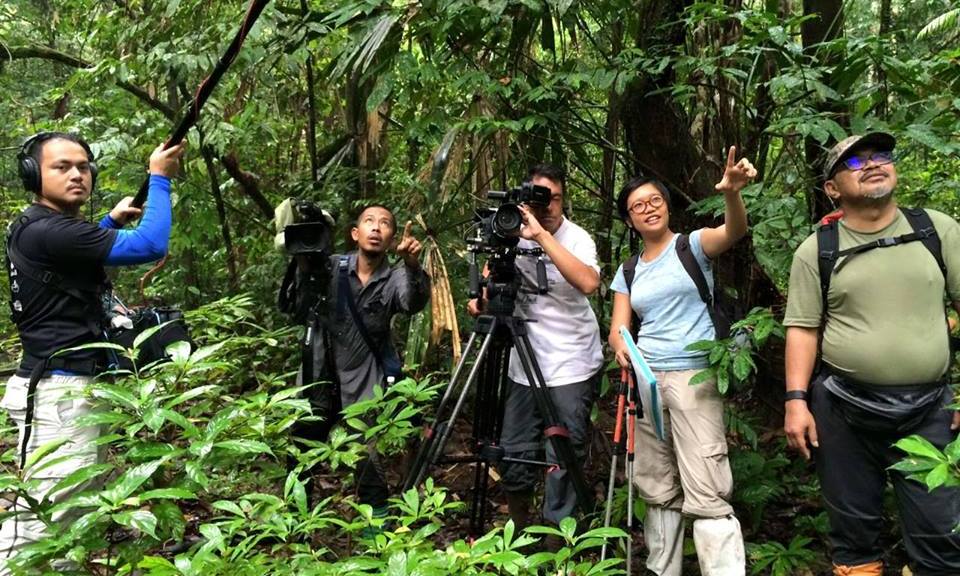
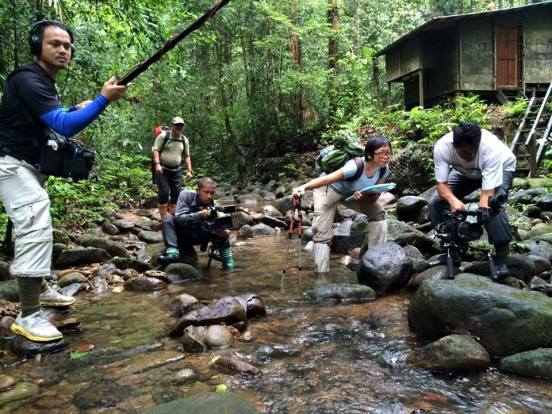
FRONTIER BORNEO 01

Frontier Borneo is a Discovery Channel documentary series showcasing a breathtaking, action-packed journey following the lives of remarkable men and women and unforgettable creatures on the third largest island on the planet. Interesting and unusual feats like dealing with home-made bombs in the oceans, exploring uncharted jungles, rescuing endangered animals and coming face to face with deadly creatures are all in a day’s work for the characters featured. Chan was asked to produce this awe-inspiring documentary in March of 2016 and later, when it premiered on February 28, 2017, it became apparent why.

“This project was an especially challenging production that was shot across 6 months in some of Borneo’s most treacherous terrain. Dixie was able to manage production of one shoot, which typically covers jungles, crocodile-infested rivers and seas, while doing the preproduction work of researching and casting of an upcoming shoot, all at the same time. Despite her ability to coordinate different aspects of the production simultaneously, she remains extraordinarily meticulous and hands on at every step and this enabled production to move forward seamlessly with minimal delay,” told Jacqueline Leow, Production Manager, who currently works at Beach House Pictures, one of Asia’s largest media company producing content for the international market.

Not only was she the most experienced producer working on the project, but she also proved to be invaluable to the entire initiative. She has an ability to juggle competing priorities with ease and to logistically map out every task involved with a project to such a degree that other cast and crew members are never left wondering what is required of them. For this particular project, Chan made it a top priority to establish and facilitate effective working relationships with her team, as well as the locals, due to the intimate nature of their filming location. She inspired each and every member involved to treat Frontier Borneo as a passion project, as opposed to an average job. In addition, her experience working in rural areas of China on other career projects gave her an advantage when liaising between crew members and local conservationists. Her adept understanding of Chinese working culture allowed her to bridge any cultural gaps they encountered and helped the planning, filming, and production processes unfold seamlessly.

“The rapport that I was so intent on building with the locals helped immensely in production, from accessing hard-to-film areas to getting information post-shoot, and even getting translators for interviews done in the tribal languages,” Chan reflected.

All in all, in order to make Frontier Borneo the true success that it was, Chan had to immerse herself mentally and physically into this expansive Malaysian rainforest and wildlife sanctuary. Whether they were shooting about marine conservation or mountain marathons, Chan was directly involved and on scene. To be so heavily engaged in such a hands-on Discovery Channel documentary is something that few producers can say they’ve ever done, let alone well enough to earn awards and accolades along the way. For Chan, however, being professionally recognized for her efforts meant little in comparison to the humbling knowledge that she and her team were able to truly celebrate the livelihood and struggles of the selfless individuals fighting to protect our Earth’s enriched wildlife and environment. Acknowledging the heroes of Borneo on such a large, influential scale gratifies her in an indescribable way and served as a safe reminder that she is doing exactly what she wants to be doing with her life.

Yayun Hsu talks pressure of producing first-ever American Influencer Awards

For award-winning film producer Yayun Hsu, being one step ahead of her work has always served her well in her field. Hsu understands better than most just how unpredictable a film set can be and learned the value of proactivity very early on in her career. She has since developed a style of producing whereby she strives to eliminate her proverbial “to-do” list on any and every set she works on. This is not to suggest that she wishes to kick up her feet and relax at work; however, it motivates her to meticulously plan each film shoot to such an extent that it could hypothetically run itself. By anticipating and accounting for any possible setbacks on set, she is always on her toes and ready to react when an issue arises. Her instinctive ability to problem solve, coupled with her desire to be an invaluable asset to any film project, makes her a force to be reckoned with in the entertainment industry, and she is taking her field by storm.

“I’m a problem solver at heart and I enjoy being a leader. In a book I read years back called Producer to Producer, the author noted that his students would often approach him to tell him that they could not afford a producer. To this he would reply, “You cannot afford not to have one.” This idea spoke to me and it became my goal to become invaluable as a producer in this industry. I like the idea of the crew needing me and I want to be that one producer that comes to mind whenever someone is looking to start a new project and to make it great,” told Hsu.

Throughout her career, Hsu has produced a number of highly acclaimed films, such as Because I Love You, and Caged Bird. In fact, after writing, directing, and producing the film Eli, she went on to receive prestigious awards such as Best Woman Filmmaker at the Los Angeles Independent Film Festival Awards in March 2017 and an Award of Distinction at the Canadian International Short Film Fest. Given that Eli was Hsu’s first major project for which she both directed and produced, she classifies it as a large accomplishment in her repertoire. It is one of the greatest highlights of her career thus far, and helped encourage her to continue pursuing filmmaking and producing for a living. In addition to Eli, Hsu considers producing the American Influencer Awards in November of this year as being another of her major career highlights to date.

“The American Influencer Awards were a unique accomplishment in my career. It represented my first “live” work, which came with its own new set of challenges. There were so many different responsibilities involved, from working with celebrities to coordinating with corporate sponsors, and more. I really learned a lot from the experience,” reflected Hsu.

The American Influencer Awards is an awards show for the online beauty influencer community. For the show, award-nominee video packages were played at the ceremony, and a live stream of the awards show was broadcasted on YouTube for fans of these wildly popular beauty influencers. With that, Hsu was responsible for conducting background research as it pertained to the nominees’ video packages, cutting demo video footage, securing an event location, a contact cast and crew, handling catering services, preparing props, and several other essential roles. In addition, during post-production, she helped edit and color-grade all of the event footage.

Interestingly, this was the first ever American Influencer Awards show and for that reason, Hsu was intrigued by the idea that she would be able to sculpt and shape something that would hopefully be such a success that its sponsors would like it to be replicated for years to come. Most importantly, however, she was both excited and nervous about the idea that she would be producing live content for the show. Her quest for perfection in her work grew with the understanding that there were no opportunities for re-dos. All of the content she was working with would be taken at face value, the first time and therefore, she exercised her best use of her skillset to ensure that her audiences could reap the benefits. She researched the show’s content, guests, and the style of live production heavily before she began planning, and after she gathered all of her ideas for nominee award packages, she and her team were able to narrow their ideas down to fifteen of the best packages for storyboarding. Her expertise was crucial in making sure that the entire production moved at a favorable pace and that the show’s events were shot with fluency. The show’s Executive Producer, Jay James, was blown away by Hsu’s contributions to the success of the show and hopes to be able to call on her again next year to make the show’s second annual awards ceremony as great as the first.

“Yayun demonstrated that she can listen well and perform under pressure. Her innate ability to multitask makes her a clear standout in my eyes. It also helped that many people that were in attendance at the event commented on how Yayun had helped them or made arrangements for them in advance, which totally gave the show an extra professional touch. We will definitely be calling her for our next American Influencer Awards show,” told James.

After months and months of tireless preparation, countless long hours, and ample effort, Hsu was relieved and grateful to hear the thanks and praise of her boss and clients. She felt proud and accomplished to know that she was responsible for the show’s success and she hopes to be able to continue that trend for future American Influencer Awards shows in years to come.

Lili Huang reflects on “Mei Mei”, one of the highlights of her career

When Lili Huang looks back on her life, she finds it difficult to pinpoint the exact moment that she decided to pursue her dreams of becoming a filmmaker. As a young child, she lived with her grandparents and fondly recalls making up stories to entertain them during family time. She would dream up a world of little ideas, laughing hysterically as she acted them out for her audience and looking forward to the next time she would get to bring her characters to life before their eyes. She was always bursting with tales to share and she quickly learned that making movies allowed her to channel that creative energy productively. Today, the talented screenwriter, director, editor, and producer, has proven herself to be a strong presence in the industry and hopes to continue to grow that reputation for several years to come.

Throughout her career, Huang as lent her talents to a number of esteemed projects. In conjunction with other filmmakers, she has worked on several international feature film productions, such as The Jade Pendant and The Bombing. For projects like these, Huang often poses not only as a contributor to the filmmaking process, but also as a communicator between Mandarin-speaking colleagues on the Chinese side of production and English-speaking colleagues on the American side of production. Her vast amount of experience working within and outside of her native country give her a unique edge above her competition.

In addition to her work with international film productions, Huang writes, directs, edits, and produces her own scripts. Through her original concept films such as Xixi, and The Flower of the Future, Huang endeavors to broaden the perspectives of her audiences and open their eyes to cultural and intellectual issues across the globe. In fact, one of the highlights of her career thus far was in 2014 and 2015, when she created Mei Mei. Mei Mei follows the life of a Chinese girl living in the United States with her American adoptive parents. At school, a new boy joins Mei Mei’s class after moving from China to America with his mother. Struggling to make friends and assimilate to American culture, Chris attempts to bond with Mei Mei over their shared heritage; however, to his dismay, she is not so keen. As time elapses, Chris begins to teach Mei Mei the Chinese language. The story eventually comes to an end when Chris must move back to China due to his illness. Fortunately, Mei Mei has their time together to cherish in her memory and is finally able to come to terms with her own identity struggles.

“I think this film is so important because identities are crucial to each and every single person, no matter where they’re from. It’s a question of who we are, where we come from, where we’ll go, and how we will recognize and appreciate the culture we belong to. So many people face these kinds of issues on a daily basis, especially if they’re exploring a new culture or place. For some people, it takes a lifetime to come to terms with these internal struggles. Mei Mei does an effective job of showing that as long as you find confidence and comfort in your own identity, the peace inside your heart will allow your bravery to shine through,” stated Huang.

As the sole creator of Mei Mei, Huang had to exercise her abilities as a screenwriter, director, producer, and editor, all at the same time. With that, she had to finesse every single detail from conceptualizing, to filming, to post-production. She began by developing her script and upon receiving approval from her advisors and mentors, she solicited the help of a cast and crew. Together, they filmed each scene, carefully ensuring that they captured all of Chris and Mei Mei’s emotional conquests. Once they were certain that they had footage that they could be proud of, Huang edited it together to create her final project. Xuhua Hu, who was fortunate enough to work with Huang on the film, was impressed by the way in which her own experiences working in China and the United States helped her to form the film’s underlying mood and emotional tones.

“Lili has accumulated a vast amount of experience and understanding of film production resources through her work in China and the United States. After working with her, I can confidently say that she is an invaluable professional filmmaker. Not only that, but she is a talented and outstanding screenwriter,” said Hu.

Mei Mei premiered in May of 2015 and Huang was extremely humbled by the way her audience received it. She was showered with praise and recognition for the hard work and dedication that she had put into ensuring that the project was a success. To her added delight, Mei Mei garnered a substantial amount of acclaim when it screened at festivals around the world. In fact, the film earned her an Official Selection at the Rhode Island International Film Festival, as well as at the Indie Fest USA International Film Festival. It was also nominated for Best Film, and won Best Screenplay at the Golden Panda Awards in 2015. Though she does not conduct her work solely in pursuit of awards and praise, Huang was extremely humbled by the Mei Mei’s tremendous success. She felt that these awards were a testament to the devotion she had for the film and to her career as a whole.

So, what’s next for this talented filmmaker? Recently, Huang was hired to be the screenwriter of an animated feature film called Sang Sang, which is being developed by Shanghai Animation Film Studios. If Huang were able to tell her childhood self that she would one day write a screenplay for the number one animation production company in China, she would be overwhelmed with joy.

Annick Jaëgy talks dressing-up, showing up, and watching her dreams come true

Some say that playing dress-up begins during childhood and never truly ends. As we age, and we experience the ups and downs that life has to offer, we do our best to look our parts and to make our way in the world. For as long as she can remember, Annick Jaëgy has had a certain fascination with playing dress-up. When she was a child, her mother would allow Annick and her friends to explore her closet, trying on her 1960’s-style outfits and “playing pretend” in her wedding dress. Annick fondly recalls the way that way dressing-up in her mother’s old clothes made her feel; she felt alive in the stories that she and her friends created through the clothing and Annick knew that no matter where her life carried her, she would always have a desire to bring her ideas to life and to share them with the world around her.

Despite the fact that Annick and her friends no longer find themselves rummaging through her mother’s closet and pretending to be the characters in their make-believe worlds, she still feels a strong connection with the emotions and creativity that those memories instilled in her.

Nowadays, she spends her time nurturing her career as a successful film producer and does everything in her power to share the joys that she learned from a young age with audiences all over the world. With over fifteen years of experience in media and production, Jaëgy takes great pride in her ability to identify a great story when she sees one and works tirelessly to bring those stories to the big screen for film fanatics to enjoy at their leisure.

“I have learned that producers need to be able to tell a great script from a mediocre one, so having a creative spark has definitely helped me. As well, having vision has been crucial. Most importantly, however, having the business acumen and salesmanship necessary to execute that vision is paramount. You cannot turn a writer’s ground-breaking idea into reality without the right amount of funding, nor without a strong team behind it. You need to actually make it happen, by pulling together all the different strands,” shared Annick Jaëgy.

Fortunately for Annick, she has mastered each of those strands. Because she wasn’t always aware that production was her calling, she worked her way through the entertainment industry, trying her hand at various different jobs involved in filmmaking and learning the ins and outs of each one. It didn’t take her long to realize that she had a pressing desire to be involved in content and getting to have her hands on every aspect of the filmmaking process from one, single position. She always felt like there was something missing from her career and after producing her first film, Soledad Canyon, she knew exactly what it was. Since producing Soledad Canyon, Annick Jaëgy has gone on to work on hit films like Mackenzie and Gubagude Ko. In fact, in 2016, she became particularly excited about the opportunity to expand her skillset into the wonderful world of musical films when she was approached by renowned director, Dana Maddox, about her unique project, That Frank. Knowing of Annick’s love for music and costumes, Maddox was confident that Annick would help her execute her vision for the film and she was itching to watch the process unfold.

“Dana and I had worked on two projects together previously, including Mackenzie. She knew my style but, furthermore, she knew my love for musicals and how this love grew through my work at a London-based musical theatre company, as well as through my position as a co-producer of the show Cabaret in London,” Annick noted.

That Frank is a film adaptation of Stephen Sondheim and George Furth’s beloved musical, Merrily We Roll Along. It is set in 1976 Los Angeles where Franklin Shepherd, a once talented Broadway composer, abandons his songwriting career to become a Hollywood film producer. At the premiere of Frank’s latest blockbuster, his oldest friend and theatre critic, Mary Flynn, urges him to return to New York in order to regain his artistic credibility. Surrounded by the intoxicating adulation of his shallow admirers, Frank must choose between his new path and his old life that he worked so hard to achieve, as well as the friendships that got him there.

For Jaëgy, working on That Frank was unlike any other job she had ever done as a producer. She found that she had to alter her thinking a lot of the time to suit the unique nature of filming musical numbers. For instance, there are a lot of different elements involved in the rehearsal and filming process of a musical. Jaëgy loved learning about all of the intricacies involved in the film’s choreography, lyrics, timing, acting, etc. It was far more complex than she could have ever anticipated; however, she found that made the final product all the more rewarding. The biggest challenge came with ensuring that the production’s budget did not limit its potential. It was very important to her that That Frank did not appear to be a low budget musical and as a result of her devotion to this intention, the film far surpassed the expectations that its budget had set. She even managed to find an innovative solution to the question of fitting costumes into the budget, as her childhood dress-up days allowed her to put her 1970’s inspired fashion items to use. She felt a great joy in seeing her cast members clothed from head to toe in her own collection and was pleased to see the authenticity that they brought to the film.

After working with Annick on That Frank, Maddox had to keep reminding herself that this was Jaëgy’s first time taking the role of lead producer on a musical. She was astonished by her ability to improvise, lead, and go above and beyond what was expected of her for the betterment of the film.

“Going into this journey, I needed the support of a producer that could think creatively and fight for our project. There was only one person I wanted for the job and that was Annick. She knows how to satisfy the production needs without going over budget, yet still maintaining the artistic integrity and vision that I had for the piece. I knew she would be able to carry the burden of wrangling the cast, crew, and details of production. This, in turn, enabled me to concentrate on bringing my dream to the big screen. I could not have accomplished that without Annick’s support,” said Dana Maddox, Director.

Seeing That Frank successfully screen at the Palm Springs International ShortFest, as well as the Toronto International Independent Film Festival were dignifying reminders to Jaëgy that being a film producer is what she was born to do. In addition, she was humbled by the experience of seeing Maddox, as well as That Frank’s cast and crew beaming with joy for the duration of the film’s premiere. It was an emotional experience and one that Annick wouldn’t change for the world.