Category Archives: International Creative Talents

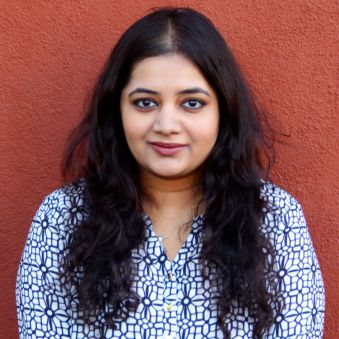
Gisele Goes went from writing letters to producing content for the world’s biggest brands

When Gisele Goes was just a child growing up in Brazil, she moved around a lot. Going from city to city, she began writing letters to keep in touch with her friends. Eventually, as the internet became more readily available, she transitioned to more modern methods of communication, like email, blog posts, and social media. This gave her the foundation for what she would then need later in life. Now, she is an internationally sought-after content producer and writer.

Goes has an esteemed reputation, with an outstanding career doing what she does best. She has worked with several large companies, creating content to help boost, restore, and promote brands. Not only does she create such content, but she is also responsible for providing a strategy behind it, and how the message will be distributed to different outlets/channels. That includes press releases, blog posts, social posts, video content, event marketing and any type of asset that is part of the overall strategy.

“It is important to have a good understanding on what kind of role content plays for each brand or service. There are so many different channels to explore nowadays and so much content that you need to be able to identify the best strategy to make your name stand out and how to increase brand awareness,” Goes explained.

More recently, Goes has been doing just that with Wpromote, a digital agency with sixteen years of experience. It was elected one of the best places to work in the United States twice and has offices in Dallas, Chicago, NY, SF, LA, and more. Since starting with the agency in March of this year, Goes’ job is to manage and oversee content strategies for some of Wpromote’s clients. Wpromote has been growing in the United States, and expanding internationally is definitely something they want to pursue. Goes’ background in different content initiatives and international expansions makes her a great asset for that expansion plan, and she has been helping improve this process.

“Wpromote is an amazing agency and I’ve heard so many cool things about it. Not only the culture of the company but their reputation for being the “Challenger” agency, it sounded a lot like me,” she Goes. “It’s been only a few months but I’m really excited to move forward with the projects I have upcoming here and make Wpromote global.”

Some of Goes’ current clients include major companies like Shutterstock, RoadRunner Sports, Imprivata, Minnetonka Moccasin, and more. Her international perspective and the way she worked with Content before, such as the mega popular Asian company Meitu, is definitely essential to do a good work for Wpromote.

“It’s always amazing to see the work you do coming to life. Establishing good relationship with the clients, their teams and being able to present all those results is really rewarding. Also, being able to bring something new to an amazing company like Wpromote makes me so happy. I know I have a lot to add and I know that I’m valued as a professional,” she said.

Her team is made up of professionals with varied backgrounds, but with Goes’ experience with launching a product and working for a global company allows her to look at things from a bigger perspective. To be able to establish effective process around content production, put together solid strategies with a great sense of direction, and attach important KPI’s to measure the actual impact of the content in the goals she is already beginning to achieve make her essential to the company’s success.

“I worked with Gisele to develop an international content marketing presentation from the ground-up. We collaborated on this project from the ideation process to detailing how we would implement and execute the strategies, which we later presented to a board of directors. Currently we are continuing to further develop and grow this exciting, new offering at Wpromote,” said Ana Vila, Content Marketing Manager with Wpromote. “Working with Gisele is an absolute pleasure; she brings unique ideas to the table with a fresh perspective backed by relevant previous experiences, data and trends. She’s able to convert ideas from a stream of consciousness to actionable next steps. Gisele’s diverse life and work experience positively contribute to her successful, multifaceted approach to content creation and building strategies.”

Unlike her previous projects, working with Wpromote allows Goes to manage content for a large variety of clients rather than focusing on just one. For many, this task would be almost impossible, but for Goes, it is a refreshing change. It’s a fast paced, dynamic environment but is great to expand different content initiatives and align them with different business goals. Most of the decisions are directly related to business goals and how they can achieve them as a team, some accounts have more than one service here, and it allows everything to be very integrated, making Goes’ job much more interesting.

“Everything is super flexible and the main goal is to achieve our client’s business through powerful and unique content – regardless of what distribution channel or type of content. We cover it all,” Goes described. “I like the fast-paced environment and I love being able to “switch” mindsets every day since all my clients are so different from each other. It’s also great to be in contact with people from other industries that come from a different background. And because Wpromote has such a strong internal culture it’s amazing to feel part of the team and being able to bring my international experience to the Content team and optimize our strategies in order to grow the company and achieve its goals.”

No matter who she is working with, whether it be her clients or her teammates, Goes impresses. Her vast range of knowledge caters perfectly to the goals she aims to achieve with Wpromote, and Jessica Anguiano, a Content Marketing Manager for the agency, is continuously impressed.

Gisele and I have worked together on developing digital campaign strategies for a number of clients ranging in size and budget. Working with Gisele is fantastic. She is a wonderful teammate and I know I can always rely on her. Above all else, the positivity and optimism she brings to situations is such a breath of fresh air. Gisele is extremely dedicated to her career and clients. She’s extremely passionate about everything she does and it is reflected in her high-quality of work. She is never afraid to tackle big projects and consistently develops out of the box ideas and campaigns, never hesitating to go above and beyond,” said Anguiano.

Goes’ dedication to her work combined with her innate talent have skyrocketed her career, allowing people all over the world to see why she is considered one of the leaders in her field.

Dancer Ivan Prokhiro talks dancing with Cher at the BBMAs

View More: http://wanderlustcreatives.pass.us/ivan-prokhiro2017
Ivan Prokhiro, photo by WanderlustCreatives

When Ivan Prokhiro was just five years old, he saw something that changed the course of his life forever. It was Michael Jackson’s hit music video for Smooth Criminal. At the time, watching the screen, captivated by Jackson’s ability to dance, Prokhiro made the decision that would determine his future. He wanted to be able to do what he saw on screen. He wanted to be a dancer, and he wanted to be on stage. That was his first inspiration, and since that moment, that is exactly what Prokhiro has done: dance.

Now, Prokhiro is an internationally renowned professional dancer, with an outstanding career. He danced on the summer and Halloween shows for Knotts Berry Farm, worked on E-Plus Productions New Year’s Eve shows two years in a row, was Erica Jayne’s back-up dancer in the Fort Lauderdale Pride Parade, and just this year he danced alongside pop-sensation Katy Perry at the Grammy’s one of the world’s largest stages. His talent is evident from the moment he steps on stage.

“I first met Ivan on a project I was assisting on. He was a dancer for a choreographer’s So You Think You Can Dance submission. Since then, I have had the pleasure of hiring Ivan for four productions including: two Hallowe’en spook-tacular’s for Thee Mistress of the Dark herself, Elvira. Elvira’s Asylum & Elvira’s Danse Macabre both at Knott’s Scary Farm were very well reviewed & received shows. In addition to theses, Ivan has performed in the summer circus show that has now run for two seasons at Knott’s Berry Farm, the Circus of Wonders,” said Melena Rounis. “It is such a pleasure to work with an artist like Ivan. He is so professional and hardworking, always willing to go the extra mile which is a choreographer’s dream! He is uninhibited and passionate about his craft and his work. Ivan takes great pride in everything he does and it shows in rehearsals transcending to the stage when he is in front of an audience. He has given so much to the many audience members in the multitude of shows he has performed in and had the opportunity to touch. I look forward to creating on and with him every time I have the opportunity. Ivan’s work ethic, focus and knowledge of various dance styles truly sets him apart from the masses. He is a quality artist and I am fortunate enough to have had the pleasure of working with him on so many diverse projects over the past couple years.”

photo1
Ivan Prokhiro, photo by Oleg Leshonok

Earlier this year, Prokhiro dazzled the world once again when he danced at the Billboard Music Awards with none other than Cher. The choreographer, Denise Faye, had previously met Prokhiro at an audition for a different show in Las Vegas. She remembered Prokhiro from that audition and asked him to be a part of the BBMA performance, knowing Cher needed to be accompanied by the best dancers possible.

“It was amazing to get so huge of a project without any auditions,” Prokhiro described. “It’s one of the biggest awards show. Also, it’s the greatest place to perform, the T-mobile Arena in Las Vegas. And, of course, to dance as a backup dancer for Cher is huge honor.”

The Billboard Music Awards premiere on May 21, 2017, and was watched by millions in America on ABC, and different stations around the world. The cast for Cher’s performance was seven boys and seven girls, but only two dancers were selected that were outside of Cher’s residency Vegas show. Prokhiro was one of them.

“It was a big responsibility to perform in front of this audience, which were mostly celebrities. A lot of cameras around made me excited and a little bit nervous. Working with Cher inspired me a lot. I saw her during rehearsals, she is a great example how humble and hardworking an artist should be. She is an icon of pop-industry, I learned a lot from our week of rehearsals,” said Prokhiro. “All my friends were so jealous.”

Prokhiro and the rest of the dancers accompanied Cher on her hit single “Believe” and were considered to be one of the best performances in the show. Prokhiro’s dancing was a large part of the success. He spent time studying Cher’s performances before the show, and went to her residency show in Las Vegas three times, saying once was not enough. Each time, he learned something new about how she worked.

“I was feeling a huge responsibility because I knew it was a live stream on TV. You do not have a chance to make any mistakes. You know that all eyes stare at you, and you need to be a star as Cher as an equal. I got a lot of feedbacks about this project. My friends and family watched this performance, some of them even didn’t know about it, and saw it randomly on television, which made it more exciting for them,” he said.

The performance was show stopping, and Prokhiro’s commitment and talent were evident to all who watched, as they are with every performance he does. There is no doubt why he has conquered the dancing industry in Russia, and is on his way to conquering the world.

Producer Sonia Bajaj talks new film ‘A Broken Egg’

Headshot 4
Producer/Director Sonia Bajaj

Sonia Bajaj was born in the city of Mumbai, India, the birthplace of Bollywood. Living in the film capital, she was exposed to films from a very young age. This interest sparked something in her, and Bajaj knew watching films was not enough, she had to make them. She wanted to tell stories, and share with the world the ones she knew needed to be told. Now, she is recognized not just in India, but also internationally for her talent, and is a sought-after director and producer.

While working on films like Rose, Hari, The Best Photograph, Bekah and Impossible Love, Bajaj has earned the reputation as an outstanding filmmaker. Bajaj always had a talent for producing. Her father is a businessman who has dealt with paperwork all his life. At times, she would help him out and during that process; she began to learn the basics of business, and therefore, the basics of producing.

“I’ve always been a good manager of time, deadline serious, and most importantly a team player as well as a leader. My goals are well defined before me and I seldom deviate from them. My experience handling paperwork, education and a creative mind inclined me towards becoming a Producer,” said Bajaj.

Bajaj’s producing instincts are evident in the new film A Broken Egg. It tells the story of a dysfunctional family that go through varied emotions over dinner due to the recent discovery of their teen daughter being pregnant. The entire film takes place during a family dinner scene.

“This meant that we had no location changes and had to film in a tight space for two days. It was a unique experience to have the beginning, middle and end of a film over the course of dinner. A Production like A Broken Egg is not a traditional style of filmmaking, making the project exciting and different. That’s why I wanted to work on this project,” said Bajaj. “Teenage pregnancy is quite prominent in the United States. Our goal was to make a film that showcases the after effects of teenage pregnancy from the eyes of the teenager as well as the family members, all together under one roof.”

The film premiered in June 2017 at the California International Shorts Festival in Los Angeles, and has since gone on to be an Official Selection at the Barcelona Planet Film Festival, UK Monthly Film Festival, and the Festival de Cannes Short Corner. It was a semi-finalist at the Los Angeles Independent Film Festival Awards, and the Hollywood International Moving Pictures Film Festival, and won the Bronze Award at the NYC Indie Film Awards, and the Gold Award at the Mindfield Film Festival. None of this could have been achieved without Bajaj’s producing savvy.

“Our goal was to create a voice for teenage pregnancy, a film that is relatable to teenagers and families, alike. We’re thrilled with the response the film was received so far and would love to see what happens next,” she said.

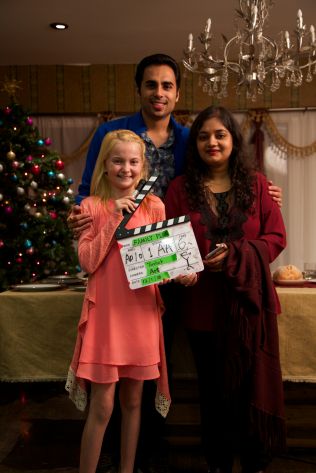
With Director Tushar Tyagi and Actor Lainee Rhodes on A Broken Egg Production Still
Actor Lainee Rhodes, Director Tushar Tyagi, and Producer Sonia Bajaj on set of A Broken Egg

Despite some budget constraints, Bajaj made sure there was still high production quality. Due to her experience producing and directing varied short films, she managed to get most of the crew work on minimum wage daily, which helped to secure a great camera and actors, leading to a successful completion of the production. They only had one day of rehearsals and two days of filming available, which meant that Bajaj had to make important decisions quickly, be on her feet at all times, and make sure that there was clear communication maintained throughout. Not many could pull off such a feat, but Bajaj’s ability to take risks and make swift decisions made her perfect for the job. The Director of the film, Tushar Tyagi, knew she would be able to make his film a success, as he had seen her work on the film Rose.

“No matter the budget level, Sonia has always been able to elevate the production to the highest standards. Whenever there’s been an issue, she’s been quick to resolve it without any setbacks to the schedule.  She is enthusiastic, a positive thinker and has a go-getter attitude,” said Tyagi. “Sonia has a fresh take on the stories she directs. Her style of directing is innovative, powerful and thought provoking. As a Producer, she is the foremost leader in every project she takes on. That’s why all her projects have enjoyed a great deal of success in film festivals both in the U.S. and globally.”

There is no doubt that A Broken Egg will continue to have success as it makes its way to more film festivals this year. For Bajaj, however, that is not why she loves what she does. The accolades and the awards don’t matter as much as getting to do what she is passionate about.

“Being a producer requires a lot of patience as you see through a production from the very beginning to right until the end. It gives one a chance to interact with different cultures, creativities and mindsets from all over the world. I enjoy this amalgamation of creative and business, and that’s why I like being a Producer,” she concluded.

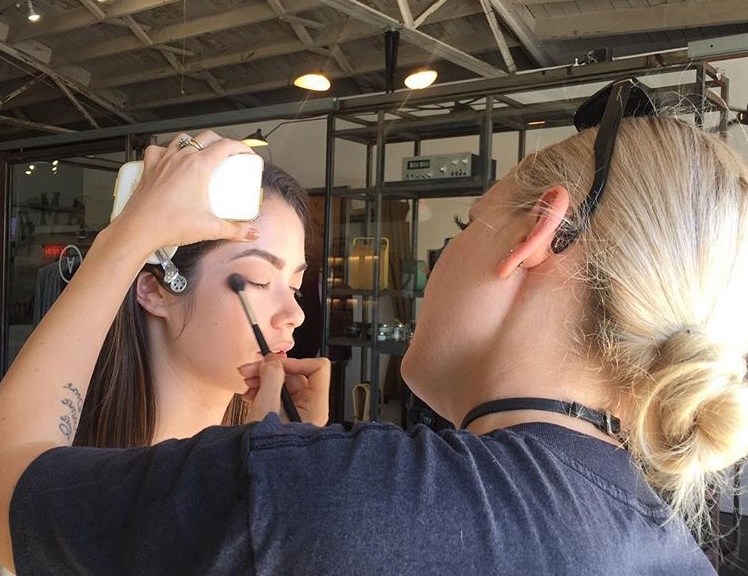
Makeup artist Jen Tioseco shows off natural beauty to Saucony shoot

Jen Tioseco is an artist. A face is her canvas, makeup is her paint. She uses her brushes to create something beautiful, or to completely change the way someone is perceived. It takes a certain skill to completely alter someone, making them unrecognizable, or just simply enhancing natural features that someone already possesses, and that is what makes Tioseco so sought-after. She is truly one of British Columbia’s best makeup artists.

Tioseco has worked with many prominent individuals throughout her career, and her work has been seen by millions across not only Canada, but the rest of the world. She has worked with the popular singer Dani LeRose, and did the makeup for two of her recent music videos. Last year, she worked on several editorials for the edgy magazine ION, showing off her innate talent. She even did the makeup for television personality George Stromboulopoulos.

“I am a huge fan of his show, and getting him stage ready and chatting with him about the charity he was representing was incredible. While men’s makeup may not seem creative, it actually is. You are working around stubble or a 5 o’clock shadow, under eye circles and blemishes, all while trying to give the illusion that they aren’t wearing any makeup at all.  Trust me, it’s a skill,” Tioseco described.

Those shopping at Saucony have the chance to see Tioseco’s fine work. Last year, she worked on their newest campaign, which is still in all of their stores. The renowned American athletic shoe manufacturer offers a variety of shoes, such as running, trail running, racing, walking, and a college collection. The shoes are designed for the main purposes of racing, running, and walking. Tioseco was already a fan of the brand, so when she had the opportunity to utilize her skills on their campaign, she was all for it.

“I had worked with the Creative Director, Jessica Law, on a Google shoot earlier in the year.  Having loved working with her and being a fan of Saucony runners, I knew it would be a fun shoot,” said Tioseco.

The shoot required Tioseco to overcome a difficult challenge for many makeup artists: making someone look completely natural while still wearing makeup. This, however, was not a problem for someone as seasoned as Tioseco. While it was not the most creative shoot she has worked on, she always enjoys making someone look their best naturally without it looking like they are wearing makeup.

“Trust me 95 per cent of the time the no makeup look is much more difficult to achieve, making it more fun to execute,” she said.

Jessica Law reached out to Tioseco after being impressed with her work on their previous shoot. Law needed a makeup artist with a high level of professionalism and attention to detail, and she immediately brought Tioseco back on board to work alongside her once more.

“Jen’s professional yet fun attitude is an amazing energy to have on set. She knows how to work in a timely and organized manner, while staying calm and positive. Jen’s ability to adapt to a situation is so refreshing.  If it’s a last-minute look change, or a change in the schedule or location, Jen always stays calm and gets the job done,” said Jessica Law.

The models on the shoot were true athletes, making the campaign more authentic, but causing some problems from the makeup perspective. Both athletes suffered from acne. However, Tioseco was able to cover up any marks so they appear to have no makeup on.

“I was able to cover their imperfections in a way where they didn’t feel like they had a lot on their face, but they could run and sprint for photos with confidence,” Tioseco described.

In addition to makeup, Tioseco was also responsible for doing the hair on the shoot, something she does not often get to do. Again, simplicity was key, and she had to make a traditional ponytail. This may sound simple, but having it perfectly frame the athlete’s face, and getting it at the right height, is actually quite a challenge. Again, despite not often doing hair, Tioseco’s adaptability shone, and the hair was perfect. She always enjoys taking on extra responsibilities.

“I actually got to do some special effects on this project. I love dewy sweaty skin, so I was very excited I got to break out the glycerine and recreate drops of water on the skin,” she said.

Not only was the work fun, but the location of the shoot also made the project extremely memorable for the makeup artist. Originally from North Vancouver, she travelled further north in British Columbia to Squamish, a stunning town filled with mountainous views.

“There was still snow on the ground and we go to hike the lookout where we shot. It was so beautiful and the team was so amazing, you forgot that it was freezing outside,” she said.

No matter what she is doing or where she is working, Tioseco loves being a makeup artist. And with such talent, it is no doubt why she has seen such success throughout the entirety of her career.

Producer Xueru Tang faces her fears, literally, in critically-acclaimed horror flick Emily

Xueru Tang’s life is making movies, and she loves every minute of it. Her work captivates international audiences, and her name is recognized all over the world. She is an extraordinary producer, and one of the best to recently come out of China.

While working on several esteemed projects, Tang has become an extremely sought-after producer. She has worked on films such as Locked, and Hot Pot Man. Both of these projects have gone on to do very well at several of the world’s most prestigious film festivals. However, what is perhaps the most decorated film of Tang’s career is the award-winning horror flick Emily.

“When I was asked to join the project, I was really interested. I love horror movies, but I always have trouble watching them because they scare me, so I really wanted to know how a horror movie was shot,” said Tang.

Directed by Jun Xia, the film tells the scary story of a woman named Emily. Emily dies giving birth at home after her husband, John, abandons her. However, she will have her revenge from beyond the grave when she returns as a ghost set on killing her widowed husband.

“I liked the script at first, it was short but it was interesting, and once I started working on the film, I began to really like the way the director told the story. He really caught the point at which everyone is frightened. It really made me scared. He really had his style and his visual for everything,” said Tang.

Tang was approached by co-producer Guannan Li to join the project. Li knew he needed a team of the best producers he could find, and having worked with Tang before, he knew she would be the perfect fit. Another producer on the film, Jingming Zhao, could not have agreed more.

“During development of the film, Xueru included her creative input for the film, and helped to polish the script, showcasing her creative abilities. She was responsible for renting equipment, creating and managing our budget and schedule, and making certain that this highly intensive work was made on our budget. Due to Xueru’s preeminent abilities as a creative thinker and a talented producer, she helped us to lay a foundation for the film, without which we would not have been nearly as successful. Of the many producers I have worked alongside, she is the most stand-out talent I can think of,” said Zhao.

Tang’s decisions for the film were very fruitful, as Emily has been a stand out at film festivals. After its premiere at the Los Angeles International Film Festival in August of 2015, it went on to be praised at the following festivals: Winner Best Horror Short Film – Hollywood Horror Festival 2015, Winner Best Short Film – Mad Town Horror 2015, Winner Best Horror Short – Hollywood Boulevard Film Festival 2016, Winner Best Student Horror Short – Hollywood International Moving Picture Film Festival 2016, Winner Best Student Horror Short – United International Film Festival 2016, Winner Best Director – Chandler International Film Festival 2016, Winner Official Selection Award – Chinese American Film Festival 2016, Official Selection London Digital Film Festival 2015, Official Selection International New York Film Festival 2015, Official Selection Full Bloom Film Festival 2015, Official Selection and Screening Big House Invitation Year One 2015, Official Selection Fort Lauderdale International Film Festival 2015, Official Selection Horror Short Video Contest 2015, Official Selection Los Angeles Short Film Festival 2016, Official Selection and Screening Holly Shorts Film Festival 2016, Official Selection AFMA Film Festival 2016, Official Selection and Screening Hanhai Studio 1st Short Film Festival 2016.

“When we won the first festival, we all super happy, and one by one, after like 10, to be honest, we all started to feel like ‘okay, this is normal,’” said Tang. “When we started winning the big festival, we felt happy of course. I felt like it showed how hard we worked and how good we are. When we work it can be a really hard time and not easy for all of us, but we studied from this production and we grew because of it.”

For a film to do so well over such an extended period of time, continuing to impress audiences and critics over a full year, shows just how good it is, and Tang was a big part of that. She dealt with the crew, worked on the budget, and was responsible for hiring a team that she knew could make the film the success it became. One role in particular that she tirelessly searched for was the cinematographer, as the director Jun Xia wanted someone he could work well with and share his vision. Tang spent months searching and interviewing candidates looking for that special director of photography. This effort led to finding the ideal match, and was vital for the film.

The team worked so well together, that they decided to embark on another horror film Inside Linda Vista Hospital, which production companies were eager to be a part of after Emily’s success. The second film has gone on to achieve similar feats at many film festivals, showing audiences all over the world why Tang is so good at what she does.

Peter Lam’s musical genius wins Best Score Award for film ‘Lovebites’

When Peter Lam was a child, he, like most other children, loved movies. He would sneak into his parents’ movie collection, eager at any opportunity to experience a new film. However, unlike most children, who would be enthralled by what they saw on the screen, Lam was captivated by what he heard through the speakers.

Now, Lam is an internationally sought-after film composer. He has worked on countless successful projects, including the award-winning films The Ballerina, The Shoemaker, & His Apprentice, and (le) Rebound. He recently worked on the score for the TV movie Menendez: Blood Brothers, which premiered on Lifetime earlier this month, with over a million people tuning in to hear what he is capable of. However, what is perhaps the most celebrated film of his career is Lovebites, a 2015 animated film that catapulted Lam to the top of his field, being recognized as one of the best film composers to come out of Hong Kong in recent memory.

“I am always excited to work on animations. It’s a very imaginative genre and music often plays a big part in shaping the ‘sound world’ of the animated world. A composer often doesn’t come on board on a live-action film until the film has been shot. But in animation, I often start composing while the animation is still being developed or rendered alongside. The whole creative process feels very organic, hence it’s always fun to work on animations,” Lam described.

Lovebites is about the praying mantis Cecil, and tells the story of his first date. Lam’s music is vital for Lovebites, as the story is essentially told through music. It is an animated film with no dialogue and minimal sound effects, and the score runs continuously through the film from start to finish. Lam’s ability to capture the emotions of the two mantises is what makes the film so engaging.

“We bounced back and forth about musical ideas and the storyline, and when I started working on the project, I was presented with the initial character sketches and concept art. I scored the entire film based on the animatics (pre-rendered animation). In a way, the material I was working with then was not as detailed or delicate as the final product, but on the other hand, it offered me a bit more freedom for imagination, and encouraged me to be creative,” he described.

Stuck Truck Studios, the production company of Lovebites, had total trust in Lam’s creative decisions. Knowing they needed the best for a film that relies so heavily on the score, the team quickly invited Lam to be a part of the project after hearing samples of his work. Lam decided to create a score that only featured percussion and plucked instruments to create the quirky world of insects.

“Stuck Truck Studio encouraged me to think outside the box in order to create a colorful and quirky palette for this cute animation. It’s always fun to break away from conventions and experiment with new sounds,” said Lam. “I think the approach I used for the music gave the film a unique character, and I had a lot of fun experimenting with wild percussion sounds that, if not for this film, I would never have thought of using.”

This musical approach proved fruitful. After its premiere at the Original Narrative Festival in Dubai in February 2015, the film went on to see enormous success at film festivals around the world. That same year, it was an Official Selection at BFI Future Film Festival, Chile Monos International Animation Festival 2015, Athens Animfest, Tiltshift Festvial, 9th River Film Festival, Original Narrative Dubai, Reel Teal Film Festival, MICE Valencia, and the Vancouver International Film Festival. It went on to win the Audience Choice Award at the Melbourne International Animation Festival, and the Character Animation Award at the ANIMEX International Festival of Animation and Computer Games. Lam was personally recognized at the Short Sharp Film Festival Australia that year, winning the award for Best Score.

“Given that this was one of my first experiences in working with animations, I was very delighted to know that the film did so well in so many film festivals. Lovebites has been screened around the world and has set foot on almost every continent. I guess winning the Audience Choice Award at the Melbourne International Animation Festival and Best Score in Short Sharp Film Festival in Australia shows how effective my music can be,” said Lam.

After its success at so many film festivals, the film was later featured in the acclaimed animation website and channel CG Bros. It has amassed more than 4.2 million views (on YouTube since that time), making it a viral animation. None of this success would have been possible without Lam’s creative ear for the score, knowing its importance in telling the story. Agaki Bautista, the Art Director for Lovebites, believes Lam is one of the best film composers he has ever worked with.

Peter was always punctual in responding and we always felt comfortable having a dialogue with him. Communication was clear across all fronts. Peter is super receptive towards creative collaboration. We started off by sharing references and bouncing off ideas with each other and he was open throughout the process. It is rare to have the level of creative cooperation that we had with Peter,” said Bautista.

Lam’s talent is evident in everything he does. His work on Lovebites shows the world that his creative instincts are spot on, and he is exceptionally versatile. Be sure to check out his work in the upcoming animation film Slippages – Grace in IMAX later this year.

In the meantime, watch Lovebites here and let your eyes, and ears, capture the essence of the story with Lam’s work.

CINEMATOGRAPHER SHOWS BOTH SIDES AT THE SAME TIME IN PARENT, TEACHER

Chris Lew is someone who enjoys learning. Though he has served on numerous productions as Cinematographer, he is adamant that being creative is not about being comfortable. Anyone who pursues growth comes to the realization that growth only comes about through tension, stress, and (hopefully) release. He accepted the DP position on the film “Parent, Teacher” with the understanding that it would be difficult in a number of ways for him. What he had not expected was that this would be his closest foray into actually becoming a passive actor in a film. It’s an interesting and unusual experience that began when the film’s writer/director Roman Tchjen approached Chris to be the DP for this tense film.

“Parent, Teacher” tells a story that is not completely unheard of. What it does so ingeniously is to communicate the emotional temperature of a room during a stressful situation. In “Parent, Teacher”, a father meets with his son’s teacher after school when his son is accused of attacking a classmate. Who is right and wrong in the situation becomes increasingly harder to define as the father and teacher argue their beliefs.

Roman Tchjen has a long history of collaborating with Lew, creating a high level of trust and understanding between them. When Tchjen wanted to present a story in a very non-traditional manner, he was firm about the need for Chris’s involvement. While most films display the commonly used and accepted approach: shooting coverage, having a protagonist with a clear goal, a clear villain whom the hero must overcome etc., Roman wanted to create something that was more honest and lacked a clear answer because in real life these types of issues aren’t black and white. Going into the film, Lew and Roman made the commitment to have as few cuts as possible. The entire film was to be split it into two takes, foregoing any coverage, any establishing shots, or cut aways. This is the cinematography equivalent of riding a bull at the rodeo while being handcuffed from behind. All of the “go to” tropes of a DP were stripped away leaving Lew to formulate an approach that would still stimulate and entice the viewer. Chris communicates, “We focused solely on the performance and the conflict between these two people. This goes back to taking risks. After reading the script I knew it wasn’t written to be the most visually stimulating film so rather than making the visuals flashy, which Roman really didn’t want, I instead thought of ways to make it immersive and use that to make the film engaging and interesting. It was this approach that contributed to the decision to shoot extremely long takes. It took a lot of work for Roman and even more so for the actors. There were many sessions leading up the shoot where everyone practiced their lines. Once they were feeling comfortable, I came in for my own rehearsal to see how we could block the camera. I needed to know at what point I was going to be on each character and if we were going to see some lines spoken on camera or off screen. Making sure I was on the right actor for an expression was key too. It was a lot like a dance that the actors and I were doing together!”

A reason for which Roman was so insistent concerning Lew coming aboard as DP was due to his style. Just as director’s have a signature which leads many to hire them, Lew has been recognized for his ability to enable the audience to have an intimate experience via his choices and camera work. It appears effortless for Chris to make the camera unnoticed in any way and at the same time pick up every nuance in the actors faces. The question of how does the action on screen affect how much the camera moves really comes down to the content. Film is art and art is subjective. For Lew it comes down to the content of the scene and the emotion the he and the director want to convey.

“Parent, Teacher” required extensive preproduction for Chris which is very atypical for a DP. The story and the unique approach necessitated Lew being there for rehearsals. Because the camera essentially appears as a mute third party witness, Lew needed to almost “perform” as another participant in the scene. Every project prior to this one had this DP engaging in the typical method of planning the scenes out based on the locations with the director as they reviewed photos. By contrast, in this production the camera was very much a character in itself, with blocking and queues that needed to be timed down to lines. If Lew and Tchjen wanted the film to feel completely out of the norm they were going to have to start with this beginning stage. Long takes helped with this. When the father first walks into the classroom at the beginning of “Parent, Teacher”, the camera follows him in but then hangs back as he walks over to the teacher to shake her hand and sit down. This was the wide establishing two shot to set the scene. As the teacher starts to explain what had happened, the camera begins to slowly creep in. Lew’s advance is so slow and subtle that you don’t even notice as he moves in to a close up. Chris describes, “Eventually we’re out of the two shot and just on the father when he starts to explain that he doesn’t see anything wrong with his son’s actions. I wanted to isolate him in the frame at this point to represent that he is in his own world. He’s clearly an immigrant and not used to Western ways of handling situations of violence. The teacher becomes increasingly frustrated as the two cannot agree on what is right and wrong, all the while the camera is slowly getting closer and closer. I tried to hide the walk in with the camera panning back and forth between each character. Just before the climax of the argument, the father has given up and is lashing out at the teacher, feeling targeted and attacked for his beliefs. Here, the front of the lens is inches away from the actor’s face. You see every detail of his expression and all the frustration in his eyes before he jumps up away from camera breaking the tension. Essentially I wanted the entire conversation to be one slow, imperceptible push in that brings the audience closer as the tension rises.”

Chris felt the camera needed to be handheld to create this immersive feeling, to make the audience feel like another person in the scene. It was a decision that Chris would have regreted if not fully committed to achieving the goals he had set for this film. The challenge was the length of the takes and the physically demanding nature of the equipment he chose. “Parent, Teacher” was shot using the Alexa XT which is a large, heavy camera. Hand holding it, trying to keep the frame steady for such long takes is extremely difficult.

Producer Kegan Sant admits to being overwhelmed upon seeing the final product. He declares, “When you are in preproduction of a film you have a vision in your mind of what you hope it will look like. I can honestly say that the idea I had for ‘Parent, Teacher’ pales in comparison to what you see when viewing it. Christopher was essential to the way in which the story was presented to our audiences. His incredibly striking camera work and expert understanding of shadow and lighting allowed for the film to reach impressive narrative heights. The way in which he reflects the overall despair and confusion of our main character throughout the frames is what makes Christopher such a valuable asset to any production that seeks out his talent. His efforts throughout the film solidified the film’s high standing and reception. We would not have received the same overwhelmingly positive reaction without his talent as cinematographer.”

Snowblink set

Chris Lew admits that his work on set left him consistently soaked in sweat from long takes wielding a heavy camera. However, he also admits that taking a risk and trying to create a film which stands apart from the norm is something that he will hold onto much longer than an aching back or sore arms.

Production Designer Shuhe Wang contributes to the delightful horror of ‘Inside Linda Vista Hospital’

Making something from nothing is what all filmmakers achieve every day. They are creators, they are storytellers, and they are artists. Shuhe Wang knows this well. She takes the pages of a script and transforms them into sets. She creates a visual world, turning each nothing, such as a meaningless prop, into something, creating a masterpiece. She is a one-of-a-kind production designer.

While working on films such as Stay, Dancing for You, Red String, and Cartoon Book, audiences were given the opportunity to see Wang’s ability to transform a drama into a completely immersive experience, making it evident why she is considered one of the best. However, this past year, Wang has brought her extraordinary talent to a new genre: horror. Working on the film Inside Linda Vista Hospital, Wang’s production design skills were on full-display, helping to fully immerse audiences in the terrifying story.

“This is a classic horror style film, so I focused more on how to show and even amplify the emotion and tense by color, texture and overall set dressing. Even each small prop can be an important storytelling step. That quite an adventure for production designer,” said Wang.

Inside Linda Vista Hospital tells the story of a young girl who wakes up in a hospital surrounded by police covered in the blood of her boyfriend. With the help of a video camera, she slowly pieces together what happened, and she may not like what she finds.

“Horror stories are connected with our real lives, but with different point of view. I needed to find and create the elements to scare the audience and keep the emotion of the storyline in the right place, and at the same time the elements should make sense in the world.
Color and tone are always the most important parts in designing a horror story. Even a tiny subtle difference would affect the whole feeling of the set,” said Wang.

The film has gone one to do exceptionally well at some of the world’s most prestigious film festivals. It was an Official Selection at the Festival de Cannes Short Film Corner and the Pasadena International Film Festival, it won Best Director and Best Horror at the Los Angeles Independent Film Festival, Best Editing at the United International Film Festival, and Film of the Year at the AFMA Film Festival of Young Cinema 2017.

“Horror story is always a popular style, but there are a bunch of these type of films that are terrible when it comes to actual storytelling, that is what divides a good horror film from a bad one. This film is a good one because it shows a tense, strong and simple story, which perfectly matches the horror genre, so I think the film totally deserves all those awards,” said Wang.

The production design directly contributed to the film’s success. She had to design in accordance to many special effects and stunt work, and the film is set in a true historical building, and the cultural importance of this influences the story in an important way. To make the set highlight this, she researched and applied this to her work.

“It was a dramatic and kind of emotional showing story. I watched a lot of classic experimental and psychology films to get more inspiration and insight into how to let the audience feel the inner world through the production design,” said Wang.

This commitment to both the genre and the film impressed all that worked alongside Wang on Inside Linda Vista Hospital. The director, Jun Xia, knew no one else could do the job but her.

Working with Shuhe was a great experience, she was familiar with each of the details of the whole story, and her plan for working was effective for the shooting process. Shuhe is sensitive with color and designing, and she knows how to create and decide the correct textile and color to present the emotion. That is actually a really important part of the horror genre,” said Xia.

Xia approached Wang to work on his film, knowing he needed the best to make the film the success that it eventually became. When he sent Wang the reference of the visual style, so knew she wanted to take part in the project, as it was quite similar to the style she always loves.

“I felt confident and interested in designing this film after talking about the film and the story. Jun is a talented horror film director, he is always enthusiastic, and he is really insistent on what he wants which is good for making a great film,” Wang said. “What I really liked was how I could see how the set dressing worked so well when the lights and performance came together. It makes the visual complete and seemed like we accomplish the original idea of the director.”

There are many nuances to production design that are easy to get lost in the big picture of a film, but with Wang as the designer, audiences are sure to take in each and every part of it.

Editor Minghao Shen talks impactful new film ‘Cartoon Book’

Only someone that truly loves what they do can enjoy it the way that Minghao Shen enjoys film editing. His understanding of his craft and his commitment to the artistic elements of it allow him to excel at what he does. Not many people are lucky enough to be so talented and so passionate about their work. Shen is one of those fortunate few, and on top of this, he is considered one of the best Chinese film editors right now.

While working on award-winning films such as Red String, Emily, Inside Linda Vista Hospital, and Stay, Shen’s editing skills were extremely evident for both audiences and critics.

“I am a creative minded person, so I love the re-creative part of editing a lot. There are many ways to make a film, and I feel editing is one of the best ways to engage in the filmmaking production,” said Shen.

Shen engaged in both the filmmaking production and with audiences with his work on the film Cartoon Book. Cartoon Book is about a little boy who tries to go against the school and teacher under severe rules. Afterwards, it seems that the teacher gradually controls the boy by using his vulnerability and letting the rebel boy become a tool to manage other students. The boy draws cartoons, but he feels it is hard to choose between his desire or his morals when the teacher bribes him to be her spy who needs to betray his friends.

“It is a kind of classic tone film, so rather than edit it ‘correctly’, director more like to keep the smooth and stressful feeling by editing. That is why I, as the editor, needed to understand the story indeed,” said Shen. “We had a lot of footage, so it was quite a lot of work at the beginning. But, all the effort and hard work was worth it.
The director had her own style for the entire pace of the film, and the film had really good results.”

The film went on the be an Official Selection at the prestigious Cannes Short Film Corner where it premiered last year, as well as the Berlin Student Film Festival, the Goa Shots International Short Film Festival, and the Accolade Global Film Festival Competition.

“I had a feeling that the film would see a lot of success in festivals, so when I found out the film got some awards I was not surprised, and I think it deserves even more and bigger awards,” said Shen. “The director is good at screenwriting. The first time I read the story I was so intrigued and really connected with the story. I was really looking forward to work with the director and making great film, which we did. It was not the first time we worked together. We know and understand each other very well. She is natural born storyteller and I always looking forward to work with her.”

The film was written and directed by Shuhe Wang, who had previously worked with Shen on her film The Regret, and was immediately impressed by his talents. Knowing they work well together, and that she needed the best to make her new film a success, she reached out to Wang to join her on Cartoon Book.

“I worked with Minghao on my award-winning short film Cartoon Book. I was the director and he was the editor. We worked together really well. He was so full of thoughts and understood the story deeply. When we were on set, Minghao watched the footage carefully on each shooting day. His did the rough cuts very quickly and helped me to get the overall storyline,” said Wang.

Shen was vital to the successful of the film. He says working on Cartoon Book was unlike any project he had worked on in the past. He read a lot of the director’s notes and talked about the story more than just the editing technique with the director. He would meet the cinematographer and communicate about the shot, knowing they all needed to be on the same page for the overall tone of the film. This understanding of not just his role, but the entire filmmaking process, is outstanding.

“The most exciting part of making this film was the journey of the main character. There were many twists and turns in it. It is a bit challenging for editing because the complex storyline, but on another hand, it offered a variety options for editing, and that is what makes my job fun,” Shen concluded.

20 QUESTIONS WITH WRITER SARAH WALTON

You write films which present the plight of modern romance. How does romance differ today from the romantic films of your childhood?

Classic 80’s rom coms like Overboard and Housesitter were much soppier than most modern rom coms. They were more fantasy based, more farcical, over the top and fun. I think audiences found corniness more palatable back in the 80’s.

In the 90’s rom coms became more realistic, more drama based rom coms like Sliding Doors and 40 days and 40 nights, high concept ideas based in reality.  Now rom coms are often quite reality based like He’s Just Not That Into You and Bridget Jones’s Dairy.  Personally I love them all, but I have to admit I’ve not seen many Woody Allen rom coms. They feel too gritty for me, but I know I shouldn’t knock it till I try it!

It feels as if society is slowly becoming more accustomed to violence and graphic, sometimes aggressive sex scenes and becoming less comfortable with cheesy love stories and romance.  I don’t know who decided it was “uncool” to like romantic comedies – I imagine someone or more likely, a group of people who had been through a lot of pain and were angry at the world.  It seems audiences are more comfortable seeing character get slaughtered on screen than they are with seeing true intimacy.  Love definitely feels more natural to me than violence and I’m passionate about making more corny lovey dovey content to counteract the violence and hate spreading like a disease in the world.  Romantic comedies have the power to remind us of the love inside of us.

What is it about romantic comedies that appeals to your sensibilities as a writer? 

Rom coms appeal to me because I’ve always been obsessed with love. I’ve been so fascinated by observing and experiencing the power of love and how it transforms people and their behavior.  I didn’t start out writing rom coms.  I fell for the mainstream view that rom coms were “uncool” and although I loved them I stayed quiet about it.  In the industry they’re most often not taken “seriously” – certainly in Australia – They don’t usually win Academy Awards (although that seems to be shifting). In my 20’s when I was an actor/writer I was the epitome of a tortured artist, I smoked cigarettes, drank too much alcohol, I fit the Hemingway stereotype perfectly. The first feature I wrote wasn’t a romantic comedy and it was horrendous. I was trying too hard to be clever. It wasn’t coming from the right place. It was coming from my head instead of my heart. I threw it all in and decided to write something fun instead – a film I wanted to watch, which I admitted to myself was a cheesy romantic comedy set in my two favorite places – a tropical island and NYC!

As I matured and I cared less and less what other people thought I began to speak my truth.  I decided to do the seemingly impossible, the unheard of, the bravest thing a filmmaker can do – come out of the romantic comedy closet and admit my love for them once and for all! And not just cool Woody Allen rom coms, but the cheesy, soppy ones that make people gag.  It was a shaky road, initially I was embarrassed, but once I embraced my true self as a corny rom com lover and expressed my passion for rom coms with conviction, I found that other people came out of the woodwork and admitted their secret rom com love.  I once dated a guy who lived in a sharehouse with a group of guys who had what they called “Rom com Sunday”! They’d all huddle around the TV nursing hangovers and watching their favorite rom coms (and no, they weren’t gay! I can vouch for that!). Some people have told me I inspired them to uncover the love from rom coms they never realized they had or were too embarrassed to admit. It’s a pretty liberating experience that I’d highly recommend 😉  Rom coms being “uncool” is kind of ridiculous, but what’s more ridiculous is caring whether people think we’re cool after we leave high school. 

Different cultures have their own perspectives on romance. How would you describe your Australian homeland’s unique sensibilities towards romance?

Australian romance can be pretty pathetic. In Australia, the sophisticated method by which a man lets you know he likes you is usually by ignoring you or teasing you.  I recently wrote the joke “You know you’re a true blue Aussie when”: 1. You understand the importance of vegemite to butter ratio; 2. You only know the first 2 verses of The Australian Anthem. 3. You call your best mate dickhead.  Excuse my French there, but you get the point.  Banter is a huge part of the Australian culture.  What we call “giving each other shit” is an endearing process by which us outback simpletons bond.  I lived in London in my 20’s and my experience dating there was that this culture comes from our British roots. Men in London were even more reserved. I find in the US and Europe men are more forthright in asking you out. This was such a novelty for me at first, I loved the confidence and straight shooter method, but at the end of the day I feel that in all cultures there’s too much emphasis on the initial “wooing” period at the beginning of dating which can be fun if you’re just dating around for the experience, but essentially it’s kind of empty and fabricated.  I find when people stop playing games and trying to be something they’re not and really get to know each other as friends, they’re more likely to find a compatible match and then from there true romance and love blossoms and flourishes.

As a screenwriter who lives in Hollywood and is female, you have a very authentic voice for the types of films you create. What responsibility do you feel to your audience in regards to creating films that are based in reality? 

I feel my responsibility is to create more female driven stories as well as smash stereotypes and challenge old unhealthy relationship paradigms. I don’t know about making sure that the films are based in reality, as I like a good farcical rom com that’s more fantasy based. I think it’s important to laugh as dysfunctional relationship patterns if I portray them in films, but I’m conscious not to encourage dysfunctional relationship patterns or promote them as healthy.  At times I’ve taken my responsibility as a writer and filmmaker too seriously and lost the true goal of rom coms for me which is to laugh at our pain and to enjoy the ride and experience love and joy myself within the process – basically to have fun! When I’ve agonized over the kind of messages my films are sending I’ve ended up writing preachy material and losing my true intention.  If I stay centered in my intention to tell stories from love about love, I find that’s when my best work comes through.  When I’m in my head I’m coming from my ego and my writing begins to feel fabricated.

I do take integrity seriously though. It’s important for me to not be swayed by external influences that focus purely on making money.  I have no problem with making money – in fact making money is good – it’s how we make more films – but I’m conscious of staying true to the heart of the story and making sure it isn’t lost in the process. This is where it’s important to have strong instincts and learn when to compromise and when to stick to your guns.

I think that the lasting effects that films have on audiences emotionally is largely neglected.  There have been many studies on the neuroscience of how film affects our brain and emotions, but it doesn’t take a neuroscientist to observe the effect the media has on our mind and our emotions.  We can experience these effects ourselves simply by observing the way commercials affect us and get into our heads. I don’t know about you, but a commercial has the power to make me cry or crave a chocolate bar so bad that I’ll be sure to eat one after I’ve been exposed to a luring commercial.  The amount of money spent on Super Bowl commercials is ludicrous and speaks to the power of the moving image on our sensibilities.  In the same way that I’m conscious about what food I feed my body, I’m conscious of what I feed my mind – the amount of negative images I expose my mind to.  I rarely watch television and I almost never watch the news.

It’s undeniable that we’re influenced by our environment- thought processes, images, sounds are all embedded in our mind when we’re exposed to them. When we’re repeatedly exposed to a succession of images, we feel the emotional effects this can have an impact on our daily lives and how we interact with others. This is why I’m so passionate about making more films that evoke and spread love, laughter and joy and remind and encourage people to live from their hearts. 

For the film JUMP, an original soundtrack was written that was inspired by 80’s music, as was the tone of the film. What do you love so much about the 80’s and what is it about this era that infers lighthearted fun? 

The 80’s music and films represent the heart and joy of our inner child. It’s fun, lighthearted and most often about love, dance and enjoying life – “dancing in the street”, “dancing in heaven”, “girls just want to have fun” …  you know how it goes.  I grew up listening to love song dedications – songs that come from love have always resonated with me.  In saying that I feel the same euphoric rush, the same joy in my heart when I listen to Linkin Park music as I do when I listen to Whitney Houston belt out a tune. Punk, rock and sometimes even heavy metal music also speaks to my heart. I think it’s about the space the artist was in when they performed the piece of music – I can feel their intention if it comes from love then it doesn’t matter whether it’s rock, pop or country music. 

The main character in JUMP is a 37-year old secretary who manifests her own release from an ordinary life. Presenting a female lead in her late 30’s is (sadly) far from the norm for Hollywood films these days. What inspired you to present Melody at this stage of her life for this film? 

Melody’s age was the most important part of the film for me.  To portray a character who is considered in society “old” as not only facing her fears, taking a risk and chasing her dreams at the age of 37, but also the fact that the odds are stacked against her in terms of being paired with her worst nightmare dance partner who exacerbates her “Stiff Leg Syndrome”. I’m incredibly passionate about shattering ageist attitudes.  Growing old is a beautiful process – ageing should be celebrated! I’m becoming fitter, healthier, more active as I’m getting older and continuing to push myself outside my comfort zone is an important part of growth.  If we’re not growing, we’re not really living.  Life is growth. If we don’t continue to grow we turn into rocks. No one wants to be a rock. 

The Dating Ring is a film in which you had the male and female leads presented in an emotional role reversal.  Are you constantly looking for new ways such as this to twist the romantic comedy template and how difficult is this to achieve? 

Yes, I love exploring gender role reversal and smashing stereotypes.

Although I still relate to the basic ideals I tend to have different views and opinions to mainstream society – tend to naturally think outside the box, so I don’t find it difficult to come up with new ways to twist the rom com template. It’s just the way I think.

In my experience there’s a different kind of love that’s largely neglected in romantic comedies that I’m excited to delve into in my films – what’s most commonly known as true friendship love or unconditional love.  I feel the current definition of romance is false, fleeting, lacks substance if it’s not grounded in true love.  What is romance with someone you don’t really know yet? You get swept up in the romance, but then once that fades away and you get to know the person you may realize you’re not compatible.  Romance without truly getting to know someone is like coloring your hair. At first it looks luscious and shiny, but eventually it fades and your turn colors show you can keep putting dye in your hair and each time it glows again, but after time your hair becomes brittle or the dye builds up and you have to keep treating it.  It’s a lot of work.  Why not just enjoy your hair in its natural state? Why not just be yourself when you’re first getting to know someone and then once you know you’re a good match, let the romance develop naturally from there.

I’d go even further to question the way we perceive the “opposite sex” in terms of attraction and how it can steer us away from creating deeper stronger bonds and platonic friendships with each other.  What if when we had children we didn’t’ tease them when they had a friend of the “opposite sex”.  What if we refrained from saying “oooh is that your girlfriend?” – or is that just me?  It’s harmless and well-intended, but what if from a young age we encouraged kids to see the other gender as equals – as mates.  Relationships based on a foundation of friendship are more likely to last and to grow unconditional love filled with respect and void of fear based love which includes jealousy, control and insecurity. 

Hollywood is still the biggest producer of films in the world. What are the challenges in this modern era for a writer in this current time here in Hollywood? 

I don’t see challenges as a bad thing, it’s an opportunity to adapt and grow. The addition of platforms like Hulu, Netflix etc. is definitely changing the game, there’s definitely a plethora of content being made and it seems there’s more opportunity to get alternative stories made, as these platforms are open to a wider range of ideas and concepts rather than being restricted by the constructs that the bigger channels and studios adhere to.

What’s the average daily routine for a screenwriter like yourself in Hollywood?

Everyone has a different process. I know some writers write for 4-6 hours a day while some write for 2 hours in the morning or late at night. Some work for 8-10 hour days. It depends on the individual. For me it varies. I can work for long periods without a break, but I can also work really well on short spurts.

You present romance and comedy in your screenplays. What is it about the blending of these two genres that works so well and has become such a popular combination? 

Romantic comedies are love and laughter – love and laughter are the two most powerful forces in human nature.

One of my favorite Gandhi quotes speaks to the power of love: “When I despair, I remember that all through history the way of truth and love have always won. There have been tyrants and murderers, and for a time, they can seem invincible, but in the end, they always fall. Think of it–always.”

There’s still an overhang of an old perspective that hate and anger are power and that love, vulnerability, kindness and compassion are weak. The truth is the opposite. It’s much harder to be kind in the face of aggression than to bite back. True strength is love and I think people connect to this truth in a good romantic comedy.

Laughter is the most positive and powerful human expression of joy and happiness and can be medicinal in its effects.

Crying as an expression of sadness is an important element in the therapeutic effects of film. Repressed sadness is what causes anger, bitterness, resentment and can lead to damaging behavior. Crying as relief is incredibly transformative and can allow the audience to connect with a film on a deeper level.  

How important are romance and comedy to you in your personal relationships? 

Imperative. I love to laugh – I laugh at everything. I can’t have people in my life who don’t make me laugh. But seeing as most people make me laugh, I’m an easy audience. Romance to me means open, regular expressions of love which is one of my favorite things to do. I do it to people I don’t know that well and sometimes strangers which can be awkward, but fun, funny and incredibly rewarding. I much prefer a card with a meaningful message or a cheap thoughtful present than an expensive gift. I guess I see romance as kindness in a way. Random acts of romance should be a thing.  I think because I do it often it comes back to me tenfold. Recently I was having a bad day and I went out for ice cream with a beautiful friend who encouraged me to “let it out” and cry (in public!) and a kind stranger came up to me, opened his arms out and hugged me. We were in Venice, so I thought he was a tree hugging hippy (I hang out in these circles sometimes, so I get it) but it turned out that the stranger was the director of one of my all-time favorite romantic comedies and now we’re friends. 

Are most of your moments of genius (in screenplays) the result of personal experience or imagined experiences? In other words, how much of your writing is based out of first hand experiences? 

My favorite moments in my films spring from a fusion of real life and being connected to the present moment – usually after or during meditation, listening to music, an inspiring conversation or exercise.  I have a vivid imagination and a tendency for exaggeration which bodes me well in comedy, but the best comedy for me comes from the truth and organic moments that pop out in presence.

Studying The Meisner Technique for 3 years as an actress I developed an obsession for organic moments – the magical moments that shoot out of us like lava when we’re in the present moment.  These are gold for both performance and writing.  This is also why I love improv. I like to use improv to help inspire ideas as well as when I direct or perform.

Real life is a huge influence on my work – like all writers I observe and soak up my environment like a sponge.  I see the beauty in everyone, I see peoples pain, their joy, their hidden emotions and stories – sometimes I feel I can see through people – that sounds creepy, but you know what I mean. Don’t you? 

Do you consider the films which you write to be therapy for the audience or how to” instruction?

I see my films as relief – escape from daily life. Have a laugh, take a load off. Laugh at our pain – therapy in that sense.  Laughter and tears are very therapeutic and a good romantic comedy will do both.

Most rom coms shouldn’t be modelled as a how to… more like how not to.  Sex and The City modelled and promoted dysfunctional relationships by making a fairytale out of Carrie and Big’s romance.  There she was, an intelligent, successful, beautiful woman with a group of good friends – a strong support system who chose to be with a man who disrespected her and strung her along for 10 years and left her broken hearted time after time – even on the alter.  This is the kind of love that happen when we don’t have a strong sense of self-worth. 

How does a screenwriter like yourself find romance in Hollywood while pursuing a career in such a difficult field? 

I don’t. Just kidding. I have incredibly fulfilling and nourishing relationships with friends and family.  I’m not interested in the traditional or modern dating structure – I did it to death in my 20’s and it was fun – and then it was painful, and now I’m done with that.

What is the DNA of a great romantic comedy? i.e. the required traits. 

The formula for a great romantic comedy is love plus laughter equals joy. A rom com needs to be relateable even if it’s a fantasy based rom com, there needs to be an element of truth.

I’m interested in exploring a different definition of romance than our current understanding of it in mainstream society. I believe romance should come later rather than at the beginning.  It should start slow and increase as your relationship develops.  The current model shows and abundance of romance in the first couple of months or the “honeymoon period” and then once there’s commitment and safety often people get complacent and the romance fades.  Id’ like to see that turned around. This would make for a long term sustained relationship full of romance.  A higher love is achieved when two people love themselves fully and don’t need or expect the other person to make them happy.  They take full responsibility for their own happiness and merely join together with someone else who is whole and complete.

I’ve fallen into the expectation trap in past relationship, but when I took a 2 year break from dating and focused on me I noticed the ebb and flow of emotion, joy, and love within me and it became clear when I was going through challenges that it came from me – when I no longer had someone else to blame! These themes that surround love are what I’m fascinated in examining further and portraying in my films. 

What film did you not write but wish that you had and why? 

Disney’s Enchanted because it’s a magical fantastical musical with a message of love and believing in wonder and the good in people.  I write music into my films and there’s usually at least one scene where characters sing and/or dance, but I’m yet to make a musical feature. I write songs, so it will happen one day in the not too distant future. 

Describe your idea of a nightmare writing assignment for a film idea. 

Anything on violence or an empty sexualized rom com focused on aesthetics – anything that would contribute to the negative body image content that we already have an abundance of.  Many films are highly sexualized these days – they focus on physical attraction and base the development of love form this foundation of initial attraction or chemistry.   The problem with this is that it fades, it’s not sustainable long terms.  Societies obsession with image breeds insecurity competition and fear which are not compatible with true love which is ultimately what people are searching for whether they admit it or are aware of it or not and what compels people to watch romantic comedies. Enjoying fashion, beauty etc. is totally healthy, it’s the relationship we have with it – when we gain our sense of self and our worthiness from image that’s when we can run into problems. The paradigm – this obsession with superficiality – is flawed and perpetuates itself in a cycle of destruction. 

What is the most avoided topic in romantic comedy films and why? 

I don’t know if there are many avoided topics in rom coms these days. Pretty much anything goes. You hear to steer clear of religion and politics, but I’ve seen some of the best comedic moments on these topics. 

You’re obviously a very creative person; how do you maintain that constant flow of creative ideas over an entire career? What is your personal means for doing this?

 Mediation, yoga, dance, running and spending time with good friends is usually the best inspiration for me as a writer.  The heather and happier I am in myself and my life the more creative ideas flow through me.  I’ve found I’ve still managed to churn out decent work when I’ve been stressed and overworked, but it’s less enjoyable, so I prefer the healthy, happy method!

 Finish this sentence; the best thing about Sarah Walton is….

 Can I say for me what the best thing about “being” Sarah Walton is?

For me it’s that I love everyone and this brings me so much love and joy. It’s not that I don’t find people challenging like everyone else, but I always find a way to connect to empathy and love people regardless of what behavior they display. I see people as who they truly are, not their behavior. My upbringing gave me many gifts, but the one I’m most grateful for is having parents that are so different. My father was brought up in a poorer, small town non-religious family with 11 children while my mother was brought up in a fairly well off suburban catholic family.  This polarity allowed me to relate to a wide range of people. I grew up camping and staying in fancy hotels, so I appreciate the beauty in simplicity while also enjoying the glamorous lifestyle without placing any importance on the superficiality of material things.  I was also blessed with enough make or break me challenges in my life to force me to discover self-development and well-being practices that have changed my life dramatically and lead me to explore new ways to find happiness, love and joy in life regardless of external circumstances. It’s an ongoing process and sometimes I’m like – I’m done! I want to go back to how I was before, ignorance is bliss! – but I know it’s not and I’ve found ways of achieving natural highs through dance, meditation, yoga, laughter etc. which is a pretty good incentive to stay on this path!

Bonus:

Finally, what do other writers say about you when you are not listening?

What others say about me is not really any of my business, but I know sometimes people comment on how cheesy and mainstream my work is thinking that it’s an insult, when for me it’s a huge compliment. I enjoy hearing other people’s perspectives. It makes me laugh.